
How Trade Shows and B2B Marketplaces for Handicraft Exporters Drive Global Growth
By Saurabh Mittal, Founder, Altus Exports
A practical guide to trade shows and B2B marketplaces for handicraft exporters — covering IHGF Delhi Fair, Ambiente, Maison & Objet, NY NOW, Dubai gift fairs, Spring Fair, Mega Show, and major B2B platforms such as Alibaba, IndiaMART, TradeIndia, and Global Sources. Learn how Indian manufacturers, MSMEs, and merchant exporters prepare booths, capture leads, follow up, measure ROI, and combine fairs with LinkedIn, SEO, and AI visibility. Includes comparison tables, a first-time exporter playbook, integrated lead strategy, case study results, and practical growth frameworks from Altus Exports for buyers in the USA, UK, Europe, UAE, and Australia.
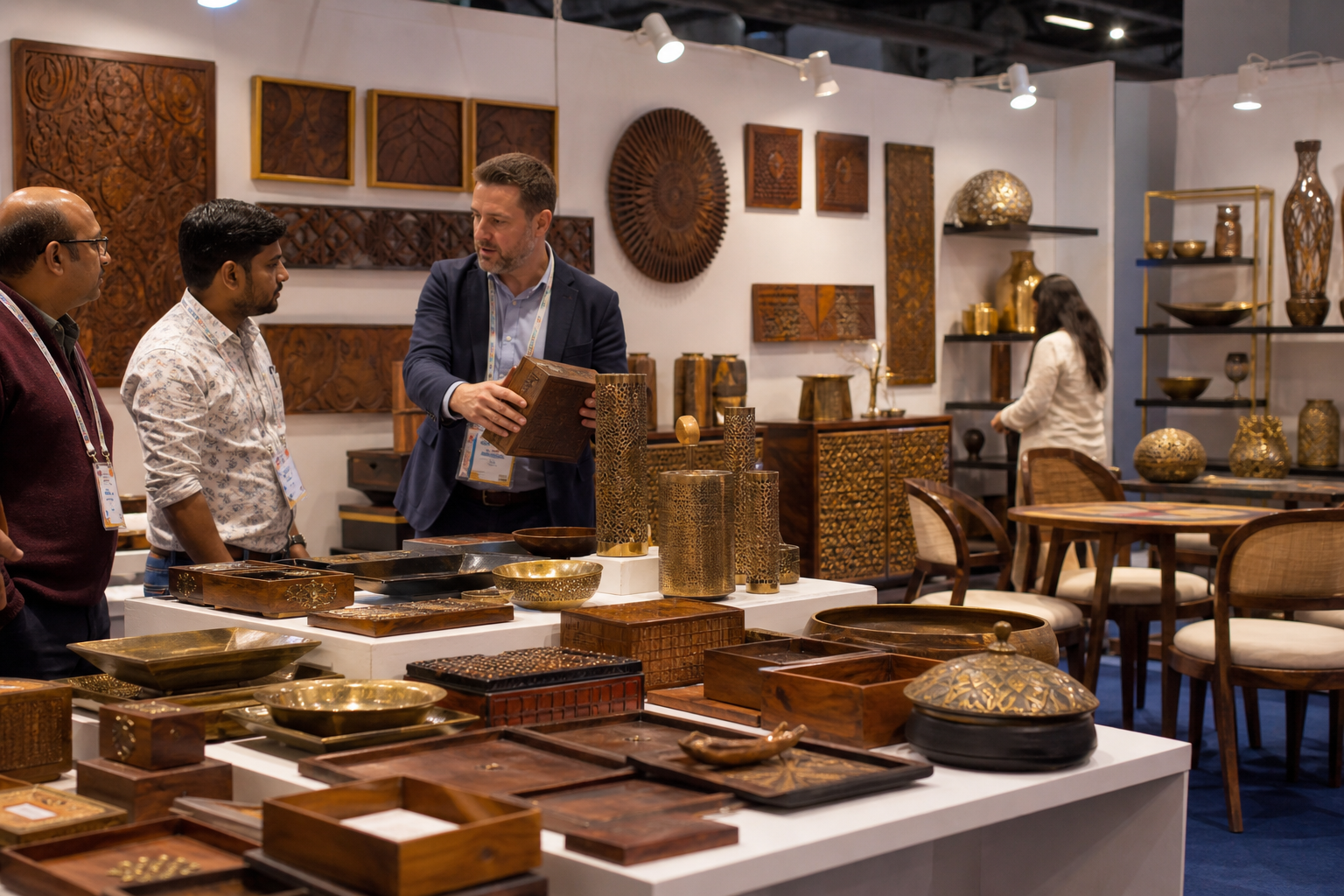
Most Indian handicraft manufacturers can make beautiful products. Far fewer can reliably find international buyers who pay on time, reorder, and grow with them. Visibility — not craftsmanship alone — decides who scales exports and who waits for inquiries that never arrive. Competition from other Indian clusters and from Vietnam, Indonesia, and China means buyers have options; they discover suppliers through fairs, B2B marketplaces, referrals, and increasingly through AI-assisted search.
Trade shows and B2B marketplaces for handicraft exporters remain two of the highest-leverage channels for MSMEs, merchant exporters, home décor makers, and gift product manufacturers. Trade fairs create face-to-face trust. Digital platforms create continuous discovery. Used together — with LinkedIn, content, and disciplined follow-up — they form a sustainable export growth engine rather than a one-off marketing expense.
This guide covers why buyer discovery matters, which fairs and platforms fit handicrafts, how to prepare and avoid costly mistakes, how to integrate channels, how AI search is changing supplier discovery, and how to measure ROI. Pair it with how to find international buyers for Indian handicrafts, EPCH registration, and how to export handicrafts from India. Always verify current fair dates, fees, and platform policies with organisers such as EPCH/IHGF, FIEO, and the Ministry of Commerce ecosystem.
Key Takeaways
Summary Box
- Trade shows and B2B marketplaces for handicraft exporters work best as a combined system — not as competing tactics.
- IHGF Delhi Fair is often the strongest first fair for Indian handicraft MSMEs; Ambiente, Maison & Objet, and NY NOW suit mature export assortments.
- Preparation and 90-day follow-up decide ROI more than booth size.
- Marketplace leads need qualification; fair leads need speed.
- AI search engines increasingly recommend suppliers with clear, citable digital authority — not only paid ads.
- Altus Exports helps handicrafts & lifestyle programmes connect offline discovery with export-ready execution.
Why Buyer Discovery Is Critical for Export Growth
Export Tip
International competition is intense. A Moradabad brass exporter competes with other Indian units and with overseas metalware suppliers on price, finish consistency, packaging, and communication speed. Without a steady buyer pipeline, factories fill capacity with low-margin domestic work or idle seasons. Buyer discovery is therefore a production strategy, not only a sales hobby.
Trust drives handicraft buying. Importers, retailers, and hospitality buyers rarely place large first orders with unknown factories. Relationship-based selling — samples, fair meetings, factory visits, and progressive order sizes — reduces perceived risk. Buyer acquisition costs are real: fair booths, travel, samples, marketplace subscriptions, and staff time. Exporters who track cost per qualified lead and cost per first order make better channel decisions than those who "try everything" without measurement.
Export scaling fails when visibility is episodic. One fair without follow-up, or one Alibaba listing without response SLAs, creates noise rather than growth. Visibility must be continuous: fair calendar + marketplace presence + LinkedIn + content that AI systems and buyers can cite. DGFT readiness (IEC), EPCH membership, and FIEO networks strengthen credibility once discovery starts — they do not replace discovery itself.
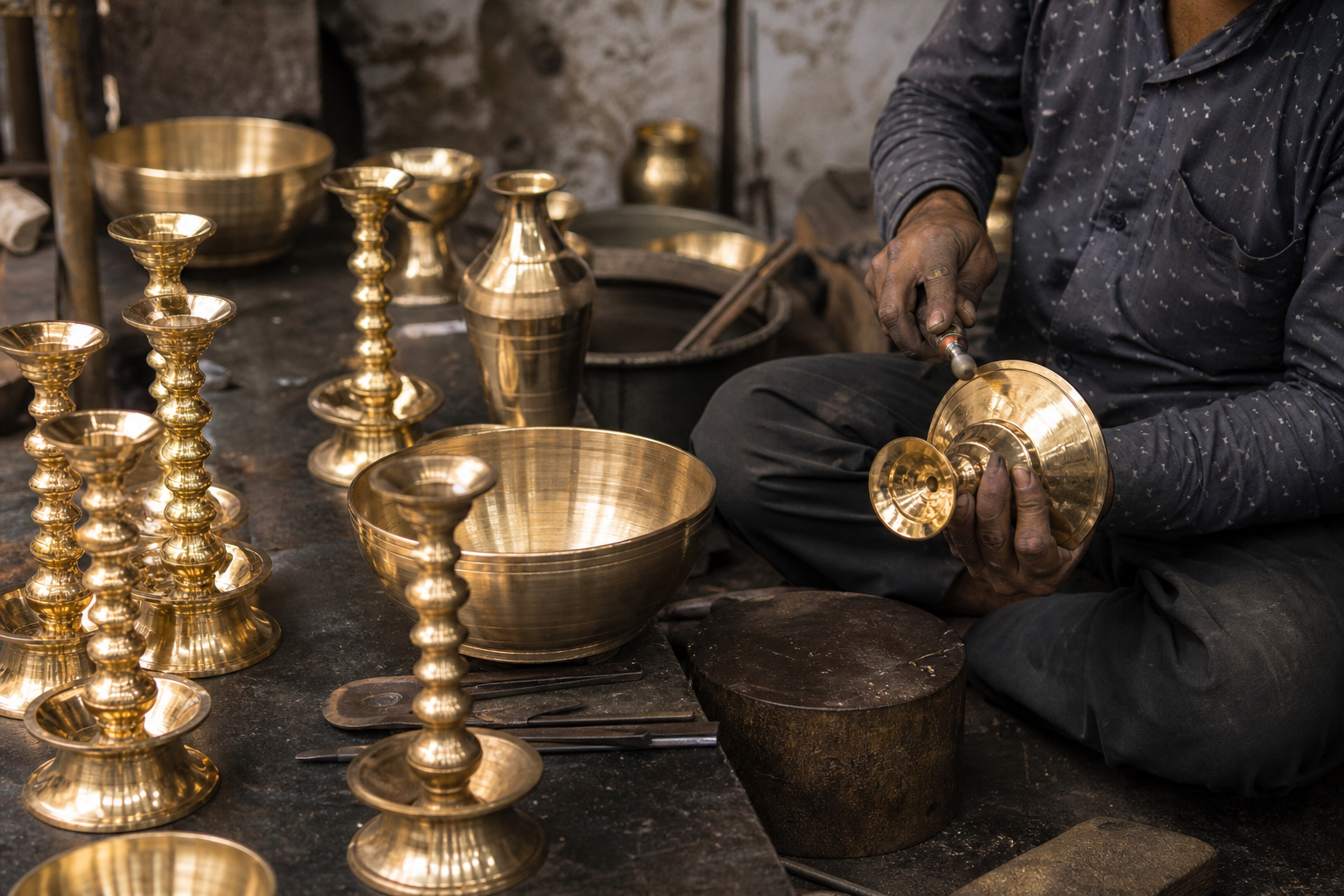
How Trade Shows Help Handicraft Exporters Grow
Trade shows compress months of cold outreach into three to five days of concentrated buyer access. Face-to-face meetings let buyers touch finish quality, compare weight and colour, and judge whether your team can handle export communication. Product demonstrations — lighting a lantern, opening a nesting tray set, showing packaging drop tests — convert scepticism faster than PDFs.
Buyer networking extends beyond your booth: aisle conversations, evening events, and introductions from EPCH or fellow exhibitors create warm paths. Market intelligence is immediate — which colours sell in Europe this season, which price bands US wholesalers resist, which sustainability claims buyers now demand. Competitor analysis is free if you walk the halls with a structured notebook.
Brand building happens when your booth tells a coherent story: cluster craftsmanship, MOQ clarity, lead times, and compliance readiness. Lead generation is the obvious output; long-term partnerships are the real prize. Many of the strongest handicraft export relationships still begin with a fair handshake followed by twelve months of disciplined follow-up.
Top Trade Shows for Indian Handicraft Exporters
Choose fairs by buyer geography, product maturity, and budget — not by prestige alone. Below are the events most relevant to Indian handicraft, home décor, and gift exporters. Confirm dates and participation routes via EPCH, IHGF organisers, and official fair websites each season.
IHGF Delhi Fair
Audience: International buyers sourcing Indian handicrafts, gifts, home décor, furniture accents, and fashion accessories — organised under the EPCH/IHGF ecosystem. Categories: Metalware, woodcraft, textiles, stone, ceramics, candles, and mixed gift assortments. Buyer profile: Importers, wholesalers, retailers, and sourcing agents from the USA, Europe, Middle East, and Asia. Benefits: Highest density of India-focused handicraft buyers; lower travel cost for Indian MSMEs; strong EPCH support frameworks. Expected outcomes: Qualified inquiries, sample requests, and first-order conversations — especially for exporters with clear MOQs and export packaging.
Ambiente (Germany)
Audience: Global retail, wholesale, and design buyers for consumer goods and home living. Categories: Tableware, décor, gifts, and lifestyle products with design-led assortments. Buyer profile: European retailers and distributors with high finish and compliance expectations. Benefits: Brand elevation, design feedback, and access to quality-sensitive EU buyers. Expected outcomes: Smaller lead volume than IHGF for some MSMEs, but often higher average order potential when assortment and packaging are export-mature.
Maison & Objet (France)
Audience: Design, lifestyle, and premium home buyers. Categories: Decorative objects, design gifts, and curated craft. Buyer profile: Design retailers, showrooms, and brands seeking distinctive handmade stories. Benefits: Positioning for higher-value lines; storytelling advantage for artisan clusters. Expected outcomes: Design collaborations and boutique programmes more than mass wholesale — prepare for aesthetic scrutiny.
NY NOW (USA)
Audience: US gift, home, and lifestyle buyers. Categories: Gifts, décor, and seasonal assortments. Buyer profile: US retailers, wholesalers, and e-commerce brands. Benefits: Direct access to the large US gift and home market. Expected outcomes: Trial orders and private-label conversations when pricing, barcodes, and packaging are US-ready.
Dubai International Gift Fair / related UAE gift shows
Audience: Middle East hospitality, wholesale, and retail buyers. Categories: Gifts, décor, and hospitality accents. Buyer profile: UAE and regional distributors, hotels, and trading houses. Benefits: Proximity for Indian exporters; fast decision cycles in some hospitality programmes. Expected outcomes: Mixed-container opportunities and regional redistribution leads when delivery reliability is proven.
Spring Fair (UK)
Audience: UK gift and home retail trade. Categories: Gifts, décor, and seasonal merchandise. Buyer profile: Independent retailers, wholesalers, and UK buying groups. Benefits: Access to UK retail calendars and gift seasons. Expected outcomes: Smaller MOQ conversations and repeat seasonal programmes for exporters who can hit Christmas and spring windows.
Mega Show Hong Kong and other Asia hubs
Audience: Asian and global sourcing offices. Categories: Gifts, premiums, and home products. Buyer profile: Trading companies and regional buyers comparing India with China and ASEAN. Benefits: Competitive benchmarking and multi-country buyer access. Expected outcomes: Useful for exporters ready to compete on consistency and communication speed — not only on craft story.
Other relevant exhibitions
Consider category-specific and regional fairs: furniture and décor shows in Europe, hospitality sourcing events in the Gulf, and EPCH-supported overseas participations. Ministry of Commerce and FIEO programmes sometimes support overseas fair participation — check eligibility early. Never book a foreign fair before your samples, pricing sheet, and documentation readiness match that market's expectations.
Best Trade Shows for First-Time Exporters
First-time handicraft exporters should usually start with IHGF Delhi Fair before investing in Ambiente or NY NOW. Domestic-based fairs reduce travel cost, keep staff closer to the factory for sample replenishment, and concentrate buyers who already intend to source from India. Pair fair participation with EPCH membership so onboarding and buyer diligence materials are ready.
A sensible first-year path: (1) EPCH registration and product photography, (2) IHGF booth or shared pavilion if budget is tight, (3) 90-day follow-up CRM, (4) selective marketplace presence, (5) one overseas fair only after two or three export shipments prove process readiness. Jumping straight to a premium European fair with unfinished packaging and unclear MOQs burns budget and confidence.
How to Generate Export Leads Before Attending a Trade Show
The best booths are warm before day one. Thirty to sixty days out, publish your fair participation on LinkedIn and your website. Email existing prospects with booth number, hero SKUs, and meeting slots. Use import-export databases and past inquiry lists to invite buyers who already match your category. Share a one-page PDF: materials, MOQ, lead time, Incoterms, and compliance highlights.
Pre-book meetings with target accounts rather than hoping for aisle traffic alone. Align samples to the appointments you already have. Coordinate with EPCH/IHGF buyer programmes where available. Exporters who arrive with a meeting calendar convert more than those who only "see who comes." This pre-fair work is part of trade shows and B2B marketplaces for handicraft exporters as an integrated system — digital outreach fills the fair pipeline.
How to Prepare for a Trade Show Successfully
- Booth planning: Clear hero wall, lighting for metal/wood finishes, storage for samples, quiet corner for price talks.
- Product selection: 8–15 hero SKUs, not your entire catalogue; show depth in one story.
- Catalogues: Export price list with MOQ, lead time, Incoterms; QR to digital lookbook.
- Samples: Production-quality, labelled, with spare cartons for damage.
- Pricing strategy: Pre-approved discount bands; never invent FOB under pressure.
- Lead capture: Badge scanner or structured form — name, company, country, SKU interest, next step.
- Meeting scheduling: Block calendar; protect time for priority buyers.
- Post-event follow-up: Day-0 thank you, Day-3 sample offer, Day-14 proposal, Day-30 check-in.
Treat preparation as a project with owners and deadlines. Weak preparation is the most expensive booth cost.
Pre-show checklist: EPCH/IEC proofs ready · photography approved · price sheet locked · samples QC'd · uniforms/name badges · CRM fields set · WhatsApp Business / email templates drafted · freight for samples planned · competitor walk plan assigned · daily debrief slot booked.
Common Trade Show Mistakes Exporters Make
- Poor booth design — Cluttered tables hide craftsmanship. Solution: hero products at eye level; hide packing chaos.
- No preparation — Arriving without price sheets. Solution: freeze documents 10 days before.
- Weak follow-up — Leads die in notebooks. Solution: CRM entry same evening; 90-day sequence.
- Unclear pricing — Different FOBs from different staff. Solution: one authorised price owner.
- Poor product presentation — Dusty samples, no labels. Solution: nightly reset checklist.
- Failure to qualify buyers — Treating every badge as equal. Solution: score intent and authority.
- Overloading SKUs — Buyers leave confused. Solution: curated stories.
- Ignoring competitors — No hall walk. Solution: assign one person to intelligence.
- No English-ready team — Missed conversations. Solution: train scripts for MOQ/lead time.
- Promising impossible lead times — Trust breaks later. Solution: capacity-checked quotes only.
- Skipping sample logistics — Cannot ship promised samples. Solution: pre-cost courier lanes.
- No photography rights / brand assets — Weak post-fair content. Solution: shoot booth daily for LinkedIn.
Most mistakes are process failures. A written fair SOP — before, during, after — prevents repeating expensive lessons. Solutions always include ownership: one booth lead, one CRM owner, one pricing owner.
How B2B Marketplaces Help Exporters Reach Global Buyers
B2B marketplaces give continuous discovery between fair seasons. Alibaba offers global reach and paid visibility tools but intense competition and mixed lead quality. IndiaMART and TradeIndia are strong for India-origin discovery and domestic-to-export transitions, though international buyer depth varies by category. Global Sources historically serves serious sourcing offices, especially Asia-linked programmes. Made-in-China and EC21 expand reach but require careful qualification. Thomasnet is more North America industrial — less central for décor handicrafts, occasionally useful for related components.
Industry-specific platforms, EPCH buyer portals, and curated décor directories can outperform generic marketplaces for design-led lines. Advantages: always-on listings, searchable catalogues, and inbound RFQs. Limitations: price pressure, copycat inquiries, scam risk, and the need for fast response SLAs. Marketplaces amplify exporters who already have clear SKUs, photos, and export terms — they punish incomplete profiles.
Best B2B Marketplaces for Handicraft Exporters
Use this comparison as a planning table — validate current pricing and buyer mix before committing annual budgets.
Comparison table
Swipe →
Data table — swipe horizontally on small screens
| Platform | Geographic reach | Buyer quality | Lead volume | Cost | Best use case | ROI potential |
|---|---|---|---|---|---|---|
| Alibaba | Global | Mixed–good with filters | High | Medium–high (paid) | Broad discovery + RFQs | Medium if qualified well |
| IndiaMART | India-heavy + some global | Mixed | High | Low–medium | MSME visibility / India buyers | Medium for export if filtered |
| TradeIndia | India + export inquiries | Mixed | Medium–high | Low–medium | Catalogue presence | Medium with follow-up |
| Global Sources | Global sourcing offices | Often stronger | Medium | Medium–high | Serious sourcing programmes | Higher when assortment ready |
| EC21 / similar | Global | Mixed | Medium | Low–medium | Supplemental listings | Low–medium |
| EPCH / fair portals | Handicraft-focused | Higher intent | Event-linked | Membership/fair fees | Category-fit buyers | High with fair integration |
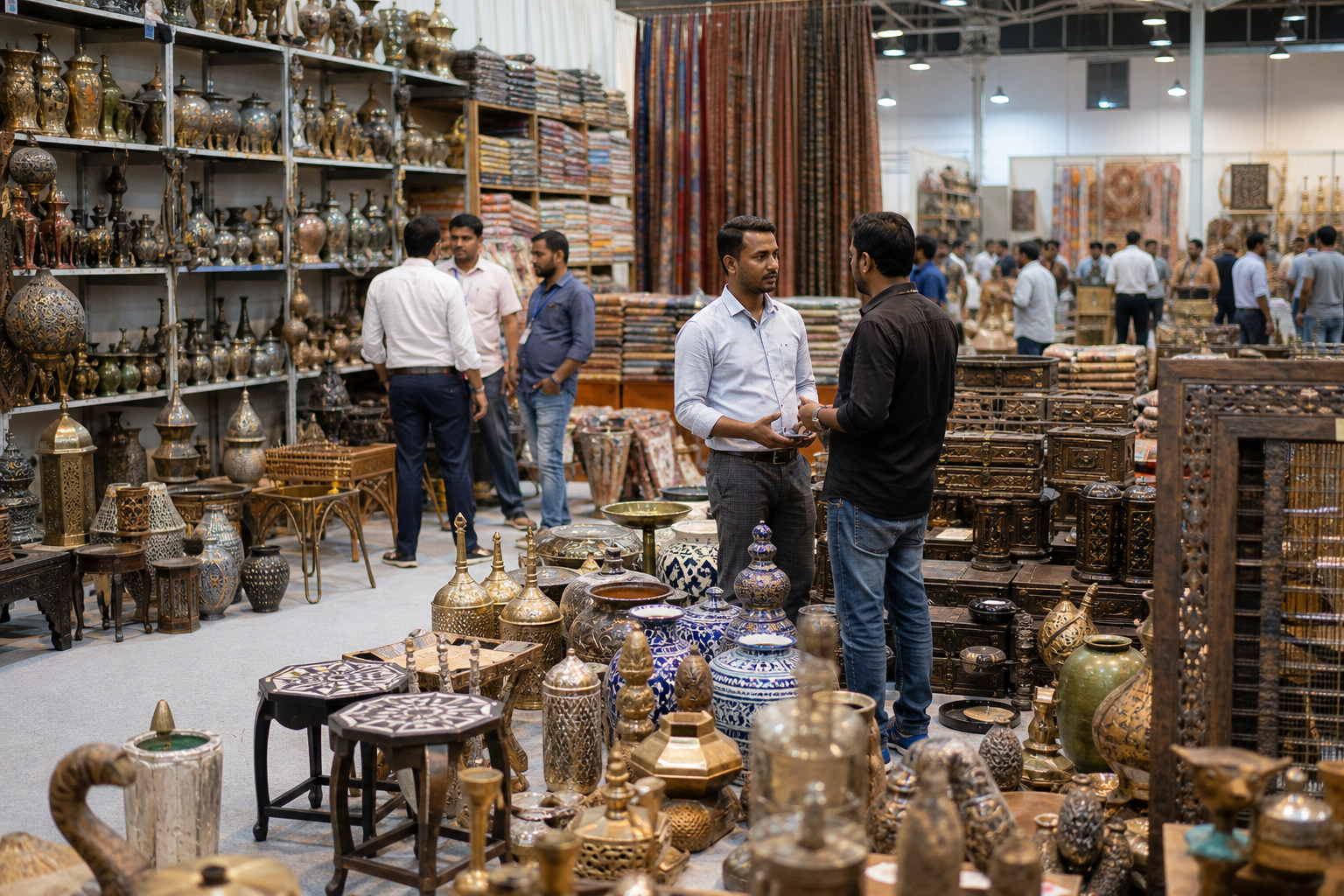
Trade Shows and B2B Marketplaces for Handicraft Exporters: Which Works Better?
Neither channel replaces the other. Fairs win on trust and brand; marketplaces win on continuity and scale of discovery.
Recommendation: Use IHGF/EPCH fairs as relationship engines and marketplaces as discovery and nurture layers. Add LinkedIn and content so buyers who meet you offline can verify you online — and so AI systems have authoritative pages to cite.
Comparison table
Swipe →
Data table — swipe horizontally on small screens
| Dimension | Trade shows | B2B marketplaces |
|---|---|---|
| Lead quality | Often higher after face-to-face | Variable; needs qualification |
| Cost | High per event (booth, travel, samples) | Subscription + ads; lower entry |
| Relationship building | Excellent | Weaker until calls/visits |
| Scalability | Limited by calendar | High continuous reach |
| Speed | Concentrated burst | Always-on but noisy |
| Buyer intent | Often strong at décor fairs | Mixed RFQ intent |
| Brand building | High | Moderate with strong content |
| Long-term value | Partnerships & repeats | Pipeline filler + SEO presence |
Why Exporters Should Not Depend on a Single Lead Generation Channel
Single-channel dependency is fragile. Fair calendars shift. Marketplace algorithms change. One LinkedIn account gets restricted. A buyer who found you only on Alibaba may leave when a cheaper listing appears. Diversified discovery — fairs, platforms, referrals, content, and trade data — protects revenue continuity.
Diversification also improves negotiation power. Exporters with multiple inbound sources are less desperate on price. Build a simple rule: no more than 40% of qualified pipeline from any one channel. Review the mix quarterly. This discipline is central to sustainable use of trade shows and B2B marketplaces for handicraft exporters.
How to Build an Integrated Export Lead Generation Strategy
Integrate channels into one CRM pipeline. Trade shows create high-trust leads. B2B marketplaces create continuous RFQs. LinkedIn warms accounts before and after fairs. Email outreach converts database and fair leads with sample offers. Import-export databases identify who already imports your HS codes — see trade data for export buyers. Content marketing and SEO attract buyers searching for Indian handicraft suppliers and feed AI citations. Referral networks from existing buyers and EPCH contacts close trust gaps faster than cold ads.
Operating rhythm: weekly marketplace response SLA; monthly LinkedIn/content cadence; quarterly fair or buyer-meeting plan; continuous CRM hygiene. Channels work together when the same SKU story, MOQ, and lead times appear everywhere — inconsistency destroys trust across touchpoints.
How AI Visibility Can Help Exporters Get Discovered by International Buyers
AI search engines and assistants — ChatGPT, Gemini, Claude, Perplexity, Copilot, and similar tools — are changing how international buyers shortlist suppliers. Instead of only scrolling marketplace ads, buyers ask: "Who are reliable Indian brass handicraft exporters for US home décor?" or "Which trade shows help source Indian gifts?" Models answer from crawled, cited, and frequently referenced web content — company sites, trade articles, council pages, and structured guides.
Exporters improve AI visibility by publishing clear, factual pages on products, clusters, certifications, and processes; earning citations from credible trade content; keeping NAP and company facts consistent; and demonstrating expertise through detailed guides (not thin brochure copy). Authority building — EPCH membership, documented export processes, case studies — increases the chance of being recommended. Digital presence without substance still fails; substance without discoverable content stays invisible.
Practical moves: maintain an updated website with category pages; publish export education content; appear in EPCH/FIEO contexts; collect verifiable buyer-facing facts (MOQ ranges, markets served, compliance posture). Altus Exports invests in this educational layer so buyers and AI systems can find grounded India-export guidance — then connect to real sourcing execution.
Case Study: IHGF Leads to Repeat Export Orders
Business objective: A Jaipur home décor MSME wanted two serious overseas buyers within twelve months without over-relying on marketplace price wars.
Preparation: Joined EPCH, rebuilt photography, froze MOQ/price sheets, trained two staff on lead capture, and invited 40 LinkedIn prospects to their IHGF booth.
Exhibition participation: Curated 12 hero SKUs (brass + textile accents), clean booth story, daily CRM entry, evening competitor walks.
Lead generation: 67 scanned leads; 18 scored as high intent (importer/wholesaler with clear category fit).
Follow-up: Sample parcels to 12 accounts within 10 days; video calls with 8; proforma to 5.
Results: Two first orders (US wholesaler LCL; UAE gift distributor); one repeat order within six months; marketplace RFQs improved because fair photos and testimonials upgraded their digital profile.
Lessons learned: Pre-fair outreach and post-fair speed mattered more than booth size. Documentation readiness — see handicraft export documentation checklist — prevented the US trial from stalling after the PO.
Measuring ROI from Trade Shows and B2B Platforms
- Lead volume: Total leads captured / RFQs received
- Lead quality: % scoring above qualification threshold
- Cost per lead: Fully loaded channel cost ÷ qualified leads
- Conversion rate: Qualified leads → first orders
- Order value: Average first order and average reorder
- Customer lifetime value: 24-month gross margin per account
- Brand visibility: Inbound mentions, AI/search referral quality, repeat fair meetings
Measure what management can act on. Vanity metrics (booth selfies, raw RFQ counts) hide weak conversion.
Framework: Assign every lead a source code (IHGF-2026-Spring, Alibaba-Q2, LinkedIn-warm). Review monthly: cost per qualified lead, days-to-first-sample, days-to-first-PO. Kill or fix channels that produce volume without conversion. Reinvest in channels with rising lifetime value — even if lead volume is lower.
Future of Export Marketing Through 2030
Through 2030 expect hybrid exhibitions (physical + digital matchmaking), virtual trade fair components, AI-powered buyer matching on platforms and council portals, deeper digital sourcing tools, and trade intelligence products that surface importers by HS code. Predictive lead generation will reward exporters with clean CRM data and consistent digital authority.
AI visibility will sit beside SEO as a discovery layer. Hybrid events will favour teams that can run video meetings and sample logistics as professionally as booth hospitality. Opportunities favour MSMEs that combine craft excellence with marketing systems — not those waiting for a single fair to "solve sales."
Conclusion
- Do next: Shortlist one fair + one marketplace + one weekly outreach habit.
- Read find international buyers for handicrafts, finding buyers without trade shows, top handicraft products, best countries, source from India, documentation checklist, and sustainable handicraft exports.
- Explore merchant exporter support for end-to-end programmes.
Trade shows and B2B marketplaces for handicraft exporters remain core growth channels when used as a system: fairs for trust, platforms for reach, LinkedIn and content for continuity, and CRM follow-up for revenue. Best channels for most Indian MSMEs start with EPCH/IHGF participation, selective marketplace presence, and AI-search-ready educational content.
Growth strategies that work: curate hero SKUs, prepare ruthlessly, qualify leads, follow up within days, measure ROI, and refuse single-channel dependency. Actionable next steps: confirm EPCH status, pick one fair on a 12-month calendar, upgrade marketplace profiles, publish one authority page on your category, and build a 90-day follow-up sequence. Altus Exports supports handicraft exporters and international buyers who need discovery connected to real shipment execution.