
Sustainable and Eco-Friendly Handicrafts: The Next Big Export Opportunity
By Saurabh Mittal, Founder, Altus Exports
A practical export guide to sustainable and eco-friendly handicrafts from India — why global demand is rising, which products sell in USA, UK, Europe, Canada, Australia, and UAE, what buyers require on traceability and packaging, and how exporters can certify, position, and price green handmade lines without greenwashing. Includes category outlooks, country demand, retail ESG drivers, margin analysis, and a Europe jute–bamboo case study from Altus Exports.
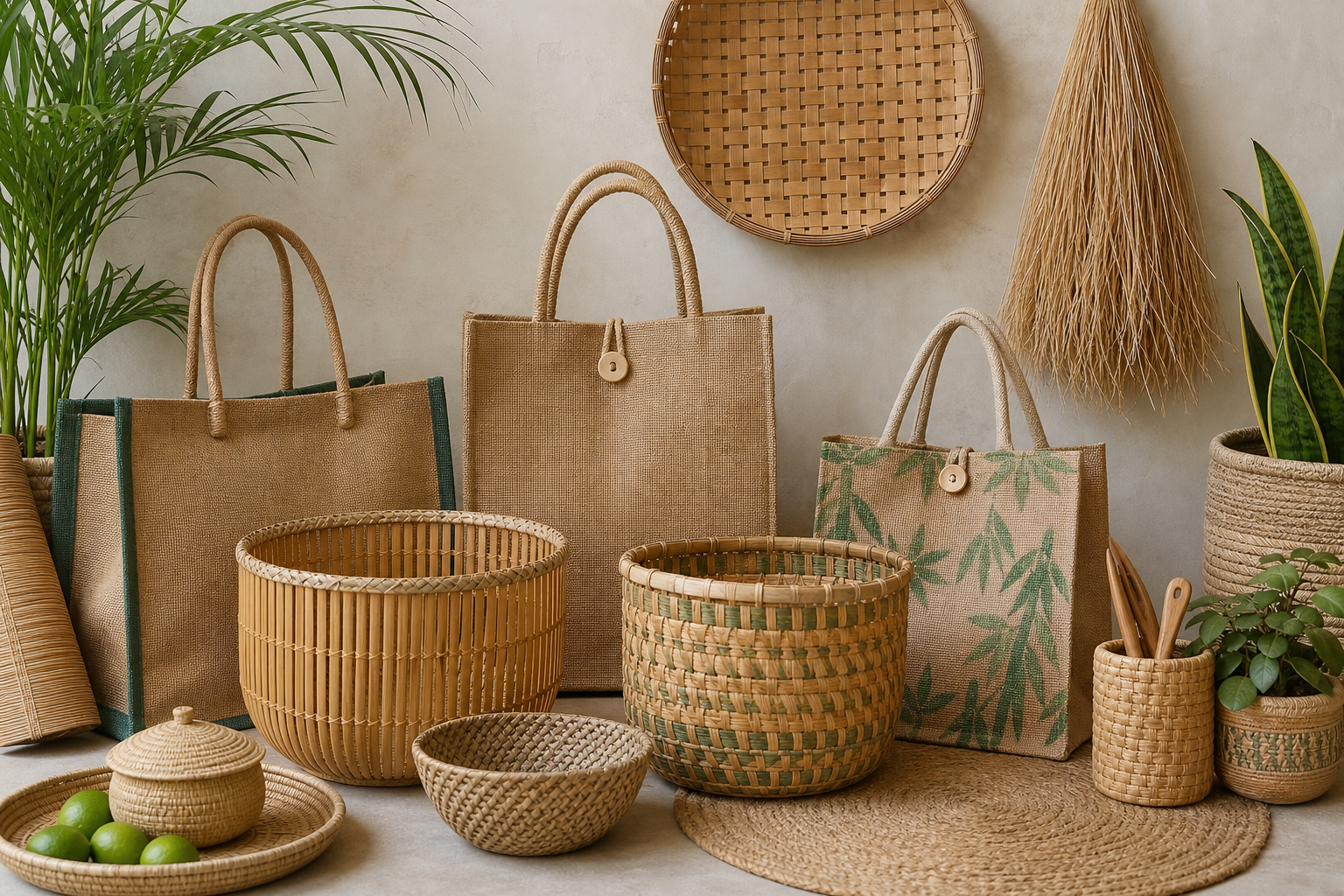
Global buyers are rewriting décor and gift assortments around materials, packaging, and labour practices — not only price and design. Eco-conscious consumers, retailer ESG commitments, and tighter procurement policies are pushing importers to ask harder questions about origin. For Indian manufacturers, that shift is not a threat to craft; it is a commercial opening. Sustainable and eco-friendly handicrafts sit at the intersection of artisan skill and the sourcing criteria that now decide vendor shortlists in the USA, UK, Europe, Canada, Australia, and increasingly the UAE.
Changing preferences favour natural fibres, responsible wood, recycled metals, and low-plastic packing when claims can be evidenced. Corporate ESG initiatives and government regulations amplify what shoppers already signal at checkout. Sustainability therefore matters in handicraft exports because it affects who gets RFQs, who clears retail onboarding, and who earns replenishment — not because it is fashionable language for catalogues.
This guide defines sustainable handicrafts, maps high-potential categories, explains country demand and buyer expectations, covers certifications, branding, margins, challenges, and 2030 outlook. Pair it with most demanded Indian handicrafts by country, top handicraft products exported from India, and how to export handicrafts from India. Reference EPCH, DGFT, FIEO, and standards bodies such as FSC, Fair Trade, SEDEX, and BSCI when building evidence packs — and verify current scheme rules before claiming them.
Key Takeaways
Summary Box
- Sustainable and eco-friendly handicrafts are becoming a mainstream export filter in EU/UK retail and a growing differentiator in USA and Australia.
- India's jute, bamboo, cane, natural textiles, terracotta, and responsible wood clusters are structurally well placed — if claims are documented.
- Buyers want transparency, traceability, ethical labour signals, and packaging that matches the product story.
- Certifications (FSC, GOTS, Fair Trade, SEDEX/BSCI, ISO) help where relevant; greenwashing destroys trust faster than no claim at all.
- Margins can improve when sustainability is specified and verified — not when it is only a slogan on a carton.
- Altus Exports supports handicrafts & lifestyle buyers and exporters building evidence-based sustainable programmes.
What Are Sustainable and Eco-Friendly Handicrafts?
Sustainable handicrafts are handmade or craft-based products designed and produced to reduce environmental and social harm across materials, processes, packaging, and working conditions — with enough transparency that a buyer can evaluate the claim. Eco-friendly handicrafts emphasise lower-impact materials and processes (for example jute, bamboo, natural dyes, recycled metal). Ethical production covers fair treatment of artisans and safe workplaces. Responsible sourcing means knowing where materials come from and avoiding high-risk supply.
Circular economy principles show up as durability, repairability, recycled inputs, and packaging designed for reuse or recycling. Example: a West Bengal jute tote with documented fibre origin and plastic-light packing is easier to defend than a "eco gift" wrapped in non-recyclable glitter film. Sustainability is a system of choices, not a single material label. Exporters should define programme boundaries in writing: which SKUs are in scope, which claims apply, and which workshops are approved for bulk.
Why Global Demand for Sustainable Products Is Growing
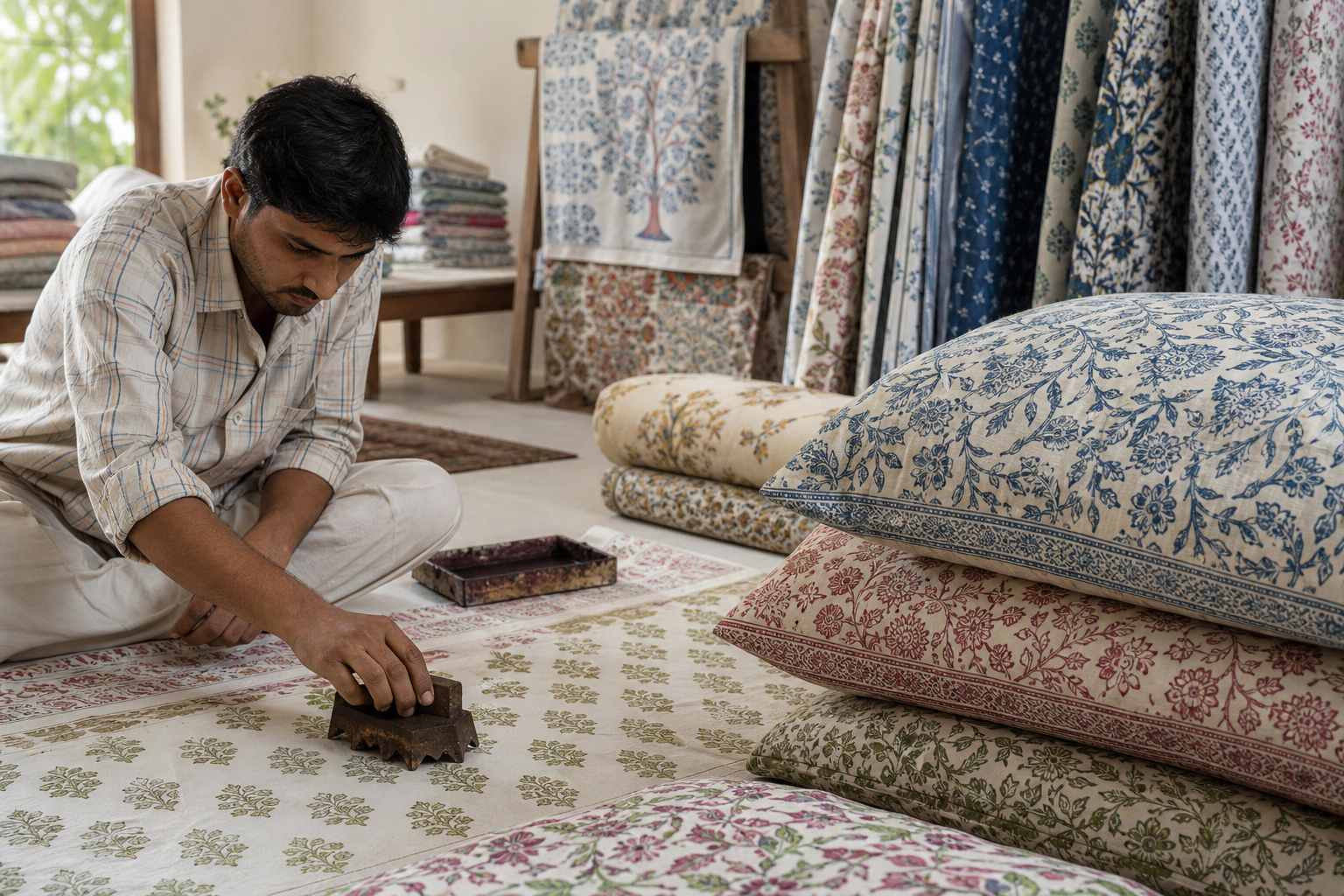
Consumer awareness of waste, climate, and labour conditions has moved from niche activism into mainstream retail behaviour. Environmental concerns shape assortment decisions even when shoppers still want design and value. Corporate ESG initiatives force importers and brands to collect supplier data. Government regulations — especially in the EU and UK — raise expectations on claims, packaging, and due diligence. Retail sustainability commitments turn those pressures into vendor scorecards.
Purchasing behaviour is changing: buyers ask for material declarations earlier, reject vague "natural" language, and prefer suppliers who can answer follow-up questions without improvising. World Bank and trade-policy discussions around green trade reinforce that sustainability is becoming infrastructure for market access, not optional marketing. For handicraft exporters, the practical meaning is simple — undocumented lines still sell somewhere, but the highest-quality retail programmes increasingly will not shortlist them.
Why India Is Well Positioned to Lead Sustainable Handicraft Exports
India already produces many of the materials global buyers associate with lower-impact décor and gifts: jute, bamboo, cane, natural fibres, terracotta, and craft wood traditions. Traditional craftsmanship often uses labour-intensive, lower-energy methods compared with fully industrial décor lines. Artisan communities provide livelihood narratives buyers want — when they are truthful and specific. Abundant raw-material regions and growing exporter awareness through EPCH and related networks create a base for scale.
Positioning is not automatic. Low-impact production can still fail if finishing chemicals, plastic packaging, or undocumented subcontracting contradict the story. India's advantage is capability plus story depth; the exporters who win convert that into evidence packs and consistent quality. DGFT export frameworks and FIEO networks support organised trade readiness, while EPCH keeps handicraft exporters connected to buyer platforms. See cluster and market context in best countries for Indian handicraft exports.
Practical implication: build eco programmes where your cluster already has material strength — jute in eastern India, bamboo in the Northeast and selected southern pockets, block-print textiles in Rajasthan/Gujarat with low-impact dye roadmaps — rather than inventing a sustainability story far from your supply base.
Sustainable and Eco-Friendly Handicrafts: Top Products with Export Potential
The categories below are among the strongest commercial plays for Indian exporters building green handmade lines. Treat each as a programme candidate: specs, packing, evidence, and target market must be defined together before outreach.
Bamboo products
- Applications
- eco retail, lifestyle
- Demand
- High in EU/Australia; rising in USA/UK
- Markets
- Germany, Netherlands, UK, Australia, USA
- Growth
- Strong through 2030 with finish quality.
Organisers, décor, baskets, utility home goods.
Jute products
- Applications
- retail, corporate, home
- Demand
- Very high in Europe
- Markets
- Germany, UK, Netherlands, USA, Australia
- Growth
- Among the most bankable eco categories.
Bags, rugs, décor, promotional lifestyle goods from eastern India.
Cane products
- Applications
- interiors, hospitality accents
- Demand
- Design-led EU/UK/USA niches
- Growth
- Solid where construction quality is export-grade.
Furniture accents and woven décor.
Terracotta and natural fibre products
- Demand
- Moderate–high with packing discipline
- Markets
- Europe, USA, UAE garden/décor niches
- Growth
- Steady for contemporary forms.
Clay décor/planters; coir, grass, and fibre organisers.
Handmade paper, sustainable wood, recycled metal, upcycled décor, organic textile crafts
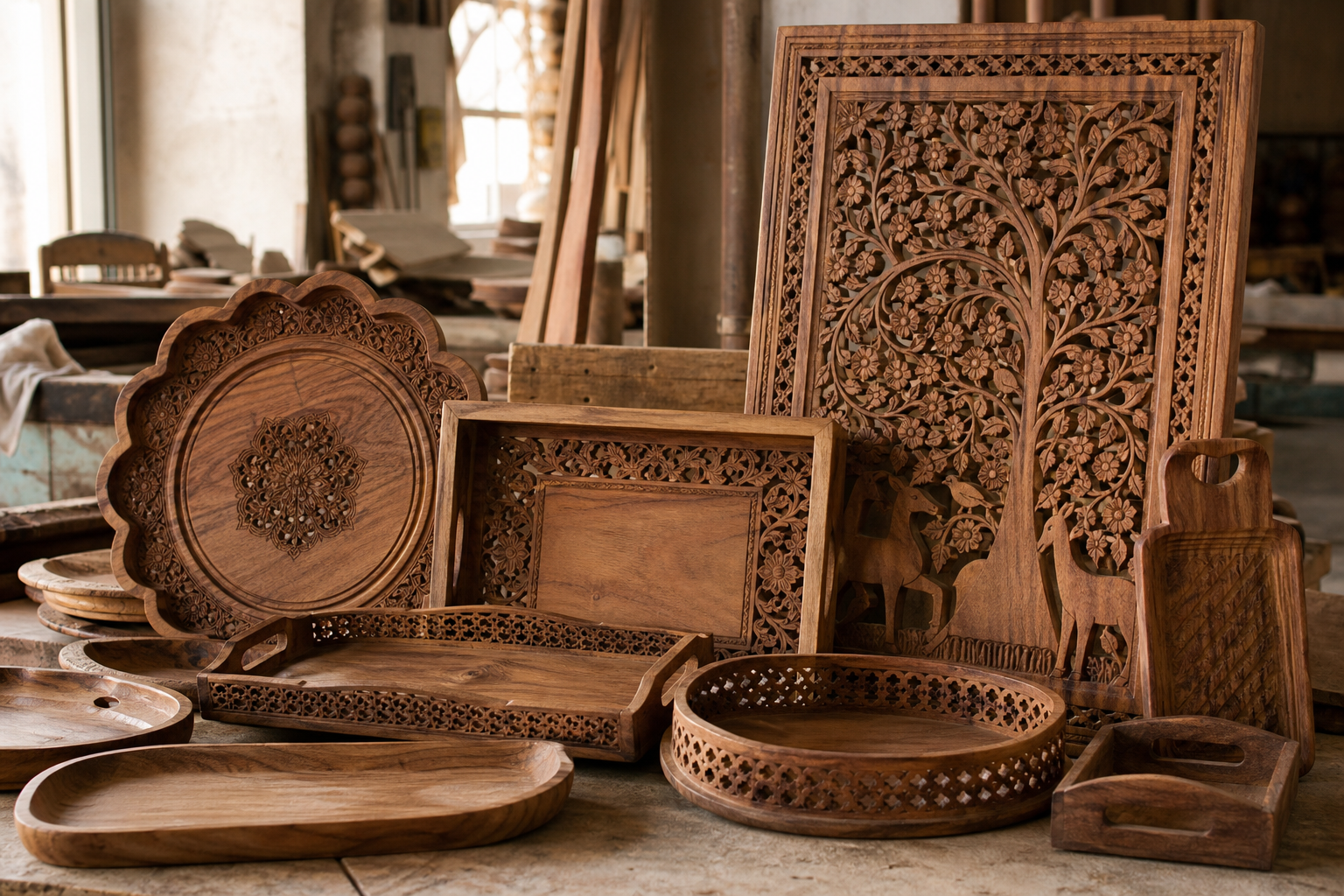
Handmade paper: stationery and gift packaging accents for eco brands. Sustainable wood: FSC-aligned or documented responsible sources for trays/décor. Recycled metal: statement décor with scrap-input stories when traceable. Upcycled décor: design-led niches; QC critical. Organic textile crafts: GOTS-relevant programmes for soft furnishings. Growth: Highest where certification and design meet retail standards.
Which Countries Are Driving Demand for Eco-Friendly Handicrafts?
Demand intensity differs by market. Use the briefs below to prioritise — then validate with buyer RFQs and HS-code trends for your exact SKUs.
USA
Growing eco assortment share alongside trend décor. Buyers want credible materials without sacrificing consistency. Opportunities in organisers, natural-fibre home, and private-label eco gifts. Expect parallel pressure on barcode readiness and replenishment — sustainability does not excuse weak operations.
UK
Strong ethical and sustainable positioning in indie retail and private label. Expect packaging scrutiny and provenance questions. Textiles, jute, and refined natural décor perform. UK buyers often ask early about labour narratives and plastic reduction in packing.
Germany, France, Netherlands
Germany leads on evidence and durability. France rewards design-led eco aesthetics. Netherlands acts as EU distribution gateway for mixed sustainable décor. Highest bar for claim substantiation. If your evidence file is thin, do not lead with Germany as first market.
Canada and Australia
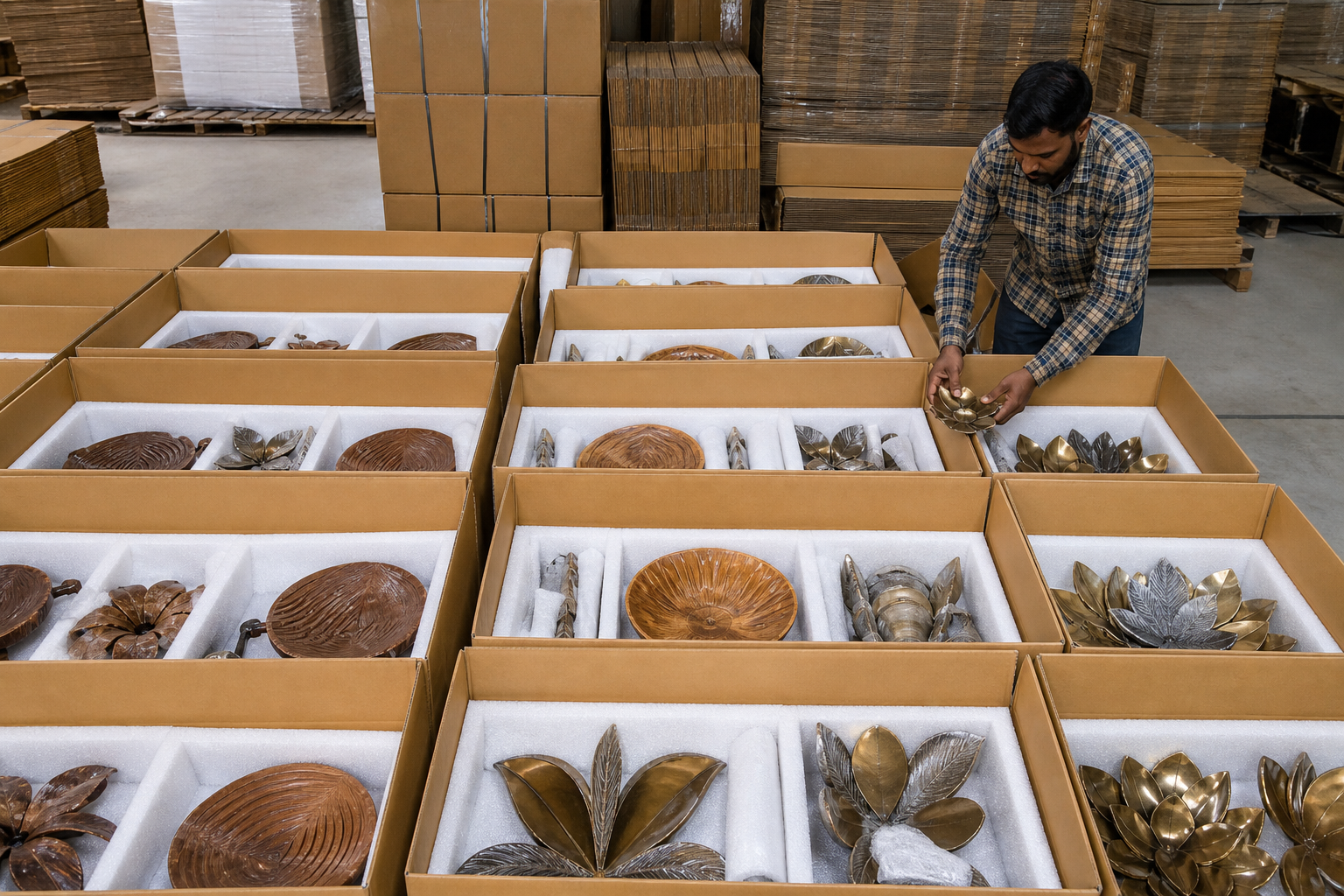
Premium niches with willingness to pay for verified eco goods; longer freight makes packaging performance critical. Natural materials and clean design win. Freight cost means damaged eco goods destroy both margin and narrative credibility.
UAE
Emerging interest in premium eco gifts and hospitality accents, still secondary to visual impact. Position sustainability as quality premium, not only activism messaging. Pair eco claims with finish standards hospitality buyers already understand.
Why Retail Chains Are Increasing Demand for Sustainable Products
Retail chains face investor ESG pressure, NGO scrutiny, and customer expectations simultaneously. Assortment teams therefore convert sustainability into supplier requirements: questionnaires, packaging rules, restricted substances, and audit pathways. Chains prefer fewer, better-documented vendors over many unverifiable craft sellers. For Indian exporters, that means readiness for onboarding packs — not only beautiful samples.
Chains also use sustainability to differentiate private-label lines, creating openings for jute, bamboo, and organic textile crafts that can hold repeat specs. The commercial door opens wider for suppliers who answer questionnaires completely on the first pass. Incomplete answers often stall onboarding longer than price negotiations.
How Sustainability Influences Buyer Decisions
Sustainability influences decisions at shortlist, sampling, and reorder stages. Buyers may accept a slightly higher FOB if claim risk and return risk fall. Conversely, a cheaper conventional SKU can lose if packaging contradicts a brand's public climate pledges. Decision-makers increasingly ask: Can we defend this on our website? If the answer is unclear, the supplier is deferred.
Influence is strongest in EU/UK and premium North America/Australia; still rising in Gulf retail. Influence also appears in negative form: one greenwashing incident can remove a supplier from a retailer's approved list across categories. That is why sales teams need approved claim language, not improvisation on calls.
What International Buyers Look for in Sustainable Suppliers
- Buyer expectation checklist
- Written material and finish declarations per SKU
- Map of workshops/subcontractors used for the programme
- Packaging composition and plastic-reduction plan
- Willingness to support audits (SEDEX/BSCI where required)
- Sample retention and bulk-match discipline
- Honest limits — what you cannot certify yet
- Response SLA for compliance questionnaires
- Photo evidence of packing and production checkpoints
Transparency about materials and processes, traceability of key inputs, responsible sourcing policies, ethical labour practices, packaging aligned to claims, quality consistency, and a credible environmental commitment over time — not a one-season slogan.
Sustainability Certifications That Can Help Exporters
FSC supports responsible wood claims where chain-of-custody applies. Fair Trade frameworks help ethical positioning for eligible products/programmes. SEDEX and BSCI pathways address social compliance expectations common in retail. GOTS matters for organic textile crafts. ISO systems (for example quality/environmental management) support process credibility. Carbon-neutral initiatives can differentiate advanced exporters but require rigorous accounting — weak carbon claims are high-risk greenwashing.
Certifications are tools, not trophies. Choose based on target buyer requirements and product category. A jute bag programme for Germany may need different evidence than a recycled-metal décor line for UAE hospitality. Budget time and cost before promising certificates in outreach. EPCH membership still helps handicraft market access credibility alongside sustainability evidence — see EPCH registration guide.
How Exporters Can Build a Sustainable Handicraft Brand
Storytelling should be specific: region, material, process, people — with permission and accuracy. Packaging must match the claim. Certification and testing should be planned, not improvised after a buyer asks. Digital marketing and website positioning should lead with evidence and SKUs, not stock eco imagery. Buyer communication should include a one-page sustainability fact sheet per programme.
Differentiation comes from consistency: the fifth container must still match the approved story and sample. Brand building also means internal training — everyone who quotes prices must know which claims are approved. A single overstated WhatsApp message can undo a year of careful positioning. For buyer outreach that respects eco diligence, see find international buyers for handicrafts.
Eco-Friendly Handicraft Trends to Watch in 2026 and Beyond
In 2026 and beyond, watch plastic-light and plastic-free packing mandates in RFQs, demand for mono-material packaging, growth in bamboo/jute organisers, private-label eco collections, recycled-metal statement pieces with documented inputs, and textile crafts tied to organic or low-impact dye stories. Traceability tech — QR batch stories, digital product passports in some markets — will move from pilot to expectation for larger retailers.
AI-powered sourcing will favour suppliers with clean digital credentials. Exporters should assume that tomorrow's buyer will find weak claims as easily as catalogue photos. Redesign packing now, map workshops now, and price evidence work into programmes before peak-season RFQs arrive.
Can Sustainable Products Command Higher Export Margins?
Often yes — when the buyer channel values verified sustainability and you control claims, quality, and packaging. Premium EU/UK private label and Australian eco retail can support better margins than undifferentiated souvenir exports. Margins erode if certification costs are ignored in pricing, if damage rates are high, or if green claims trigger disputes.
Price sustainability as a specification upgrade with clear inclusions. Do not assume every market will pay more; Gulf and some US wholesale channels may still prioritise visual impact and unit cost unless the brand mandates eco criteria. Run internal dual quotes — conventional vs evidenced eco — so sales teams do not give away upgrades for free.
Sustainable Handicrafts vs Conventional Handicrafts
Comparison table
Swipe →
Data table — swipe horizontally on small screens
| Factor | Sustainable / Eco-Friendly | Conventional |
|---|---|---|
| Materials | Documented natural/recycled/low-impact inputs | Mixed; often undocumented finishes/packaging |
| Buyer demand | Rising fast in EU/UK/premium NA/AU | Still large, but more price-competitive |
| Pricing | Often premium when verified | More race-to-bottom pressure |
| Margins | Higher potential if claims hold | Volume-driven, thinner on commodity looks |
| Market growth | Strong through 2030 | Stable but less differentiated |
| Brand perception | Trust + story advantage | Craft story alone may not clear ESG gates |
| Export potential | High for prepared exporters | High volume, lower defensibility |
| Long-term opportunity | Strategic — vendor consolidation favours evidence | Risk of displacement from ESG retail lists |
Case Study: Jute and Bamboo Exporter Serving European Buyers
Business objective: An eastern India–linked manufacturer wanted to move from generic jute bags into a documented eco home-organiser programme for EU retail.
Market opportunity: German and Dutch importers seeking plastic-light alternatives with material declarations after retail customers rejected promotional bags with heavy poly packing.
Product positioning: Narrow SKU set, natural finishes, recyclable packaging, one-page evidence sheet; avoided unverifiable "100% carbon neutral" claims.
Buyer acquisition: EPCH fair follow-up + LinkedIn to eco category buyers; trade-data shortlist of jute importers; 72-hour response SLA on questionnaires.
Challenges: Initial packaging used unnecessary poly; buyer rejected. Switched to paper-forward packing and updated quotes. Colour-lot drift was fixed with tighter incoming fibre checks.
Results: Trial LCL to Netherlands; repeat order within a season; margin improved versus prior commodity bag sales; second EU buyer onboarded faster using the same evidence pack.
Lessons learned: Sustainability sells when operational. Evidence and packing mattered as much as weave quality. See also source handicrafts directly from India.
Challenges Exporters Face in Sustainable Product Exports
Comparison table
Swipe →
Data table — swipe horizontally on small screens
| Challenge | Solution |
|---|---|
| Certification costs | Phase by target buyer; price into FOB; start with declarations if full certs not yet required |
| Supply chain management | Map every finishing vendor; freeze approved process |
| Material sourcing | Secure consistent fibre/wood lots; avoid opportunistic substitutions |
| Buyer verification of claims | Maintain evidence files and sample retention |
| Greenwashing risk | Claim only what you can document; train sales teams |
| Pricing challenges | Show landed value of lower claim/return risk |
| Compliance requirements | Build destination memos before outreach |
Future Outlook for Sustainable Handicraft Exports Through 2030
Through 2030, ESG requirements, circular-economy packaging rules, eco-conscious consumers, and retail sustainability commitments will keep raising the floor. AI-powered sourcing and traceability technology will make undocumented suppliers easier to exclude. Carbon-footprint questions will appear more often in serious RFQs.
Indian exporters who invest now in materials discipline, packaging redesign, and selective certifications will be positioned for vendor consolidation. Those who only add green adjectives will be filtered out. The opportunity is durable because it is operationally demanding — barriers protect prepared suppliers. Plan multi-year capability roadmaps, not one-season eco stickers. Prepared exporters will treat 2026–2030 as a capability race, not a slogan race.
Conclusion
- Next step: Share your materials, target markets, and current claims for a sustainability gap review.
- Explore handicrafts & lifestyle and export products from India.
- Continue with source handicrafts directly from India, documentation checklist, trade shows for handicraft exporters, find buyers, and EPCH registration.
Sustainable and eco-friendly handicrafts matter because buyers now score suppliers on evidence as well as aesthetics. Best product opportunities for India include jute, bamboo, cane, natural-fibre goods, responsible wood, recycled metal, upcycled design lines, and organic textile crafts — matched to EU/UK/premium NA/AU demand and growing Gulf interest. Competitive advantage goes to exporters who document materials, fix packaging, and communicate honestly.
Actionable recommendations: pick one eco programme, write material and packing declarations, align pricing to verification costs, register market access via EPCH where relevant, and target buyers who already purchase sustainable assortments. Altus Exports can help international buyers and Indian manufacturers build sustainable handicraft programmes that ship as cleanly as they read on a website.