
How to Find Genuine International Buyers for Indian Handicrafts
By Saurabh Mittal, Founder, Altus Exports
A practical guide to find international buyers for Indian handicrafts — from building buyer profiles and using import data to LinkedIn outreach, EPCH/IHGF fairs, verification checklists, and scam prevention. Built for manufacturers, MSMEs, merchant exporters, and artisan groups who need genuine export leads and a repeatable sales process. Includes channel comparisons, outreach templates, a Moradabad–USA case study, and pipeline tactics from Altus Exports.
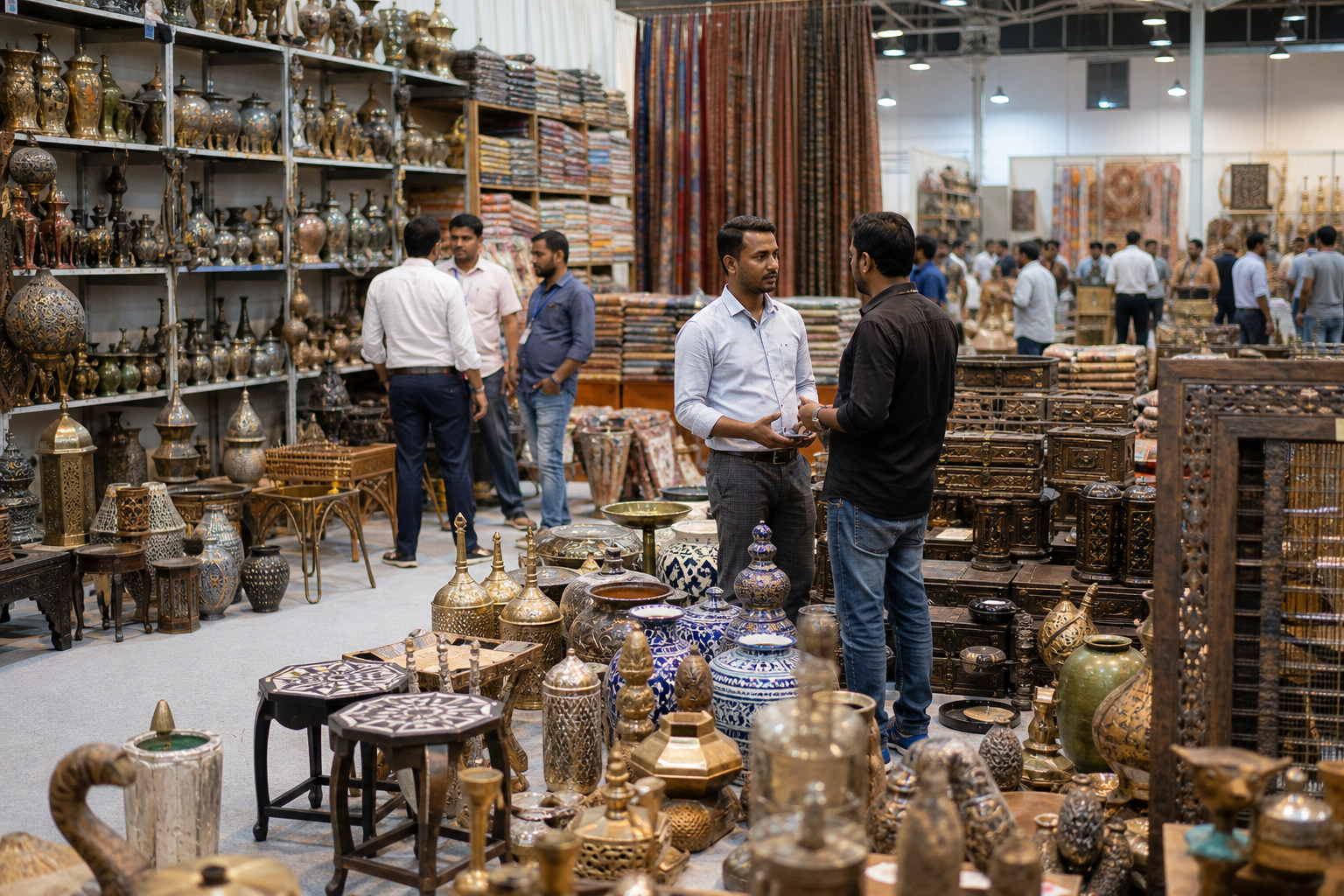
Finding buyers is the hardest part of handicraft export for most Indian manufacturers. Production skill is common in Saharanpur, Moradabad, Jaipur, and other clusters; a disciplined pipeline of genuine international buyers is not. Global demand for Indian handmade décor, gifts, textiles, and metalware remains real across the USA, UK, Europe, UAE, Australia, and Canada — but demand does not automatically become a purchase order in your inbox.
The opportunity for MSMEs and merchant exporters is substantial when you target the right buyer types with verified credentials. Fake inquiries, vague "agents," and unpaid sample requests waste months. This guide shows how to find international buyers for Indian handicrafts, qualify them, outreach professionally, convert inquiries, and build a repeatable export sales process.
Pair it with most demanded Indian handicrafts by country, EPCH registration benefits, and how to export handicrafts from India. For non-fair tactics that apply across categories, see finding buyers without trade shows and trade data for export buyers.
Key Takeaways
Summary Box
- To find international buyers for Indian handicrafts, build a narrow buyer profile before you open any database or fair booth.
- Genuine buyers show business legitimacy, import history, and willingness to follow normal sample and payment processes.
- Best channels combine EPCH/IHGF fairs, import-export data, LinkedIn, referrals, and selective B2B platforms — not one marketplace alone.
- Verification before deposits prevents most scams; speed of professional follow-up converts most real inquiries.
- A CRM-managed pipeline of 50 qualified accounts beats 5,000 cold emails.
- Altus Exports helps handicraft exporters and buyers connect through verified handicrafts & lifestyle sourcing programmes.
Understanding the International Handicraft Buyer Landscape
International handicraft buyers are not one persona. Importers and wholesalers buy mixed containers for redistribution. Distributors may hold regional exclusivity expectations. Retail chains need barcode-ready consistency and vendor compliance. E-commerce brands need compact packaging and low return rates. Gift companies buy to seasonal calendars. Interior designers and hospitality buyers buy statement pieces on project timelines. Private-label and corporate gift buyers need branding, packaging, and delivery certainty.
Buying behaviour differs by channel: wholesalers negotiate hard on FOB and MOQ; retailers care about sell-through and chargebacks; hospitality cares about finish durability and lead time. Your outreach must match the persona. A corporate gift brief is not a farmhouse wholesale RFQ. Map persona → product → message before you send the first email. Also map decision cycles: US wholesale may trial quickly; German eco retail may sample slowly with heavier documentation; UAE hospitality may move fast on visual approvals then demand tight delivery windows.
Ministry of Commerce and EPCH market platforms help you see where demand concentrates, but persona clarity still decides whether your message is relevant. DGFT IEC readiness and FIEO/EPCH credibility help you survive buyer diligence once conversations start. World Bank logistics and freight realities should shape which markets you promise short lead times to — overpromising transit is a quiet way to lose trust.
What Makes a Buyer Genuine?
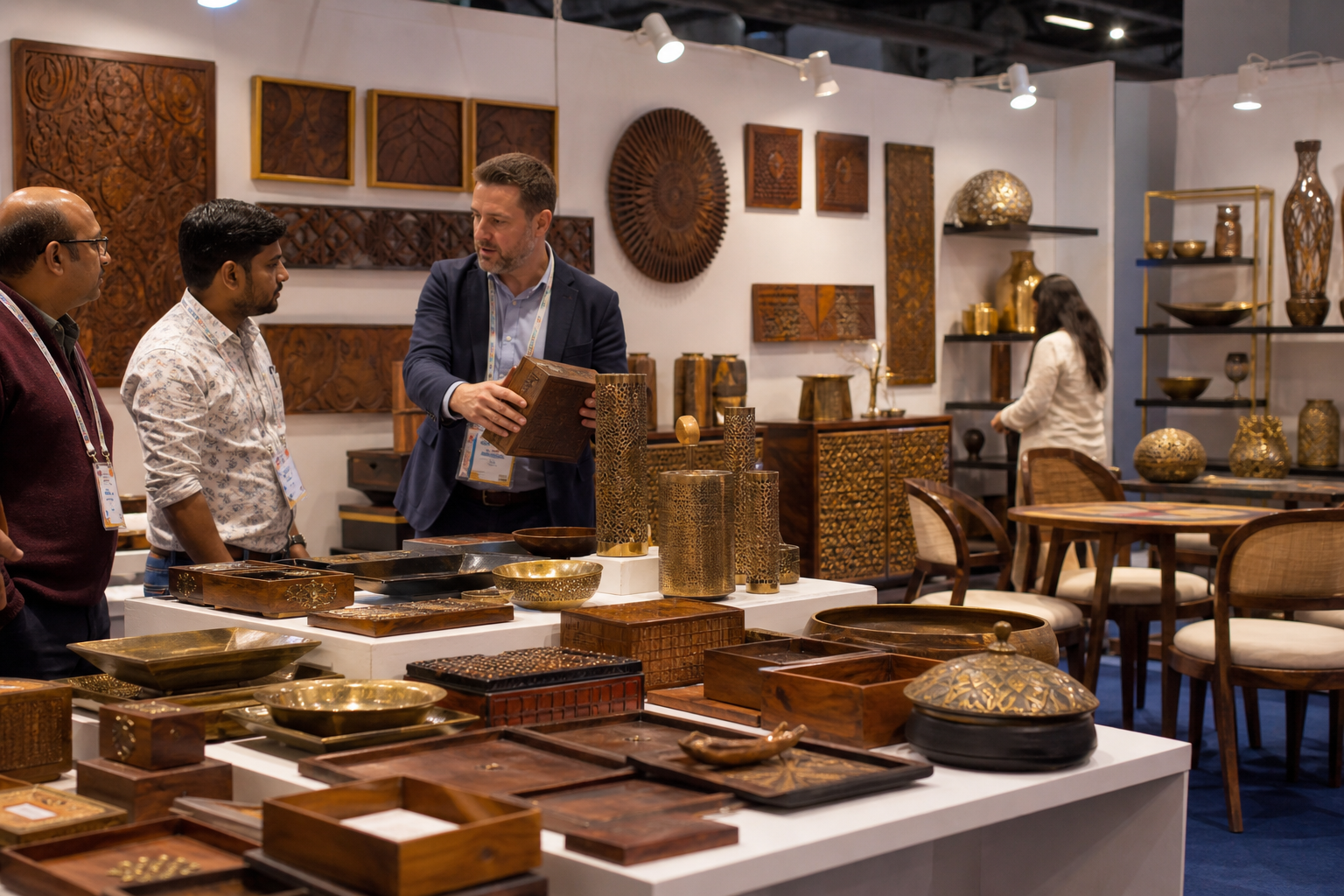
A genuine buyer is a verified business with active or recent purchasing intent in your category, legitimate registration, and payment behaviour consistent with international trade norms. Import records, trade association presence, and long-term sourcing intent strengthen confidence. Curiosity is not the same as buying authority. Students, brokers without principals, and "agents" who never disclose the end buyer can consume sample budgets without creating export revenue.
Build a simple scoring model: legitimacy (0–5), category fit (0–5), evidence of imports (0–5), communication quality (0–5). Prioritise accounts scoring 12+. Keep low-score leads in a nurture list, not in your expensive sample queue.
Comparison table
Swipe →
Data table — swipe horizontally on small screens
| Verification signal | What good looks like | Red flag |
|---|---|---|
| Business legitimacy | Company registry, GST/VAT/EIN traces, real address | Only personal Gmail + no entity trail |
| Active purchasing history | Import shipments in related HS codes | Claims huge volume with zero footprint |
| Website/operations | Coherent catalogue, contacts, about page | Copied templates, stock photos only |
| Payment reliability | Normal advance/LC terms discussion | Demands odd payment routes immediately |
| Sourcing intent | Specs, MOQ, destination, timeline questions | Vague "send all prices" forever |
| Communication pattern | Named role, consistent domain email | Changing identities mid-thread |
How to Find International Buyers for Indian Handicrafts: Step-by-Step Process
Export Tip
Use this eight-step operating system every quarter. It turns random outreach into a sales process.
Step 1: Identify Target Markets
Pick one primary and one backup market using demand fit from best countries for Indian handicraft exports. USA for volume décor, UAE for hospitality/gifts, Germany for eco lines — choose based on your SKU readiness, not vanity.
Step 2: Choose Product Categories
Commercialise 5–10 hero SKUs you can reproduce. Buyers ignore endless catalogues. Match categories to market demand in top handicraft products exported from India.
Step 3: Build a Buyer Profile
Write a one-page ICP: country, channel, assortment type, MOQ range, Incoterm preference, and decision-maker titles (category buyer, importer owner, sourcing manager).
Step 4: Research Potential Buyers
Use trade data, EPCH fair lists, LinkedIn, association directories, and referrals to build a list of 50–100 named accounts. Capture website, contact, HS evidence, and notes.
Step 5: Verify Buyer Credentials
Run the verification checklist before heavy sampling. Disqualify fake urgency and payment anomalies early.
Step 6: Reach Out Professionally
Send short, SKU-specific messages with MOQ, lead time, and one relevant product photo or line sheet. No 20MB PDF on first touch.
Step 7: Follow Up Consistently
Plan 4–6 touches over 3–4 weeks across email/LinkedIn. Most conversions happen after follow-up, not first contact.
Step 8: Convert Inquiry to Order
Respond in 24 hours, quote clearly, offer paid samples, lock specs, agree payment/Incoterms, and run a trial LCL. Document every commitment.
Best Ways to Find International Buyers
No channel wins alone. Build a portfolio and measure cost per qualified meeting. Exporters who bet everything on one B2B portal usually drown in price shoppers. Exporters who only attend fairs without digital follow-up leak the best leads within a week. A balanced mix — fair presence + trade data + LinkedIn + referrals — creates both trust and continuity.
Allocate budget deliberately: if you can afford one major EPCH/IHGF cycle per year, protect funds for samples and CRM follow-up rather than oversized booth décor. Between fairs, run weekly data and LinkedIn sprints so your pipeline does not go cold for ten months.
Comparison table
Swipe →
Data table — swipe horizontally on small screens
| Channel | Pros | Cons |
|---|---|---|
| Trade shows / EPCH events / IHGF | High-intent buyers, face-to-face trust | Costly; needs follow-up discipline |
| B2B marketplaces | Fast discovery | High noise, fake leads, price racing |
| Named decision-makers | Slow nurture; needs strong profile | |
| Import-export databases | Evidence of real importers | Subscription cost; still need outreach |
| Google search strategies | Free discovery of importers/retailers | Time-intensive; uneven quality |
| Trade associations / councils (EPCH, FIEO) | Credibility + networks | Not a magic buyer list |
| Referrals | Highest trust | Limited unless you ask systematically |
| Local overseas distributors | Market access leverage | Margin share; exclusivity talks |
Top Websites to Find Handicraft Buyers Worldwide
Useful starting points include EPCH portals and fair exhibitor/visitor ecosystems, DGFT-linked trade intelligence pathways, ITC Trade Map for macro demand, reputable B2B directories for discovery (always verify offline), LinkedIn Company + People search, and chamber/association member directories in target countries. Company registries and VAT/EIN lookup tools in destination markets help confirm legitimacy after you find a name.
Treat websites as research tools, not automatic order machines. Cross-check every lead against import evidence and payment-normal behaviour before sampling heavily. Bookmark a shortlist of 8–10 recurring sources and review them on a fixed weekly schedule so prospecting becomes habit rather than crisis activity before a fair.
How to Use Import Export Data to Find Buyers
Import records reveal who already buys your HS codes from India or competing origins. A practical workflow: (1) map SKUs to HS codes, (2) pull destination import trends via ITC Trade Map and shipment databases, (3) extract consignee/importer names, (4) enrich with website and LinkedIn contacts, (5) score by recency/frequency/volume, (6) outreach with proof you understand their category. Competitor research shows which Indian exporters already supply an account — useful for positioning, not for copying spam.
Lead qualification question: has this company imported related goods in the last 12–24 months? If yes, they are warmer than a random Facebook "buyer." Add a second filter: do they import from multiple origins? Multi-origin importers often switch more readily when you offer better consistency or packaging. Detail on this method sits in how trade data helps find export buyers.
LinkedIn Strategy for Finding International Buyers
Optimise your profile as an export capability page: cluster, categories, MOQ, markets served, and a clear CTA. Target titles like "Home Décor Buyer," "Import Manager," "Category Manager – Gifts," or company owners of wholesale importers. Connection notes should mention a specific product fit, not "Dear Sir looking for business."
Messaging example: "We manufacture Moradabad metal lanterns and Saharanpur wood trays for US/UAE wholesale programmes — MOQ X, lead time Y. Open to sharing a one-page line sheet if useful." Post process content weekly (packing standards, new finishes) to warm prospects. Follow up 3–5 times with new value each time — a packing photo, a new antique finish, or an IHGF meeting slot. Nurture warm leads in a CRM with next-action dates. Avoid connecting to thousands of random users; 30 highly relevant connections per week outperform 300 generic ones.
How to Build a Buyer Database for Handicraft Exports
A usable handicraft buyers database is a living spreadsheet or CRM — not a purchased PDF of unverified emails. Minimum fields: company, country, website, buyer type, HS evidence, contact name/role, email/LinkedIn, source, last contact, status, next action, notes on assortment interest. Add tags for USA wholesale, UAE hospitality, UK private label, and eco-EU.
Build weekly: 10 new verified accounts from trade data + 10 from LinkedIn + fair leads when in season. Clean quarterly. Ownership matters — one person must keep the pipeline honest. Bought "databases" without verification usually create spam risk and reputational damage.
How to Verify International Buyers Before Doing Business
- Confirm company registration / legal existence in the claimed country
- Review website coherence, contact pages, and domain age signals
- Check import history for related HS codes where data is available
- Ask for trade references and actually call/email them
- Look for trade association or directory presence
- Run basic credit/reputation checks for larger programmes
- Agree written payment terms before production
- Start with paid samples / small trial orders
- Verify signatory identity on contracts and POs
- Reject pressure to bypass normal banking channels
Common Export Buyer Scams and How to Avoid Them
Common patterns include fake buyers who only want free samples, advance-fee or unusual payment instructions, document fraud, overpayment cheque scams, freight-forwarder impersonation, and identity theft using real company names. Warning signs: urgency without specs, refusal to video call, mismatched domains, requests to pay "agents" personally, and deals too large for your visible capacity.
Prevention: verify first, never pay to receive an order, use normal banking, confirm freight parties independently, and keep written trails. If a thread feels wrong, stop. Losing a fake order is cheaper than funding a scam. Train every salesperson and family member who answers export email on these patterns — handicraft MSMEs often lose money through informal decision-making under pressure, not through lack of product quality. When a deal sounds unusually easy, increase verification intensity rather than shipping speed.
Why Most New Exporters Struggle to Find Buyers
New exporters struggle because they hunt randomly, lead with price only, lack export-ready samples, ignore verification, and abandon follow-up. They also underinvest in buyer profiles and overinvest in generic directory blasting. EPCH membership and IEC help credibility, but they do not replace sales process. Struggle ends when outreach becomes weekly, measured, and qualification-first.
Another hidden cause is product unreadiness: contacting buyers before packaging and documentation are stable creates early failures that poison confidence. Fix foundations, then prospect. The market is not empty — the process is incomplete. Exporters who fix process usually discover that genuine buyers were reachable all along.
10 Mistakes Exporters Make When Contacting International Buyers
- Mass-emailing "Dear Sir" catalogues — Solution: named, SKU-specific notes.
- No buyer profile — Solution: write ICP before outreach.
- Claiming every product under the sun — Solution: hero assortment only.
- Skipping verification — Solution: checklist before samples.
- Slow replies — Solution: 24-hour response SLA.
- Quoting without Incoterms/inclusions — Solution: clear proforma structure.
- Free endless samples — Solution: paid sample policy.
- No follow-up cadence — Solution: 4–6 planned touches.
- Negotiating only on price — Solution: trade MOQ, lead time, packaging value.
- No CRM — Solution: track every lead with next actions.
How to Convert Buyer Inquiries into Export Orders
Speed, clarity, and proof convert. Reply fast with a structured quotation: SKU, specs, MOQ, lead time, Incoterm, payment, packing, validity. Share a tight catalogue or line sheet. Offer paid samples with credit terms against first order where appropriate. Negotiate on package value, not only unit price. Build trust with process transparency — inspection rights, document samples, production milestones.
Follow up until you get a yes, no, or timed deferral. After the first trial, ask for replenishment forecasts and referrals. Long-term relationships outperform one-off fair wins. Create a conversion checklist for your team: inquiry logged same day, quote within 24 hours, sample options within 48 hours, and a scheduled follow-up if no reply in five business days. For readiness sequencing, use first export order in 90 days.
Case Study: Moradabad Exporter Finding a USA Wholesale Buyer
Challenge: A Moradabad metal handicraft manufacturer had fair brochures but no repeat export pipeline. Inquiries were mostly price shoppers and unverified "agents."
Research process: Mapped lantern and candle-stand HS codes; pulled US importers with recent related imports; enriched 60 accounts with LinkedIn category buyers; scored each account on legitimacy and category fit.
Buyer identification: Shortlisted 12 wholesalers with active home décor programmes; verified websites and shipment footprints; removed three leads with mismatched domains.
Outreach: Personalized LinkedIn + email with two hero SKUs, MOQ, and lead time; offered paid sample kit; followed up four times over three weeks with packing details and finish options.
Negotiation: 40% advance / 60% against B/L scan for trial; FOB Nhava Sheva; agreed packing checklist and pre-shipment photos.
Order acquisition: LCL trial in 11 weeks from first reply; reorder discussion after sell-through; second order expanded to a mixed metal set.
Lessons learned: Trade data created the list; LinkedIn opened the door; verification and fast quoting closed the trial. Directory spam had produced nothing for two years prior. Qualification saved sample cost and management time.
Building a Sustainable Export Sales Pipeline
Use a simple CRM (even a disciplined spreadsheet) with stages: research → contacted → sampling → quotation → negotiation → shipped → repeat. Manage leads weekly. Support with light email sequences, LinkedIn networking, selective trade shows, and post-shipment reviews that earn referrals. Buyer retention is cheaper than constant acquisition — schedule reorder reminders before the buyer's season.
Measure: qualified conversations per month, sample-to-order rate, and repeat order rate. If you only measure "emails sent," you will optimise spam. Review the funnel every Monday: which deals stalled, which need samples, which need payment confirmation. Pipeline hygiene is an export department function even if one person wears every hat.
Future of International Buyer Discovery
Export Tip
Through 2030, AI-powered lead generation, trade intelligence tools, digital sourcing platforms, buyer-intent signals, and predictive analytics will compress discovery time. Exporters with clean digital catalogues, EPCH visibility, and verifiable shipment histories will be easier for algorithms and procurement teams to shortlist. Human trust — samples, calls, fair meetings — will still close handicraft orders.
Build data hygiene now so you are findable later: consistent company names, product specs, and response SLAs. Buyers will use AI to filter noise; your job is to look like a low-risk, high-clarity supplier in both human and machine evaluation. Discovery gets faster; credibility standards get stricter.

Conclusion
- Do this week: Write ICP + 5 hero SKUs + verification checklist.
- Read trade shows and B2B marketplaces for handicraft exporters, trade data buyer guide, buyers without trade shows, documentation checklist, source from India, and sustainable handicraft exports.
- Explore merchant exporter and export products from India.
To find international buyers for Indian handicrafts, combine the best channels — EPCH/IHGF, import data, LinkedIn, referrals — with strict verification and a conversion process that respects buyer time. Relationship-building and repeat orders matter more than one viral inquiry. Actionable next steps: define one market and hero assortment this week, build a 50-account verified list, launch outreach with a follow-up calendar, and register fair participation only when samples are ready.
Altus Exports supports manufacturers and merchant exporters who need buyer access paired with export execution — not leads without shipments. Share your category and target markets to start a practical pipeline plan.