
Top 15 Handicraft Products Exported from India and Their Global Demand
By Saurabh Mittal, Founder, Altus Exports
Discover the top handicraft products exported from India and where global demand is strongest. This guide maps wooden décor, brass and metal artware, handmade textiles, rugs, lanterns, marble, leather, jute, bamboo, terracotta, gift items, and eco-friendly crafts — with manufacturing regions, importing countries, price ranges, and buyer trends for USA, UK, Europe, UAE, Canada, and Australia. Includes state cluster tables, India vs China/Vietnam/Indonesia sourcing comparison, a US retailer case study, and practical sourcing steps for importers and Indian manufacturers working with Altus Exports.
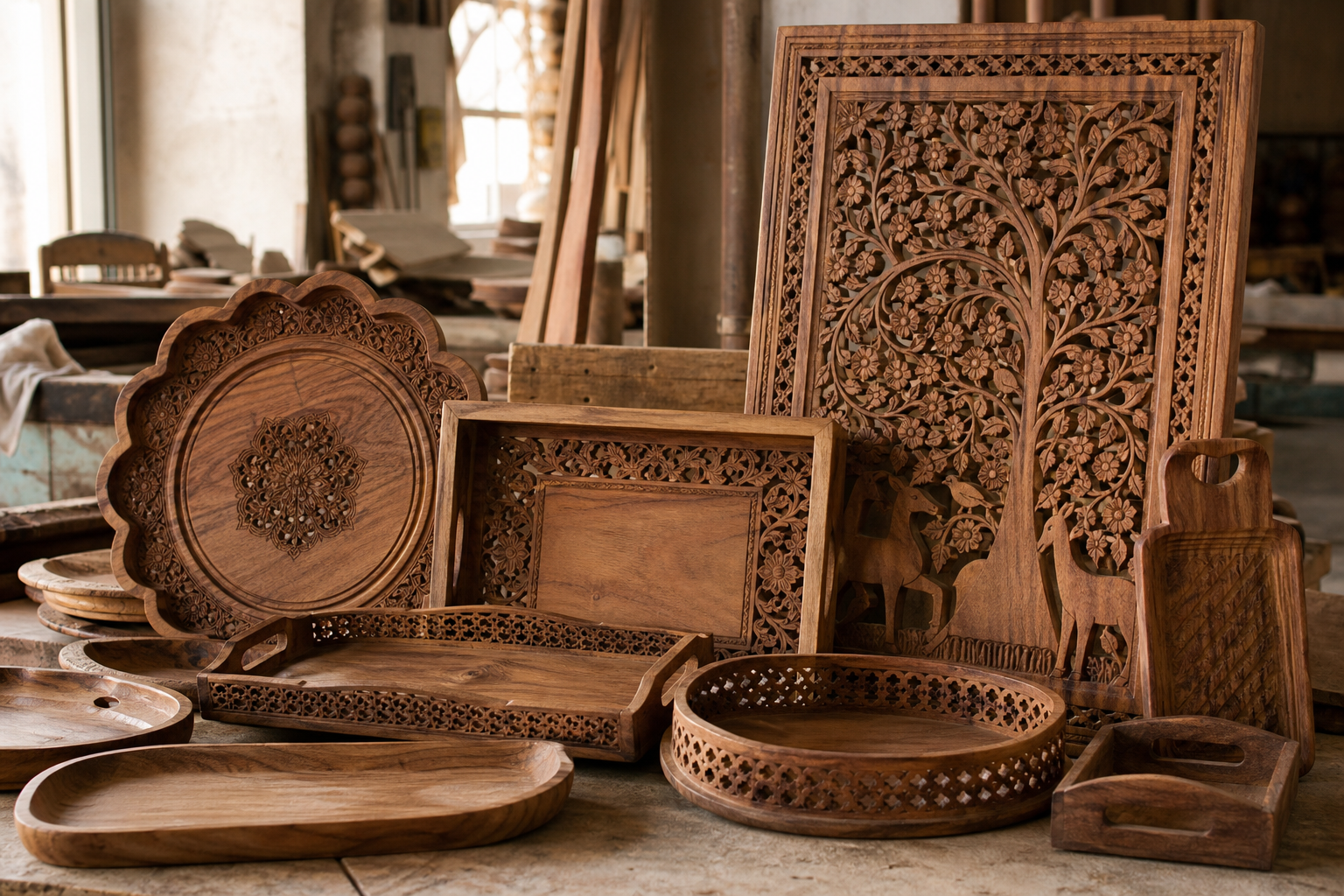
India remains one of the world's most important origins for handmade lifestyle goods. From Saharanpur wood carving and Moradabad metalware to Jaipur textiles, Kashmir papier-mâché, and Assam bamboo, the country combines artisan depth with export-scale finishing and packing. For international buyers, that mix means assortment breadth under one sourcing geography. For Indian manufacturers, it means durable demand across home décor, gifts, hospitality, and e-commerce. This guide ranks the top handicraft products exported from India by commercial relevance — not folklore — so procurement teams and exporters can prioritise categories with real offtake.
Global demand for handmade and sustainable products has strengthened as retailers and D2C brands differentiate against mass-produced décor. Buyers still want competitive landed cost, but they increasingly ask for traceable craftsmanship, consistent dimensions, retail-ready packaging, and ethical production narratives. EPCH, DGFT, Ministry of Commerce, and FIEO frameworks support organised handicraft trade, while ITC Trade Map patterns continue to show strong flows into the USA, UAE, UK, Germany, France, Netherlands, Canada, and Australia.
Whether you are an importer building a 2026 assortment or an MSME choosing which SKUs to commercialise for export, the fifteen categories below — plus state clusters, country demand, and a sourcing playbook — give you a practical map of the Indian handicraft export market. For the process side of shipping and documentation, pair this article with How to Export Handicrafts from India.
Key Takeaways
Summary Box
- Handicraft products exported from India span wood, brass, metal artware, textiles, rugs, stone, leather, jute, bamboo, terracotta, gifts, and eco lines — each tied to specialised regional clusters.
- USA, UAE, UK, Germany, France, Netherlands, Canada, and Australia remain core demand centres; product mix differs by market.
- Buyers win when they source by cluster (not by generic "India handicrafts" RFQs) and lock sample approvals before bulk runs.
- India competes with China, Vietnam, and Indonesia on craftsmanship and customisation more than on pure factory speed.
- Fastest growth signals: eco-friendly materials, private-label décor, hospitality programmes, and retail-ready handmade textiles.
- Altus Exports supports handicrafts and lifestyle sourcing for buyers who need verified suppliers plus export coordination.
Why Indian Handicrafts Are Popular Worldwide
- Example: A UK home brand sources block-printed cushion covers from Jaipur and pairs them with Saharanpur wooden trays for a coordinated "artisan living" collection.
- Example: A UAE hospitality buyer consolidates Moradabad lanterns and brass planters into one mixed container for hotel corridors and lobbies.
- Example: A Canadian gift wholesaler rotates festive metalware and handmade gift sets seasonally while keeping a core jute and textile basics line year-round.
Heritage craftsmanship is the first reason buyers return to India. Techniques such as brass casting in Moradabad, wood carving in Saharanpur, block printing in Jaipur and Bagru, Bidri metalwork, and Channapatna lacquerware create product stories that catalogue photography alone cannot invent. Handmade appeal still converts on retail shelves and online listings when quality is consistent enough for planograms and returns policies.
Customization is a structural advantage. Many Indian workshops can adjust finish, size, engraving, colourway, and packing configuration for private-label programmes at MOQs that mid-size retailers can absorb. Sustainability trends reinforce demand for jute, bamboo, natural-fibre textiles, and responsible wood programmes — especially in Europe and Australia. Unique regional art forms let buyers build differentiated assortments without relying on a single factory aesthetic.
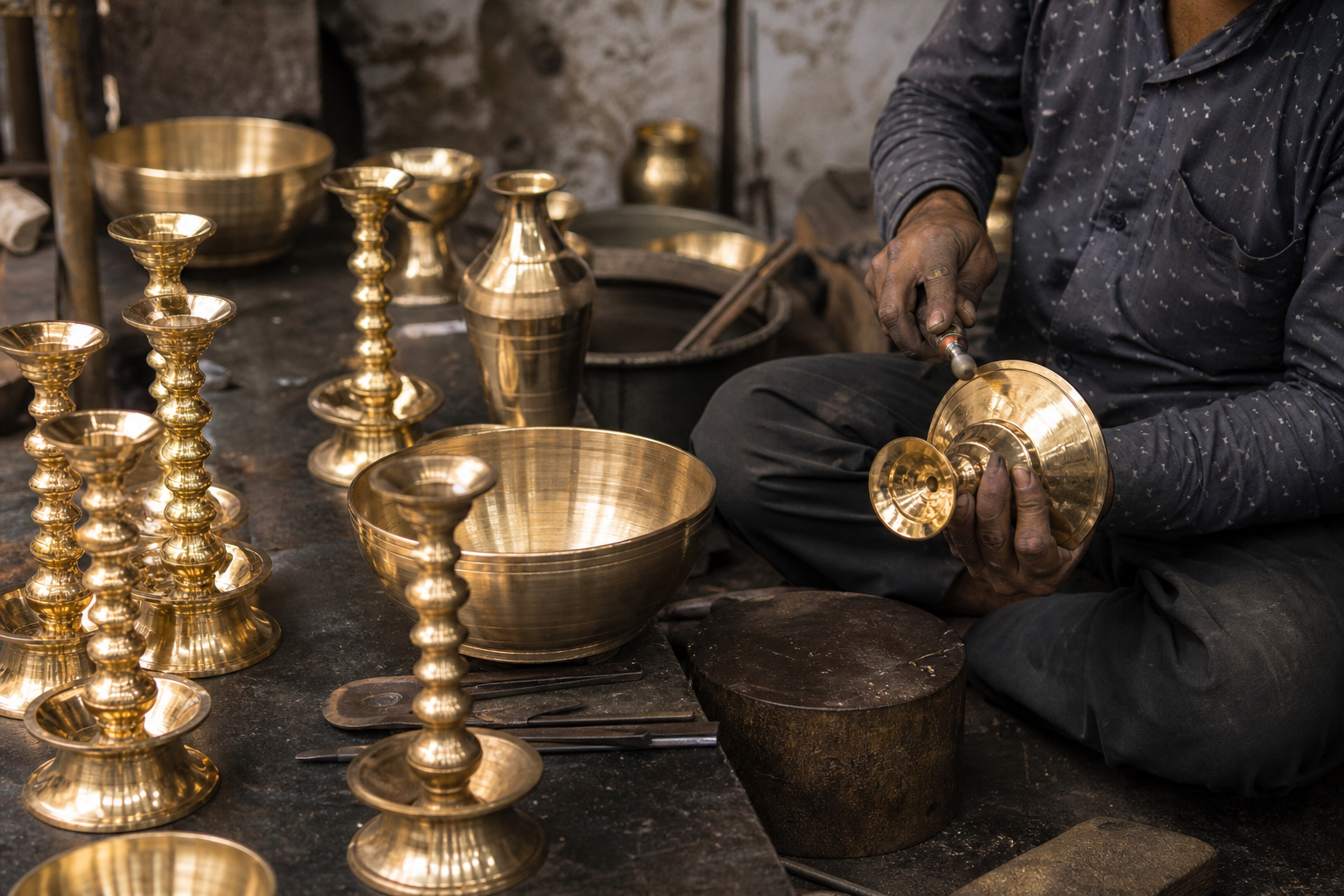
Overview of India's Handicraft Export Industry
India's handicraft industry is a distributed manufacturing system: artisan workshops, organised finishing units, merchant exporters, and council-supported trade channels. Export growth has been resilient relative to pure commodity categories because design differentiation protects price better than undifferentiated volume. Major buyer countries consistently include the United States, UAE, United Kingdom, and key EU markets, with Canada and Australia important for premium and eco-positioned lines.
Government support flows through EPCH membership and exhibitions, DGFT IEC frameworks, Ministry of Commerce export promotion, and FIEO MSME outreach. Future opportunities concentrate on private label, hospitality fit-outs, sustainable materials, and digital buyer discovery — not only traditional gift wholesale.
Comparison table
Swipe →
Data table — swipe horizontally on small screens
| Indicator | Directional Snapshot | Buyer Implication |
|---|---|---|
| Industry structure | Cluster-based artisan + organised export finishing | Source by region and capability, not generic directories |
| Export demand | Strong in USA, UAE, UK, EU; steady in Canada/Australia | Match SKU mix to market channel |
| Growth drivers | Sustainability, private label, e-commerce décor | Invest in packaging and consistency |
| Institutional support | EPCH, DGFT, Ministry of Commerce, FIEO | Use councils for fairs and credibility |
| Risk factors | Quality variation, fragile transit damage | Sample lock + engineered cartons |
| Opportunity window 2026–2030 | Eco lines, hospitality, curated handmade textiles | Prioritise programme buyers over one-off souvenir orders |
Top 15 Handicraft Products Exported from India
The following categories represent the most commercially relevant handicraft products exported from India for international buyers and manufacturers planning export assortments. Price ranges are approximate FOB India bands for mid-quality commercial goods and vary with finish, size, MOQ, and packaging.
1. Wooden Handicrafts
- Regions
- Saharanpur, Jodhpur, Karnataka (Channapatna accents)
- Top markets
- USA, UK, Europe, Australia
- Applications
- Home décor retail, hospitality, e-commerce
- Buyer trends
- Natural finishes, lighter stains, retail-ready sets
- Export opportunity
- High for consistent SKUs with moisture-controlled wood
- Approx. FOB
- USD 2–40+ per piece depending on size/carving
- Growth
- Strong where packaging and warp control are professional.
Carved décor, trays, frames, furniture accents, and turned wood items.
2. Brass Handicrafts
- Regions
- Moradabad, Jaipur
- Top markets
- USA, UAE, UK, Germany
- Applications
- Décor wholesale, gifts, hospitality
- Buyer trends
- Antique and brushed finishes; mixed metal looks
- Export opportunity
- Excellent for programme repeaters
- Approx. FOB
- USD 3–50+ per piece
- Growth
- Stable with finish consistency as the key differentiator.
Planters, bowls, idols (where permitted), candle stands, table accents.
3. Metal Artware
- Regions
- Moradabad, Delhi NCR, Rajasthan
- Top markets
- USA, UAE, UK, Netherlands
- Applications
- Indoor/outdoor décor, lanterns, wall art
- Buyer trends
- Powder-coated colours, lightweight aluminium for freight efficiency
- Export opportunity
- High for seasonal colour stories
- Approx. FOB
- USD 2–35+ per piece
- Growth
- Strong in hospitality and big-box seasonal programmes.
Iron, aluminium, copper, and mixed-metal décor beyond classic brass.
4. Handmade Home Decor
- Regions
- Multi-cluster consolidation via exporters in Delhi NCR, Jaipur, Moradabad
- Top markets
- USA, UK, UAE, Canada
- Applications
- Retail floor sets, online bundles
- Buyer trends
- Story-led collections over single SKUs
- Export opportunity
- High for merchant exporters who can consolidate
- Approx. FOB
- Assortment-dependent
- Growth
- Rising with private-label home brands.
Cross-material décor assortments — wood + metal + textile accents sold as curated collections.
5. Handwoven Rugs and Carpets
- Regions
- Bhadohi–Mirzapur, Jaipur, Kashmir, Agra belt
- Top markets
- USA, Germany, UK, UAE
- Applications
- Residential retail, designers, hospitality
- Buyer trends
- Contemporary patterns, washable flatweaves, traceable wool/cotton stories
- Export opportunity
- Premium margins with longer lead times
- Approx. FOB
- Wide — from entry dhurries to high-end hand-knotted
- Growth
- Solid for design-led programmes.
Hand-knotted and handwoven rugs, dhurries, and flatweaves.
6. Handmade Textiles
- Regions
- Jaipur, Kutch, Lucknow, West Bengal, Tamil Nadu
- Top markets
- USA, UK, Europe, Australia
- Applications
- Soft furnishings, gifts, fashion-home crossover
- Buyer trends
- Natural dyes narratives, OEKO-TEX-ready programmes for retail
- Export opportunity
- High with colour-lot control
- Approx. FOB
- USD 1–25+ per unit by product
- Growth
- Strong for private label.
Block prints, embroidery, cushions, throws, table linen, apparel accents.
7. Decorative Lanterns
- Regions
- Moradabad, Rajasthan
- Top markets
- USA, UAE, UK, Saudi Arabia
- Applications
- Seasonal retail, hospitality, events
- Buyer trends
- Oversized statement pieces and LED-compatible designs
- Export opportunity
- Seasonal spikes with year-round basics
- Approx. FOB
- USD 4–45+ per piece
- Growth
- High in festive and patio categories.
Metal and mixed-material lanterns for indoor/outdoor décor.
8. Marble Handicrafts
- Regions
- Agra, Kishangarh, Makrana belt
- Top markets
- USA, Middle East, Europe
- Applications
- Gifts, luxury décor, hospitality
- Buyer trends
- Contemporary inlay with cleaner geometry
- Export opportunity
- Premium niche; freight weight matters
- Approx. FOB
- USD 5–80+ depending on inlay complexity
- Growth
- Steady in luxury and gift channels.
Inlay work, coasters, décor objects, tabletops accents.
9. Stone Crafts
- Regions
- Rajasthan, UP stone clusters
- Top markets
- UAE, USA, Europe
- Applications
- Outdoor décor, architectural accents
- Buyer trends
- Weather-resistant finishes and lighter SKUs where possible
- Export opportunity
- Good for Gulf landscaping and US garden retail
- Approx. FOB
- Size-driven
- Growth
- Moderate to strong with logistics planning.
Soft stone, sandstone, and carved stone décor/garden accents.
10. Leather Handicrafts
- Regions
- Kanpur, Kolkata, Jaipur, Tamil Nadu pockets
- Top markets
- USA, UK, Europe, UAE
- Applications
- Fashion accessories, corporate gifts, retail
- Buyer trends
- Vegetable-tanned stories, custom branding
- Export opportunity
- Strong for private label
- Approx. FOB
- USD 3–40+ per piece
- Growth
- Healthy where compliance and finishing are controlled.
Bags, journals, belts, desk accessories, décor accents.
11. Jute Products
- Regions
- West Bengal and eastern India
- Top markets
- Europe, USA, UK, Australia
- Applications
- Eco retail, promotional, home
- Buyer trends
- Laminate-free looks, custom print, reusable shopping programmes
- Export opportunity
- High under sustainability mandates
- Approx. FOB
- USD 0.50–15+ by item
- Growth
- Among the strongest eco categories.
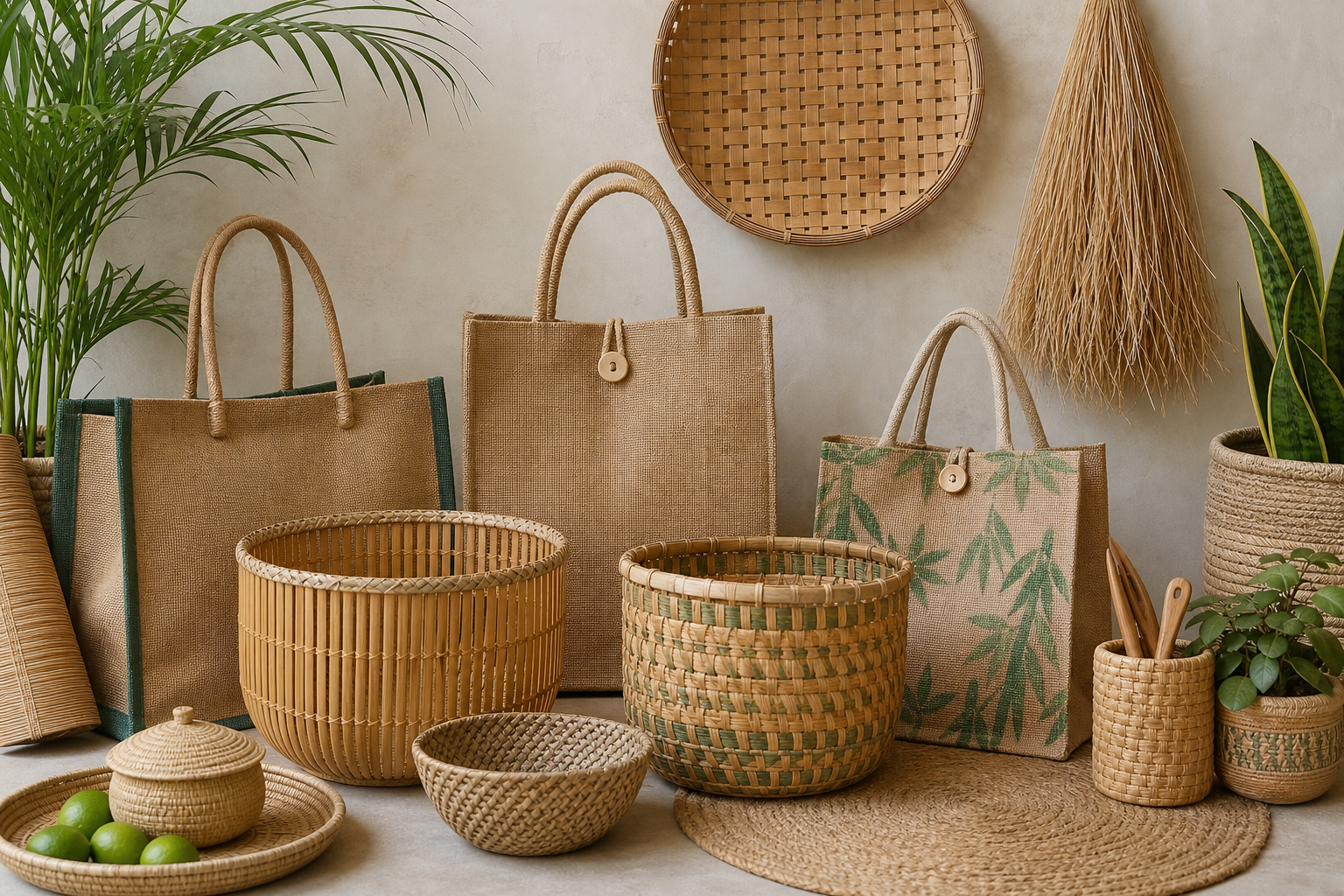
Bags, rugs, décor, packaging-adjacent lifestyle goods.
12. Bamboo Handicrafts
- Regions
- Assam, Tripura, Northeast, parts of South India
- Top markets
- Europe, USA, Australia
- Applications
- Eco home, retail organisers
- Buyer trends
- Smooth finishing and food-safe claims where relevant
- Export opportunity
- Rising with EU eco assortment goals
- Approx. FOB
- USD 1–20+ per piece
- Growth
- High through 2030 for sustainable lines.
Baskets, décor, utility organisers, furniture accents.
13. Terracotta Products
- Regions
- West Bengal, Tamil Nadu, Rajasthan pockets, Molela-style regions
- Top markets
- Europe, USA, UAE
- Applications
- Garden retail, décor, gifts
- Buyer trends
- Matte contemporary forms over purely traditional motifs
- Export opportunity
- Good with breakage-controlled packing
- Approx. FOB
- USD 1–18+ per piece
- Growth
- Moderate; packaging quality decides repeat orders.
Planters, décor objects, traditional and contemporary clay crafts.
14. Handmade Gift Items
- Regions
- Multi-cluster
- Top markets
- USA, UAE, UK, Saudi Arabia
- Applications
- Seasonal wholesale, corporate programmes
- Buyer trends
- Ready-to-gift packaging and custom inserts
- Export opportunity
- High seasonality; plan capacity early
- Approx. FOB
- Kit-dependent
- Growth
- Strong for curated gifting.
Festive sets, desk gifts, wedding/corporate gifting assortments across materials.
15. Eco-Friendly and Sustainable Handicrafts
- Regions
- Across jute, bamboo, textile, and wood clusters
- Top markets
- Germany, Netherlands, UK, Australia, USA (eco retail)
- Applications
- Green retail programmes, D2C brands
- Buyer trends
- Evidence over slogans — material declarations and supplier transparency
- Export opportunity
- Fastest narrative growth
- Approx. FOB
- Premium to conventional peers
- Growth
- Highest strategic potential through 2030.
Cross-category positioning — natural fibres, responsible wood, low-plastic packing, recycled-metal stories.
Top Indian States for Handicraft Manufacturing
State clusters determine lead time, finishing quality, and which SKUs you should even attempt. Use this map before issuing RFQs.
Comparison table
Swipe →
Data table — swipe horizontally on small screens
| State | Major Products | Key Export Markets | Competitive Advantage |
|---|---|---|---|
| Rajasthan | Textiles, metal décor, stone, leather accents | USA, UAE, Europe | Design depth + tourist-to-export craft pipeline |
| Uttar Pradesh | Wood (Saharanpur), metal (Moradabad), carpets (Bhadohi), marble (Agra) | USA, UAE, UK, EU | Scale + specialised clusters |
| Gujarat | Embroidery, textiles, handicraft accessories | USA, UK, Europe | Strong textile craft and merchant networks |
| West Bengal | Jute, terracotta, kantha textiles | Europe, USA, UK | Jute leadership and soft-craft heritage |
| Tamil Nadu | Bronze/metal craft pockets, textiles, stone accents | USA, Europe, Middle East | Skilled metal and textile traditions |
| Karnataka | Lacquerware, wood accents, crafts | USA, Europe | Distinctive turned-wood aesthetics |
| Madhya Pradesh | Textile crafts, folk art products | USA, Europe | Unique art forms for differentiated assortments |
| Odisha | Applique, stone, traditional crafts | Europe, USA | Heritage motifs with niche export appeal |
| Kashmir | Carpets, papier-mâché, embroidery | USA, Europe, Middle East | Premium handmade positioning |
| Assam | Bamboo, cane, natural fibre crafts | Europe, USA, Australia | Eco-material advantage |
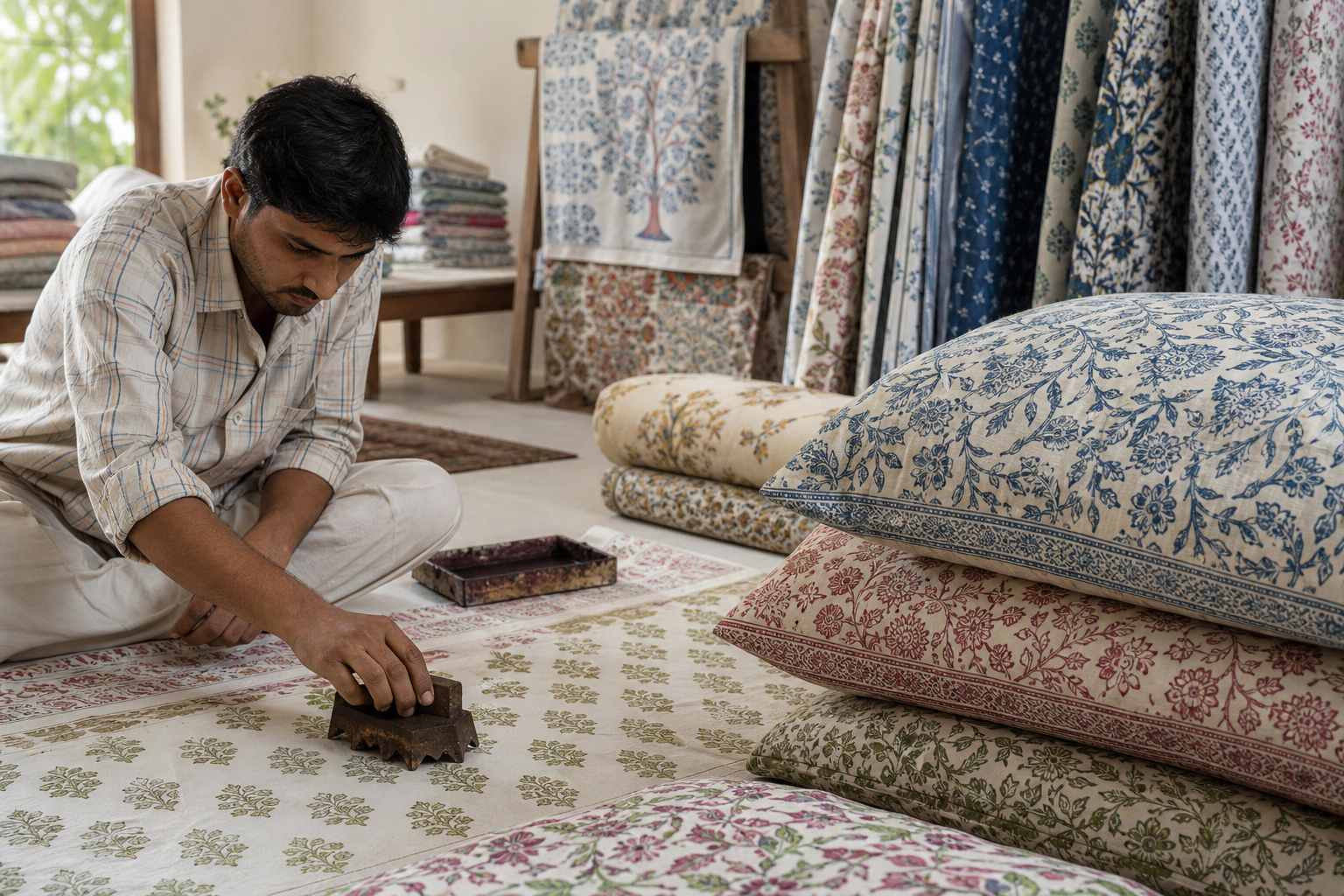
Which Countries Import the Most Indian Handicrafts?
Demand is not uniform. Match product and channel to destination preferences.
USA
Typically the largest volume destination for many Indian handicraft lines. Preferences: retail-ready wood, metal artware, textiles, rugs, and seasonal gifts. Opportunity: e-commerce and big wholesale programmes with strict consistency.
UK
Design-led buying with strong soft furnishings and curated décor demand. Opportunity: private label and indie retail; compliance and labelling discipline expected.
Germany and France
Quality and sustainability focus. Strong for textiles, ceramics/terracotta, jute, bamboo, and responsible wood. Opportunity: eco-certified narratives and durable finishes.
UAE and Saudi Arabia
Fast wholesale and hospitality demand for metal décor, lanterns, gifts, and statement pieces. Opportunity: mixed containers and hotel programmes with shorter decision cycles.
Canada and Australia
Premium niche markets. Canada mirrors US tastes at smaller scale; Australia favours eco and quality wood/textile lines with longer transit planning. Opportunity: higher average order values with careful packaging.
Netherlands and Japan
Netherlands acts as an EU distribution and design wholesale hub for mixed décor. Japan is selective, quality-obsessed, and strong for refined craft aesthetics with meticulous packing standards.
Why International Buyers Source Handicrafts from India
Cost competitiveness still matters, but it is not the only reason. Product diversity across clusters lets buyers build full home and gift assortments from one origin. Customization capacity supports private label. Skilled artisans enable design differentiation that factories in purely industrial origins struggle to copy at the same narrative value.
Scalability exists when exporters organise finishing, QC, and consolidation — which is why many buyers prefer a merchant exporter or product sourcing company in India over managing dozens of micro-workshops alone. Sustainable sourcing options in jute, bamboo, and natural textiles align with retailer ESG goals when claims are evidence-based.
India vs China vs Vietnam vs Indonesia for Handicraft Sourcing
No origin wins every RFQ. Use the comparison below as a decision filter, not a slogan.
Comparison table
Swipe →
Data table — swipe horizontally on small screens
| Factor | India | China | Vietnam | Indonesia |
|---|---|---|---|---|
| Pricing | Competitive on handmade value; not always cheapest unit cost | Often strongest on industrialised volume pricing | Competitive on selected décor/furniture | Competitive on rattan/wood niches |
| Customization | Excellent for artisan and private-label tweaks | Strong for engineered custom tooling | Good for structured factory custom | Good in rattan/wood craft niches |
| MOQ | Flexible for many craft SKUs | Can be high on factory lines | Moderate to high | Moderate |
| Craftsmanship | Deep heritage techniques across clusters | Strong finishing consistency at scale | Improving craft-industrial mix | Strong natural-material craft |
| Lead times | Variable; artisan calendars matter | Often predictable factory calendars | Relatively predictable | Variable by island logistics |
| Product variety | Extremely broad across materials | Broad industrial décor range | Focused strengths | Strong in specific natural materials |
| Sustainability | Strong jute/bamboo/textile stories if verified | Improving; scrutiny on claims | Growing eco positioning | Natural-material advantage |
| Buyer suitability | Best for handmade differentiation + multi-category programmes | Best for high-volume standardised décor | Best for selected factory-backed décor | Best for rattan/wood specialty assortments |
How International Buyers Can Source Handicrafts from India Successfully
- Verify IEC/GST/EPCH credentials and request prior export document samples
- Lock golden samples before bulk; retain reference pieces at origin
- Engineer export cartons per material (wood, metal, ceramic, textile)
- Start with LCL trials before FCL programmes
- Use a single accountable partner when consolidating multi-cluster assortments — see How to Find Reliable Suppliers in India and supplier verification checklist
Successful sourcing follows a disciplined sequence. Select suppliers by cluster capability and export history, not catalogue photography alone. Run quality checks against written tolerances. Approve samples with photos, measurements, and finish standards. Confirm compliance needs (labelling, wood packaging rules, chemical restrictions for painted children's items, textile fibre labels). Plan logistics for fragility and cube utilisation. Use staged payment terms for new vendors. Manage risk with pre-shipment inspection, cargo insurance, and clear Incoterms.
Case Study: US Home Décor Retailer Sourcing Wood and Brass from India
Business objective: A mid-size US home décor retailer wanted a differentiated handmade collection of wooden trays and brass candle stands for Q4 and ongoing replenishment.
Challenges: Prior China-sourced décor looked generic; the buyer lacked cluster knowledge and worried about finish variation and ocean damage.
Supplier selection: Shortlisted Saharanpur wood units and Moradabad brass finishers through a merchant-export partner; scored factories on sample discipline, moisture control, and packing tests.
Sampling process: Two revision cycles on stain colour and antique brass rub-through; written approval with measurement sheet and carton drop-test photos.
Shipping: LCL trial via Nhava Sheva with cargo insurance; documents aligned SKU-by-SKU across invoice and packing list.
Results: Trial sell-through beat category average; buyer expanded to a mixed FCL including lanterns. Damage claims stayed below 1% after carton redesign.
Lessons learned: Cluster-based sourcing plus packaging engineering mattered more than chasing the lowest FOB. For process depth, see How to Export Handicrafts from India.
Emerging Trends in the Global Handicraft Market
Through 2030, expect sustainability and ethical sourcing to move from marketing copy to purchase gates — especially in EU retail. Eco-friendly packaging will be specified in RFQs, not left to exporter discretion. AI-powered sourcing will help buyers shortlist suppliers by shipment history and category fit, rewarding exporters with clean digital catalogues and verifiable credentials.
Private labeling and custom branding will expand as D2C home brands seek exclusive assortments. Handmade will not mean inconsistent: the winners will industrialise QC without erasing craft character. Categories likely to outpace others include jute and bamboo eco lines, curated handmade textiles, hospitality metal décor, and retail-ready wooden accents with reliable packaging.
Conclusion
- Buyers: Share your target categories, markets, and MOQs for a sourcing shortlist.
- Manufacturers: Identify which of the fifteen categories match your cluster strength before outreach.
- Explore handicrafts & lifestyle products and export products from India.
- Compare destinations in Best Countries to Export Indian Handicrafts in 2026.
- Match SKUs to demand with Indian Handicrafts Buyers Want in the USA, UK, UAE and Europe.
- Build eco programmes with Sustainable and Eco-Friendly Handicrafts: The Next Big Export Opportunity.
- Prepare paperwork with the Handicraft Export Documentation Checklist.
- Generate leads with How to Find Genuine International Buyers for Indian Handicrafts and Trade Shows for Handicraft Exporters.
- Complete council readiness with EPCH Registration Benefits.
- Buyers: follow How International Buyers Can Source Handicrafts Directly from India.
- Start with process basics in How to Export Handicrafts from India.
- Continue with The Ultimate Guide to Sourcing Products from India.
The most commercially relevant handicraft products exported from India today are not a single craft — they are a portfolio: wood, brass, metal artware, home décor collections, rugs, textiles, lanterns, marble and stone, leather, jute, bamboo, terracotta, gifts, and eco-positioned lines. The best opportunities sit where regional craftsmanship meets export process discipline.
Most promising near-term bets for many buyers: wooden décor, brass/metal artware, handmade textiles, jute, and sustainable assortments. Buyer recommendation: source by cluster, approve samples rigorously, and consolidate through partners who can manage multi-category quality. Future outlook through 2030 favours evidence-based sustainability and private-label programmes. Altus Exports helps international buyers and Indian manufacturers turn that map into shipped containers under one accountable relationship.