
How International Buyers Can Source Handicrafts Directly from India
By Saurabh Mittal, Founder, Altus Exports
A practical buyer guide on how to source handicrafts directly from India — from defining specs and finding Indian handicraft suppliers to sampling, verification, pricing, inspections, and shipping. Built for importers, retailers, gift companies, home décor brands, and e-commerce sellers in the USA, UK, Europe, UAE, Canada, and Australia who want reliable wholesale handicrafts with lower sourcing risk. Includes supplier checklists, India vs China comparisons, merchant-exporter guidance, and a US retailer case study from Altus Exports.
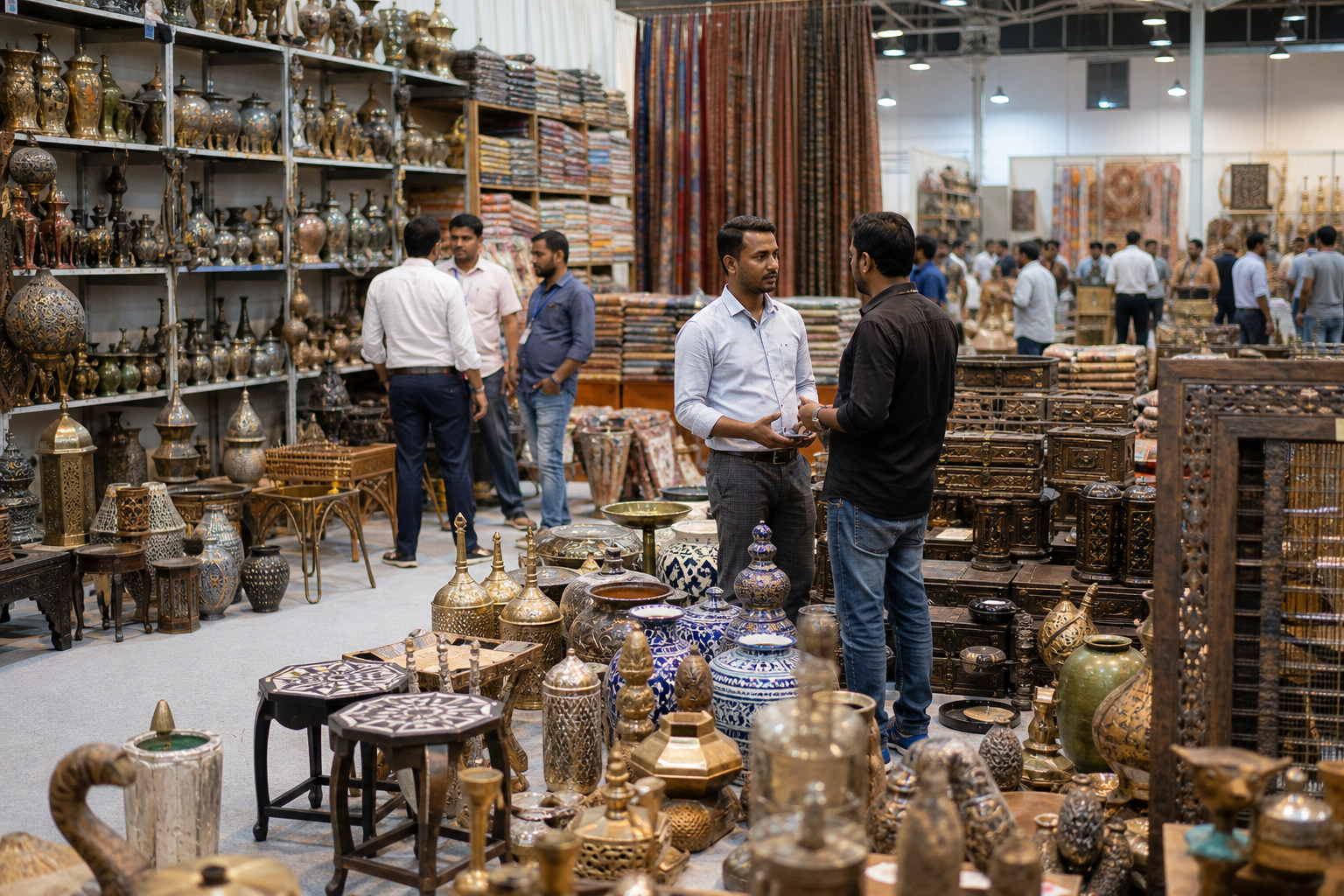
International buyers source handicrafts from India because the country combines artisan depth with commercial export capacity. Wooden décor from Saharanpur, brass and metal artware from Moradabad, block-printed textiles from Jaipur, jute from West Bengal, and bamboo crafts from the Northeast give importers assortment breadth that few origins can match under one sourcing geography. Handmade product demand continues to rise in home décor, gifting, hospitality, and e-commerce — especially where craft character differentiates a brand from industrial catalogue lookalikes.
Yet buyers who try to source handicrafts directly from India without a structured process often meet the same failures: beautiful samples, inconsistent bulk, weak packaging, delayed documents, or suppliers who cannot file export paperwork. Global sourcing trends favour India for China+1 diversification and sustainable lifestyle goods, but craftsmanship alone does not clear customs or protect margin.
This guide is written for importers, wholesale distributors, retail chains, gift companies, home décor brands, e-commerce sellers, and private-label buyers in the USA, UK, Europe, Canada, Australia, UAE, and Saudi Arabia. It explains how the Indian supply chain works, how to find and verify suppliers, how to manage quality and logistics, and when a merchant exporter is smarter than managing ten workshops alone. For category and market context, see top handicraft products exported from India and best countries for Indian handicraft exports.
Key Takeaways
Summary Box
- To source handicrafts directly from India, define specs first — then shortlist by cluster capability, not catalogue photography.
- India wins on product diversity, customisation, and artisan storytelling when QC and packaging are export-grade.
- Verify IEC, GST, export history, samples, and packing before any deposit.
- Trial LCL orders beat oversized first containers for new supplier relationships.
- Multi-cluster assortments are often safer through a merchant exporter than through fragmented direct buying.
- Altus Exports supports handicrafts & lifestyle sourcing with supplier verification, QC coordination, and export documentation.
Why India Is One of the Best Countries for Handicraft Sourcing
Market Snapshot
- Example: A UK private-label brand sources Jaipur block-printed cushions and Saharanpur trays as one coordinated collection.
- Example: A UAE hospitality buyer consolidates Moradabad lanterns and brass planters into mixed containers for hotel corridors.
- Example: A Canadian gift wholesaler rotates festive metalware seasonally while keeping a year-round jute basics line.
- Example: An Australian eco retailer builds a bamboo-and-jute organiser range with documented material declarations for store compliance teams.
Product diversity is India's first advantage. A single sourcing programme can combine wood, brass, iron artware, textiles, rugs, leather accents, jute, bamboo, terracotta, and gift sets — if you work through the right clusters and consolidators. Skilled artisan ecosystems in Rajasthan, Uttar Pradesh, Gujarat, West Bengal, and the Northeast create techniques that industrial origins struggle to copy at the same narrative value. EPCH-linked trade channels and Ministry of Commerce export promotion keep the sector visible to global buyers, while DGFT IEC frameworks and FIEO networks support organised exporters.
Competitive pricing still matters, but the real commercial edge is customisation: finish, size, engraving, colourway, and private-label packing at MOQs mid-size retailers can absorb. Scalability exists when finishing units and exporters organise QC around artisan production. Sustainability advantages appear in jute, bamboo, natural-fibre textiles, and responsible wood programmes — when claims are evidence-based, not brochure language. World Bank logistics performance and ITC Trade Map demand signals should inform which ports and destinations you prioritise, but cluster fit still decides whether a SKU can be reproduced at retail tolerance.
Understanding the Indian Handicraft Supply Chain
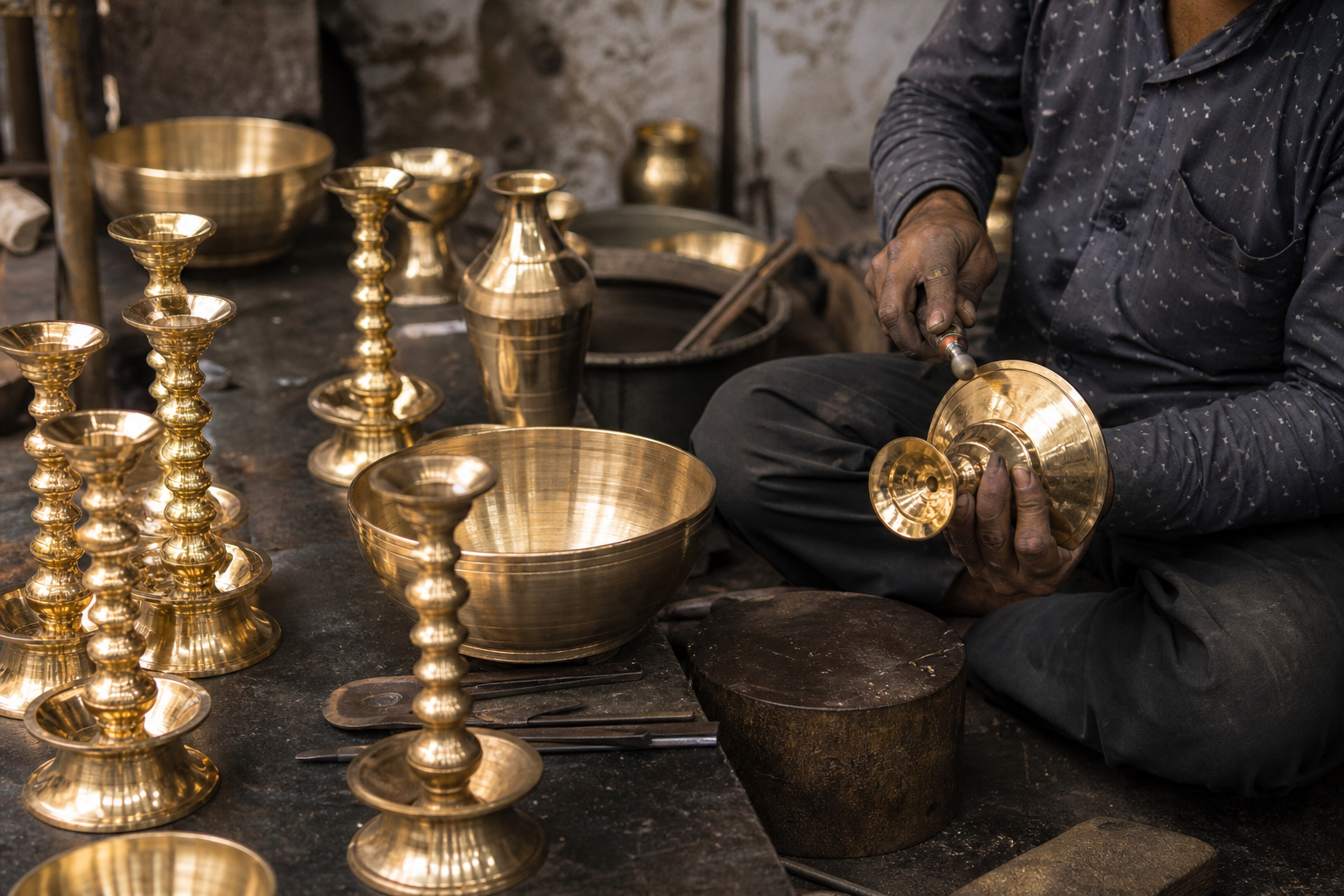
Buyers who confuse artisans with exporters create false expectations. Artisans and workshops produce craft. Organised manufacturers and finishing units standardise output. Export houses and merchant exporters convert goods into compliant international shipments. Buying agents may introduce factories without taking shipment accountability. Wholesalers and retail exporters serve different channel needs. Knowing who does what protects your contract structure.
Comparison table
Swipe →
Data table — swipe horizontally on small screens
| Node | Role | Buyer Implication |
|---|---|---|
| Artisans / workshops | Core craft production | Great skill; may lack export docs and packing systems |
| Clusters | Regional specialisation (e.g., Moradabad metal) | Source by cluster, not generic "India handicrafts" RFQs |
| Manufacturers / finishers | Scale, finishing, QC checkpoints | Better for repeatable commercial SKUs |
| Export houses | Category exporters with own lines | Useful for established catalogues |
| Merchant exporters | Buy/coordinate and export under their accountability | Strong for multi-supplier consolidation |
| Buying agents | Introduction and local coordination | Clarify whether they own quality and documents |
| Wholesalers | Domestic or mixed wholesale stock | May not be export-ready |
| Retail exporters | Finished branded/retail programmes | Higher readiness; less custom flexibility sometimes |
Benefits of Sourcing Handicrafts Directly from India
Direct sourcing can lower unit costs versus buying through multiple overseas middle layers, improve customisation speed, and unlock unique artisan products unavailable in generic global catalogues. Private labeling becomes practical when workshops can hold approved finishes. Margins improve when landed cost is modelled honestly and damage rates stay low. Direct communication shortens revision cycles on colour, hardware, and packing inserts. Long-term partnerships compound as suppliers learn your tolerances and replenishment rhythm — the second and third containers are usually where true margin appears.
"Direct" does not always mean "factory only." For many international buyers, direct-from-India still works best with one accountable Indian export partner who consolidates verified workshops — especially across wood + metal + textile assortments. That model preserves origin pricing advantages while adding documentation and QC discipline. Compare models in merchant exporter vs manufacturer exporter and merchant exporter vs sourcing agent. Buyers who insist on ten separate factory relationships on day one often recreate the coordination cost they tried to avoid.
How to Source Handicrafts Directly from India: Step-by-Step Process
Export Tip
Use this ten-step sequence whether you buy from a manufacturer or through a merchant exporter. Skipping verification to "save time" usually costs more on the first failed container.
Step 1: Define Product Requirements
Document materials, dimensions, finish, colour tolerance, packing configuration, labelling, target FOB/landed cost, MOQ, and delivery window. Attach reference images or physical swatches. Vague briefs produce incomparable quotes and invite suppliers to fill gaps with assumptions you will reject later. Include destination-market constraints early — fibre labels for textiles, warning marks for candles/lanterns, or retail barcode placement for US programmes.
Step 2: Identify Potential Suppliers
Search by cluster and export history — EPCH directories, fairs, trade data, LinkedIn, referrals, and vetted merchant exporters. Prefer suppliers who already ship your destination market. A Moradabad metal unit with UAE experience is not automatically ready for Japanese defect tolerances; ask for market-specific references.
Step 3: Shortlist Suppliers
Score on capability fit, communication speed, sample policy, and document readiness. Keep three options maximum for a focused trial. Disqualify vendors who refuse to share IEC details or who quote without asking clarifying questions about finish and packing.
Step 4: Request Samples
Pay for serious samples. Require the same materials and finish intended for bulk. Record sample codes, photos, and measurement sheets. Free samples that differ from bulk intent are marketing props, not approvals.
Step 5: Evaluate Product Quality
Measure against written tolerances. Check finish consistency, odour, hardware, stitching, moisture (wood), and scratch resistance (metal). Reject "close enough" on hero SKUs. Involve merchandising and quality teams together so commercial taste and technical standards do not conflict after production starts.
Step 6: Negotiate Pricing
Compare landed cost, not only FOB. Confirm what packaging, inspection, and documentation are included. Build MOQ breaks for programme volume. A cheaper ex-works price that omits export cartons is not cheaper after claims. Stress-test currency and payment terms in the same negotiation.
Step 7: Verify Export Capability
Confirm IEC, GST, prior shipping document samples, and who files the shipping bill. A beautiful workshop without export process is a domestic supplier. Ask who prepares the commercial invoice nomenclature and whether packing lists are generated from the same SKU master as production.
Step 8: Place Trial Order
Start LCL or limited assortment. Lock Incoterms and payment milestones in writing. Tie production to approved sample references. Define what happens if inspection fails — rework, sort, or cancel — before money moves.
Step 9: Conduct Quality Inspection
Use in-line and pre-shipment checks. For critical orders, appoint a third-party inspector with an agreed AQL and checklist. Photograph packing before sealing. Do not let cargo cutoff pressure skip inspection on a first order.
Step 10: Manage Logistics and Shipping
Approve carton engineering, insure cargo, align commercial invoice and packing list, and pre-alert your destination broker. Process detail aligns with how to export handicrafts from India and the complete importing guide. Track vessel milestones and keep a claims file ready even when you expect clean arrival.
Where to Find Reliable Indian Handicraft Suppliers
No single channel is perfect. Combine discovery sources and verify every lead. Buyers who rely only on B2B marketplace messages inherit the highest fraud and quality variance rates. Buyers who only attend one fair and never follow up waste the highest-intent leads they will see all year.
Comparison table
Swipe →
Data table — swipe horizontally on small screens
| Channel | Advantage | Disadvantage |
|---|---|---|
| EPCH / export councils | Credible handicraft ecosystem access | Still requires your own due diligence |
| Trade shows / IHGF-type fairs | Face-to-face sampling and negotiation | Costly; follow-up discipline required |
| B2B platforms | Fast discovery | High noise; weak proof of export readiness |
| Industry associations / FIEO networks | Broader exporter introductions | Category fit varies |
| Direct access to decision-makers | Needs precise outreach; slow nurture | |
| Referrals | Higher trust transfer | Limited network if you are new to India |
| Merchant exporters | Consolidation + accountability | Embedded coordination margin vs pure ex-works |
| Import trade data | Reveals active shippers by HS code | Data access cost; still need QC validation |
How to Verify a Handicraft Supplier in India
- Company registration / legal entity name matches quotations and invoices
- GSTIN valid and consistent with business address
- IEC verified on DGFT records for export authority
- Export experience evidenced by redacted prior document packs
- Customer references in markets similar to yours
- Factory/workshop visit or live video audit of production and packing
- Third-party audits for larger retail programmes
- Online reputation cross-check (not sole decision factor)
- Paid product samples matching bulk intent
- Quality systems / certifications relevant to your channel (as applicable)
- Subcontracting map disclosed for finishing and packing steps
- Packaging drop-test evidence for fragile SKUs
Use this checklist before deposits. For a broader framework, see our supplier verification checklist for importers and how to find reliable suppliers in India.
Common Challenges International Buyers Face
Communication gaps, quality variation, delayed deliveries, weak packaging, compliance misses, payment disputes, over-dependence on one workshop, and MOQ mismatches are the recurring failure modes. Time-zone lag is manageable; unclear ownership of decisions is not. Quality variation often appears when bulk uses different artisans than the sample maker. Delayed deliveries follow optimistic lead times that ignored finish curing or peak-season capacity. Packaging problems surface as scratches, warping, and crushed corners — especially on mixed metal and wood loads.
Mitigate with written specs, staged payments, dual-source critical SKUs where practical, engineered packaging, and destination compliance memos before production. Cap concentration risk so one workshop delay cannot freeze an entire seasonal launch. For a wider risk framework, see how to reduce risks when sourcing from India and common mistakes international buyers make.
Comparison table
Swipe →
Data table — swipe horizontally on small screens
| Challenge | Mitigation |
|---|---|
| Communication issues | Single commercial owner; written decision log; 24–48h response SLA |
| Quality variations | Golden sample + in-line QC + pre-shipment AQL |
| Delayed deliveries | Capacity calendar; penalties/incentives; buffer in launch plans |
| Packaging problems | Drop tests; material-specific carton specs; photo evidence |
| Compliance risks | Destination memo before PO; label artwork approval |
| Payment risks | Staged terms; no 100% advance to unverified parties |
| Supplier dependency | Dual-source hero SKUs or consolidator backup |
| MOQ challenges | Assortment consolidation; phased colourways; merchant-export mixing |
India vs China vs Vietnam vs Indonesia for Handicraft Sourcing
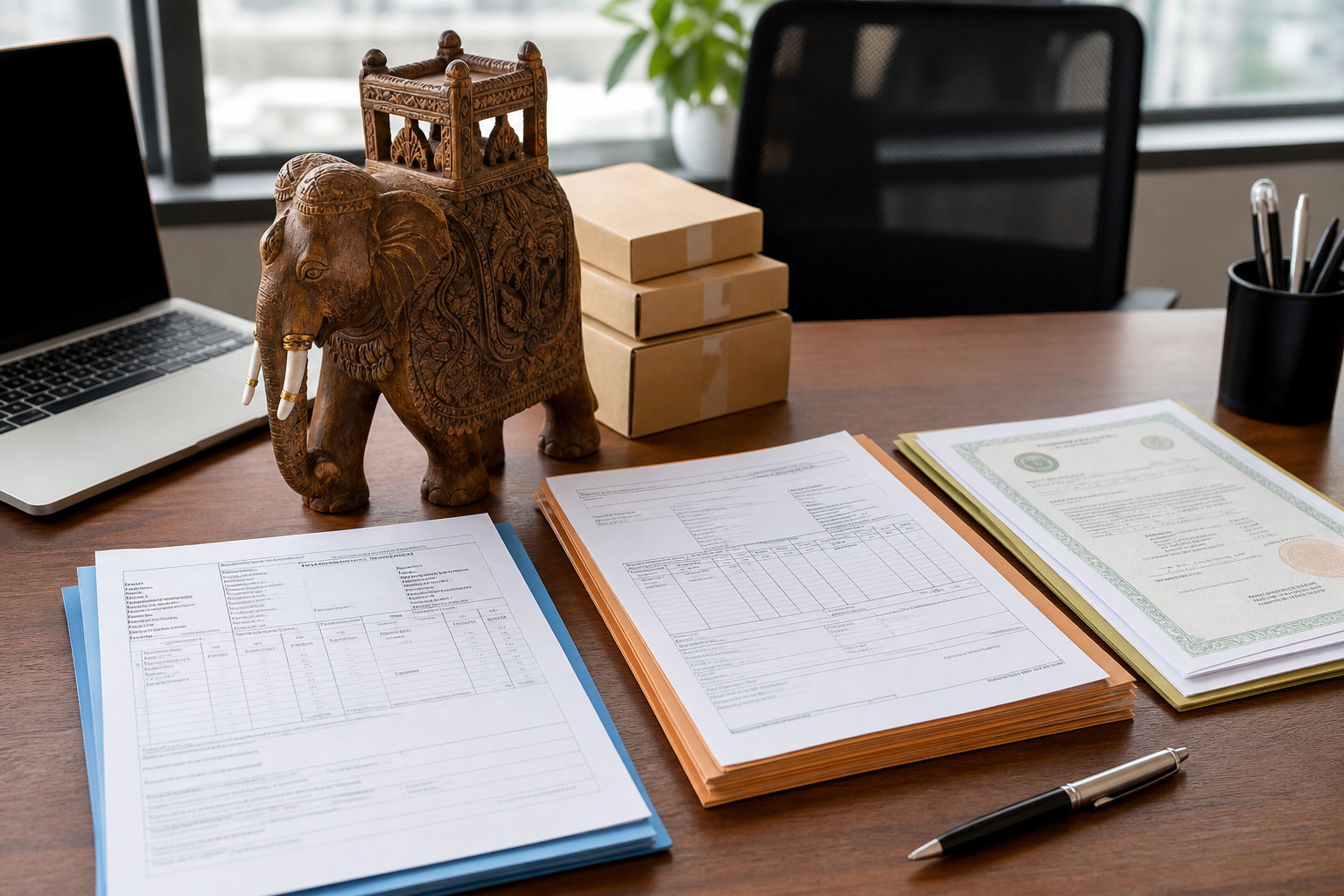
Origin choice should follow product strategy. If you need high-volume standardised décor with predictable factory calendars, China may still win on industrial efficiency. If you need heritage craft character, multi-material assortment depth, and flexible private-label tweaks, India is usually the stronger fit. Vietnam and Indonesia compete hard in selected décor and natural-material niches. Many global buyers now multi-origin: India for handmade differentiation, another origin for purely industrial fillers.
Comparison table
Swipe →
Data table — swipe horizontally on small screens
| Factor | India | China | Vietnam | Indonesia |
|---|---|---|---|---|
| Pricing | Strong handmade value; not always lowest unit cost | Often strongest industrialised volume pricing | Competitive on selected décor | Competitive in rattan/wood niches |
| Craftsmanship | Deep heritage techniques across clusters | Excellent finishing consistency at scale | Improving craft-industrial mix | Strong natural-material craft |
| Customization | Excellent for artisan/private-label tweaks | Strong engineered custom | Good structured factory custom | Good in specialty materials |
| MOQ | Often flexible on craft SKUs | Can be high on factory lines | Moderate–high | Moderate |
| Lead times | Variable with artisan calendars | More predictable factory calendars | Relatively predictable | Variable by logistics |
| Product variety | Extremely broad multi-material | Broad industrial décor | Focused strengths | Strong specialty niches |
| Scalability | High with organised exporters | Very high | High in focus categories | Moderate–high in niches |
| Sustainability | Strong jute/bamboo/textile stories if verified | Improving under scrutiny | Growing eco positioning | Natural-material advantage |
| Buyer suitability | Best for handmade differentiation + multi-category programmes | Best for high-volume standardised décor | Best for selected factory décor | Best for rattan/wood specialty |
Logistics and Shipping Considerations
Use courier for samples, air for urgent high-value replenishment, LCL for trials, and FCL when density justifies it. Packaging is category-specific: wood needs moisture and corner protection; metal needs scratch barriers; textiles need moisture control; ceramics need dividers. Agree Incoterms (often FOB or CIF for first programmes), insure cargo, and align invoice/packing list descriptions. Destination customs clearance depends on clean documents as much as product quality.
Cost optimisation comes from carton engineering, honest weight declarations, and assortment planning — not from under-packing. Nhava Sheva and Mundra are common load ports for North and West Indian clusters; plan inland haul from Saharanpur, Moradabad, or Jaipur into the sailing schedule. Pre-alert your broker with draft documents before vessel departure so HS codes and values are not debated after arrival. Lead times should include production, inspection, documentation, ocean transit, and destination dwell — buyers who quote only factory days create self-inflicted stockouts.
Why International Buyers Work with Merchant Exporters Instead of Multiple Suppliers
Managing five handicraft workshops across three states sounds efficient on a spreadsheet and chaotic in practice. A merchant exporter provides a single point of contact, supplier management across clusters, coordinated quality control, export documentation, and logistics under one accountable relationship. That structure reduces sourcing risk when SKUs span wood, metal, and textiles with different failure modes. It also simplifies payment and claims: one commercial counterparty instead of fragmented disputes.
Cost savings appear in fewer missed shipments, lower claim rates, and less internal procurement time — even when the export price includes coordination margin. Buyers still define specs and approve samples; the merchant exporter executes the India-side operating system. This is why many USA, UK, UAE, and EU buyers prefer consolidated India sourcing for lifestyle assortments rather than pure multi-factory direct buying on day one. Learn more about how Altus Exports helps international buyers and when the merchant model outperforms agent-only introductions.
Case Study: USA Home Décor Retailer Sourcing Wood and Metal from India
Objective: A US home décor retailer wanted handmade wooden trays and metal candle stands that looked artisan but shipped like retail goods.
Supplier search: Shortlisted Saharanpur wood and Moradabad metal partners through a merchant-export coordinator; rejected pure catalogue vendors without export document samples.
Sampling: Two revision cycles on stain and antique rub-through; written golden-sample approval with measurements.
Quality verification: Pre-production packing drop tests; mid-line finish checks; third-party pre-shipment inspection on the trial.
Order and shipping: LCL trial via Nhava Sheva on FOB terms with cargo insurance; documents SKU-aligned.
Results: Sell-through beat category average; damage under 1% after carton redesign; expanded to mixed FCL including lanterns.
Lessons learned: Cluster-based sourcing plus packaging engineering mattered more than chasing the lowest FOB. Direct-from-India worked because accountability was clear.
Future of Global Handicraft Sourcing
Through 2030, AI-powered sourcing and digital supplier discovery will route RFQs toward exporters with clean credentials and shipment histories. Sustainable and ethical sourcing will become purchase gates in EU and premium retail. Private label and traceability will expand. D2C brands will keep seeking exclusive artisan assortments, but B2B wholesale reliability will remain the volume engine. Buyers who build verified India partnerships now will move faster as assortment cycles compress.
Conclusion
- Next step: Send category, target markets, MOQ, and packaging requirements for a supplier shortlist.
- Explore product sourcing company in India and import products from India.
- Read top handicraft products, best countries, how to export handicrafts, EPCH registration, documentation checklist, find buyers, trade shows, and sustainable handicrafts.
- Continue with The Ultimate Guide to Sourcing Products from India.
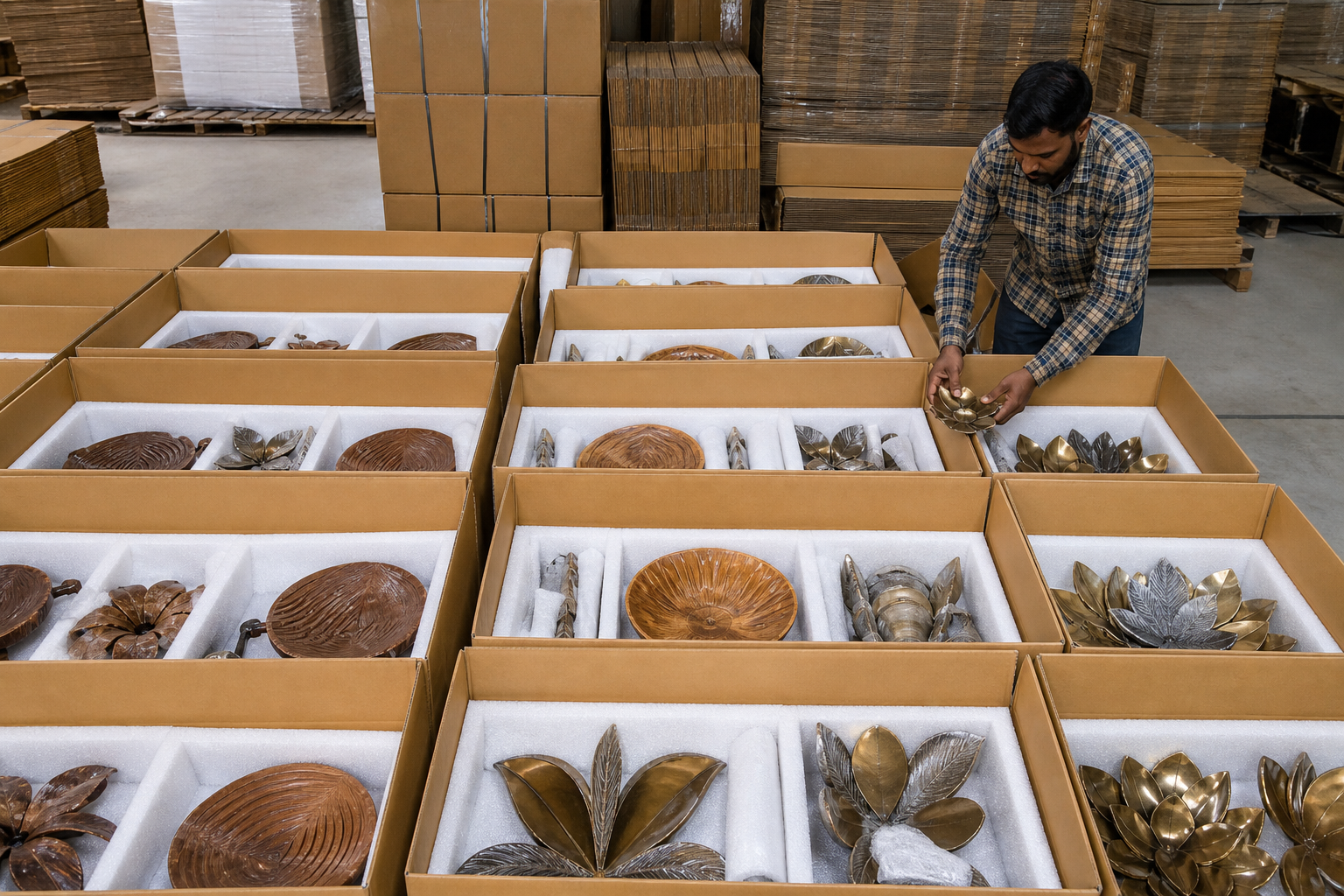
International buyers who source handicrafts directly from India gain access to unmatched craft diversity, customisation, and competitive landed value — when they treat sourcing as a controlled process. Define requirements, verify suppliers, lock samples, inspect before sailing, and engineer packaging for ocean transit. Mitigate risk with staged orders and clear Incoterms. For multi-category programmes, a merchant exporter often delivers better outcomes than fragmented workshop management.
Best practices are simple and non-negotiable: cluster-true shortlists, document checks, trial shipments, and replenishment partnerships. If you are ready to buy handicrafts from India with fewer first-order surprises, share your assortment brief with Altus Exports for a verified sourcing pathway.