
Fox Nut (Makhana) Export Documentation Checklist for Indian Exporters
By Saurabh Mittal, Founder, Altus Exports
A document-by-document checklist for Indian fox nut (makhana) exporters — every paper required from IEC and APEDA RCMC through commercial invoice, packing list, lot COA, health certificate, bill of lading, and certificate of origin, plus HS declaration accuracy, customs broker handoff, and field-level alignment across the full document pack.
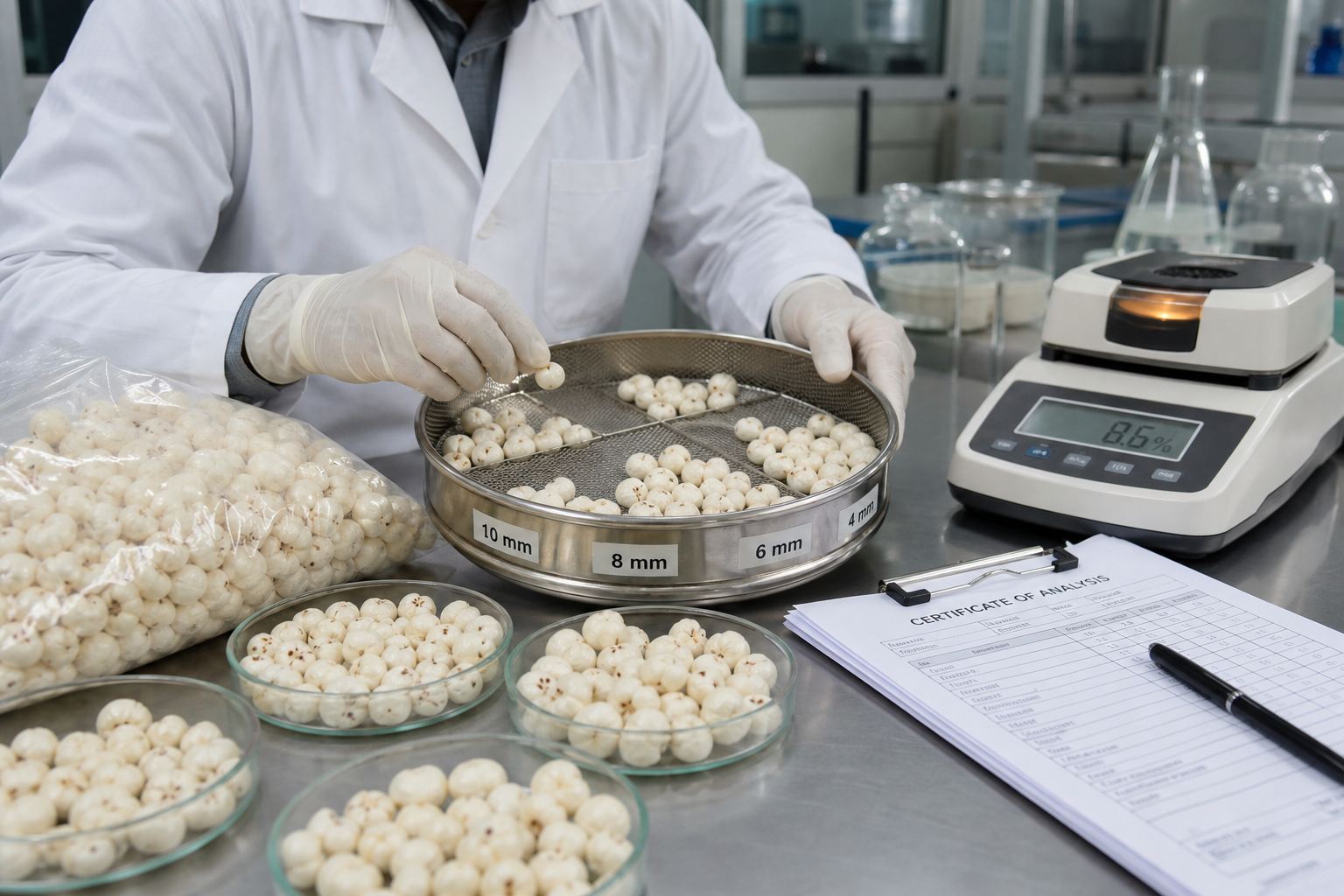
Documentation is the single most common reason **fox nut (makhana / *Euryale ferox*)** shipments hold at Kolkata, Nhava Sheva, or Mundra — not popping quality, not pond-harvest shortages, not vessel schedules. A commercial invoice that disagrees with the packing list, an HS declaration inconsistent with the shipping bill, or a lot Certificate of Analysis (COA) issued after container stuffing are the everyday failure modes that turn a clean Bihar Mithila harvest into a delayed, penalised, or rejected shipment.
This guide is a field-ready, document-by-document checklist for makhana exporters — covering every paper from IEC and APEDA RCMC through commercial invoice, packing list, bill of lading, certificate of origin, lot COA, health certificate, and customs broker (CHA) handoff. HS declaration reference (effective July 2025 per APEDA): popped/roasted phool makhana under HS 2008.19.21, makhana flour under HS 2008.19.22, other prepared/flavoured makhana under HS 2008.19.29, with a legacy classification some exporters historically used at HS 1904.10.90 (legacy / alternate) — always confirm the current heading with your licensed customs broker before your first shipping bill.
For end-to-end process, read How to Export Fox Nuts (Makhana) from India. For council registration detail, read APEDA Registration Benefits for Fox Nut (Makhana) Exporters. For SKU catalogue, see Top Fox Nut (Makhana) Products Exported from India. For destination compliance, see Best Countries for Indian Fox Nut (Makhana) Exports.
Altus Exports operates as a merchant exporter in India and export products from India coordinator, handling documentation packs from IEC through post-shipment for makhana programmes sourced from verified Mithila-belt processors. This guide is written for exporters preparing their first FCL and for buyers verifying supplier readiness before signing a purchase order — contact Altus Exports to walk through a live document pack.
Key Takeaways
Summary Box
Executive Summary
Summary Box
The makhana export documentation pack is a coordinated set of roughly 20 documents split across five families: (1) registration and compliance foundation; (2) commercial transaction documents; (3) shipping and logistics documents; (4) product quality and food-safety documents; and (5) destination-specific compliance documents. Each document has an owner, a format expectation, and a timing constraint tied to the vessel cutoff. Missing or misaligned documents cause customs holds regardless of how clean the popped fox nut grading is.
This guide walks through each document family with format guidance, HS declaration accuracy, customs broker handoff practice, and field-level alignment checks — the recurring theme being that every field on every document (product description, HS code, quantity, net/gross weight, lot number) must read identically across the pack. It is designed to be adapted into a project plan or a supplier qualification file for a first-time makhana exporter or a merchant exporter onboarding a new Bihar processor.
For overseas buyers, this checklist is a supplier readiness benchmark. Ask any prospective Indian makhana exporter to walk through each document with sample copies from a prior shipment. Exporters who can produce clean, field-aligned packs across all five families are the ones who convert first purchase orders into durable, repeat FCL programmes.
Market Size & Industry Overview
Key Statistics
India's fox nut (makhana) export industry sits under HS heading 2008.19, with popped/roasted phool makhana, flour, and other prepared/flavoured variants as the three principal sub-headings. Documentation intensity varies by SKU: bulk phool makhana for further processing carries a lighter product-side panel; flavoured, roasted, and retail-ready packs carry deeper documentation including artwork approval and language-panel review. Destination market determines additional compliance layers: FDA-aligned food safety expectations for USA, bilingual labels for Canada, Halal for UAE, organic transaction certificates for EU-adjacent and USDA Organic buyers, and biosecurity paperwork for Australia.
Documentation coordination is a workflow discipline, not a clerical afterthought. Larger exporters and merchant exporters build documentation SOPs tied to the Bihar harvest and popping calendar; first-time exporters often improvise and pay for it in customs holds at Kolkata, Nhava Sheva, or Mundra. Regardless of exporter size, the goal is identical: every document consistent, complete, and delivered ahead of the vessel cutoff.
Documentation Intensity by SKU + Destination
Swipe →
Data table — swipe horizontally on small screens
| SKU + Destination | Documentation Intensity |
|---|---|
| Bulk phool makhana (unroasted/unflavoured) + Nepal | Baseline (registration + commercial + shipping + COA) |
| Roasted popped makhana + USA/Canada | Baseline + full health certificate + English/bilingual labels |
| Flavoured/coated retail packs + UK/Germany | Baseline + artwork approval + language labels + allergen declaration |
| Organic makhana + USA/EU-adjacent buyers | Baseline + organic transaction certificate + NPOP/USDA cross-reference |
| Retail private label + UAE | Baseline + Halal certificate + Arabic labels |
| Makhana flour (bakery/ingredient use) + Germany | Baseline + ingredient spec sheet + allergen and gluten-free declaration |
Export Statistics
Key Statistics
Export documentation flows follow HS 2008.19.21 for popped/roasted phool makhana, HS 2008.19.22 for flour, and HS 2008.19.29 for other prepared or flavoured variants; a legacy classification some exporters used historically sits at HS 1904.10.90 (legacy / alternate). Directional export statistics indicate high-volume documentation flow through Kolkata given proximity to Bihar's Mithila belt, with additional volume through Nhava Sheva and Mundra for west-bound and Gulf-bound shipments. Documentation errors typically account for a small but consistent share of Indian port hold cases — proportionally more common on first-time exporter shipments and on flavoured/coated retail packs where allergen labelling review adds another point of failure.
Documentation Failure Rate Signals (Directional)
Swipe →
Data table — swipe horizontally on small screens
| Failure Mode | Frequency Direction |
|---|---|
| Invoice–packing list mismatch (weight/lot) | High |
| HS misdeclaration (wrong sub-heading) | Medium |
| Lot COA missing or issued after stuffing | Medium |
| Health certificate delay | Medium |
| Certificate of origin delay | Medium |
| Destination-specific certificate missing (Halal/organic) | Medium |
| Allergen/label review pending at packing time | Medium |
Import Statistics
Key Statistics
Import-side documentation requirements vary by destination. Top destinations to plan documentation against: USA, Canada, UAE, UK, Australia, Germany, and Nepal. USA and Canada demand full commercial and food-safety documentation with English (and, for Canada, bilingual) labels. UAE requires Arabic labelling and typically Halal certification. UK and Germany add allergen declarations and language-panel review. Australia adds biosecurity paperwork on top of standard commercial documents. Nepal, as a land-border market, often moves on lighter documentation but still requires accurate invoice and packing list alignment for customs valuation.
Destination Documentation Add-Ons
Swipe →
Data table — swipe horizontally on small screens
| Destination | Documentation Add-On |
|---|---|
| USA | FDA facility registration + Prior Notice + FSVP compliance + health certificate + English labels + allergen declaration |
| Canada | Bilingual retail labels + health certificate |
| UAE | Halal certificate + Arabic labels |
| UK | Allergen declaration + English labels |
| Germany | German labels + allergen declaration + organic TC (if applicable) |
| Australia | DAFF biosecurity paperwork + FSANZ-aligned English labels |
| Nepal | Accurate invoice/packing list for land-customs valuation |
Product Categories
Summary Box
The documentation pack shape follows the SKU family. Bulk phool makhana (unroasted, ungraded to fine size) for further processing carries the lightest product-side documentation. Standard roasted/popped grades and size-graded lots add a fuller lot COA. Flavoured, coated, and retail private-label packs add artwork approvals, allergen declarations, and language panels. Makhana flour for bakery or ingredient use adds an ingredient specification sheet and gluten-free/allergen cross-contamination declaration where relevant.
Document Pack Structure by SKU
Swipe →
Data table — swipe horizontally on small screens
| SKU | Document Pack Focus |
|---|---|
| Bulk phool makhana (HS 2008.19.21) | Basic COA (moisture, size grade, broken %) + FSSAI + APEDA RCMC |
| Roasted/popped size-graded (HS 2008.19.21) | Full COA + microbiology + health certificate |
| Flavoured / coated retail (HS 2008.19.29) | Full COA + allergen declaration + artwork approval + language labels |
| Makhana flour (HS 2008.19.22) | Ingredient spec sheet + full COA + allergen/gluten-free declaration |
| Organic makhana (any HS above) | Full pack + organic transaction certificate + NPOP/USDA cross-reference |
Manufacturing Overview
Export Tip
Documentation workflow starts before roasting and grading. The product specification sheet drives the lot COA panel; the packing bill of materials drives the packing list; the sales contract drives the commercial invoice; the correct HS sub-heading drives the shipping bill. Manufacturing (pond harvest, drying, roasting/popping, size grading, flavouring) runs alongside documentation preparation, not sequentially — the two workstreams should share a common lot number from the first day of processing.
Registration & Compliance Documents (Foundation Layer)
- IEC (Importer-Exporter Code) from DGFT
- GST registration
- PAN
- Bank AD code / forex account confirmation
- FSSAI licence (mandatory for any food export from India)
- APEDA RCMC (Registration-cum-Membership Certificate)
- Factory / partnership / company incorporation documents
- Board resolution or partnership authorisation for export signatory
- HACCP / ISO 22000 certificate copy (where held)
- Halal / Kosher / organic certificate copies (where relevant)
Commercial Transaction Documents
- Proforma invoice (buyer-approved before PO)
- Sales contract or purchase order
- Commercial invoice (final, matching PO exactly)
- Packing list (matching commercial invoice line-for-line)
- Insurance certificate (voyage-specific, where CIF/CIP)
- Letter of Credit (where applicable) or advance payment receipt
- Beneficiary certificate (where LC-driven)
Shipping & Logistics Documents
- Shipping bill (filed with Indian customs, correct HS declaration)
- Bill of Lading or Sea Waybill (issued by carrier)
- Certificate of Origin (chamber or APEDA-facilitated)
- Fumigation certificate (if required by destination)
- Container inspection / pre-stow report
- Seal number record (photograph)
- Freight forwarder booking confirmation
- CHA (customs broker) authorisation letter and shipping bill checklist
Product Quality & Food-Safety Documents
- Lot Certificate of Analysis (COA) — moisture, size grade, broken %, foreign matter, microbiology, aflatoxin, pesticide residues
- Health certificate (FSSAI/APEDA-facilitated, as applicable to destination)
- Product specification sheet
- Packing bill of materials
- Sample retention log
- Third-party lab report (where required by buyer)
- Product artwork approval (for retail packs)
- Nitrogen-flush / barrier-film datasheet (for retail packs)
Destination-Specific Compliance Documents
- Organic transaction certificate (NPOP / USDA / EU-equivalent, where applicable)
- Halal certificate (UAE)
- Kosher certificate (specialty programmes)
- Bilingual retail labels (Canada)
- Arabic retail labels (UAE)
- German-language labels and allergen declaration (Germany)
- Biosecurity paperwork (Australia)
- GI (Geographical Indication) usage reference for Mithila Makhana, where the buyer wants provenance confirmation

Export Process
Export Tip
The export process for makhana, seen purely through a documentation lens, is a sequence of nine handoffs. Each handoff has a document that closes it and a field-level check that must pass before the next handoff opens. The two most common breakpoints are the HS declaration (wrong sub-heading chosen at the shipping bill stage) and the customs broker handoff (draft documents sent too late, or sent incomplete, forcing the CHA to file under time pressure).
Document-by-Document Export Process Checklist
Swipe →
Data table — swipe horizontally on small screens
| Stage | Document Closing the Stage | Field-Level Check |
|---|---|---|
| 1. Buyer agreement | Proforma invoice + sales contract | Product description, grade, quantity, price, Incoterm match buyer PO |
| 2. Registration confirmation | IEC + GST + FSSAI + APEDA RCMC copies | All registration numbers current and matched to legal entity name |
| 3. HS declaration lock | HS classification note from CHA/broker | Correct sub-heading chosen (HS 2008.19.21 / HS 2008.19.22 / HS 2008.19.29) and confirmed in writing |
| 4. Production + lot assignment | Packing bill of materials + lot number | Lot number assigned before roasting/grading completes, shared across all downstream documents |
| 5. Lab testing | Lot COA + health certificate application | Moisture, size grade, broken %, FM, microbiology, aflatoxin, pesticide residues within buyer spec |
| 6. Commercial documentation | Commercial invoice + packing list | Weight, unit count, lot number identical to packing bill of materials and COA |
| 7. Customs broker handoff | Complete draft pack to CHA | Draft pack delivered 5–7 days before vessel cutoff, not on cutoff day |
| 8. Shipping bill + loading | Shipping bill filed + container stuffed | Shipping bill payload matches actual container weight (VGM) and packing list exactly |
| 9. Post-shipment | Bill of Lading + Certificate of Origin + buyer document set | All documents cross-checked once more before courier/telex release to buyer |
Pricing Analysis
Buyer Tip
Documentation cost is a small share of landed cost but disproportionately affects on-time performance and buyer confidence. Include documentation preparation time, CHA fees, certificate of origin fees, lab testing fees, and destination-specific compliance filing costs in the landed-cost model. FOB price bands for makhana run directionally from around USD 12/kg for bulk unroasted or lower-grade lots to USD 26/kg and above for premium size-graded, flavoured, or organic-certified retail-ready lots — every band requires the same documentation discipline, only the destination compliance layer differs.
Documentation Cost Framework
Swipe →
Data table — swipe horizontally on small screens
| Item | Cost Framework |
|---|---|
| CHA fees | Per shipping bill; standard tariff |
| Certificate of origin | Per certificate; chamber or APEDA-facilitated |
| Lab testing (moisture/microbiology/aflatoxin/pesticide) | Per lot; approved lab tariff |
| Health certificate | Per shipment; APEDA/FSSAI-facilitated |
| Organic transaction certificate | Per lot; certifier tariff |
| Halal / Kosher certification | Annual; scope-dependent |
| Artwork approval cycles | Per revision; retail programmes |
MOQ Analysis
Buyer Tip
Documentation intensity does not scale linearly with order size. A 1–5 kg sample courier requires a simplified commercial invoice and courier declaration; a 100–500 kg trial order requires nearly the same full document pack as a 1–5 MT wholesale FCL, minus the deeper destination compliance layer that a repeat programme accumulates. Plan documentation bandwidth for the trial-to-wholesale transition, not just for the first sample.
Documentation Load by MOQ
Swipe →
Data table — swipe horizontally on small screens
| Programme | Document Load |
|---|---|
| Sample 1–5 kg | Simplified commercial invoice + courier declaration; COA reference optional but recommended |
| Trial 100–500 kg | Full baseline pack (foundation + commercial + shipping + product) minus deep destination layer |
| Wholesale FCL 1–5 MT | Full baseline pack + full destination compliance layer + repeat-shipment archive |
Packaging Standards
Export Tip
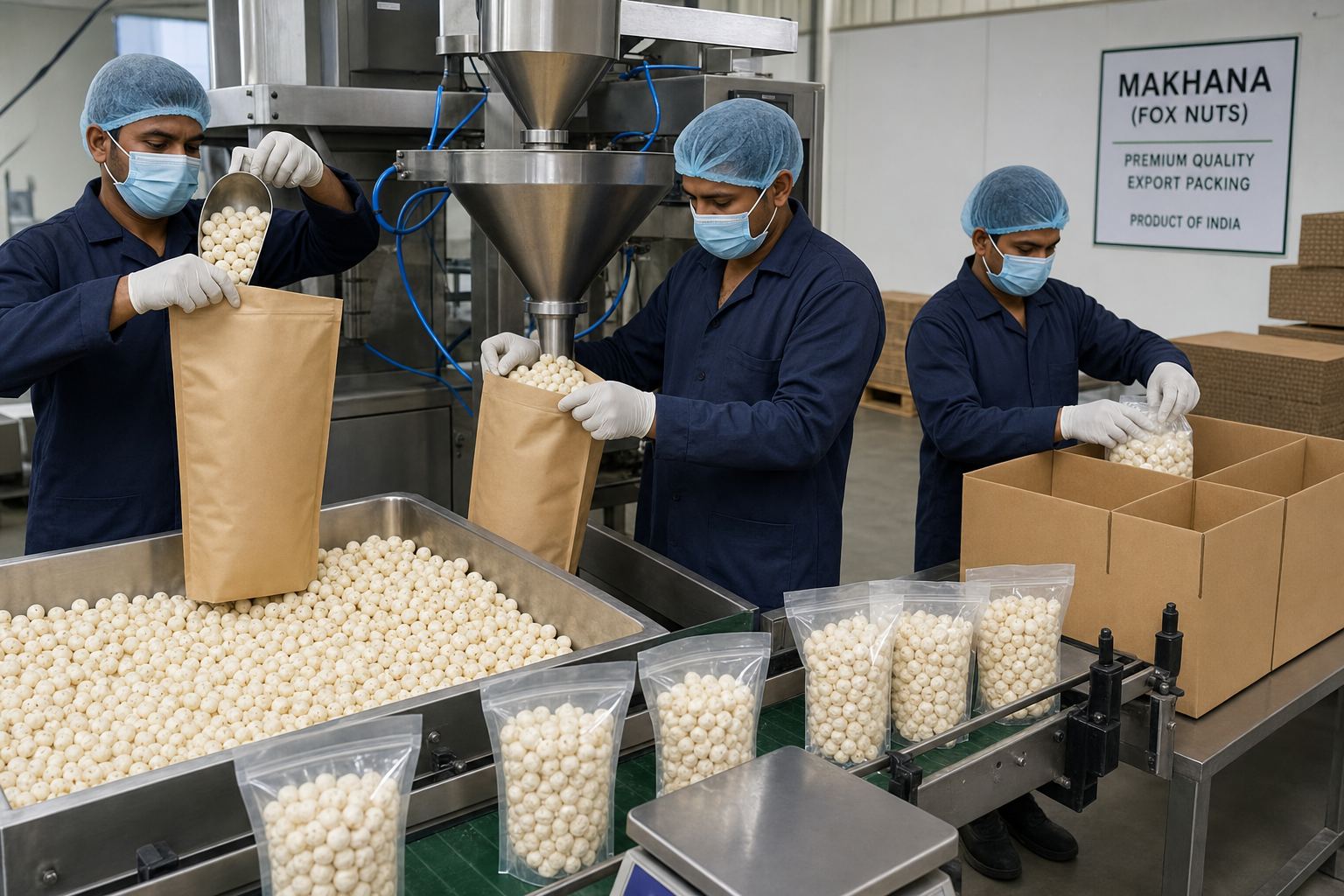
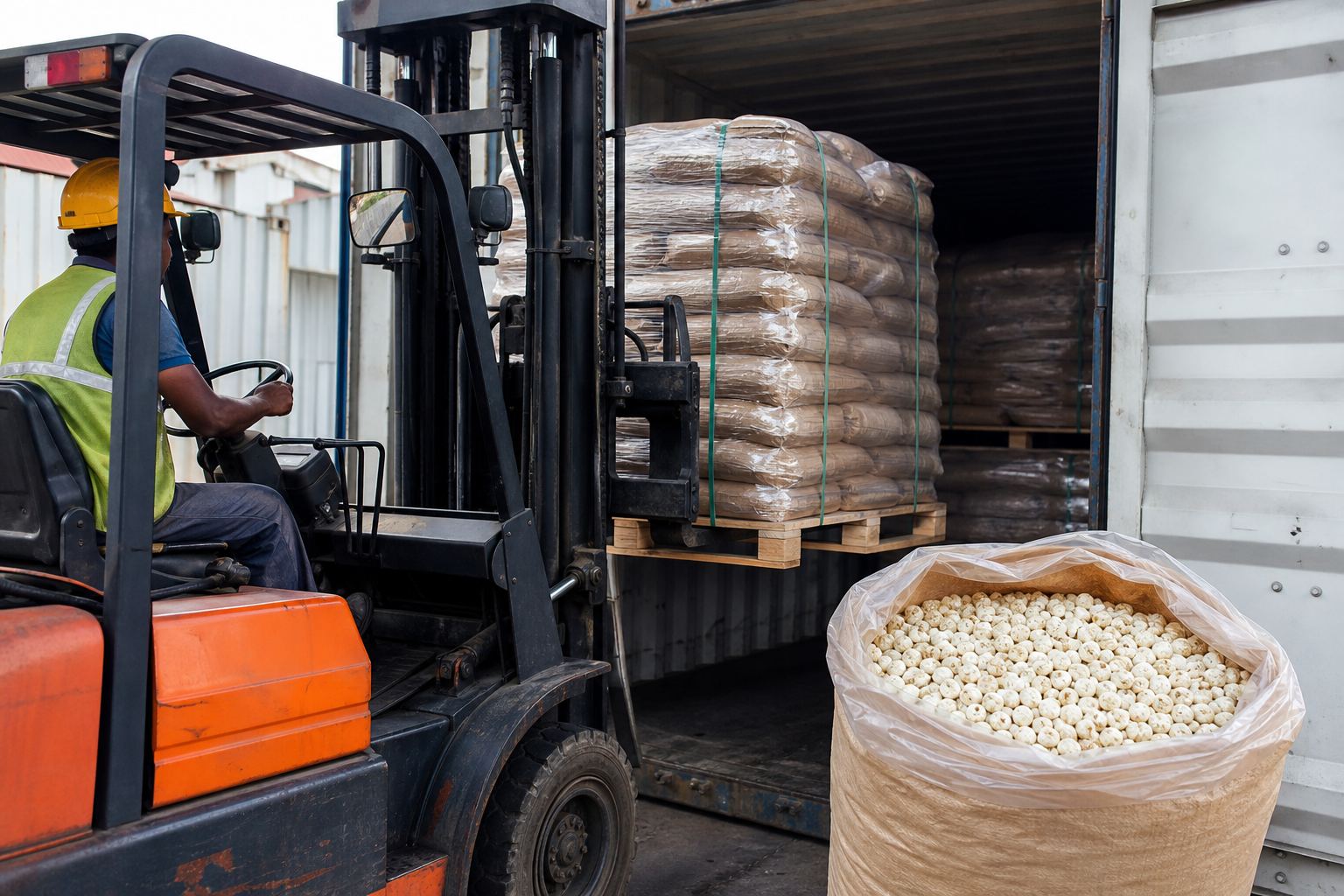
The packing bill of materials is a document, not just an item description. It should specify bulk pack details (5/10/20/25 kg food-grade bags with moisture-barrier liner) and retail pack details (50–500 g pouches, nitrogen-flushed for shelf stability) precisely enough that the packing list can mirror it exactly: bag/pouch counts, net weight per unit, gross weight, lot numbers, and carton/pallet configuration.
Packing Documentation Detail
Swipe →
Data table — swipe horizontally on small screens
| Format | Packing List Detail Required |
|---|---|
| 5/10/20/25 kg bulk bags | Bag count, lot numbers, net + gross weight, pallet count |
| Retail pouches 50–500 g (N2-flushed) | Unit count, master carton count, palletisation |
| Flour packs (bulk or retail) | Bag/pouch count, lot numbers, moisture reading at packing time |
| Mixed FCL (multiple SKUs) | Segregated by SKU with sub-totals |
Container Loading Details
Export Tip
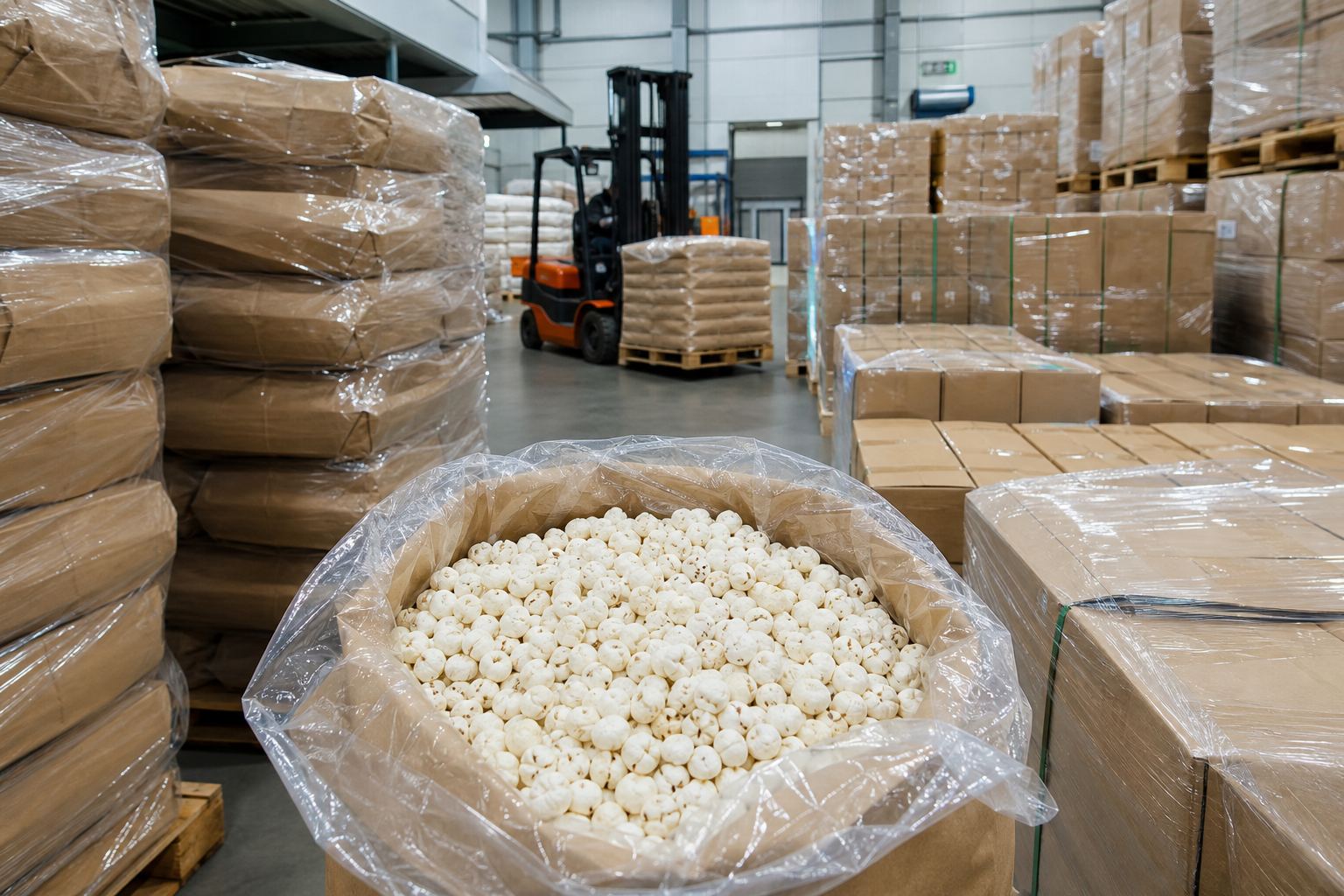
Container loading generates its own documentation: pre-stow inspection report, seal number record, load photographs, and lot-to-bag traceability record. Payloads for a standard 1–5 MT wholesale programme must match the packing list exactly. Discrepancies between the shipping bill payload and actual container weight (Verified Gross Mass) trigger customs re-examination at Kolkata, Nhava Sheva, or Mundra.
Loading Documentation Items
Swipe →
Data table — swipe horizontally on small screens
| Item | Purpose |
|---|---|
| Pre-stow inspection | Container fitness for a food-grade cargo |
| Seal number photo | Chain of custody |
| Load photos | Stow evidence, moisture-barrier placement |
| Lot-to-bag traceability | Match packing list detail exactly |
| Weight verification (VGM) | Regulatory requirement before loading |
Shipping Methods
Export Tip
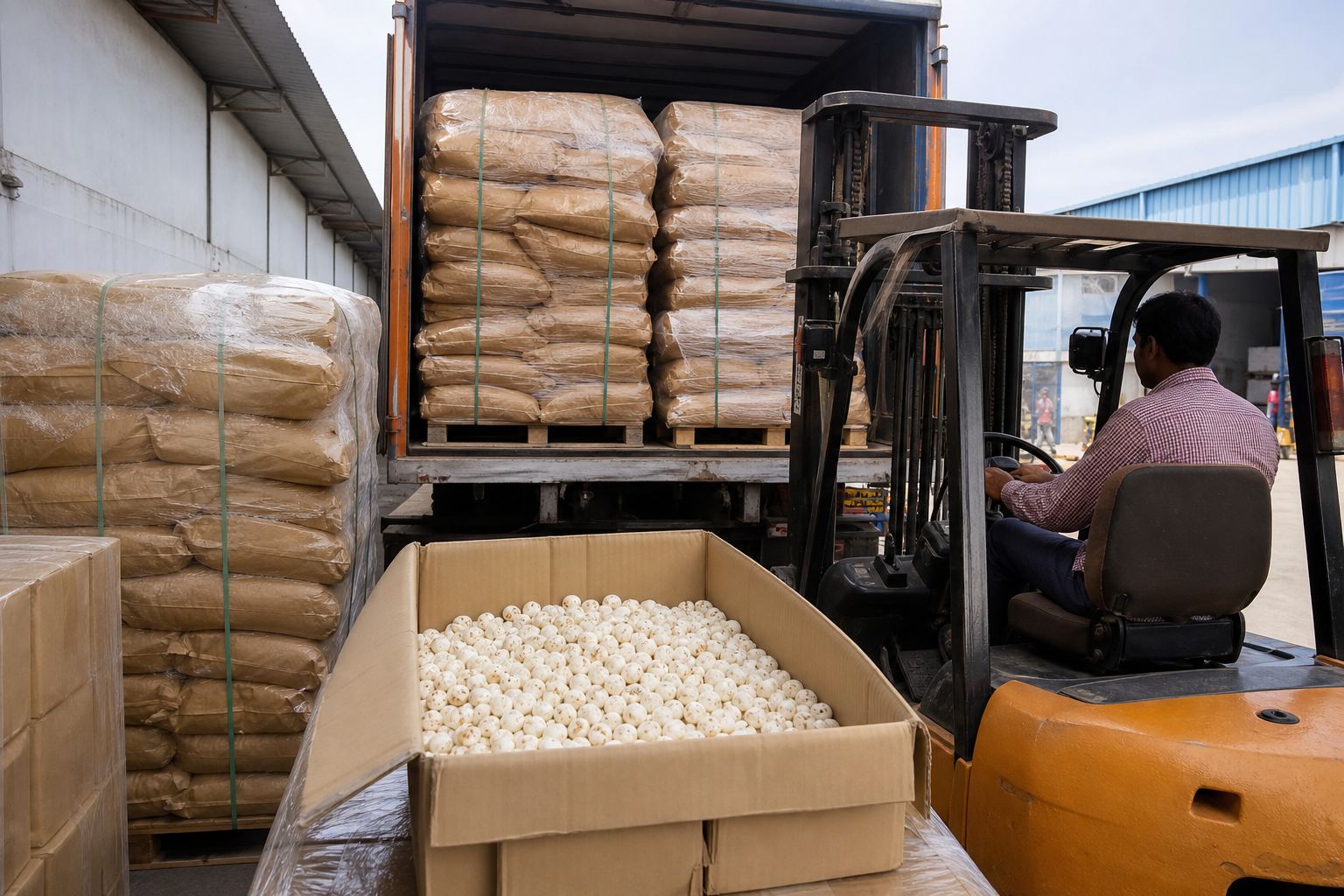
Shipping method affects documentation. Sea FCL uses a standard bill of lading; sea LCL uses a house BL from the consolidator; air uses an airway bill for premium retail or sample shipments. Common Incoterms: EXW, FOB, CFR, CIF. Each Incoterm assigns different documentation responsibilities between exporter and buyer — an FOB Kolkata quote leaves ocean freight documentation to the buyer's forwarder, while CFR/CIF places freight and insurance documentation with the exporter.
Shipping Method Documentation
Swipe →
Data table — swipe horizontally on small screens
| Mode | Key Documents |
|---|---|
| Sea FCL | BL, packing list, shipping bill, COO |
| Sea LCL | House BL, shared packing list, COO |
| Air (samples/premium retail) | AWB, commercial invoice, COO for premium destinations |
| EXW/FOB programmes | Exporter documents to port of loading; buyer's forwarder handles onward BL |
| CFR/CIF programmes | Exporter documents through to destination port; insurance certificate included |
Certifications
Compliance Notes
Certifications alongside the document pack: FSSAI licence, APEDA RCMC, HACCP, ISO 22000, Halal, Kosher, organic (NPOP/USDA/EU-equivalent), and the Mithila Makhana GI tag for Bihar-origin provenance claims. Include RCMC and relevant food-safety system certificates in the exporter file. Halal / Kosher certificates matter most for Middle East and specialty programmes; organic transaction certificates and third-party lab reports matter most for USA, UK, and EU-adjacent retail buyers.
Cert Pack Alongside Documentation
Swipe →
Data table — swipe horizontally on small screens
| Cert | Filing Frequency |
|---|---|
| APEDA RCMC | Renewable per council policy |
| FSSAI licence | Renewable per FSSAI schedule |
| HACCP / ISO 22000 | Renewable per certifier |
| Halal / Kosher | Annual renewal typical |
| Organic transaction certificate | Per lot / per shipment |
| Lot COA | Per shipment |
| GI usage reference (Mithila Makhana) | Provenance reference; verify current usage terms with the GI registry |
Buyer Requirements
Buyer Requirements
Buyer requirements around documentation aggregate the SKU + destination expectations described above. Present the complete document pack proactively during supplier qualification. Overseas buyers who see a well-organised, field-aligned document pack usually accelerate the onboarding decision and commit to trial purchase orders faster than buyers left to request each document individually.
Buyer Documentation Expectations
Swipe →
Data table — swipe horizontally on small screens
| Buyer Type | Documentation Expectation |
|---|---|
| Snack brand / retail chain | Full pack + artwork + language labels + third-party audit |
| Distributor | Full pack + prior shipping bill references |
| Organic retail brand | Full pack + organic transaction certificate + NPOP/USDA cross-reference |
| Bakery / ingredient buyer (flour) | Ingredient spec sheet + allergen declaration + full COA |
| E-commerce brand | Full pack + artwork revision archive |
Country-wise Opportunities
Market Snapshot
Country-specific documentation opportunities revolve around adding the right destination compliance layer without over-documenting for lighter-compliance destinations such as Nepal.
Destination Documentation Add-On Summary
Swipe →
Data table — swipe horizontally on small screens
| Country | Additional Documents |
|---|---|
| USA | Health certificate + English labels + allergen declaration |
| Canada | Bilingual labels + health certificate |
| UAE | Halal + Arabic labels |
| UK | Allergen declaration + English labels |
| Australia | Biosecurity + English labels |
| Germany | German labels + allergen declaration + organic TC |
| Nepal | Accurate invoice/packing list for land-customs valuation |
United States
USA documentation adds a health certificate, English labels, allergen declarations, and often an organic transaction certificate for USDA Organic claims. Retail chain onboarding may require third-party audit reports.
Canada
Canadian documentation adds bilingual English/French retail labels, a health certificate, and destination broker coordination. Distribution routes commonly transit Vancouver or Montreal customs.
United Arab Emirates
UAE documentation adds a Halal certificate and Arabic retail labels. Jebel Ali redistribution requires robust chain-of-custody documentation, especially for flavoured retail SKUs re-exported across the Gulf.
United Kingdom
UK documentation adds allergen declarations, English labels, and post-Brexit destination-specific handling notes. Health certificate requirements should be confirmed with the importer's broker ahead of each season.
Australia
Australian documentation adds biosecurity paperwork, English labels, and destination-specific food-safety registration where consumer retail packs apply.
Germany
Germany documentation adds German-language labels, allergen declarations, and organic transaction certificates for EU-adjacent organic claims where applicable.
Nepal
Nepal, as a land-border market, typically moves on lighter documentation but still requires accurate invoice and packing list alignment for customs valuation and any applicable trade-treaty benefit claims.
Sourcing Checklist (Buyer + Exporter)
Checklist
A sourcing checklist for documentation focuses on preparing every element of the document pack before serious buyer conversations begin — from both sides of the transaction.
For Exporters
- Complete registration foundation (IEC, GST, FSSAI licence, APEDA RCMC)
- Draft product specification sheet per SKU family
- Prepare sample lot COA templates per SKU family
- Prepare health certificate application workflow with FSSAI/APEDA
- Prepare packing bill of materials per format
- Set up commercial invoice and packing list templates
- Confirm CHA and freight forwarder document workflow
- Confirm certificate of origin issuance path
- Verify the correct HS sub-heading with a licensed customs broker
- Prepare destination-specific compliance file per target market
For Buyers
- Ask for sample copies of a complete document pack from a prior shipment
- Verify FSSAI licence and APEDA RCMC numbers independently where possible
- Confirm lot COA parameters match your specification before committing to a PO
- Request organic transaction certificate detail if organic claims are part of your programme
- Agree a written HS classification and Incoterm before the proforma invoice is finalised
Compliance Checklist
Checklist
Compliance Notes
- IEC, GST, PAN, bank AD code current and matched across all documents
- FSSAI licence and APEDA RCMC valid and referenced on commercial documents where required
- HS sub-heading confirmed in writing with the customs broker before the first shipping bill
- Lot COA issued before container stuffing, not after
- Commercial invoice, packing list, and shipping bill fields identical (description, quantity, weight, lot number)
- Health certificate application filed in time for the vessel cutoff
- Certificate of origin application filed in parallel with lab testing
- Destination-specific certificates (Halal, organic TC, biosecurity) confirmed per market before booking
- Seal number and load photographs captured and archived
- Complete document set retained for a minimum of three years
A compact pre-shipment compliance checklist reduces the risk of customs holds and buyer rejection at destination.
Common Buyer Mistakes
Common Mistakes Box
Documentation-related mistakes are consistent: buyers accepting suppliers who cannot produce sample document copies; buyers ignoring HS mismatch signals until customs holds arrive; buyers approving samples without a matching lot COA template; buyers signing retail purchase orders without artwork revision control; and buyers under-scoping destination-specific compliance until the vessel is already at sea.
Challenges & Solutions
The most common documentation challenges in makhana export are recurring rather than novel, which means each has a repeatable solution once an exporter has been through one full FCL cycle.
Documentation Challenges and Solutions
Swipe →
Data table — swipe horizontally on small screens
| Challenge | Solution |
|---|---|
| HS sub-heading uncertainty (2008.19.21 vs .22 vs .29) | Get written classification confirmation from CHA before first shipping bill; keep it on file for every reorder |
| Lot COA issued after stuffing | Lock lab testing turnaround into the production calendar, not the shipping calendar |
| Invoice/packing list weight mismatch | Use a single shared spreadsheet template across sales, packing, and documentation teams |
| Late CHA handoff | Deliver draft pack 5–7 days before vessel cutoff as a standing rule |
| Destination certificate gaps (Halal/organic) | Maintain a destination compliance matrix reviewed before every new market entry |
| Artwork/label revision delays on retail packs | Freeze artwork before first production run; treat revisions as a separate SKU version |
Future Market Trends
Key Statistics
Documentation trends over the next few years: greater digital integration (electronic bills of lading, digital certificates of origin, e-signed invoices), tighter destination food-safety and allergen-labelling frameworks, growing traceability expectations tied to GI provenance claims for Mithila Makhana, and blockchain-anchored lot COA adoption in premium retail. Exporters who invest in digital document workflows now will outpace paper-heavy competitors as buyer diligence standards rise.
Documentation Trend Signals
Swipe →
Data table — swipe horizontally on small screens
| Trend | Exporter Response |
|---|---|
| Electronic BL adoption | Coordinate with carriers early |
| Digital COO | Register with chamber or APEDA e-COO services |
| Tighter allergen/food-safety frameworks | Track destination labelling requirements per market |
| Traceability + GI provenance demand | Adopt lot-level traceability tools tied to GI usage |
| E-signature workflows | Digitise sales contract and PO flow |
Conclusion
The makhana export documentation pack is a coordinated set of roughly 20 documents across five families: registration and compliance foundation; commercial transaction; shipping and logistics; product quality and food-safety; destination-specific compliance. Every document has an owner, a format expectation, and a timing constraint tied to the vessel cutoff.
Use HS HS 2008.19.21 for popped/roasted phool makhana, HS 2008.19.22 for flour, and HS 2008.19.29 for other prepared/flavoured variants; confirm the legacy classification (HS 1904.10.90 (legacy / alternate)) is not still in use before filing. Align HS across every document. Prepare in parallel with roasting and grading, not after packing.
Contact Altus Exports to structure your fox nut (makhana) documentation workflow with APEDA-backed credibility, verified Bihar Mithila processors, and coordinated CHA + forwarder execution. Get in touch or continue with How to Export Fox Nuts (Makhana) from India for end-to-end process, Source Fox Nuts (Makhana) Directly from India for buyer-side sourcing, or Trade Shows and B2B Marketplaces for Fox Nut (Makhana) Exporters for buyer-discovery channels.