
India vs China for Supply Chain Diversification: Why Companies Are Adding India
By Saurabh Mittal, Founder, Altus Exports
Companies add India beside China to cut concentration risk and access category depth—not to exit China overnight. Keep China where ecosystems win; qualify India where resilience or fit justifies parallel capacity. Use a structured India add playbook with governed volume allocation rules.

For two decades, many international buyers optimized supply chains around a single dominant origin. China offered scale, component ecosystems, mature export infrastructure, and competitive unit economics across consumer goods, electronics, industrial components, and packaging. Procurement teams built deep supplier relationships, invested in tooling, and accepted that geographic concentration was the price of efficiency.
That trade-off has shifted. Tariff volatility, geopolitical friction, logistics shocks, and supplier fatigue have made single-origin dependence a board-level risk — not a procurement detail. Buyers are no longer asking whether diversification is fashionable. They are asking whether their current portfolio can survive the next tariff cycle, port disruption, or supplier capacity squeeze without empty shelves, margin collapse, or emergency requalification under deadline pressure.
India has emerged as the most frequently evaluated China+1 add for buyers who need parallel capacity with real category depth — not a symbolic second country on a supplier slide. India exported merchandise worth approximately $441.78 billion in FY 2025–26, with strength in engineering goods, textiles, chemicals, spices, pharmaceuticals, and increasingly electronics assembly under Production Linked Incentive (PLI) programmes. China remains the world's largest goods exporter at roughly $3.4 trillion annually. The scale gap is real. So is India's value as a diversification node: lower concentration risk on specific SKUs, alternate routing through Indian ports, and category-specific landed economics that can beat or match China when buyers compare total cost rather than FOB alone.
This guide owns the diversification decision and India add playbook — why companies are adding India, how India vs China compare as diversification origins, and how to structure dual sourcing without rewriting your entire supply chain overnight. For the day-to-day operating system of running China and India in parallel — allocation governance, documentation rhythm, and multi-origin procurement mechanics — see China–India sourcing strategy for global buyers. For broader India vs China comparison across cost, quality, MOQ, and lead times, see India vs China for sourcing: international buyers' guide. Altus Exports supports international buyers on the India side of diversification: supplier identification, qualification support, sample coordination, and export execution through a global sourcing partner in India.
Why supply chain diversification moved from optional to operational
Diversification is not anti-China sourcing. Mature procurement teams continue China programmes where tooling investment, component ecosystem depth, lead time, and unit cost remain superior. Diversification adds a qualified parallel origin so that no single country, port cluster, or supplier group can halt an entire product line.
The drivers pushing buyers toward India vs China supply chain diversification are structural:
Industry surveys consistently show majority adoption intent for China+1 among multinational procurement teams — with implementation lagging intent because qualification cost, verification time, and first-order risk are real. Buyers who treat diversification as a multi-year portfolio project build India capacity that compounds across seasons. Buyers who treat it as a quarterly cost auction often abandon India after one difficult first order.
For strategic context on why India fits the China+1 role — manufacturing growth, PLI incentives, and sector trends — read Why more global buyers are choosing India for their China+1 strategy. This article focuses on the diversification decision itself and the playbook to add India.
Comparison table
Swipe →
Data table — swipe horizontally on small screens
| Driver | What changed | Why it affects India vs China decisions |
|---|---|---|
| Tariff and trade policy volatility | US and EU tariff regimes on Chinese goods have shifted repeatedly; product-specific duty exposure now varies by HTS and origin | India-origin goods often face different duty schedules on agricultural, textile, and engineering lines — though product-specific verification is always required |
| Geopolitical concentration risk | Single-origin dependence amplifies exposure to bilateral trade friction, sanctions risk, and policy uncertainty | Parallel India capacity hedges policy shock without requiring full China exit |
| Logistics disruption | COVID port closures, Red Sea routing changes, and container imbalance cycles showed that geographic concentration magnifies shock | India exports through Nhava Sheva, Mundra, Chennai, and Cochin — alternate lanes when specific China coastal routes tighten |
| Supplier concentration fatigue | Buyers discovered that "multiple suppliers" sometimes meant multiple names at one factory cluster or shared upstream inputs | India adds a genuinely different manufacturing base, material sourcing geography, and export documentation path |
| Customer and retailer requirements | Large retailers, hospitality groups, and institutional buyers increasingly ask for origin diversification in RFQs | India qualification satisfies resilience requirements without abandoning China where it still wins |
| Category-specific India advantage | Food, cotton textiles, basmati rice, spices, honey, engineering components, and specialty chemicals hold established Indian export depth | Diversification to India is often category-driven, not country-driven |

India vs China as diversification origins: an honest comparison
Supply chain diversification is not about picking a winner. It is about understanding where each origin reduces risk and where each origin still holds operational advantage.
The honest conclusion: India vs China supply chain diversification is a portfolio design exercise, not a migration. Buyers who succeed keep China where it wins and add India where diversification value — resilience, tariff hedge, category depth, or customer requirement — justifies parallel qualification cost.
Comparison table
Swipe →
Data table — swipe horizontally on small screens
| Dimension | China as primary origin | India as China+1 add | Diversification implication |
|---|---|---|---|
| Manufacturing scale | Largest global goods exporter; deep factory density across coastal clusters | Large and growing; strong in category-specific clusters rather than universal depth | India adds parallel capacity; rarely replaces China's full category map |
| Component ecosystem | Unmatched for electronics, complex assemblies, and multi-tier supply chains | Growing under PLI; component depth still trails China in many electronics categories | Qualify India for assembly and category-native products first; not full electronics supply chain overnight |
| Export infrastructure | Mature ports, bonded zones, and decades of buyer-facing export discipline | Modernising ports; export readiness varies by factory maturity | Budget more verification and coordination on India first orders |
| Cost position | Often lowest FOB on mass-produced consumer and industrial goods | Competitive on landed cost for textiles, food, engineering, chemicals when total cost is modelled | Compare landed cost, not FOB alone — see India vs China sourcing costs and landed cost comparison |
| Lead time and MOQ | Often shorter lead times and lower MOQs at scale for standardised goods | MOQ and lead time vary widely; strong for commodity and specification-driven categories | Set realistic trial volumes; do not assume China-equivalent MOQ on first India SKU |
| Supplier network density | Highest supplier choice per category in many segments | Deep in textiles, food, engineering; narrower in some consumer electronics subcategories | India supplier search requires cluster mapping — see India vs China supplier networks |
| Tariff and market access | Higher friction on many US/EU lines in current cycles | Often favourable on agricultural, textile, and selected engineering exports | Model duty by HTS and destination before portfolio allocation |
| Resilience value | High efficiency, higher concentration risk | Adds geographic and policy hedge | India earns its role through risk reduction and category fit, not universal cost leadership |

The Supply Chain Diversification Decision Framework (SCDDF)
Altus Exports uses the Supply Chain Diversification Decision Framework (SCDDF) to help buyers decide whether, where, and how much to add India alongside China. The framework has five linked stages: Expose, Evaluate, Select, Qualify, and Allocate.
This framework owns the decision and add path. The operating rhythm for running two origins day to day — PO templates, document custody, multi-origin scorecards — belongs in China–India sourcing strategy. Do not conflate the two: SCDDF answers "should we add India and for which SKUs?"; the dual-country OS answers "how do we run both every quarter?"
Comparison table
Swipe →
Data table — swipe horizontally on small screens
| SCDDF stage | Core question | Primary output | What "good" looks like |
|---|---|---|---|
| 1. Expose concentration | Where does single-origin dependence create unacceptable consequence? | Concentration risk map | SKUs, spend, tooling, and upstream inputs are visible — not just supplier names |
| 2. Evaluate India fit | For which categories does India offer credible parallel capacity? | Category shortlist | India advantage is evidence-based: cluster depth, landed cost, compliance path |
| 3. Select pilot SKUs | Which products justify qualification cost and first-order risk? | Pilot portfolio (typically 3–8 SKUs) | Mix of high-exposure and India-native-win categories |
| 4. Qualify in parallel | Can India suppliers meet specification, timing, and documentation requirements? | Approved alternate with trial order evidence | Beyond quotation — samples, audit, trial PO, PSI pass |
| 5. Allocate with governance | How is volume split, monitored, and adjusted over time? | Dual sourcing allocation policy | Written rules for share-of-spend, triggers, and escalation |
Stage 1: Expose concentration beyond supplier count
Comparison table
Swipe →
Data table — swipe horizontally on small screens
| Concentration type | Example | Why it matters for India add |
|---|---|---|
| Spend concentration | 85% of textile spend with one Guangdong factory | One disruption empties a category |
| Geographic concentration | All SKUs from Pearl River Delta | Regional logistics or policy shock hits everything |
| Tooling concentration | Buyer-funded molds at one site with no transfer terms | Alternate supplier is theoretical without tooling access |
| Upstream concentration | Multiple factories share one fabric mill or component vendor | Supplier count masks shared failure point |
| Knowledge concentration | Specifications and revision history live in supplier email threads | Requalification in India or elsewhere requires buyer-controlled files |
| Customer commitment concentration | One origin supplies all private-label lines for a retail season | Missed window has revenue consequence beyond unit cost |
Buyers often believe they are diversified because they have multiple Chinese suppliers. Concentration risk sits in layers:
Map SKUs by consequence of interruption, not only by spend. A low-spend proprietary component can be high risk if it blocks finished goods shipment. A high-spend commodity may tolerate slower India ramp if alternate China capacity exists.
Stage 2: Evaluate India fit by category
Comparison table
Swipe →
Data table — swipe horizontally on small screens
| Category signal | India diversification strength | Caution |
|---|---|---|
| Cotton textiles, home furnishings, towels, bedding | Established export clusters; competitive landed cost | Verify dyeing, finishing, and compliance for destination market |
| Spices, rice, honey, pulses, processed food | Strong agricultural export depth; origin story value | Full food safety documentation and lot traceability required |
| Engineering goods, castings, fasteners, components | Growing export volume; specification-driven supply | Tolerance and material certification discipline varies by factory |
| Specialty chemicals, dyes, intermediates | Export-oriented chemical clusters | Regulatory and SDS alignment for destination |
| Pharmaceuticals and nutraceuticals | WHO-GMP and export-ready manufacturers | Long qualification cycles; not a quick diversification win |
| Private label consumables | India private-label manufacturing depth | Brand specification and QC OS must be buyer-led — see India vs China for private label products |
| Complex consumer electronics | PLI-driven assembly growth | Component ecosystem still largely China-dependent; qualify assembly, not full BOM overnight |
Not every SKU belongs in an India add pilot. Use a category fit lens:
Cross-reference India vs China for exporting to USA, Europe, and Middle East when destination market access influences the diversification case.
Stage 3: Select pilot SKUs with intentional mix
- High-exposure SKUs — where China concentration creates unacceptable downside if disrupted.
- India-native-win SKUs — where Indian cluster depth and landed economics already favour parallel or primary India sourcing.
- Learning SKUs — lower complexity items that build your team's India qualification muscle before tackling harder categories.
A practical India add pilot combines:
Avoid starting with your hardest custom SKU unless concentration risk forces it. Avoid starting with a commodity where India offers no advantage — you will conclude "India doesn't work" when the pilot was poorly chosen.
Typical pilot size: 3–8 SKUs over 6–12 months with explicit success criteria.

The India Add Playbook: seven steps from decision to dual sourcing
Once SCDDF stages 1–3 confirm that India belongs in the portfolio, execute the India Add Playbook (IAP) — a sequenced path from intent to allocated dual sourcing.
Altus Exports typically supports steps 3–5 on the India side: finding manufacturers in India and export through merchant exporter in India where that fits the buyer model.
Comparison table
Swipe →
Data table — swipe horizontally on small screens
| IAP step | Action | Owner | Typical duration |
|---|---|---|---|
| 1. Charter | Document diversification objective, pilot SKUs, success metrics, budget, and governance | Procurement / supply chain lead | 1–2 weeks |
| 2. Baseline China programme | Capture current FOB, landed cost, lead time, MOQ, quality performance, and concentration map for pilot SKUs | Procurement + finance | 2–3 weeks |
| 3. India supplier discovery | Map clusters; issue structured RFQ with spec pack; shortlist 2–3 candidates per SKU | Procurement; India partner if used | 3–6 weeks |
| 4. Verification and audit | Factory capability review, sample development, documentation check | Procurement + QC | 4–8 weeks |
| 5. Trial order | Controlled volume with production monitoring and pre-shipment inspection | Procurement + QC | 6–12 weeks |
| 6. Landed cost and scorecard | Compare trial against China baseline on total cost, quality, timing, and admin load | Finance + procurement | 1–2 weeks post-trial |
| 7. Allocation decision | Set initial India share, review triggers, and document dual sourcing rules | Supply chain leadership | 1 week |
Step 1: Write a diversification charter
- Objective — e.g., reduce single-origin exposure on textiles from 95% China to ≤70% China / ≥30% India within 18 months.
- Pilot SKUs — named products with current China supplier, annual volume, and concentration tier.
- Success metrics — landed cost band (±X%), lead time band, defect rate ceiling, documentation completeness.
- Non-goals — e.g., no China exit on electronics in year one.
- Budget — qualification travel, samples, trial inventory, inspection, India partner fees.
- Governance — who approves allocation changes and who owns the scorecard.
A one-page charter prevents scope creep and political drift. Include:
Step 2: Baseline the China programme honestly
- Trailing twelve-month landed cost including duty, freight, inspection, rework, and coordination time — not FOB alone.
- Lead time variance — average and worst case.
- Quality — PSI fail rate, customer returns, major CAPA events.
- Commercial — payment terms, tooling ownership, contract flexibility.
Dual sourcing India China decisions fail when India is compared to an idealised China baseline rather than actual performance. Capture:
If China baseline is incomplete, India will appear expensive when it is actually competitive — or appear cheap when hidden China costs are ignored.
Steps 3–4: Discover and verify without skipping depth
- Legal entity and export role clarity (manufacturer vs trader).
- Factory visit or third-party audit for production-intent SKUs.
- Development sample against spec.
- Reference check or export document review where available.
India supplier discovery is not a Alibaba search. Cluster mapping matters: Tiruppur for knitwear, Moradabad for metal handicrafts, Ludhiana for engineering, Gujarat for chemicals and food processing. Issue the same specification pack to China and India candidates so comparison is fair.
Verification minimums for diversification pilots:
For verification depth, use how to verify an Indian supplier before placing an order. This article does not replace that ladder — it situates verification inside the diversification playbook.
Steps 5–6: Trial order with inspection discipline
Comparison table
Swipe →
Data table — swipe horizontally on small screens
| Metric | China baseline | India trial | Accept? |
|---|---|---|---|
| Landed cost per unit | |||
| Lead time (order to ready) | |||
| PSI result | |||
| Documentation completeness | |||
| Communication responsiveness | |||
| Capacity for scale-up |
First India orders deserve full QC treatment even if China repeat orders run lighter: golden sample approval, production checkpoint, pre-shipment inspection against AQL. A failed trial from skipped QC is wasted diversification spend.
Link to the India QC cluster for execution detail:
Score the trial on a Dual Origin Scorecard:
Step 7: Allocate with explicit rules
- Initial share — e.g., 70/30 China/India on pilot SKU after successful trial.
- Review cadence — quarterly scorecard review.
- Triggers to increase India share — consistent quality, landed cost within band, capacity confirmed.
- Triggers to pause India share — two consecutive PSI fails, lead time slip beyond band, documentation gaps.
- Escalation path — who decides when customer commitment conflicts with allocation policy.
Allocation without rules reverts to China by default under pressure. Define:
For multi-SKU portfolio governance across both origins, defer to China–India sourcing strategy — the dual-country operating system this article complements rather than duplicates.
Dual sourcing India China: governance models that work
Dual sourcing India China is not always 50/50. Effective models match allocation to category risk and supplier evidence.
Share-of-spend limits prevent silent re-concentration. Example policy: no single origin above 75% on any SKU family after diversification charter unless documented exception approved by supply chain leadership.
Documentation custody must sit with the buyer: specifications, approved samples, artwork, test requirements, and inspection records for both origins in one controlled file. Dual sourcing fails when India files live with one agent and China files with another.
Comparison table
Swipe →
Data table — swipe horizontally on small screens
| Governance model | When to use | India share typical range | Risk if misapplied |
|---|---|---|---|
| Hedge pilot | First India qualification; learning mode | 10–25% | Too small to earn supplier attention |
| Balanced dual | Standard products with two qualified sources | 30–50% | Requires both sources truly qualified |
| India-primary / China-backup | India-native-win category; China as overflow | 60–80% India | China capacity may atrophy |
| China-primary / India-hedge | China still wins; India satisfies resilience RFQ | 15–35% India | India share too small to maintain competency |
| Seasonal split | Peak vs off-peak allocation | Variable | Coordination complexity |

Risk comparison: what diversification to India actually reduces
Diversification to India does not eliminate supplier risk, quality variance, or first-order friction. It redistributes geographic and policy concentration. Buyers still need India-side verification, QC, and export discipline — the same operational seriousness applied to China programmes.
Comparison table
Swipe →
Data table — swipe horizontally on small screens
| Risk | China-only exposure | How India add changes profile |
|---|---|---|
| Tariff step-change on Chinese origin | Full SKU line cost shock | India-origin lines may avoid or reduce duty — product-specific |
| Regional logistics disruption | Coastal cluster delay affects all SKUs | Alternate routing from Indian ports |
| Single-factory failure | Category halt | Parallel India supplier absorbs partial volume |
| Geopolitical supply shock | Entire programme at risk | Partial volume continues from India |
| Customer origin requirement | Non-compliance on RFQ | India qualification satisfies diversification clause |
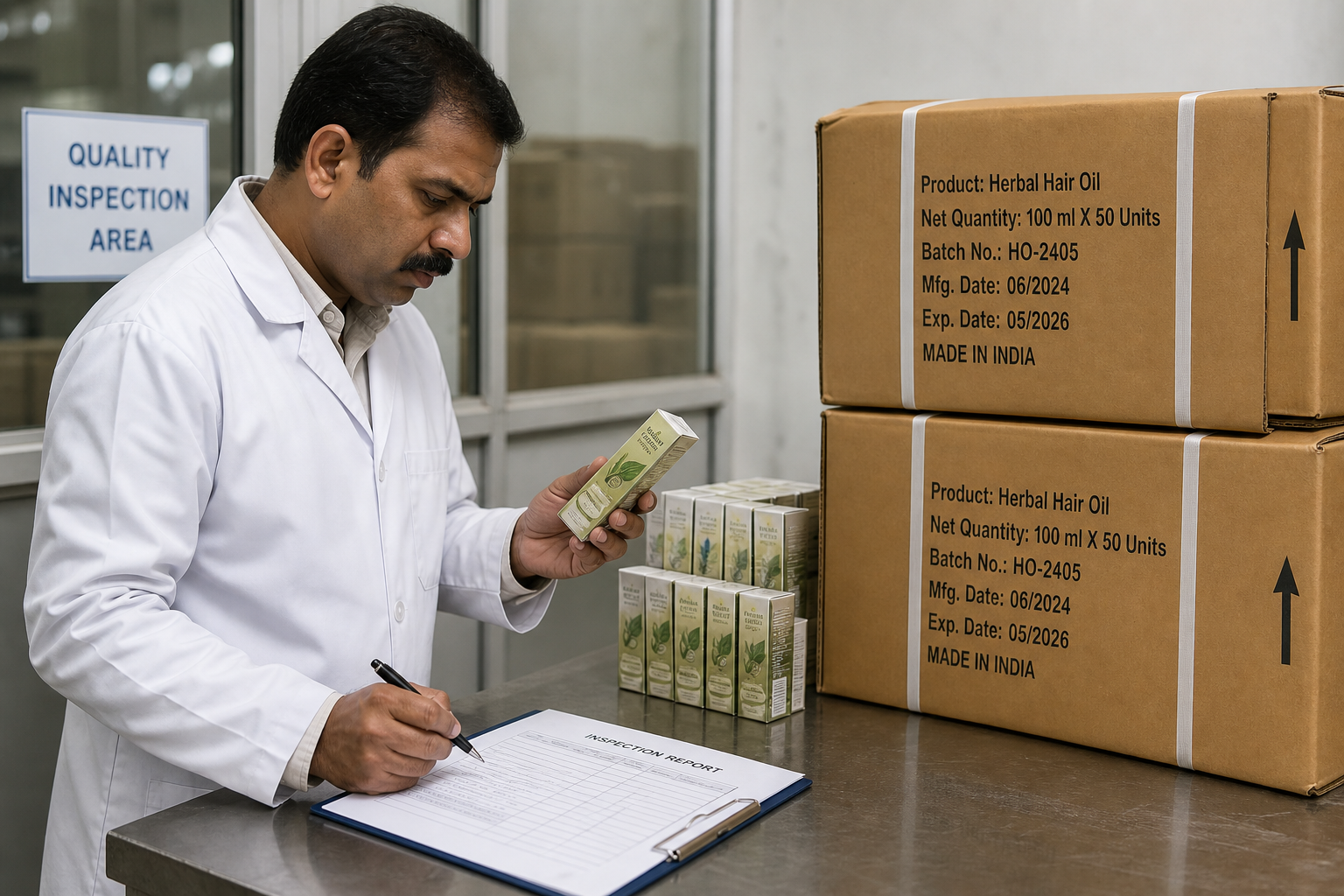
Common mistakes when diversifying sourcing to India
Common Mistakes Box
Comparison table
Swipe →
Data table — swipe horizontally on small screens
| Mistake | Why it happens | Better approach |
|---|---|---|
| Expecting India to match China on every SKU | Treating diversification as universal migration | SKU-level SCDDF; keep China where it wins |
| Comparing India FOB to China FOB only | Ignoring duty, freight, rework, coordination | Full landed cost model |
| One failed trial = "India doesn't work" | Wrong category or unverified supplier | Fix pilot selection; rerun with audit depth |
| No written allocation rules | Reverts to China under deadline pressure | Charter + scorecard + quarterly review |
| Skipping QC on India trial to save cost | False pass/fail on trial economics | Full QC OS on first orders |
| Adding India without buyer-controlled specs | Knowledge trapped at China supplier | Export spec pack before India RFQ |
| Confusing diversification with immediate China exit | Political pressure vs operational reality | Multi-year portfolio; phased allocation |
| Ignoring Art 10 dual-country OS | Decision made but execution chaotic | Link charter to China–India sourcing strategy |

Timeline: realistic expectations for China+1 India implementation
Buyers who expect full diversification in one quarter usually under-invest in verification and over-index on price quotes. A three-year portfolio build compounds qualification assets that accelerate later SKUs.
Comparison table
Swipe →
Data table — swipe horizontally on small screens
| Phase | Months | Milestone |
|---|---|---|
| Charter and baseline | 0–1 | Approved pilot SKUs and China baseline |
| Discovery and verification | 1–3 | Shortlist audited; samples approved |
| Trial order | 3–6 | PSI pass; scorecard complete |
| Initial allocation | 6–7 | Dual sourcing rules live |
| Scale and second SKU wave | 7–18 | Additional SKUs qualified; share adjusted |
| Portfolio review | 18+ | Concentration map updated; charter refreshed |

Conclusion
India vs China supply chain diversification is a portfolio decision, not a country replacement. China remains the right primary origin for many SKUs where ecosystem depth, unit cost, and lead time dominate. India earns its China+1 role where concentration risk, tariff exposure, category depth, or customer requirements justify parallel qualification — textiles, food, engineering, chemicals, and selected private-label programmes among the clearest wins.
Use the Supply Chain Diversification Decision Framework (SCDDF) to expose concentration, evaluate India fit, select pilots, qualify in parallel, and allocate with governance. Execute through the India Add Playbook (IAP) with honest China baselines, cluster-aware supplier discovery, trial orders under full QC, and written dual sourcing rules. For running both origins every day, pair this decision guide with China–India sourcing strategy and China+1 strategy for global buyers.
Altus Exports helps international buyers execute the India side of diversification — from finding manufacturers in India through trial orders and importing products from India. If you are chartering a China+1 pilot, share your SKU list, destination markets, and timeline to discuss a structured India add path.