
India vs China for Exporting to the USA, Europe and Middle East
By Saurabh Mittal, Founder, Altus Exports
Neither origin wins every USA, EU/UK, or GCC export route. China often leads high-volume hard goods with mature Western lanes. India often fits textiles, leather, food niches, and diversification. Match each SKU to destination compliance, landed cost, and lane reliability—not one Asia path.
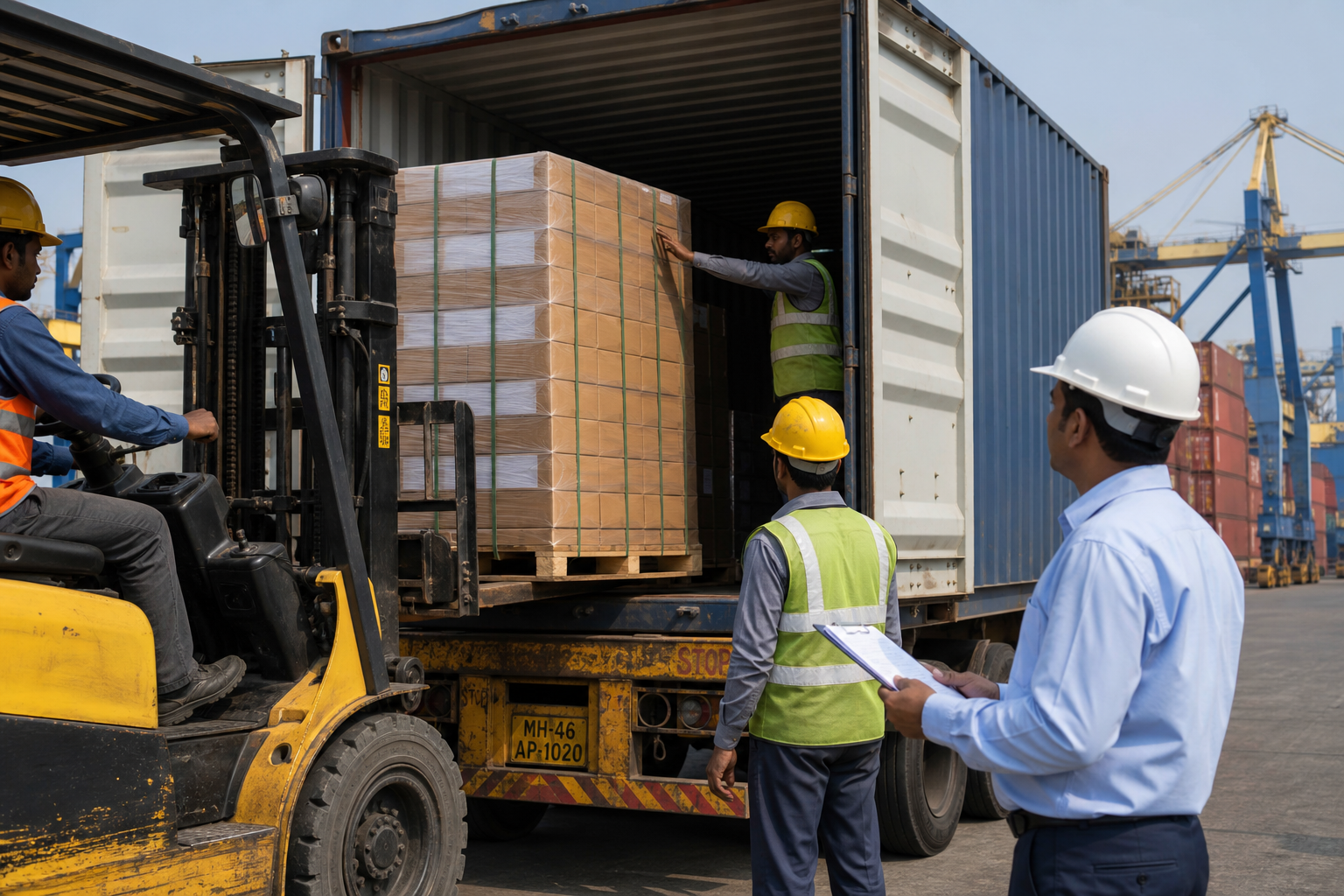
International buyers rarely choose a sourcing origin in isolation. They choose an origin that can produce the right product—and move it through the right compliance, documentation, and logistics path into the market where customers pay. That makes India vs China USA Europe Middle East a destination-market question as much as a factory question. A supplier that quotes an attractive FOB price is not the right supplier if destination customs, labeling rules, product registration, or tariff treatment make clearance slow, expensive, or unpredictable.
China and India both export aggressively to North America, Europe, the UK, and the Gulf Cooperation Council (GCC) states. Their export profiles differ. China ships enormous volume across consumer electronics, furniture, plastics, machinery, apparel basics, and industrial intermediates through mature freight lanes and decades of buyer familiarity. India ships deep category volume in textiles, leather, brass and metalware, handicrafts, spices and food ingredients, pharmaceuticals, and growing engineering and chemical lines—often with English-first coordination and export documentation experience oriented toward US, EU, and Gulf buyers. The comparison is not which country exports more globally. It is which origin gives your SKU the better path into your destination market at acceptable landed cost and risk.
This guide applies the Destination Fit Matrix (USA / Europe / Middle East)—a structured way to evaluate India vs China by where you sell, not only where you manufacture. It covers market-specific compliance and commercial realities, category-level fit by destination, logistics lane considerations, and a practical decision workflow. For Incoterms, customs clearance mechanics, shipping execution, and landed-cost modeling, use the import cluster linked throughout this article; those topics are deliberately not rewritten here. For the broader India vs China decision framework, see India vs China for sourcing: which country is better for international buyers?. Altus Exports supports buyers as an India-based sourcing and merchant-export coordination partner for programs where India—or India as part of a dual-origin strategy—is the right call for your destination markets.
Why destination market should come before origin slogan
Procurement teams sometimes pick India or China first, then discover destination friction later: FDA-style expectations for food-contact goods into the USA, CE marking and REACH substance rules for EU retail, UKCA transition complexity for UK listings, or halal and label-language requirements for GCC retail and food service. Origin choice affects all of these—not because regulations differ by country of manufacture alone, but because factory export readiness, testing infrastructure, documentation habits, and category cluster depth differ between India and China.
Three principles keep destination-market analysis honest.
First, compliance is product-specific, not country-generic. Both India and China produce export-ready factories and under-prepared suppliers. A Spices Board–registered Indian processor with steam treatment and phytosanitary workflow may be easier to qualify for US or EU spice import than an unregistered trader in either country. A Chinese electronics assembler with established UL or FCC test relationships may be the only practical path for a US retail electronics SKU regardless of India PLI momentum.
Second, landed cost includes destination treatment. Tariff lines, anti-dumping history, preferential trade access, and Section 301–style exposure (for US buyers evaluating China origin) can invert a headline FOB comparison. Model landed cost with the same Incoterm and scope; see India vs China sourcing costs: a complete landed cost comparison and how to calculate landed cost for products imported from India.
Third, logistics lane maturity affects service level, not only freight rate. Transit time reliability, consolidation options, direct vs transshipment routes, and port-pair familiarity with your forwarder influence whether a destination launch date is achievable. Shipping execution detail lives in shipping from India: a complete guide for importers and your forwarder's lane data—not in origin slogans.

The Destination Fit Matrix (USA / Europe / Middle East)
The Destination Fit Matrix (USA / Europe / Middle East) scores each candidate SKU against five destination dimensions. Use it after you have a frozen product brief and before you commit tooling or dual-source capital.
Score each dimension Green / Amber / Red per origin (India vs China) for the SKU. Green means qualified evidence exists or is achievable within your timeline. Amber means gaps are closable with investment (testing, label rework, new supplier qualification). Red means structural mismatch—wrong cluster, missing cert infrastructure, or prohibitive trade treatment.
Comparison table
Swipe →
Data table — swipe horizontally on small screens
| Dimension | What it evaluates | Primary evidence |
|---|---|---|
| Regulatory admissibility | Can this product legally enter the destination market as specified? | HS classification, restricted lists, product registrations, cert path |
| Labeling and claims | Do labels, languages, and marketing claims meet market rules? | Destination label mockups, nutrition/allergen rules, CE/UKCA marks |
| Tariff and trade treatment | What duty and trade-policy exposure applies by origin? | HTS/CN code research, preferential schemes, China-specific US exposure |
| Logistics lane fit | Are reliable routings and transit times available at viable cost? | Forwarder quotes, port pairs, seasonal capacity |
| Supplier export readiness | Does the factory routinely export to this destination with document quality? | Reference shipments, certificate samples, broker feedback |
Matrix output: four allocation outcomes
Comparison table
Swipe →
Data table — swipe horizontally on small screens
| Outcome | Meaning | Typical action |
|---|---|---|
| Single origin — China default | China green on most dimensions for this SKU and destination | Keep or start in China; monitor diversification triggers |
| Single origin — India default | India green on most dimensions | Qualify Indian supplier; plan India import path |
| Dual origin — destination split | Different origins win for different destinations of same category | Separate BOM/spec where needed; avoid one-size-fits-all SKU |
| Dual origin — resilience split | Similar fit; buyer wants concentration risk hedge | Parallel qualification; primary/backup volume rules |
For dual-origin operating mechanics, see China + India sourcing strategy—this article stops at destination fit; Article 10 owns day-to-day dual-country governance.
Exporting to the USA: India vs China fit
US buyers—importers, distributors, Amazon sellers, retail private-label teams, and industrial purchasers—evaluate India and China through CBP entry, product safety regimes, labeling rules, and tariff exposure as much as through factory quotes.
USA — structural comparison
Comparison table
Swipe →
Data table — swipe horizontally on small screens
| Factor | China — typical US export profile | India — typical US export profile | Buyer implication |
|---|---|---|---|
| Tariff exposure | Elevated scrutiny and additional duties on many consumer and industrial lines in recent cycles | Generally lower additional-duty friction on many agro, textile, and handicraft lines—verify per HTS | Model HTS by origin; do not assume 2019 duty tables |
| Product safety / FDA touchpoints | Mature export supply chains for many hard goods; food/CPSA paths vary by factory tier | Strong agro/spice export infrastructure; food and dietary paths need verified processors | Match factory to product regime, not platform badge |
| Textiles and apparel | Scale and speed at high volume | Competitive on cotton, home textiles, craft segments | Compare MOQ, lead time, and compliance scope |
| Electronics / EMS | Deep component ecosystem | Growing but narrower for full-stack assemblies | US electronics retail often remains China-default |
| Documentation to CBP | Exporter experience common among established factories | Export experience common; verify entity and document pack | Use customs clearance when importing from India for process depth |
| English coordination | Variable without Mandarin-capable buyer team | Widely used in export-facing roles | India may reduce coordination load for US SMEs |
USA — category notes
Food, spices, and ingredients: India often holds structural advantage when buyers need origin-linked products (basmati, specific spice grades, honey, pulses) with export registration workflows buyers already recognize. China competes on processed ingredients and packaging-heavy lines where supply chains are mature. US admissibility depends on facility registration, prior notice, labeling, and test evidence—regardless of origin.
Home textiles and apparel: Both origins serve US retail. China often wins on basic volume programs with locked specs. India competes on cotton-rich lines, customization, and mid-volume private label where flexibility matters. Compare India vs China for private label products when branding is central.
Hard goods, furniture, and seasonal: China retains scale advantage for many US big-box and e-commerce volume programs. India fits selective dual-source or craft-forward assortments—not automatic replacement at identical MOQ and tooling.
Industrial and MRO components: Evaluate drawing-level fit. India has engineering pockets; China has broader tier depth. Destination is less about "US market love" and more about cert and traceability (material certs, PPAP-style expectations where applicable).
USA — practical workflow hooks
- Importer of record and HTS classification — confirm who files entry and that classification matches material and function.
- Product compliance path — CPSA, FDA, FCC, UL, or other regimes as applicable; do not infer from supplier verbal assurance.
- Label and packaging approval — US-market artwork signed off before production.
- Incoterms and freight — see how to import products from India for stage-gate logic; mirror discipline for China POs.
- Landed cost model — include duty, harbor fees, inland delivery, inspection, and coordination time.
Before first US shipment from either origin, align:
Illustrative scenario: A US regional distributor launching a cumin program for retail and food-service may find Indian exporters with steam treatment and lot traceability align with US spice import expectations, while a Chinese origin quote for the same spice name may omit treatment scope. Reverse scenario: A US consumer electronics accessory brand needing molded housings, cables, and retail clamshell packaging in six weeks may remain China-default because adjacent suppliers compress iteration time.

Exporting to Europe and the UK: India vs China fit
India China EU sourcing decisions must account for EU regulatory harmonization, member-state enforcement variation, UK market divergence post-Brexit, and increasing attention to product safety, chemical compliance, and supply-chain due diligence—not only unit economics.
Europe / UK — structural comparison
Comparison table
Swipe →
Data table — swipe horizontally on small screens
| Factor | China — typical EU/UK export profile | India — typical EU/UK export profile | Buyer implication |
|---|---|---|---|
| CE / UKCA pathways | Established factories with test lab relationships for common hard goods | Feasible for many categories; verify lab scope and DoC ownership | Buyer owns market compliance responsibility either way |
| Textiles and labeling | High volume supply to EU retail | Strong in cotton, home, craft; fiber labeling discipline varies | Audit label compliance on samples |
| REACH / chemical exposure | Importer obligations apply regardless of origin | Same; know substance rules for textiles, metals, plastics | Compliance cost is not "avoided" by switching origin |
| Agro and food | Selective export depth | Deep spice, rice, honey, ingredient clusters | EU food law and contaminant limits drive supplier choice |
| Sustainability scrutiny | Supply-chain due diligence pressure on EU importers | Same pressure; documentation quality matters | Origin switch alone does not satisfy ESG audits |
| Lead time and MOQ | Scale advantage on repeat programs | Flexible on many mid-volume programs | SMEs may favor India coordination; verify capacity |
Europe / UK — regulatory mindset for buyers
EU and UK buyers should treat importer-of-record obligations seriously: product safety, technical files where required, WEEE/battery rules where applicable, and restricted substance controls. Indian and Chinese factories can both produce EU-compliant goods when buyers invest in specification, testing, and document control. The origin comparison question is whether your supplier cluster has repeatable export experience to EU/UK with acceptable document quality and responsive remediation when lab tests fail.
For UK-specific listings, confirm whether UKCA, CE acceptance policies, and labeling language (English, bilingual where required) are locked before bulk production. Brexit did not simplify dual-market labeling for many SKUs.
Europe / UK — category notes
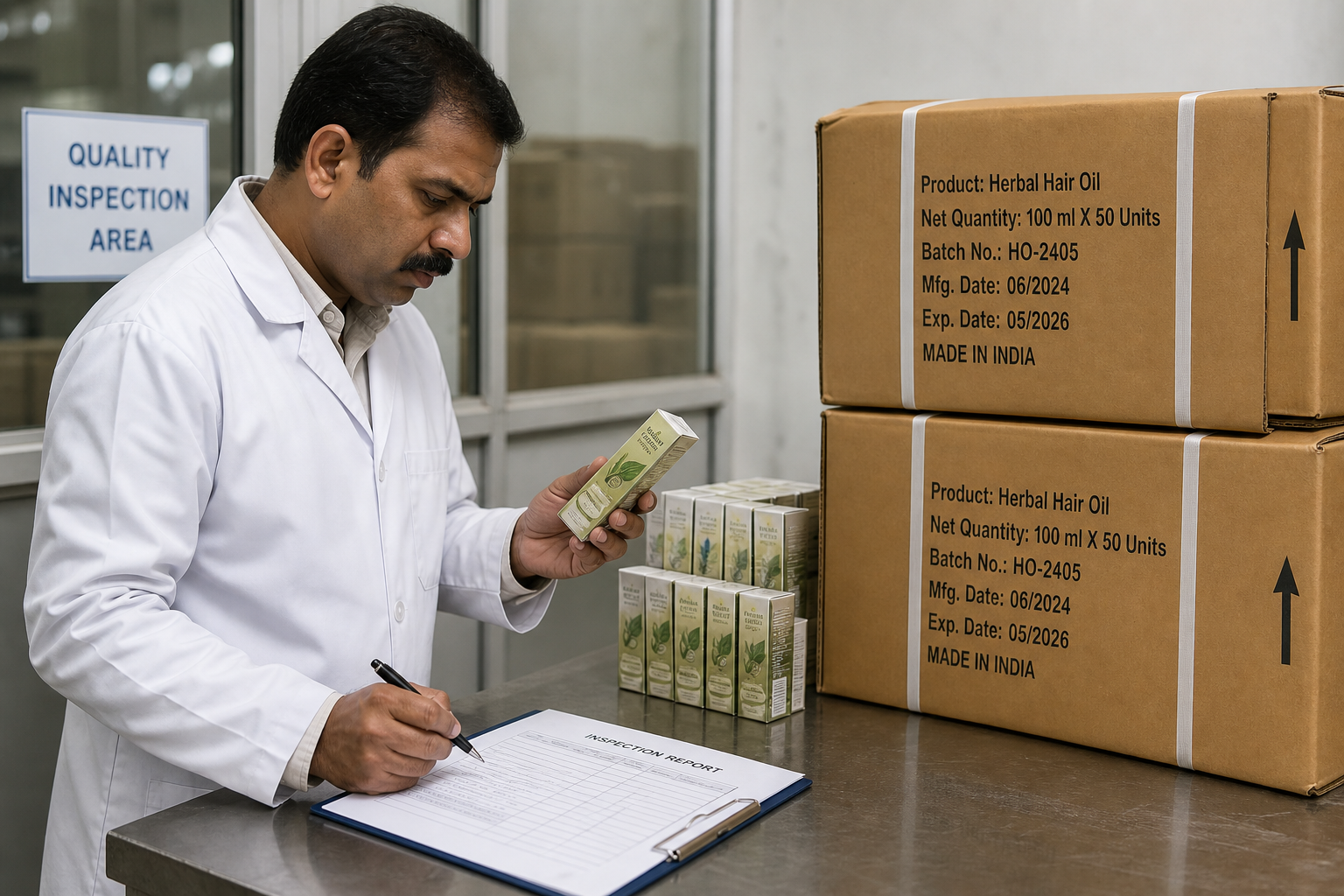
Spices, rice, and ingredients: India is often the default origin for authentic EU spice and basmati programs where buyers need specific grades and treatment. China may compete on blended or processed inputs. Run contaminant and pesticide residue expectations against supplier test history.
Home textiles and apparel: EU retail frequently sources from both origins. India competes on craft, cotton, and customization; China on volume basics. Compare India vs China manufacturing: cost, quality, MOQ and lead times for operational trade-offs.
Brass, metalware, and gifts: India cluster depth is a common EU sourcing path for decorative and gift categories. China produces equivalents at scale; buyers choose based on design authenticity, MOQ, and landed cost to their EU hub.
Machinery and industrial SKUs: CE technical files and service parts availability drive supplier choice more than country preference. Qualify factory-by-factory.
Illustrative scenario: A Nordic home goods retailer dual-sources towels—China for high-volume white SKUs, India for organic cotton and embroidery lines—because EU labeling and design differentiation align with different factory strengths, not because one country "beats" the other on every towel.
Exporting to the Middle East and GCC: India vs China fit
GCC sourcing India China comparisons reflect geographic proximity advantages from India, halal and label expectations for food and personal care, re-export hub dynamics (UAE, Saudi Arabia), and buyer preference for English coordination and flexible MOQs on mid-volume programs.
Middle East / GCC — structural comparison
Comparison table
Swipe →
Data table — swipe horizontally on small screens
| Factor | China — typical GCC export profile | India — typical GCC export profile | Buyer implication |
|---|---|---|---|
| Transit time to Gulf | Competitive on direct lanes from East China ports | Often shorter sailings from West/South India ports | Lead time can favor India on repeat programs |
| Food and halal-sensitive categories | Established exporters; verify halal cert scope | Strong spice, rice, snack, and ingredient export culture | Cert body and product scope must match destination |
| Textiles and garments | Volume supply to Gulf retail | Deep supply for fabrics, home, ethnic wear | Match assortment strategy |
| Handicrafts and brass | Available | Cluster depth in Rajasthan, Moradabad, etc. | India often preferred for variety |
| Re-export hub entry (UAE) | Common China→UAE→Africa path | Common India→UAE path | Model hub clearance + re-export if applicable |
| Payment and commercial terms | Mature export finance patterns | Mature merchant export patterns | Align LC, TT milestones, and inspection gates |
Middle East / GCC — market nuances
Gulf buyers include local retailers, hospitality groups, government tenders, and distributors serving wider MENA and East Africa. Requirements vary by emirate and by whether goods stay local or re-export. Arabic labeling, bilingual packaging, halal certification for applicable categories, and municipality registration (where required) should appear in the product brief before origin selection.
India's geographic and cultural trade links with the Gulf often produce English-first export teams accustomed to GCC documentation. China serves Gulf volume powerfully in electronics, furniture, construction materials, and consumer goods. Buyers running India vs China USA Europe Middle East portfolios frequently keep China for high-volume hard goods into Gulf hypermarkets while sourcing spices, rice, textiles, and brass from India for differentiation and speed.
Illustrative scenario: A Dubai-based distributor building a housewares assortment for UAE and Kenya may source plastic organizers from China at scale while sourcing brass décor and spice gift sets from India—destination fit is really assortment architecture, with hub logistics coordinated through one forwarder.
Category × destination quick reference
Use this table as a starting hypothesis—not a verdict. Confirm with the Destination Fit Matrix for your exact spec and compliance path.
When private label and launch timing drive the decision, cross-read India vs China for private label products and India vs China for SME buyers.
Comparison table
Swipe →
Data table — swipe horizontally on small screens
| Category | USA — China | USA — India | EU/UK — China | EU/UK — India | GCC — China | GCC — India |
|---|---|---|---|---|---|---|
| Spices / agro ingredients | Selective | Often strong | Selective | Often strong | Volume | Often strong |
| Cotton home textiles | Scale | Competitive | Scale | Competitive | Scale | Competitive |
| Leather goods | Scale | Competitive | Both viable | Competitive | Both viable | Competitive |
| Brass / metal décor | Available | Cluster depth | Available | Cluster depth | Available | Cluster depth |
| Consumer electronics | Default | Niche | Default | Niche | Default | Niche |
| Furniture (volume) | Default | Selective | Default | Selective | Default | Selective |
| Engineering components | Tier depth | Niche pockets | Tier depth | Niche pockets | Tier depth | Niche pockets |
| Private label mid-MOQ | If white-label exists | Flexible OEM | If white-label exists | Flexible OEM | Both | Both |

Logistics lanes: origin is only the first mile
Destination fit fails when buyers ignore port pairs, consolidation, and Incoterms handoffs.
Incoterms define who owns freight, insurance, and export/import clearance. Misaligned Incoterms between Indian and Chinese suppliers in the same assortment create finance and document chaos. Standardize preferred terms where possible and document exceptions. Depth: how to import products from India and your China PO templates.
Comparison table
Swipe →
Data table — swipe horizontally on small screens
| Lane consideration | China | India | What buyers should do |
|---|---|---|---|
| US West Coast routing | Mature direct and transship options from East China | Direct options from Nhava Sheva, Mundra, Chennai | Compare total transit + reliability, not headline ocean rate |
| US East Coast / Gulf | Strong China services | India services improving; verify cut-offs | Ask forwarder for lane-specific on-time performance |
| North Europe hubs | High frequency from Chinese base ports | Competitive from Indian west coast to Rotterdam/Antwerp | Align with your 3PL inbound calendar |
| UK direct | Established | Established on select services | Confirm post-Brexit entry documentation early |
| Jebel Ali / Gulf | Major China export lane | Shorter sailing from India on many services | Model hub storage if re-exporting |
Customs and documentation: link, don't duplicate
- End-to-end import process: How to import products from India
- Shipping execution: Shipping from India: complete guide for importers
- Customs clearance: Customs clearance when importing from India
- Landed cost: How to calculate landed cost for products imported from India
Both origins require disciplined document packs: commercial invoice, packing list, bill of lading or airway bill, certificates of origin where preferential treatment applies, product-specific certificates (phytosanitary, health, test reports), and accurate HS alignment between invoice, packing list, and clearance entry.
This article does not restate customs encyclopedia content. Use these cluster resources by destination need:
For China-origin shipments, apply the same discipline with your China forwarder and customs broker. Mixed-origin programs need one document standard so finance and warehouse teams can reconcile arrivals without origin-specific guesswork.
The 5-Step Destination Fit Workflow
Run this workflow per SKU (or per SKU-destination pair if you sell the same product into multiple regions with different rules).
Step 1 — Freeze market-specific requirements. Capture HTS/CN code hypothesis, labeling languages, certifications, restricted substances, shelf-life rules, and customer-specific audit requirements for each destination.
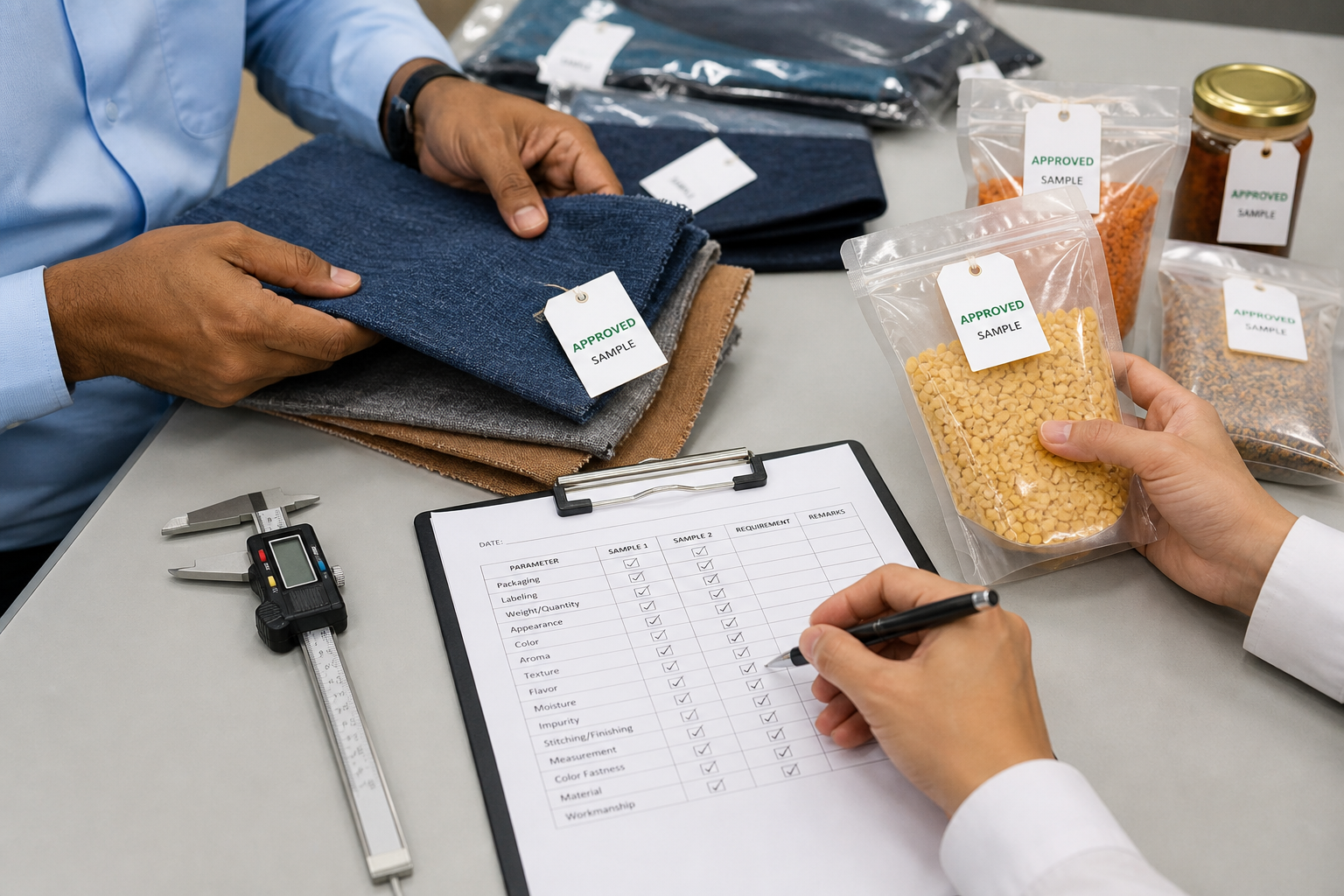
Step 2 — Score India and China suppliers on export readiness. Request destination reference shipments, sample document packs, and certificate examples—not marketing decks.
Step 3 — Model landed cost and tariff treatment by origin. Include duty, freight, insurance, inspection, rework reserve, and coordination hours. See India vs China sourcing costs: landed cost comparison.
Step 4 — Validate logistics and lead time. Confirm production lead time + port-to-warehouse transit meets launch or replenishment dates.
Step 5 — Assign origin and document the decision. Record primary/backup origin, compliance owner, QC plan, and review triggers (tariff change, quality failure, capacity loss). For diversification context, see India vs China supply chain diversification.

Supplier verification and risk by destination
Export readiness variance exists in both countries. A factory that ships domestically is not automatically qualified for US retail or EU CE paths. Apply verification proportionate to product risk and destination: factory audits, sample testing, document dry-runs, and pre-shipment inspection. See India vs China quality control, factory audits, and supplier risk and India vs China supplier networks.
For India-side execution without duplicating your entire procurement team, an India sourcing partner or merchant exporter in India can coordinate supplier verification, sample flow, and export document collection—while you retain product and compliance decisions.
When destination markets push you toward dual origin
You may discover that import from India vs China USA is not one answer—for example, China supplies US electronics accessories while India supplies US spice private label; EU textiles split by price tier; GCC housewares split by material. That is normal portfolio design, not indecision. Article 10 covers how to run dual-origin programs: allocation rules, governance, and QC synchronization. This article helps you decide where each origin fits each destination.

Conclusion
India vs China USA Europe Middle East is a portfolio question. China retains structural strength for many high-volume paths into Western and Gulf markets where ecosystem density and repeat export lanes are already embedded. India earns allocation when category clusters, compliance readiness, coordination model, tariff treatment, or Gulf proximity align with your SKU and destination rules. The Destination Fit Matrix (USA / Europe / Middle East) turns that insight into a repeatable workflow: score regulatory admissibility, labeling, tariff treatment, logistics fit, and supplier export readiness before you lock origin.
Altus Exports helps international buyers execute India-side programs for US, European, UK, and GCC destinations—supplier search, sample coordination, QC follow-up, and export execution—without replacing your compliance and commercial decisions. Share your destination markets and SKU list for a practical India-fit conversation.