
India vs China Manufacturing: Quality Control, Factory Audits and Supplier Risk
By Saurabh Mittal, Founder, Altus Exports
QC differs more by factory maturity and buyer process than by country. Both need specs, samples, monitoring, and PSI. China often shows higher average export-QC maturity; India needs stronger upfront audits on new relationships. Risk falls with verification and order-level QC discipline.
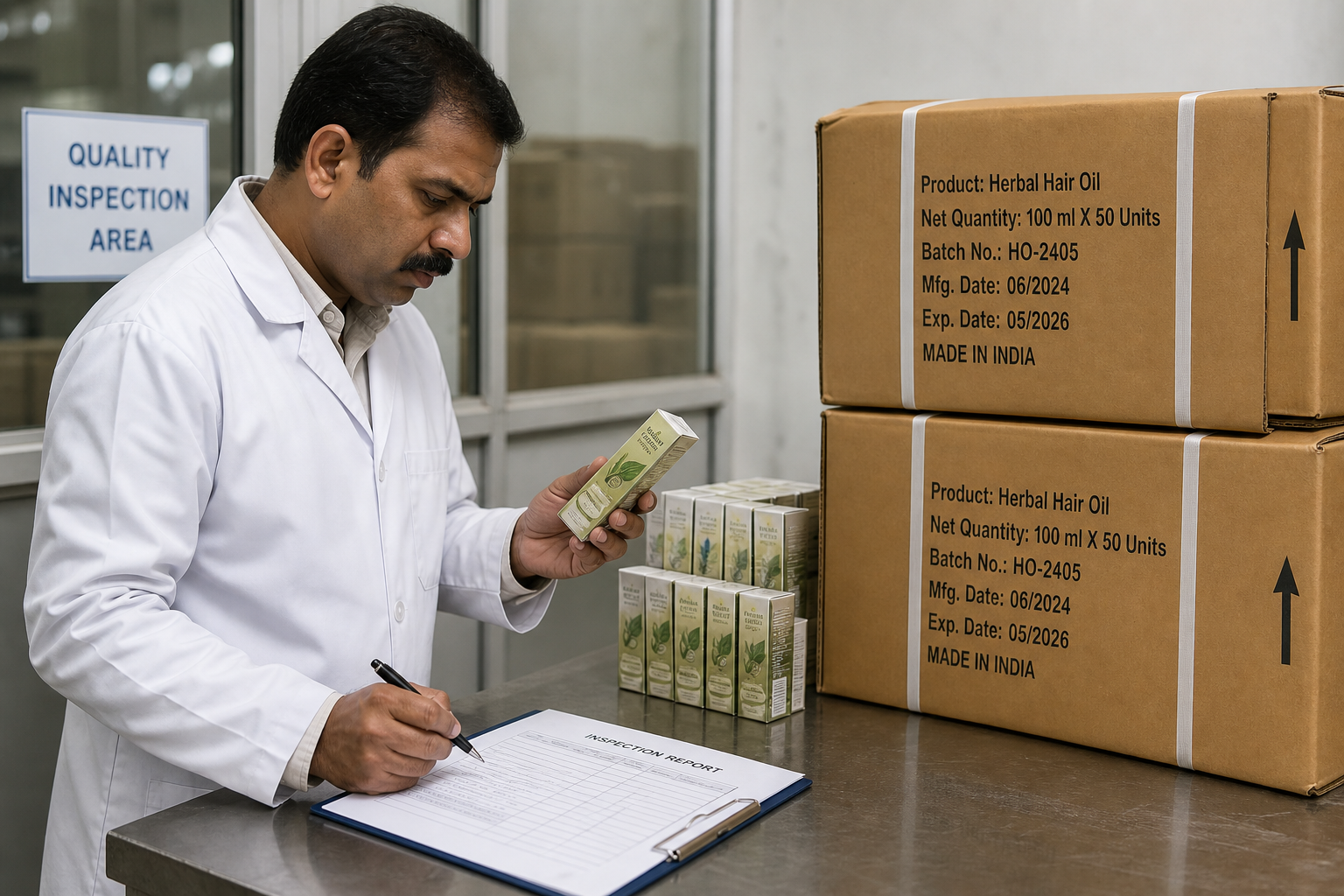
International buyers often ask a deceptively simple question: Is quality better from India or China? The honest answer is that quality is not a country property. It is the outcome of specification clarity, factory capability, process control, subcontracting transparency, inspection discipline, and how consistently a buyer converts requirements into evidence across the order lifecycle.
China built decades of export-facing manufacturing at scale. Thousands of factories serve global brands with established QC departments, third-party inspection ecosystems, and buyer teams who know how to run AQL-based pre-shipment inspection. India offers strong manufacturing depth in textiles, engineering, food, chemicals, and handicrafts — with wider variance in factory maturity, documentation habit, and English-language technical communication. The same buyer can experience excellent quality from a qualified Indian exporter and unacceptable variance from an unverified one. The same is true in China when buyers skip audit depth or assume scale equals control.
This guide compares India vs China quality control, factory audits, and supplier risk — not to declare a winner, but to help buyers allocate verification effort, design audit depth, and build QC governance that works for single-origin, dual-origin, or China+1 programmes. It does not rewrite the full India QC operating system for specifications, AQL, production monitoring, and CAPA. For that execution depth, use the India QC cluster:
Why QC and supplier risk cannot be compared as "India vs China averages"
How to conduct quality control when sourcing from India
Pre-shipment inspection in India
India quality control process from selection to shipment
How to verify an Indian supplier before placing an order
For broader India vs China context — cost, MOQ, lead times, and supplier networks — see India vs China manufacturing: cost, quality, MOQ and lead times and India vs China for sourcing: international buyers' guide. Altus Exports supports international buyers with India-side factory follow-up, sample coordination, inspection booking support, and export execution through a global sourcing partner in India.
Country-level quality generalisations fail buyers because within-country variance often exceeds between-country variance for a given product category.
The strategic takeaway: India vs China quality control is a process design question. Buyers who run the same specification, audit, monitoring, and inspection rigour in India as their best China programmes usually get acceptable outcomes. Buyers who treat India as "lower QC need" or China as "audit optional on repeats" take on supplier risk in either country.
Comparison table
Swipe →
Data table — swipe horizontally on small screens
| Factor | Typical China sourcing context | Typical India sourcing context | Buyer implication |
|---|---|---|---|
| Export QC ecosystem | Large third-party inspection industry; many factories accustomed to buyer audits | Growing inspection capacity; factory audit maturity varies by cluster | Audit and PSI are standard in both — depth and consistency differ by factory, not passport |
| Specification discipline | Mature suppliers expect detailed spec packs; less tolerance for vague briefs | Wide range — some exporters excel; others rely on "as per sample" without revision control | Buyer must issue measurable specs in both origins |
| Subcontracting transparency | Common; can be well-documented or hidden | Common in textiles and handicrafts; often under-disclosed | Map actual production site, not only sales office |
| Documentation habit | Often strong on export packing lists, test reports for repeat buyers | Variable — strong in pharma and large engineering; weaker in small job shops | Require document checklist in PO |
| Language and technical communication | Generally strong in coastal export factories | Generally strong in business English; technical nuance varies | Put critical requirements in writing with revision IDs |
| Buyer experience density | Many buyers have internal China QC playbooks | Fewer buyers have mature India QC playbooks | India programmes need deliberate OS adoption, not assumption |
The Supplier Risk Comparison Matrix (SRCM)
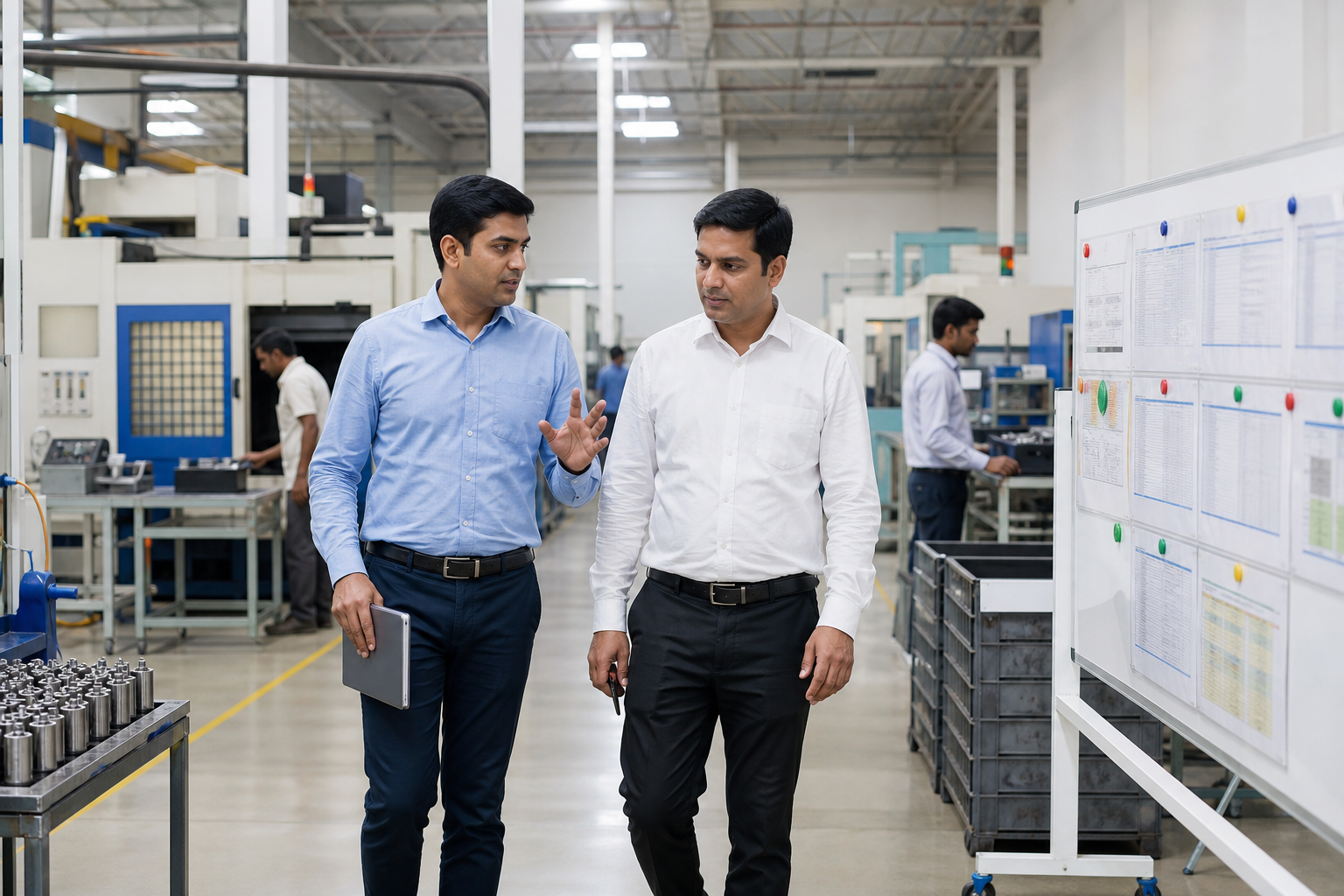
Altus Exports uses the Supplier Risk Comparison Matrix (SRCM) to help buyers compare India and China at the supplier and SKU level, not the country level. Score each candidate supplier across six dimensions:
Apply SRCM before comparing India vs China at portfolio level. A high-scoring Indian manufacturer can present lower supplier risk than a low-scoring Chinese trader for the same SKU.
For supplier network discovery context, see India vs China supplier networks. For verification execution on India candidates, use how to verify an Indian supplier before placing an order.
Comparison table
Swipe →
Data table — swipe horizontally on small screens
| SRCM dimension | What to assess | Higher risk signal (either origin) | Mitigation |
|---|---|---|---|
| Entity and role clarity | Manufacturer vs trader vs agent; export licence path | Cannot name production site or refuses visit | Verification ladder before PO |
| Capability match | Equipment, workforce skill, category experience | Portfolio mismatch; no comparable export reference | Technical audit + sample |
| Process control | Incoming QC, in-process checks, final inspection records | No written procedures; "we check everything" | Factory audit + PO inspection rights |
| Subcontracting exposure | Who dyes, prints, plates, assembles, packs | Undisclosed subcontractor for critical steps | Process map in audit |
| Compliance and testing | REACH, FDA, FSSAI, OEKO-TEX, ISO as applicable | Cannot produce certificates or test method | Lab test before scale |
| Commercial and continuity | Capacity honesty, payment terms, tooling ownership | Overcommitment; vague tooling terms | Scorecard + dependency mapping |
India vs China QC maturity: a balanced comparison
QC maturity means the factory's ability to produce to specification repeatedly — supported by documentation, trained QC staff, calibrated equipment, and corrective action when nonconformities appear.
Neither country eliminates the need for buyer-side QC. China programmes fail when buyers skip inspection on "trusted" suppliers and discover subcontractor swaps or silent material changes. India programmes fail when buyers assume verbal assurance replaces spec packs and PSI.
For the full order-level India QC rhythm, see India quality control process from selection to shipment. This article compares origins; that article operates India orders.
Comparison table
Swipe →
Data table — swipe horizontally on small screens
| QC maturity element | China — general pattern | India — general pattern | Buyer action |
|---|---|---|---|
| In-house QC team | Common in mid-to-large export factories | Common in larger exporters; thin or absent in small job shops | Confirm QC headcount and authority in audit |
| Third-party inspection acceptance | Widely accepted; many suppliers factor PSI cost | Widely accepted among export-oriented suppliers | Book independent PSI on new relationships |
| AQL familiarity | High among export manufacturers | High among export manufacturers; lower in domestic-only shops | Define AQL in spec pack regardless of origin |
| Test and lab access | Strong cluster lab access in coastal industrial zones | Strong in pharma, food, textiles hubs; variable elsewhere | Nominate tests and acceptable labs in PO |
| CAPA discipline | Mature suppliers document root cause | Variable — strong in ISO-certified plants | Require CAPA report after major fails |
| Digital traceability | Increasing — batch codes, scan systems in leading plants | Growing; often manual in smaller units | Define lot marking and traceability in spec |

Factory audit India vs China: depth, cost, and what to verify
Factory audits answer whether a site can make your product under acceptable process control — before you release a purchase order or scale volume. Audit mechanics are similar globally; what you find differs by factory, not by flag.
The Factory Audit Depth Ladder (FADL)
Comparison table
Swipe →
Data table — swipe horizontally on small screens
| Audit topic | India vs China — practical difference | Same requirement both countries | |
|---|---|---|---|
| Production site access | India: confirm actual factory vs trader office; cluster visits may need local coordination | Walk the production floor, not only showroom | |
| Subcontractor mapping | India: textile dyeing, printing, plating often outsourced | Require disclosure of critical outsourced steps | |
| QC records | China: often more complete binders on repeat export factories | India: ask to see records from recent similar export order | Review incoming, in-process, final inspection logs |
| Equipment calibration | Both: verify for measurement-critical SKUs | Calibration tags on gauges and test equipment | |
| Sample room discipline | Both: golden sample storage varies | Confirm how approved samples are labelled and protected | |
| Social and compliance | Buyer programme dependent | Apply same code whether India or China |
Use risk-tiered audit depth for both origins:
Cost and logistics: China audits benefit from dense industrial clustering — multiple factories per day in Shenzhen, Ningbo, or Dongguan. India audits may require longer domestic travel between clusters (Tiruppur, Ludhiana, Moradabad, Gujarat). Budget travel time in total qualification cost comparison — not only audit fee.
India-specific factory audit checklist depth lives in Indian factory audit checklist for international buyers and factory inspection in India: complete guide. This article situates audits in the India vs China comparison; those articles execute India audits.
What factory audits do not replace
- guarantee conformance of a specific production lot;
- replace golden sample approval;
- eliminate need for pre-shipment inspection;
- prove that the audited site will be the actual production site without ongoing confirmation.
Audits confirm capability and system presence at a point in time. They do not:
Order-level QC closes the gap between audit and shipment. Link: how to conduct quality control when sourcing from India.

Supplier risk India China: verification before quality control
Supplier verification and quality control are adjacent but distinct. Verification asks: Is this entity real, is the role clear, and does the factory appear capable? QC asks: Does this order conform through production and shipment?
Common supplier risk patterns:
For India verification ladder detail: how to verify an Indian supplier before placing an order. For product-quality evidence before scale: how to verify product quality with an Indian manufacturer.
Comparison table
Swipe →
Data table — swipe horizontally on small screens
| Risk pattern | India manifestation | China manifestation | Control |
|---|---|---|---|
| Trader posing as manufacturer | Exporter with no owned production | Trading company masking factory | Site visit; production evidence |
| Portfolio inflation | Website shows products never made | Same | Ask for export docs for similar SKU |
| Silent subcontracting | Weaving in-house, dyeing elsewhere undisclosed | Assembly in-house, key component outsourced | Process map in audit |
| Specification drift | "Standard export quality" without metrics | Same phrase, different factory habit | Written spec + AQL |
| Document gaps | Missing test report or incomplete packing list | Same on rushed orders | Document checklist in PO |
| Overcommitment on capacity | Accepts volume beyond realistic lead time | Same during peak season | Reference orders; phased PO |
Pre-shipment inspection and production monitoring: India vs China
Pre-shipment inspection (PSI) is the late gate that verifies a finished lot against agreed criteria before balance payment and dispatch. Production monitoring detects deviation while rework is still feasible.
India PSI execution detail: pre-shipment inspection in India. Third-party options: third-party quality inspection in India. This article does not duplicate AQL selection tables or defect class definitions — those belong in the India QC OS articles.
Comparison table
Swipe →
Data table — swipe horizontally on small screens
| Scenario | Suggested monitoring depth — China | Suggested monitoring depth — India |
|---|---|---|
| New supplier, custom SKU | Full: sample + inline + PSI | Full: sample + inline + PSI |
| Repeat supplier, stable spec, clean history | PSI; periodic inline spot check | PSI; stronger inline on first 2–3 repeats |
| Regulated food or pharma | Spec + lab + PSI + doc review | Same — often more doc scrutiny in India food export |
| Low-value commodity repeat | PSI sample risk-based | PSI — do not waive because unit value is low |
| Dual-origin same SKU | Same spec pack both origins | Parallel inspection standards — no "India lite" QC |

Documentation, traceability, and compliance: comparative expectations
Documentation gaps are a supplier risk category, not merely admin inconvenience. Customs, retailers, and regulators expect coherent chains from specification through test report to shipment documents.
For private-label documentation intensity, see India vs China for private label products. Private-label buyers should assume equal documentation rigour in India and China — brand risk does not reduce at border.
Comparison table
Swipe →
Data table — swipe horizontally on small screens
| Document type | Buyer expectation | India vs China notes |
|---|---|---|
| Commercial invoice and packing list | Accurate HS code, quantity, value | Both: verify consistency with physical lot at PSI |
| Certificate of origin | As required by destination | India: prefer authorised issuer; China: standard export docs |
| Test reports (material, safety, food) | Match spec revision and lot | India food/textile: confirm lab accreditation; China: same |
| Batch / lot traceability | Link production date to inspection report | India: specify in PO; China: specify in PO |
| Label and artwork approval record | Version-controlled | Critical for private label in both origins |
| Inspection report | Third-party or buyer-authorised | Same acceptance rules both countries |
Dual-origin QC governance: one standard, two countries
Buyers running dual sourcing India China for the same or parallel SKUs face a common failure mode: asymmetric QC — full spec and PSI on China, abbreviated process on India because "the price is lower" or "the order is a trial."
The Dual-Origin QC Governance Model (DOQGM) prevents that drift:
Dual-origin portfolio decisions live in India vs China supply chain diversification. Dual-origin daily operation lives in China–India sourcing strategy. This article owns QC and audit comparison; those articles own diversification decision and multi-origin OS.
Comparison table
Swipe →
Data table — swipe horizontally on small screens
| Governance mistake | Consequence | Fix |
|---|---|---|
| "India trial" with no PSI | False pass on supplier capability | Full PSI on every trial |
| Different packaging spec by origin | Customer confusion; retailer rejection | Unified packaging revision |
| Separate spec files with China agent vs India agent | Drift and disputes | Buyer-controlled master file |
| Waiving inline on India for speed | Late discovery at PSI | Risk-based inline per SKU, not per country |

Category-specific QC considerations: India vs China
QC emphasis shifts by category. Use this lens when allocating audit and inspection budget:
For cost-quality trade-offs by category: India vs China manufacturing: cost, quality, MOQ and lead times.
Comparison table
Swipe →
Data table — swipe horizontally on small screens
| Category | China QC focal points | India QC focal points | Shared buyer control |
|---|---|---|---|
| Cotton textiles / home textiles | Consistent dye lot; shrinkage; construction | Subcontracted dyeing/printing; hand-feel variance | Lab dip approval; GSM and dimension checks |
| Spices / agricultural | Less common China origin | Moisture, aflatoxin, adulteration, mesh size | CoA, lab test, lot traceability |
| Engineering / castings | Dimensional tolerance; material cert | Material grade verification; machining finish | Material cert + dimensional PSI |
| Plastics / injection moulding | Tool wear; cavity consistency | Tool ownership; machine tonnage match | First-article + cavity check |
| Handicrafts / metal | Galvanising, sharp edge, weight | Artisan variance; plating subcontract | Limit samples with defect board |
| Electronics assembly | Component authenticity; functional test | PLI assembly — confirm component source | BOM lock; functional test protocol |
| Private label consumables | Label compliance; batch code | Same | Artwork version control; retain samples |
Building your comparative QC playbook
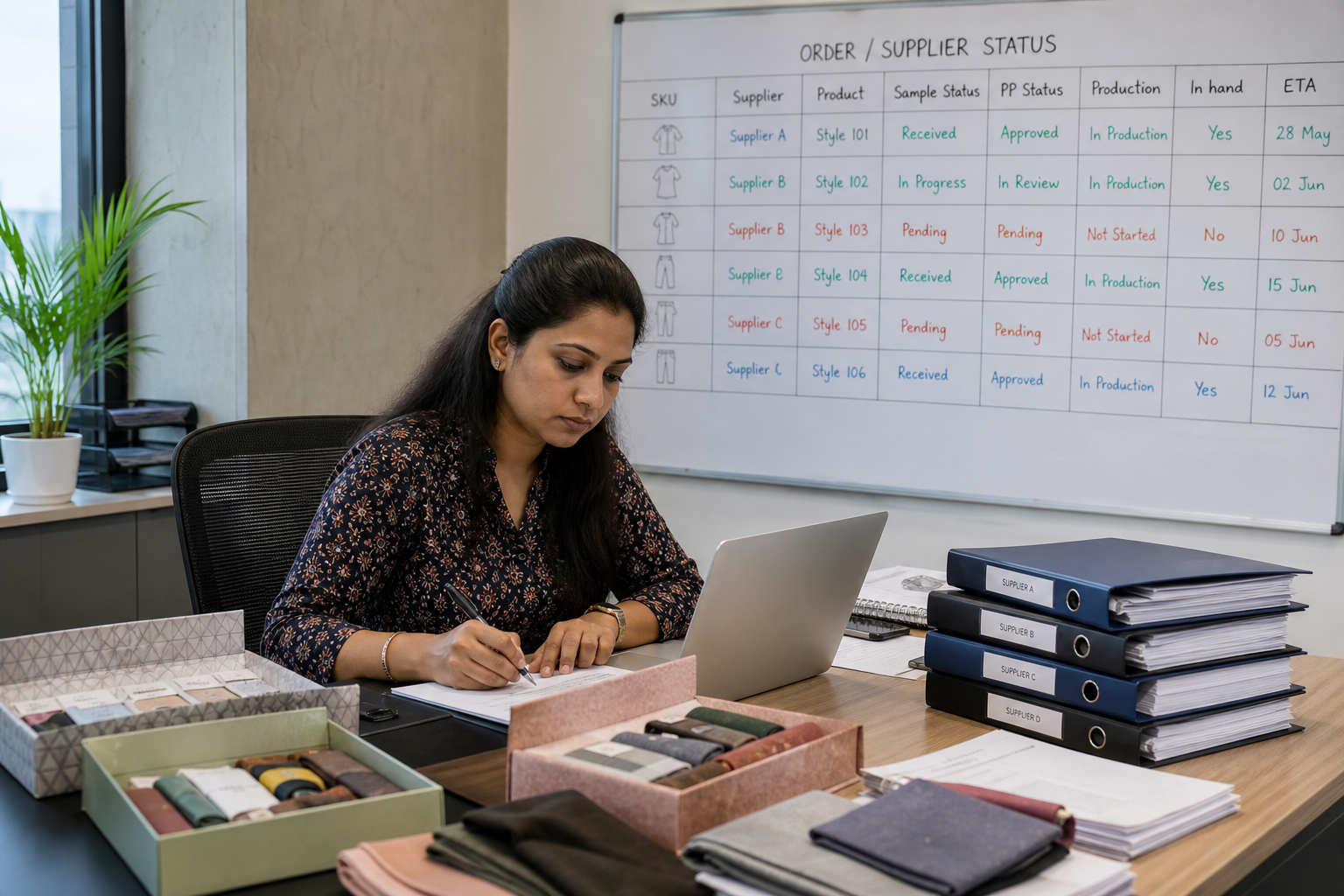
Consolidate India vs China quality control into a buyer-side Comparative QC Playbook — three pages internal procurement can use:
Page 1 — Risk tier definitions
Comparison table
Swipe →
Data table — swipe horizontally on small screens
| Tier | SKU examples | Verification + audit | Production + shipment |
|---|---|---|---|
| A — Critical | Food, childcare, medical adjacent, brand flagship | Full verification + Tier 3 audit | Inline + PSI + doc review |
| B — Standard | Custom private label, moderate value | Tier 2 visit + sample | PSI mandatory |
| C — Commodity repeat | Stable spec, low consequence | Tier 1 refresh + reference | PSI risk-based |
Apply tiers identically for India and China suppliers unless a documented reason exists.
Page 2 — Audit and inspection vendor brief
One brief template for third-party auditors covering: product description, spec revision, defect classes, AQL, approved sample location, subcontractor disclosure requirement, and photo deliverables. Same brief both countries.
Page 3 — Scorecard and CAPA linkage
Track by supplier and origin: PSI pass rate, major defect rate, on-time sample approval, document completeness, CAPA closure time. Compare India vs China suppliers on performance, not stereotypes.
Altus Exports can support India-side audit coordination, sample holds, inspection booking, and export document alignment — especially when buyers lack local staff. See global sourcing partner in India and private label manufacturing in India for programme-fit discussions.
Common mistakes in India vs China QC comparison
Common Mistakes Box
Comparison table
Swipe →
Data table — swipe horizontally on small screens
| Mistake | Why it fails | Better approach |
|---|---|---|
| Assuming China is "automatically better quality" | Low-tier suppliers exist; subcontracting hides risk | SRCM every supplier |
| Assuming India needs "less QC" | Variance is higher; skipped QC amplifies it | Same DOQGM both origins |
| Conflating verification and PSI | Factory looks good; lot still wrong | Separate gates |
| One failed India order → "India quality problem" | Often unverified supplier or no spec | Audit depth + spec pack |
| Different AQL for India trials | Incomparable scorecard | Same AQL unless documented |
| Ignoring subcontracting in textiles/handicrafts | Audit site ≠ production site | Process map mandatory |
| No buyer-controlled golden sample | Disputes at PSI | Retained sample both sides |
Conclusion
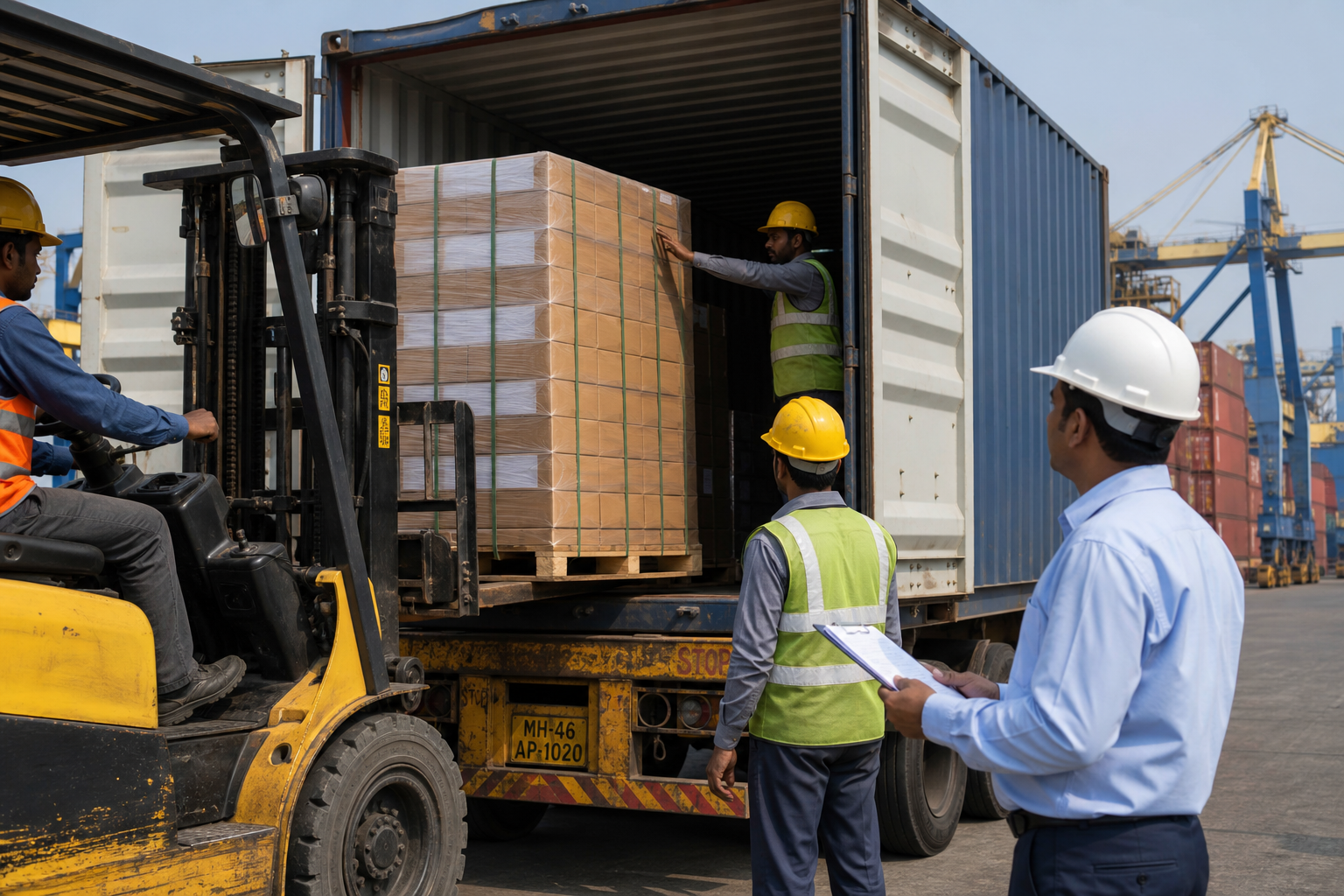
India vs China quality control is not a question of which country is safer. It is a question of whether the buyer runs the same specification, audit, monitoring, inspection, and CAPA discipline in both origins. China often presents higher average export-QC maturity at scale; India presents wider variance that makes upfront factory audits and consistent third-party inspection on new relationships essential. Supplier risk in India and China reduces when buyers apply the Supplier Risk Comparison Matrix (SRCM), climb the Factory Audit Depth Ladder (FADL) by risk tier, and govern dual-origin programmes through the Dual-Origin QC Governance Model (DOQGM).
Do not rewrite the India QC encyclopedia here. Execute order-level control through how to conduct quality control when sourcing from India, pre-shipment inspection in India, and India quality control process from selection to shipment. Verify suppliers through how to verify an Indian supplier before placing an order before PO release.
Altus Exports helps international buyers close the India-side gap — factory follow-up, sample coordination, inspection support, and export handoff. Share your SKU spec, supplier stage, and risk tier to discuss a practical India QC and audit plan aligned with your China programme standards.