
India vs China Sourcing Costs: A Complete Landed Cost Comparison
By Saurabh Mittal, Founder, Altus Exports
Compare India vs China sourcing costs with one landed-cost model: identical specs, Incoterms, HS classification, freight, duties, brokerage, and inspection—then cost per sellable unit at your warehouse. FOB price alone often misranks origins and hides true programme economics for international buyers.

International buyers comparing India vs China sourcing costs often stop at the factory quote. A Chinese supplier may show a lower FOB unit price on a spreadsheet; an Indian merchant exporter may quote higher on the same line but include export packaging, inland haulage, and compliance documentation in the scope conversation. Without a normalized landed-cost model, procurement teams choose the wrong origin, negotiate the wrong lever, and discover margin erosion only after goods arrive.
Landed cost is the direct, documentable cost to receive goods at your warehouse or fulfillment node—not the same as total cost of ownership, which adds verification time, quality failures, working capital, and coordination overhead. This article owns the line-item landed-cost comparison between India and China: how to normalize FOB vs landed cost, what hidden costs appear in each origin, how to model duties and taxes without treating outdated tariff lists as gospel, and how to stress-test freight and classification sensitivity. For manufacturing operations comparison (MOQ, lead time, quality variance at factory level), see India vs China manufacturing: cost, quality, MOQ and lead times compared. For the broader origin decision framework, start with India vs China for sourcing: which country is better for international buyers?.
The practical tool is the Dual-Origin Landed Cost Comparison Worksheet (DOLCCW-14)—fourteen cost lines applied identically to India-origin and China-origin scenarios before you award volume. Whether you buy direct, through a merchant exporter, or with an India on-ground sourcing partner coordinating quotes, the discipline is the same: no blank lines, no mixed Incoterms, no duty guesses without HS-specific verification.
Altus Exports supports international buyers who need India quotes structured for apples-to-apples landed-cost comparison against China alternatives. The method below is useful whether you evaluate origins internally or with local coordination on the India side.
Why FOB comparisons mislead India vs China decisions
FOB (Free On Board) tells you what the seller delivers to the named port of loading—it does not tell you what you pay to sell the product profitably in your market. Three structural reasons make FOB-only comparison especially dangerous in India vs China evaluations.
First, quote scope differs by origin habit. Chinese export quotes for mature categories often assume standard export cartons, established port clusters, and high container utilization. Indian quotes—especially from MSME manufacturers—may quote ex-factory or FOB with unstated assumptions about packaging, inland distance to port, or who arranges export clearance. A lower FOB from one origin may omit lines the other includes verbally.
Second, freight economics differ by lane and cube. India and China both offer competitive ocean rates on major tradelanes, but origin port choice, container fill, seasonal capacity, and product density change the freight line materially. Light, bulky goods amplify freight as a share of landed cost; dense industrial components may make freight a minor uplift. The origin with the lower FOB is not automatically the origin with the lower freight per unit.
Third, duty and trade-policy exposure is product- and destination-specific. Import duty rates depend on the HS classification your customs broker applies, the destination country, preferential trade agreements, and current tariff schedules—not on generic "India vs China duty" blog tables. A SKU that enters the United States at one ad valorem rate from China may enter at a different rate from India; anti-dumping, countervailing, or Section-style measures may apply to one origin and not the other for the same nominal product category. Always verify HS-specific duty rates with your licensed customs broker or trade counsel before committing volume. This article teaches the method and line items; it does not publish duty rates as facts.
FOB vs landed cost: what changes in the math
Comparison table
Swipe →
Data table — swipe horizontally on small screens
| Cost layer | Visible in FOB quote? | Typically buyer's problem at destination? | Common India vs China nuance |
|---|---|---|---|
| Product + export packaging | Usually yes (verify scope) | No | India quotes may separate packaging; confirm master carton spec |
| Inland to port/airport | Sometimes bundled on FOB | Sometimes | India factory-to-port distance varies widely by cluster |
| Origin terminal / export clearance | Often on FOB; verify | Partial | Both origins mature on major lanes; detail still varies |
| International freight | No (unless CIF/DAP) | Yes | Lane, season, and cube drive differences more than origin patriotism |
| Insurance | No (unless CIF) | Yes | Same principle both origins |
| Import duty | No | Yes | HS code + origin + destination; verify professionally |
| Import taxes (VAT/GST/sales tax) | No | Yes | Destination rules dominate |
| Brokerage and clearance | No | Yes | Similar process; fees vary by broker and port |
| Destination handling and delivery | No | Yes | Drayage and last-mile depend on your node |
| Inspection / testing | Rarely in FOB | Often yes | Both origins: buyer-side QC is usually explicit |
| Compliance testing (if required) | Rarely in FOB | Often yes | Category-dependent; not origin-generic |
| Financing and payment fees | No | Yes | LC, TT, and FX timing affect cash, not classic landed cost |
For Incoterm boundaries when buying from India specifically, see FOB vs CIF vs EXW when buying from India. For the India-only twelve-line worksheet and formula depth, see how to calculate the landed cost of products imported from India.
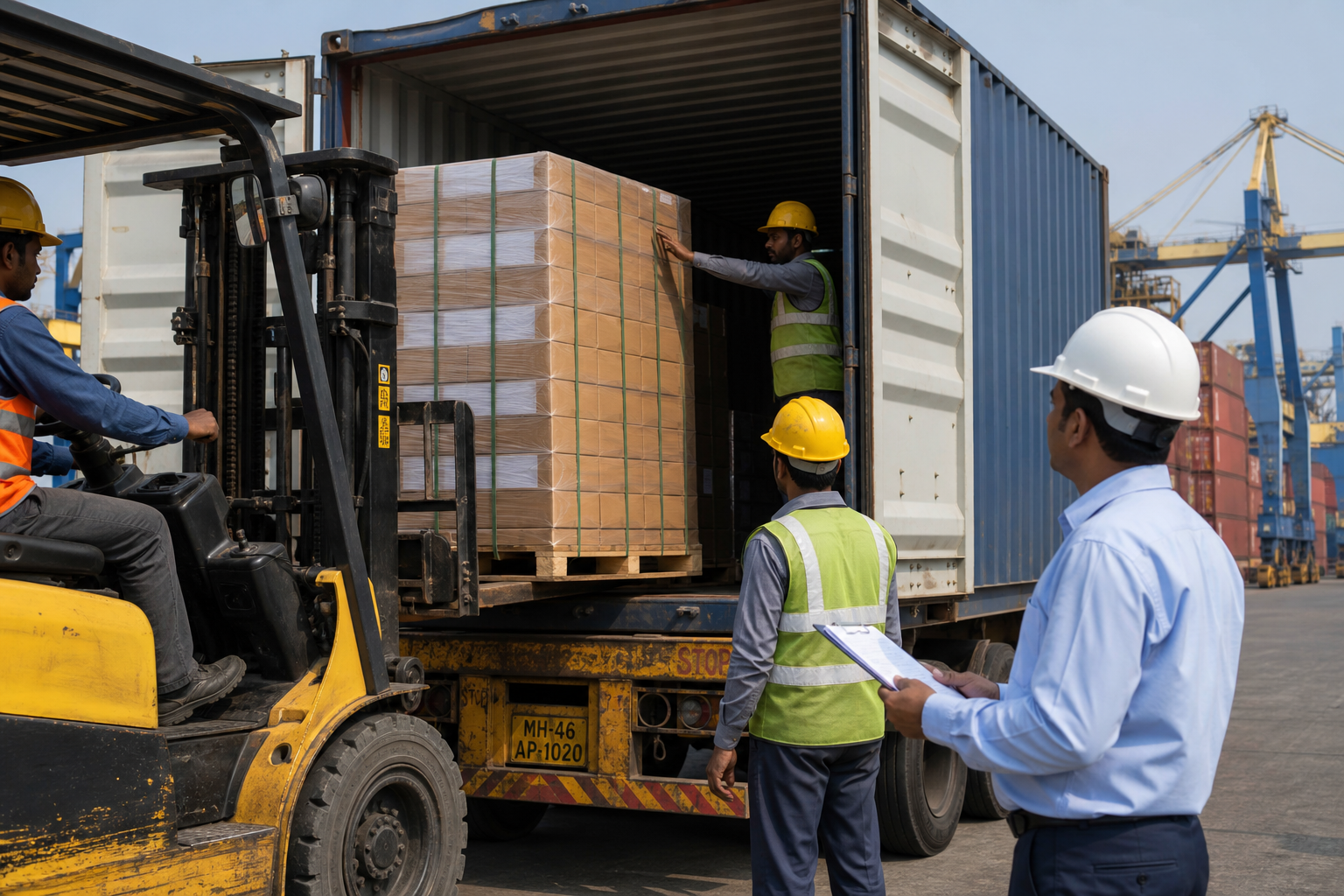
The Dual-Origin Landed Cost Comparison Worksheet (DOLCCW-14)
- One HS classification hypothesis per comparison—if India and China suppliers suggest different classifications, model both and flag broker confirmation.
- One freight mode per comparison—do not compare India FCL against China LCL unless you are explicitly testing mode sensitivity.
- Zero is allowed only with a written note—"included in line 1" or "not applicable for this SKU."
- Same sellable unit denominator—account for known breakage, QC reject policy, and inner-pack vs master-case counting.
- Archive FX rate and date—apply the same treasury policy to both scenarios.
DOLCCW-14 extends the India Landed Cost Worksheet (ILCW-12) logic into a side-by-side origin comparison. Each line is populated for Scenario A (India) and Scenario B (China) in the same destination currency, with a notes column for assumptions, documents, and verification status.
DOLCCW-14 rules:
Download or replicate DOLCCW-14 with these header fields: product description; destination country and receiving node; Incoterm and named place (both scenarios); HS code used for duty estimate; shipment mode; quantity; sellable units; comparison owner; revision date.
Comparison table
Swipe →
Data table — swipe horizontally on small screens
| # | DOLCCW-14 line item | Typical source document | Compare across origins |
|---|---|---|---|
| 1 | Product cost (commercial invoice value) | Proforma / commercial invoice | Same spec, same MOQ band, same pack level |
| 2 | Export packaging and labeling | Packing spec, invoice | Carton count, weight, and branding scope |
| 3 | Inland transport (factory to port/airport) | Supplier or forwarder quote | Distance and port choice matter |
| 4 | Origin clearance and terminal handling | Supplier invoice, forwarder | Confirm FOB includes loading |
| 5 | International freight (ocean or air) | Forwarder quote, same mode both sides | Model identical container type or chargeable weight |
| 6 | Cargo insurance | Policy or CIF breakdown | Same coverage basis |
| 7 | Import duties | Broker estimate on HS code | Verify current rates per origin |
| 8 | Import taxes and government fees | Broker estimate | Destination-specific |
| 9 | Customs brokerage and filing | Broker quote | Same broker where possible |
| 10 | Destination port/airport handling | Drayage / CFS quote | Same receiving port |
| 11 | Last-mile to warehouse | Truck / rail quote | Same delivery point |
| 12 | Inspection and pre-shipment QC | Inspection invoice | Same AQL / same scope |
| 13 | Compliance testing (if required) | Lab quote | Same standard both origins |
| 14 | Other direct costs (demurrage, bonds, storage) | Actual or allowance | Use same contingency rule |

The Landed Cost Comparison Method: seven steps
Use this sequence whenever India vs China sourcing costs are on the table—new SKU evaluation, re-bid, or China+1 parallel qualification.
Step 1 — Freeze the specification and commercial scope
Before any numbers, freeze what you are buying: materials, dimensions, finishes, certifications required for export (not confused with destination retail compliance), packaging level, labeling, MOQ, and payment term structure. A landed-cost comparison between India and China fails when one quote is for a thicker fabric, a different plug standard, or an extra colorway.
Write a Specification Lock Block at the top of DOLCCW-14: SKU description, reference sample ID, pack format, and "excluded from scope" list (tooling, molds, buyer-provided components, retail inserts, etc.).
Step 2 — Normalize Incoterms to a comparable boundary
Comparison table
Swipe →
Data table — swipe horizontally on small screens
| Normalization check | Question to ask both suppliers |
|---|---|
| Export cartons | Included in unit price or separate? |
| Palletization | Required for your destination? |
| Inland to port | Whose truck, whose cost? |
| Export documentation | Commercial invoice, packing list, certificates—who prepares? |
| Loading at port | Included on FOB? |
| Insurance and freight | Quoted CIF? If so, split lines 5–6 for comparison |
If the Indian supplier quotes FOB Nhava Sheva and the Chinese supplier quotes FOB Shenzhen, both are FOB—but inland distance, port charges, and what "FOB" includes in local practice may differ. If one side quotes EXW and the other FOB, normalize by adding the missing lines rather than comparing headline prices.
The FOB-to-Landed Normalization Method requires you to list what each quote includes, map inclusions to DOLCCW-14 lines, and add missing lines from forwarder or supplier clarification. Never rank suppliers on Incoterm labels alone.
Step 3 — Build freight on identical assumptions
Request forwarder quotes for the same mode, container size or chargeable weight basis, and destination port. For ocean, specify FCL vs LCL and whether you are modeling a consolidated first trial or a full-container reorder. For air, use the same chargeable weight calculation method.
India major export gateways include Nhava Sheva (JNPT), Mundra, Chennai, Kolkata, and air hubs at Delhi, Mumbai, and Bengaluru depending on cluster. China gateways include Shanghai, Ningbo, Shenzhen, Qingdao, Guangzhou, and many category-specific ports. Port choice affects freight more than country flag. Model the port the supplier actually uses, not a generic national average.
Sensitivity-test freight: rerun DOLCCW-14 at +10% and +20% ocean rate to see whether the origin winner flips under market volatility.
Step 4 — Model duties and taxes with broker-verified inputs
- Obtain a provisional HS code from your broker based on product description, material, and use—India and China suppliers are not customs authorities.
- Ask the broker for current duty rate for origin India and origin China into your destination, including any preferential program eligibility (FTA, GSP-style preferences where applicable, and product-specific trade measures).
- Record the rate source and effective date on DOLCCW-14.
- Calculate duty on the customs value your destination uses (typically CIF or equivalent—not always identical to commercial invoice).
Import duty is often the line that reverses an FOB winner. Model it responsibly:
Do not copy duty percentages from comparison articles, old RFQs, or generic HS tables without verification. Tariff schedules change; product-specific measures apply to narrow HS lines; classification disputes are common on multi-material goods.
Import taxes (VAT, GST on import, harbor fees, merchandise processing fees, etc.) follow destination rules. Model them as separate lines 7 and 8 even when paid together at clearance.
For duty mechanics on India-origin goods specifically, see how import duties and taxes work when buying from India. For destination-market context on how origin choice interacts with trade lanes, see India vs China for exporting to the USA, Europe and Middle East.
Step 5 — Add inspection, testing, and compliance direct costs
Classic landed cost includes buyer-mandated pre-shipment inspection, lab testing for regulated categories, and certificate fees that are directly tied to the shipment. Examples: food pathogen panels, textile lead testing, phytosanitary or fumigation where required, certificate of origin fees.
These costs are not inherent to India or China—they depend on your category and destination. Both origins may produce compliant goods; the cost appears when your program requires proof. Omitting line 12–13 makes the cheaper origin look artificially attractive.
This article does not deep-dive factory quality systems—that belongs in India vs China quality control, factory audits and supplier risk. Here, only shipment-attributable inspection and testing belong in DOLCCW-14.
Step 6 — Calculate per-unit landed cost and uplift
Landed cost (total) = Sum of DOLCCW-14 lines 1–14
Landed cost per unit = Landed cost (total) ÷ Sellable units
FOB-to-landed uplift % = (Landed cost per unit − FOB-equivalent per unit) ÷ FOB-equivalent per unit
Report both absolute per-unit landed cost and uplift. Uplift varies widely by density and duty—there is no universal "good" percentage. What matters is whether the uplift is stable under freight and duty sensitivity and whether it fits your margin target.
Step 7 — Extend to total cost when the decision is close
When landed costs fall within your materiality band (for example, within three to five points of margin), extend the view to total cost sourcing India vs China—verification hours, sample iterations, payment-term finance, inventory risk, and coordination cost. Landed cost is necessary; it is not always sufficient.
See how to calculate the total cost of buying products from India for the India-side TCO frame. For dual-origin portfolio design, see China + India sourcing strategy.
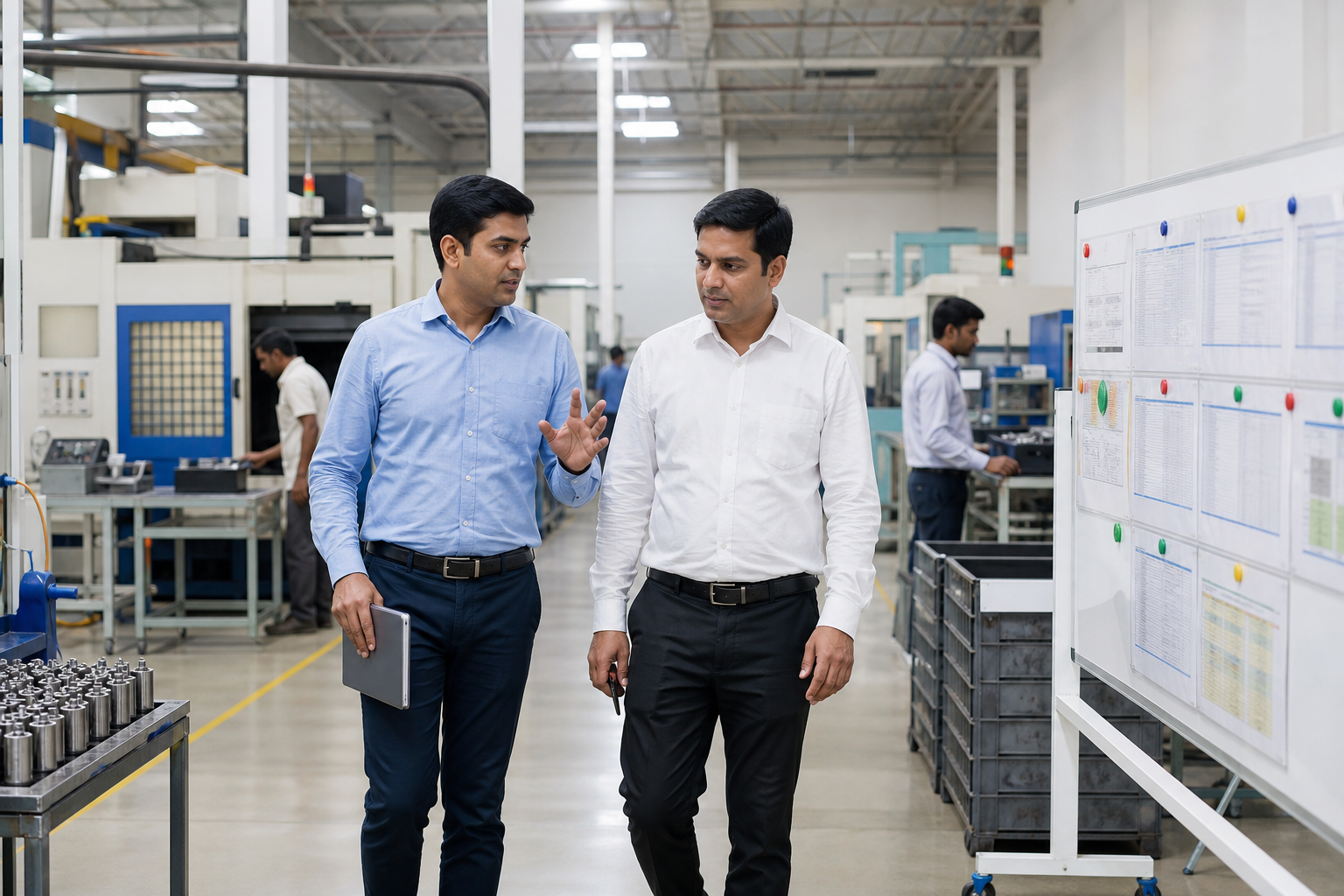
Worked comparison scenario (illustrative only)
The following scenario is illustrative for method teaching only. Numbers, duty rates, and freight are hypothetical. Do not use these figures for pricing decisions. Verify all commercial inputs with suppliers, forwarders, and customs brokers.
Product: Private-label cotton kitchen towel set, four pieces, retail hangtag packaging Destination: US distribution warehouse Mode: 40-foot FCL Quantity: 20,000 sellable sets HS hypothesis: Textile category—broker to confirm Incoterm: FOB respective port
In this illustrative skeleton, China retains a lower subtotal before duty—but line 7 determines the winner. If broker-verified duty differs by origin for the confirmed HS code, the ranking can flip. That is why DOLCCW-14 separates duty from product and freight rather than baking assumptions into FOB.
Run three versions: base, freight +10%, duty +5 percentage points (if ad valorem)—to see decision stability.
Comparison table
Swipe →
Data table — swipe horizontally on small screens
| DOLCCW-14 line | India scenario (illustrative USD) | China scenario (illustrative USD) | Notes |
|---|---|---|---|
| 1 Product | 48,000 | 44,000 | China lower FOB headline |
| 2 Packaging | 4,000 | 3,600 | Confirm hangtag scope identical |
| 3 Inland | 1,200 | 800 | India interior cluster example |
| 4 Origin terminal | 900 | 850 | Verify FOB inclusions |
| 5 Ocean freight | 5,500 | 5,200 | Same forwarder, same week quote |
| 6 Insurance | 350 | 320 | Same policy basis |
| 7 Import duty | Broker input A | Broker input B | Rates not stated here—broker verifies |
| 8 Import taxes/fees | Broker input | Broker input | Destination-specific |
| 9 Brokerage | 650 | 650 | Same broker |
| 10 Destination handling | 1,100 | 1,100 | Same port |
| 11 Last-mile | 950 | 950 | Same warehouse |
| 12 Inspection | 600 | 600 | Same AQL scope |
| 13 Testing | 0 | 0 | Assumed not required—verify |
| 14 Other | 400 | 400 | Contingency |
| Subtotal ex duty/tax | 63,650 | 58,470 | China still ahead ex duty |
| Per unit ex duty/tax | 3.18 | 2.92 | FOB gap narrows when lines added |
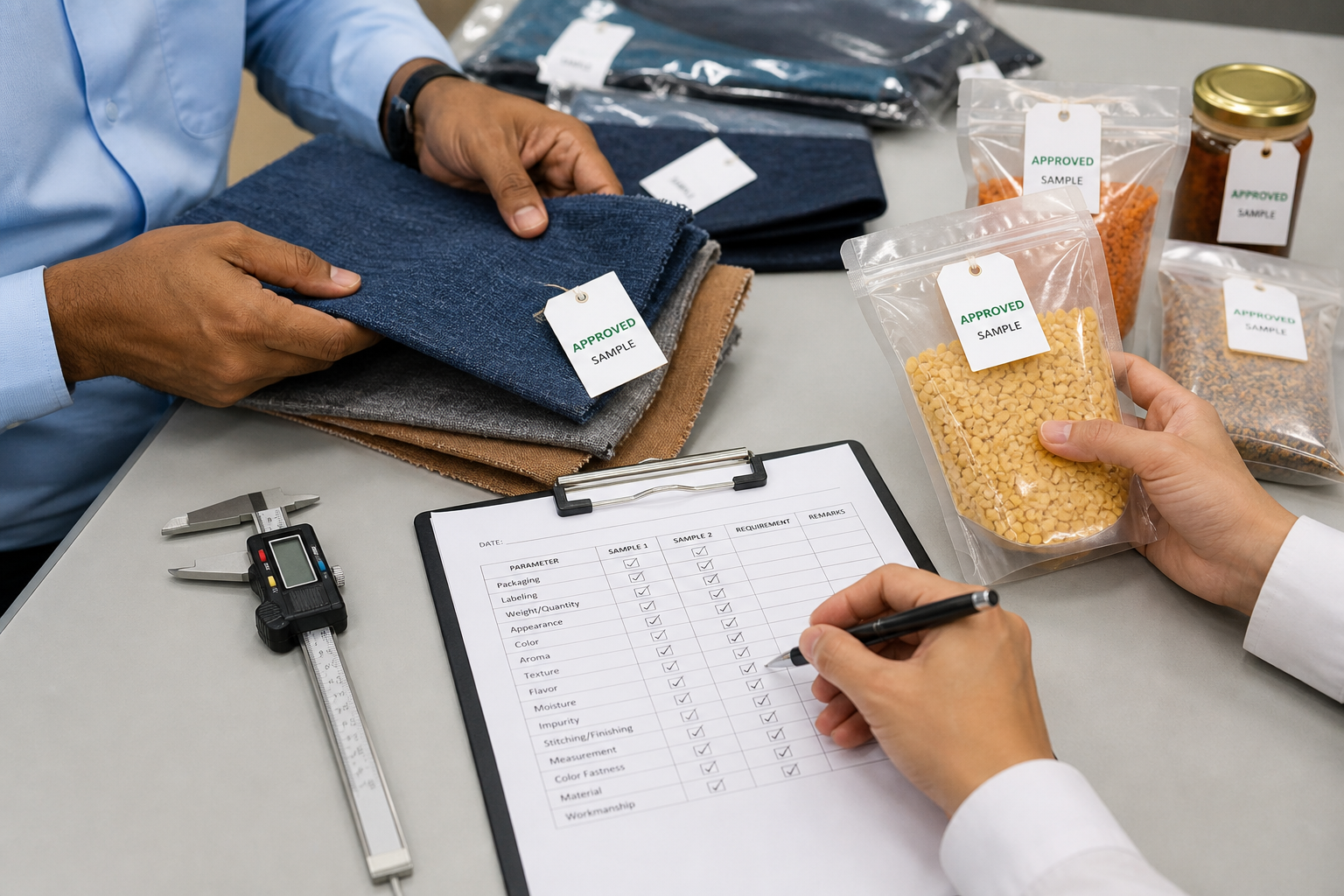
India vs China sourcing costs by cost-driver category
No origin wins every line. Use this Cost-Driver Lens to predict which DOLCCW-14 lines will dominate your comparison.
For manufacturing MOQ and lead-time interactions with cost, see India vs China manufacturing. For SME trial-order economics, see India vs China for SME buyers.
Comparison table
Swipe →
Data table — swipe horizontally on small screens
| Cost driver profile | Lines that usually dominate | Landed-cost tendency | Buyer implication |
|---|---|---|---|
| Raw-material-adjacent (spices, cotton, castings, honey) | 1, 7 | India may win on product + compliance path when raw material is domestic | Model certificates in 12–13; verify duty separately |
| High-volume consumer goods | 1, 5 | China often strong on unit cost and container utilization | Do not skip packaging and inland on either side |
| Light, bulky (cushions, lampshades, hollowware) | 5, 10–11 | Freight share magnifies; FOB gap matters less | Mode and cube optimization beat origin ideology |
| Regulated food / agri | 1, 7, 12–13 | Total program cost includes treatment and documentation | Compare all-in scope, not commodity FOB |
| Precision components | 1, 12, 13 | Quality-attributable costs may sit in TCO more than landed | Landed cost still needs identical spec |
| Fashion / seasonal | 5, 14, air sensitivity | Missed season triggers air freight—model line 5 alternate | Lead time risk is TCO; air is landed sensitivity |
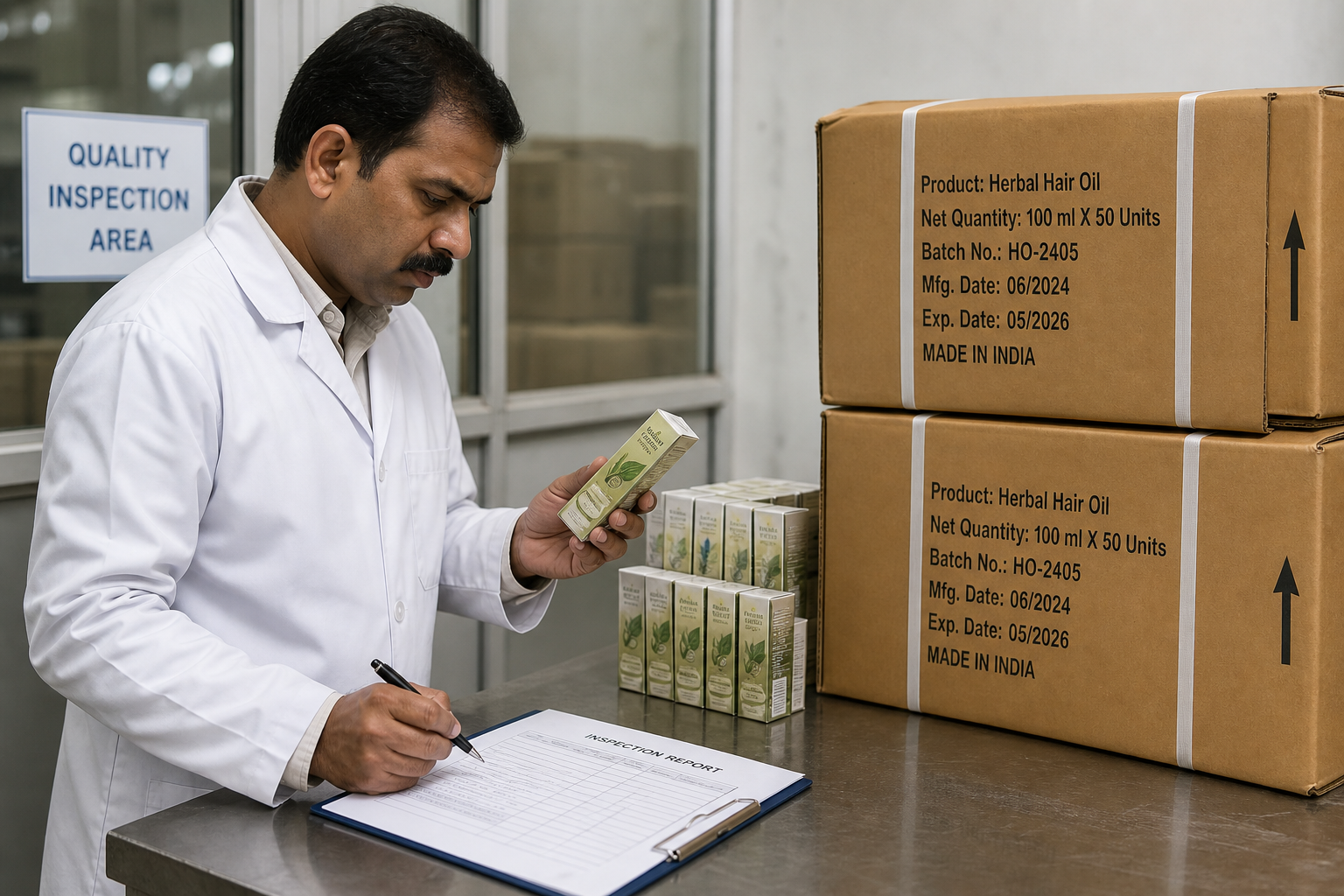
The Landed Cost Comparison Worksheet: governance and common errors
Treat DOLCCW-14 as a controlled document, not a one-off spreadsheet.
Governance habits
- Version every comparison with date, FX, freight quote validity, and HS assumption.
- Require broker sign-off on lines 7–8 before executive approval on new origins.
- Reconcile DOLCCW-14 to actual invoices after first shipment; update assumptions.
- Store supplier quotes and forwarder quotes as attachments—audit trail matters when margins miss.
Common errors that favor the wrong origin
Comparison table
Swipe →
Data table — swipe horizontally on small screens
| Error | Effect | Fix |
|---|---|---|
| Compare EXW China to FOB India | Artificially punishes one origin | Normalize Incoterms |
| Use different HS codes | Duty lines incomparable | One classification or model both |
| Ignore packaging weight | Freight skew | Same master carton spec |
| Apply outdated duty rate | Wrong winner | Broker-verified dated rate |
| Skip inspection line | Understates cautious buyer cost | Same QC scope both sides |
| Mix commercial invoice and CIF in duty base | Double count or undercount | Broker confirms customs value |
| Divide by order qty not sellable units | Wrong unit economics | Align with reject policy |
When India wins on landed cost—and when China does
India often competes well on landed cost when the product value is tied to domestic raw materials, when export-ready compliance is bundled transparently in the quote, when tariff or trade-policy structure favors the India origin for your HS code into your destination, when MOQ fits your trial or mid-volume without LCL penalty, and when freight cube is favorable on the India port lane you use.
China often competes well on landed cost when manufacturing scale and labor productivity compress line 1 for high-volume SKUs, when component ecosystem density reduces hidden assembly cost (even if not always visible in FOB), when container utilization is high on repeat programs, and when your category has mature export infrastructure on the coast.
Neither origin wins universally. A dual-origin portfolio may assign SKUs by DOLCCW-14 outcome rather than national preference. For diversification logic beyond unit economics, see India vs China supply chain diversification.

Using merchant exporters and sourcing partners in landed-cost modeling
- Trace factory-of-record and invoice structure—DOLCCW-14 line 1 should reflect the commercial value customs will see.
- Separate pass-through logistics from service fees—service fees may belong in TCO unless contractually tied to shipment invoice.
- Ask for DOLCCW-14 mapping in the quote response—serious partners can align to your worksheet.
India merchant exporters and on-ground sourcing partners often quote program-level FOB that includes coordination, export documentation, and sometimes consolidated compliance steps. China trading companies may similarly bundle scope. When comparing:
Altus Exports can help international buyers obtain India quotes with explicit scope boundaries suitable for DOLCCW-14 comparison against China alternatives—without replacing your broker, forwarder, or commercial decision.
Conclusion
India vs China sourcing costs cannot be decided on factory FOB alone. The decision-grade number is landed cost per sellable unit at your warehouse, built through DOLCCW-14 with identical specifications, Incoterms normalization, broker-verified duties, and honest freight and compliance lines. China often leads on headline manufacturing cost for high-volume SKUs; India often competes when raw-material economics, program scope, tariff structure, and trial-volume fit align—but your SKU determines the winner, not country reputation.
Use the Landed Cost Comparison Method as standard procurement hygiene: freeze the spec, normalize FOB, model freight and duty professionally, stress-test sensitivity, and extend to total cost when the gap is narrow. Buyers who document assumptions protect margin and avoid origin decisions they cannot explain to finance six months later.
If you want India supplier quotes mapped to DOLCCW-14 for comparison against your China baseline, contact Altus Exports with product specs, destination, target Incoterm, and volume band. A worksheet beats a headline price every time.