
India vs China for Private Label Products: Which Is Better?
By Saurabh Mittal, Founder, Altus Exports
Private-label origin choice depends on category, customization, packaging, MOQ, and NPD timeline. China often leads on mature OEM and white-label volume. India often competes on textiles, lifestyle, and flexible OEM—if you freeze specs, packaging, and QC gates before awarding bulk production.
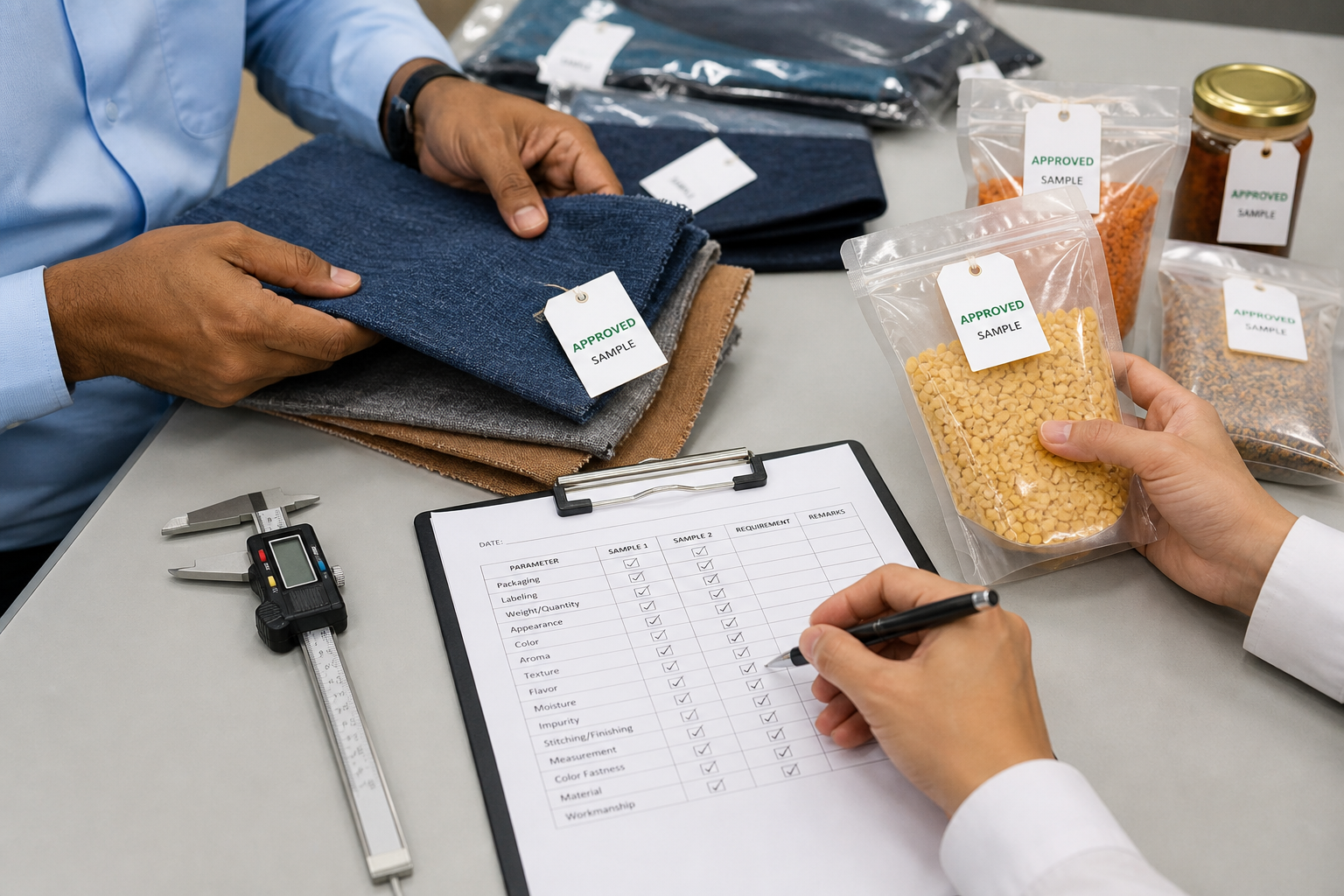
Private label is not one sourcing model. It spans white-label rebranding, adapted catalog SKUs, and full OEM programs with custom formulation, construction, or tooling. When international buyers compare India vs China private label, they are really comparing which origin can deliver their branded product—pack, spec, MOQ, and launch timeline—at acceptable risk.
Both countries host capable manufacturers. Both can fail programs that skip brief discipline, packaging freeze, or quality gates. The difference shows up in category clusters, component depth, packaging supply chains, MOQ economics, and how much product development the factory can absorb before production.
This article focuses on private-label and OEM origin choice: branding, pack, NPD, and MOQ. It does not rewrite the full India private-label encyclopedia. For end-to-end India PL process depth, start with how to source private label products from India and follow the India PL cluster for manufacturer selection, development, packaging, and MOQ. For broader origin comparison, see India vs China for sourcing: guide for international buyers, India vs China manufacturing: cost, quality, MOQ, and lead times, and India vs China sourcing costs and landed cost comparison.
Altus Exports supports international buyers as an India-based private-label sourcing and merchant-export coordination partner. That means manufacturer search support, verification coordination, sampling and production follow-up, QC arrangements, and export handoffs—while the buyer owns brand, formula or design decisions, market compliance, and commercial awards.
Private label, OEM, and white label: compare origins on the same model
Buyers often ask “India or China?” before defining whether they want white label, adapted private label, or full OEM. That produces incompatible quotes and false origin conclusions.
State the model in every RFQ. A white-label path in one country is not comparable to an OEM path in another.
Comparison table
Swipe →
Data table — swipe horizontally on small screens
| Model | Buyer control | NPD intensity | MOQ sensitivity | Origin comparison note |
|---|---|---|---|---|
| White label | Branding and pack mainly | Low to moderate | Often lower if base SKU exists | China may have more near-ready bases in some categories; India may win on design-led bases elsewhere |
| Adapted private label | Spec and pack adaptation | Moderate | Material and print drivers matter | Compare decomposition, not slogans |
| Full OEM | Technical design or co-development | High | Tooling and batch economics dominate | Cluster maturity in China vs customization depth in India categories |

The Private Label Origin Fit Scorecard
Use the Private Label Origin Fit Scorecard when evaluating India vs China for a defined PL brief—not as a generic ranking.
Score each origin from 1 (weak) to 5 (strong) on criteria weighted by launch risk:
Award the origin that scores highest on your weighted risks—usually NPD plus pack plus MOQ for first launches.
For supplier-network depth by country, see India vs China supplier networks. For QC comparison, India vs China quality control, factory audits, and supplier risk.
Comparison table
Swipe →
Data table — swipe horizontally on small screens
| Criterion | India assessment questions | China assessment questions |
|---|---|---|
| Category cluster fit | Are there OEM-capable factories for your process? | Same—verify export role and PL experience |
| NPD capability | Can factories run sampling, revisions, freeze discipline? | Same—do not assume faster without stage timeline |
| Packaging ecosystem | Labels, cartons, bottles, inserts available at your spec? | Often deep in mature consumer categories |
| Branding methods | Print, weave, emboss, fill, assemble as required? | Tooling and print infrastructure varies by cluster |
| MOQ at branded pack | What drives minimum—print, material, tooling? | Component MOQs may bind before product MOQ |
| Sample cycle time | Realistic gates from brief to PPS? | Compare with same approval pack |
| Tooling ownership | Who pays; who owns molds, dies, screens? | Clarify repeat-use and exclusivity in writing |
| QC and consistency | Sample-to-bulk path for your process? | Same discipline required |
| Export and documentation | Who owns invoice, COO, product-specific certs? | Factory export desk maturity varies |
| IP and brand control | Subcontracting, artwork handling, exclusivity | Same buyer-side controls required |
| Landed cost at launch qty | Normalize Incoterm and pack | Same normalization |
| Reorder economics | Price tiers and MOQ on PO2 | Repeat path often strong when SKU is frozen |
Branding and customization: where each origin tends to lead
Private label lives in the details buyers see: logo placement, colorways, materials, finishes, and pack experience.
Branding capability comparison (illustrative, category-dependent)
Comparison table
Swipe →
Data table — swipe horizontally on small screens
| Branding element | China often strong when… | India often strong when… |
|---|---|---|
| Injection-molded housings and plastic consumer goods | Tooling ecosystems are mature | Niche or design-led variants only |
| Printed packaging at scale | High-volume print supply chains | Moderate runs with clear print decomposition |
| Textile branding—labels, embroidery, prints | Standard apparel-adjacent runs | Custom weaves, handwork, design differentiation |
| Home and lifestyle materials | Mass formats | Mixed materials, artisan-adjacent, bespoke finishes |
| Personal care fill and pack | Component and bottle ecosystems | Selected formats, natural/herbal positioning, contract fill |
| Gift and stationery customization | Standard SKU rebranding | Design-led assortments and mixed materials |
“Strong” means credible factories exist—not that every factory in the country can do the work. Verification beats reputation.
Packaging and labeling: often the real origin decision
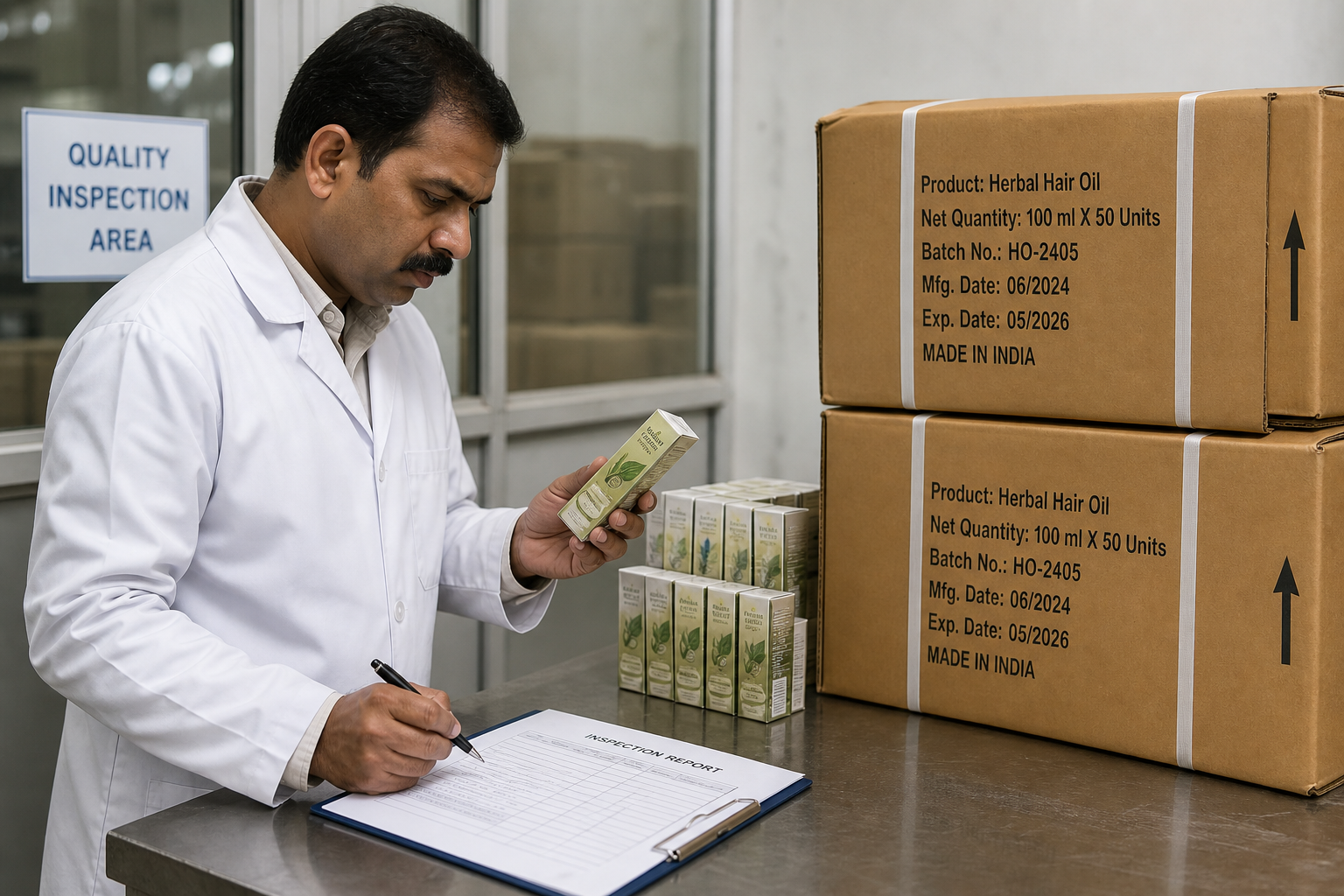
For private label, packaging is part of the SKU. Many programs slip because artwork, dielines, barcodes, and destination labeling lag product samples.
Packaging decision matrix for PL buyers
Comparison table
Swipe →
Data table — swipe horizontally on small screens
| Pack complexity | Typical risk | India vs China planning note |
|---|---|---|
| Standard bottle or pouch, single-language label | Moderate | Either origin works with clear artwork freeze |
| Multi-language regulated labels | High | Buyer owns market compliance; factory executes agreed files |
| Custom cartons with print MOQ | High | Print minimum may exceed product MOQ in both countries |
| Gift sets and mixed inner packs | High | Consolidation and kitting discipline required |
| Tooling-linked pack (custom mold, unique closure) | Very high | Tooling timeline and ownership decide feasibility |
China may offer faster access to standard pack components in categories where packaging supply chains are dense—bottles, closures, blister formats, and high-volume print.
India can be competitive when pack needs align with local print and converting capacity for your volume band, or when merchant-export consolidation combines PL SKUs for export. Neither origin removes artwork approval work.
For India packaging process depth, see private label packaging and labeling in India—without duplicating that guide here. The operational rule is the same in both countries: run pack milestones parallel to product development, not after.
NPD and sampling: timeline beats geography
Private-label NPD turns a concept into a production-ready specification. Origin choice should reflect who can reach spec freeze on your timeline—not which country has the shorter marketing story.
The PL NPD Gate Map (origin-neutral)
- Concept alignment — white label vs adapted PL vs OEM confirmed.
- Technical translation — BOM, materials, tolerances, fill levels, construction standards.
- Prototype sample — prove function; pack may be interim.
- Branded sample — near-final labels and pack structure.
- Pre-production sample (PPS) — intended materials and process.
- Specification freeze — written approval of product, artwork, and packing.
- Pilot production — controlled run with agreed QC before scale.
Use the same gates whether you shortlist India or China:
Compare origins by asking shortlisted factories for a stage-gated timeline tied to your freeze pack—not a single “lead time” number.
China factories in mature clusters may move quickly on near-standard OEM bases where tooling already exists.
India factories may offer strong collaboration on design-led categories—textiles, home, gifts—when the buyer maintains revision logs and does not confuse exploration with production.
For India-specific development depth, see private label product development in India. For manufacturer evaluation, how to choose a private label manufacturer in India.
MOQ and unit economics for private-label launches
Private-label MOQ is driven by materials, tooling, packaging print, and line setup—not by country labels.
MOQ driver comparison for PL programs
Comparison table
Swipe →
Data table — swipe horizontally on small screens
| Driver | Effect on India PL MOQ | Effect on China PL MOQ |
|---|---|---|
| Custom material or color lot | Dye, fragrance, compound batches | Resin, component, fabric MOQs from upstream |
| Tooling | Molds, dies, screens amortized into MOQ or fees | Often established; may favor volume |
| Packaging print | Frequently sets floor for branded launches | Same—print MOQ can dominate |
| Process batch minimum | Wet fill, dye lot, kiln load | Line and component campaign sizes |
| Factory policy | Filters small PL programs | Busy clusters may enforce floors |
- separate product MOQ from packaging MOQ;
- list tooling fees and ownership;
- state which material grade drives the lot;
- confirm trial quantity that still represents bulk production.
Use the MOQ Decomposition Request on every serious quote:
For India MOQ economics and negotiation, see private label MOQ in India. For cross-origin manufacturing MOQ context, India vs China manufacturing: cost, quality, MOQ, and lead times. For landed-cost comparison at launch quantities, India vs China sourcing costs and landed cost comparison.
Category-level origin posture for private label
These are planning guides for RFQ design—not promises.
Validate every row with live factory evidence before origin award.
Comparison table
Swipe →
Data table — swipe horizontally on small screens
| PL category theme | China often fits when… | India often fits when… |
|---|---|---|
| Plastic consumer goods and hardware-adjacent OEM | Tooling and component depth matter | Limited unless niche process exists |
| Electronics accessories and assembled consumer | Supply chain maturity matters | Selective programs only |
| Textiles, home textiles, soft goods | Mass standard runs | Custom materials, branding methods, design differentiation |
| Home décor, furniture accessories, lifestyle | High-volume standard SKUs | Design-led, mixed-material programs |
| Personal care and cosmetics | Bottle and component ecosystems | Contract fill, natural positioning, moderate MOQ |
| Food and packed food concepts | Scale pack formats | Specialty ingredients and select formats—buyer owns compliance |
| Gifts, stationery, seasonal | Stock rebranding | Assortment creativity and material mixes |
Quality control and brand risk across origins
Private-label QC must protect what customers associate with your brand—not just pass a generic inspection.
PL quality gates (same in India and China)
Comparison table
Swipe →
Data table — swipe horizontally on small screens
| Gate | Purpose |
|---|---|
| Material incoming check | Confirm agreed inputs before run |
| Inline / process check | Catch drift during production |
| PPS confirmation | Align floor to approved reference |
| Pre-shipment inspection | Ship / rework / reject against written criteria |
| Document and label audit | Barcodes, claims fields, language, marks |
Define measurable acceptance criteria. “Export quality” without a standard is not a plan.
Cross-origin QC comparison: India vs China quality control, factory audits, and supplier risk. India program execution can be coordinated through product sourcing company in India when the buyer wants local QC arrangement support.

IP, exclusivity, and brand control
- stage confidential disclosures;
- version-control artwork and specs;
- clarify subcontracting for print and components;
- agree production quantities and leftover-pack handling;
- separate exclusivity commercials from verbal assurances.
Private label creates assets: artwork, formulas, molds, and customer-facing pack. Origin choice does not replace brand discipline.
At program level in either country:
Legal form should follow counsel in relevant jurisdictions. India cluster depth: how to protect your brand when working with Indian private label manufacturers where applicable to India-side programs.
Export, consolidation, and multi-SKU private label
PL programs rarely stop at one SKU. Export structure affects how smoothly branded goods leave the country.
China export paths are familiar for many buyers when a single factory owns the full document set reliably.
India merchant-export and consolidation models can help buyers combining multiple PL SKUs or suppliers—when commercial terms and document ownership are clear upfront.
For destination export considerations, see India vs China exporting to USA, Europe, and Middle East. India service context: private label manufacturing in India and merchant exporter in India.
Decision scenarios: which origin for which PL program?
Scenario 1 — White-label launch, tight timeline, stock base SKU
Lean: Shortlist near-ready bases in the category cluster with the deepest stock—often China for certain consumer formats; India for selected textile or home bases. Prioritize pack print MOQ and sample-to-bulk consistency.
Scenario 2 — Differentiated PL line, moderate volume, design-led
Lean: Compare India and China on NPD gates and pack decomposition. India may compete strongly in textiles, home, gifts; China may win when component tooling already exists.
Scenario 3 — Full OEM with custom tooling
Lean: Map tooling cost, ownership, and timeline first. China clusters may lead when tooling ecosystems are mature; India may fit when process alignment and customization matter and tooling is category-appropriate.
Scenario 4 — Multi-SKU PL assortment, one destination market
Lean: Evaluate consolidation and document ownership—not just unit price. Dual-origin complexity belongs in China–India sourcing strategy; first launches should stay controlled.
Scenario 5 — Buyer lacks India/China PL experience
Lean: Choose the origin with stronger category fit and a coordination model that closes verification, sampling, and export gaps. For India programs, Altus Exports can coordinate local stages while the buyer retains brand and compliance ownership.
Common mistakes in India vs China private-label decisions
Common Mistakes Box
Mistake 1: Comparing unit price before model alignment
OEM and white-label quotes are not interchangeable across origins.
Mistake 2: Freezing factory before PPS and artwork
Origin choice cannot fix unfinished specs.
Mistake 3: Treating packaging as phase two
Late labels and cartons delay both countries equally.
Mistake 4: Ignoring packaging MOQ
A low product MOQ with 10,000-label print minimum is not a low-MOQ program.
Mistake 5: Assuming China is always faster for PL
Mature bases can be fast; custom OEM can be slow. Demand stage timelines.
Mistake 6: Assuming India is always more flexible
Flexibility has economic limits in every factory.
Mistake 7: Skipping verification of manufacturer vs trader role
PL programs fail when the quoted “factory” is not the producing entity.
India private-label cluster: where to go deeper
- How to source private label products from India — pillar playbook
- How to choose a private label manufacturer in India — selection scorecard
- Private label product development in India — sampling and freeze
- Private label packaging and labeling in India — artwork and compliance handoff
- Private label MOQ in India — economics and trial design
This article stays at origin-choice depth. When India is shortlisted—or selected—use the India PL cluster for execution detail:
Do not duplicate those encyclopedias here. Origin comparison should end at the award decision; cluster guides run the program.
How Altus Exports fits private-label origin choice
- manufacturer identification and verification support;
- sampling and revision follow-up against agreed gates;
- packaging and production checkpoint coordination;
- QC arrangement support;
- export documentation and handoff coordination.
Altus Exports does not tell buyers to choose India on ideology. When India fits the category and commercial model, Altus can coordinate:
The buyer retains brand direction, formula or design approval, market compliance ownership, supplier award, and pricing decisions. For scope discussion, start with a Private Label Sourcing Brief, target markets, volume ranges, and model—white label, adapted PL, or OEM.
Entry points: private label manufacturing in India, global sourcing partner in India, find manufacturers in India.

Conclusion
India vs China for private label is a fit question, not a slogan. Compare the same model—white label, adapted private label, or OEM—on branding capability, packaging economics, NPD gates, MOQ decomposition, QC discipline, and export structure. China often leads where component ecosystems and scale tooling paths dominate. India often competes where design-led categories, customization, and coordinated export models align with the buyer’s volume and brief.
When India is the right origin, use the India private-label cluster for execution depth rather than improvising from this comparison alone. When the buyer needs on-ground India coordination, Altus Exports can support structured programs against a clear brief—without making brand or compliance decisions for you.