Private Label MOQ in India: How Much Do You Need to Order?
By Saurabh Mittal, Founder, Altus Exports
Private label MOQ in India is driven by materials, tooling, packaging print runs, and production line changeovers—not by a single universal number. Ask factories to break the minimum into components, design a trial MOQ that still exercises real production, and negotiate…

Minimum order quantity is one of the first commercial questions international buyers ask when they explore private label in India. It is also one of the easiest questions to answer badly. A single figure quoted on a sales call—“MOQ is 5,000”—can hide several different constraints. Some are real process economics. Some are habits. Some are negotiable if the buyer changes scope. Some are warnings that the factory is not a fit for the intended launch.
This article owns private-label MOQ economics and negotiation for cross-category programmes: what drives minimums, how to read illustrative ranges, how trial quantities differ from scale quantities, and how to negotiate without destroying the unit economics both sides need. It does not replace category selection, full product development, or manufacturer scorecards. For the end-to-end playbook, see how to source private label products from India. For development and freeze decisions that affect MOQ, see private label product development in India. For factory evaluation, see how to choose a private label manufacturer in India. For a controlled first purchase, use how to start sourcing from India with a small trial order.
Altus Exports supports international buyers as an India-based private-label sourcing and procurement partner. On MOQ, that usually means helping buyers decompose supplier minimums, compare options across manufacturers, and design a commercially honest trial or launch quantity—not promising a fixed MOQ that no factory can support.
Executive answer: negotiate the cost structure, not a magic number
Treat private label minimum order India figures as the output of a cost structure. Ask what creates the floor: raw material lots, color or compound batches, component purchases, packaging print runs, tooling amortization, and line changeovers. Then decide whether to accept the floor, pay a setup or surcharge, simplify the SKU, use more standard inputs, or choose a different manufacturer. A lower MOQ that forces hidden quality or packaging shortcuts is not a win.
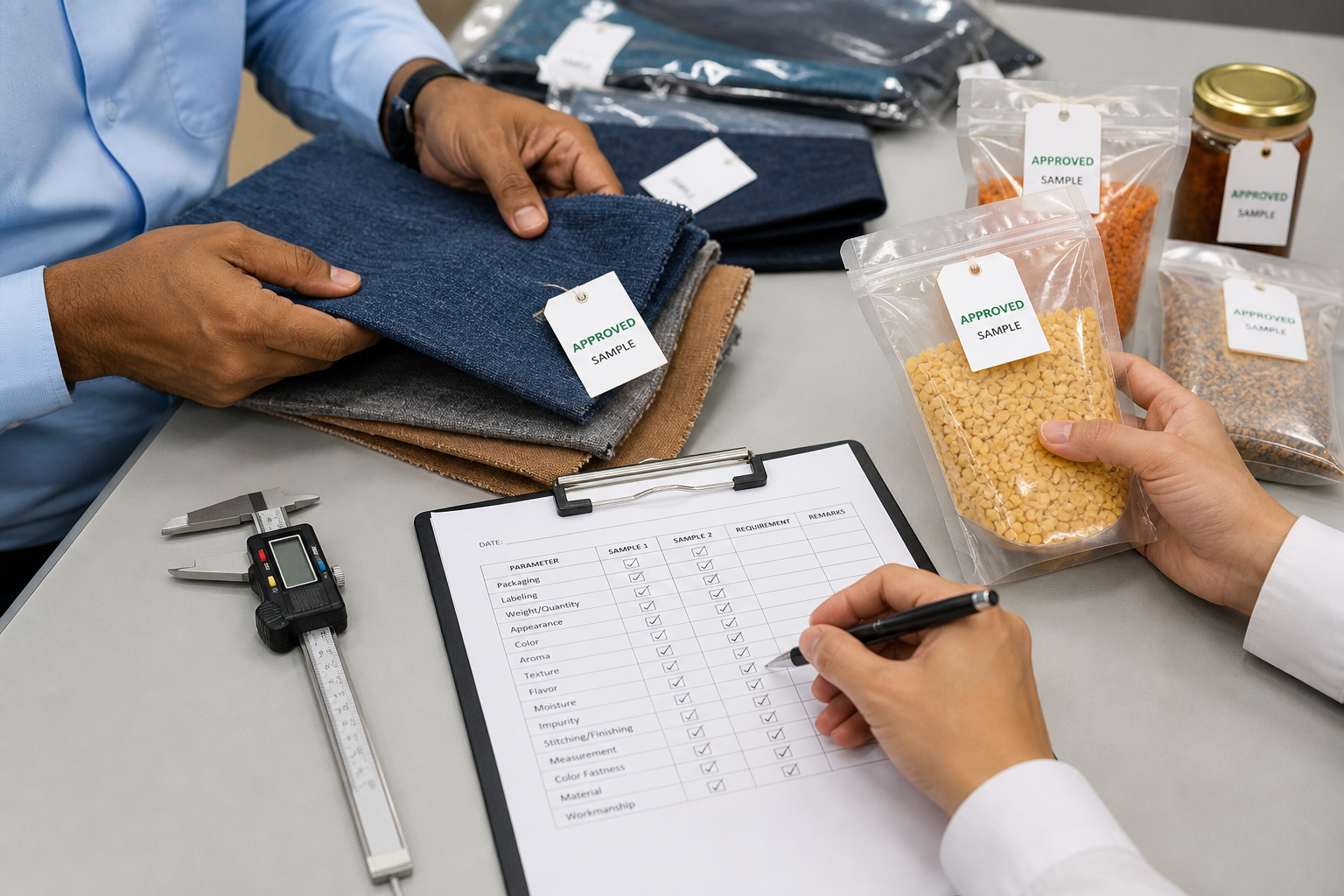
Why private-label MOQs differ from catalog wholesale minimums
Catalog or white-label stock items often carry lower or more flexible minimums because the factory already planned materials and packaging for multiple buyers. True private-label and OEM work usually introduces buyer-specific inputs: custom formula or construction, exclusive color, branded packaging, unique inserts, or dedicated tooling. Those inputs create purchase minimums and setup costs that a generic stock SKU does not carry.
OEM MOQ India discussions therefore need more precision than “how many pieces for your best price.” The better question is: what quantity makes the intended process, materials, and packaging commercially workable for this SKU and market?
Private-label MOQ also interacts with risk. Ordering enough to obtain a slightly lower unit price can increase cash, inventory, defect, and markdown exposure. The commercial target is not the lowest possible unit cost at any quantity. It is an order quantity that matches evidence, demand, and process reality.
The MOQ Decomposition Framework
The MOQ Decomposition Framework breaks a quoted minimum into six drivers. Use it whenever a factory states a single number.
Driver 1: Raw materials and intermediates
- Is the material standard stock or buyer-specific?
- What is the supplier’s minimum purchase and lead time?
- Can a near-standard grade reduce the lot size for the first run?
- What happens to leftover custom material—buyer-owned, factory-absorbed, or scrapped?
Many materials are sold in minimum lots—fabric dye lots, polymer natural or masterbatch quantities, botanical extract batch sizes, fragrance compounds, metal gauges, or chemical drums. If the buyer’s shade, grade, or active requires a dedicated purchase, the material lot often sets a practical floor even when the filling or sewing line could run fewer units.
Questions to ask:
Driver 2: Tooling, molds, and setup
- Is tooling buyer-owned or factory-owned?
- Is the quoted MOQ covering tooling recovery?
- Can tooling be paid separately so the first production lot can be smaller?
- Will the same tool support later SKUs or markets?
Dies, molds, custom cutters, screens, embossing tools, or filling-line change parts may require amortization. Sometimes the factory quotes a higher piece MOQ instead of a separate tooling invoice. Sometimes it quotes tooling plus a modest run size. Neither approach is automatically better; the buyer needs visibility.
Questions to ask:
Driver 3: Packaging and print runs
- Which packs are custom print versus blank or standard?
- What is the printer’s minimum per SKU and per language version?
- Can the first order use a simpler label or interim pack?
- Are digital print options available for short runs, and at what unit premium?
Custom cartons, labels, sleeves, bottles, and inserts frequently dominate private-label minimums. A product that could be filled in small lots may still require thousands of printed cartons or labels to make a print setup economical. Packaging MOQ and product MOQ should be listed separately in every serious quotation.
Questions to ask:
For packaging workflow and artwork control, see private label packaging and labeling in India.
Driver 4: Production batch and process stability
- What is the minimum process batch for the intended method?
- Would a smaller lot change the process so much that the trial becomes unrepresentative?
- Can one batch cover multiple pack sizes if labels differ?
Some processes need a minimum wet batch, kiln load, dye lot, extrusion run, or line clearance quantity to stay stable. A factory may refuse a tiny lot not from inflexibility but because the process cannot represent future production at that size. That distinction matters for trial design.
Questions to ask:
Driver 5: Line changeovers and factory scheduling
- How many SKUs or fragrances can share one campaign?
- Is there a changeover charge below a stated run length?
- Does consolidating shades or packs reduce the true minimum?
Changeovers cost time: cleaning, color changes, allergen or fragrance clearance, needle or tool changes, and documentation. Factories recover those costs through minimum run lengths or changeover fees. A buyer launching many micro-SKUs will feel this faster than a buyer launching one hero SKU.
Questions to ask:
Driver 6: Commercial policy and risk allocation
Not every stated MOQ is pure physics. Some factories set policy minimums to filter buyers, protect margin, or avoid export documentation effort on tiny orders. Policy minimums can sometimes move when the buyer offers clearer forecasts, better payment structure, or a sourcing partner who reduces coordination cost. They should still be tested against the five physical drivers above so negotiation stays honest.
Illustrative MOQ ranges by situation
The ranges below are illustrative planning bands only. They are not promises, guarantees, or quotations. Actual private label order quantity India outcomes vary by category, customization, packaging, factory scale, and destination requirements. Always confirm with the shortlisted manufacturer against a written specification.
Read the table as a conversation starter. A home-textile programme, a spice blend, a personal-care bottle, and a metal housewares SKU will not share one commercial floor. Category fit guidance lives in best private label products to source from India; MOQ still needs SKU-level decomposition after category choice.
Comparison table
Swipe →
Data table — swipe horizontally on small screens
| Situation | What often drives the floor | Illustrative planning band (units or equivalent) | Notes |
|---|---|---|---|
| Near-standard product, stock pack, light branding | Line policy, labeling setup | Commonly a few hundred to a few thousand | Lower bands appear more often when packs are simple and inputs are stocked |
| Custom formula or construction, standard pack | Material batch, process batch | Often 1,000–10,000+ | Wide spread; regulated or multi-ingredient products may sit higher |
| Custom product plus custom printed packaging | Print run + material lot | Often 2,000–20,000+ per SKU artwork | Packaging print frequently outranks filling minimum |
| Tooling-intensive hard goods or molded parts | Tool amortization + cavity efficiency | Highly variable; may need tooling fee + trial cavity run | Separate tooling from piece MOQ in the quote |
| Multi-SKU assortment launch | Changeovers + per-artwork print minima | Total programme quantity may look large even if per-SKU is modest | Assortment design can dominate cash need |
| Controlled trial before scale | Evidence needs vs process representativeness | Often smaller than steady-state MOQ, sometimes with surcharge | Should still exercise intended materials and packing where possible |
Trial MOQ versus scale MOQ
A trial MOQ private label quantity answers a different question than a scale MOQ. The trial asks whether the manufacturer can execute the approved product, packaging, and controls. Scale asks what quantity supports landed cost, service levels, and capacity once evidence exists.
Design principles for a trial quantity
- Large enough to use intended materials, process, and packing where those are part of what you need to learn.
- Small enough that a failure does not create damaging inventory or customer-service exposure.
- Explicit about what is interim (for example, simpler cartons) versus what must match the future launch pack.
- Paired with written success criteria, inspection, and a go/no-go rule.
Do not call a full-season inventory buy a “trial” because the supplier offered a better price at that volume. Conversely, do not force a token quantity so small that the factory hand-builds units and the result teaches nothing about production. The trial-order playbook linked above covers charter design, payment gates, and scoring in depth; this article focuses on quantity economics.
When scale quantity should increase
- the trial met agreed quality and process criteria;
- demand or channel commitments support the inventory;
- packaging and material purchases are stable;
- capacity and lead times are confirmed in writing; and
- the landed-cost model remains acceptable with realistic waste and inspection assumptions.
Increase quantity when:
Scale in steps. A successful first lot may justify a defined repeat band, not an open-ended annual commitment on day one.

The MOQ Negotiation Ladder
The MOQ Negotiation Ladder gives buyers a structured way to improve commercial fit without demanding impossible economics.
Rung 1: Clarify before you push
Request a written breakdown: material minimum, process batch, packaging print minimum, tooling, and policy minimum. Many “high MOQ” quotes collapse into one dominant driver. Negotiate that driver first.
Rung 2: Simplify scope
Reduce SKUs, fragrances, colors, or languages for the first order. One hero SKU with final market artwork is often healthier than five half-specified variants. Scope control is usually more effective than arguing about a headline number.
Rung 3: Standardize inputs
Where brand differentiation allows, use stock bottles, standard carton sizes, common closures, or house substrates with custom labels only. Full custom packaging can wait until volume supports it.
Rung 4: Separate setup from piece price
Offer to pay tooling, screen, plate, or changeover fees explicitly. Factories sometimes prefer this to inflating piece MOQ. The buyer gains a smaller production lot and a clearer asset register for tools and print materials.
Rung 5: Use interim packaging intentionally
Neutral or simpler packs for a controlled trial can unlock a lower first quantity if the buyer accepts a second packaging step later. Document that the trial does not prove final pack application if final packs were not used.
Rung 6: Trade forecast and repeatability for flexibility
A realistic 90-day or two-order forecast, even if non-binding in legal terms, can help a factory plan material purchases. Do not invent demand. Do share honest planning ranges when the relationship and data support them.
Rung 7: Change the manufacturer profile if needed
Some export-scale plants are efficient at container economics and awkward at boutique runs. Some smaller specialists are the opposite. If decomposition shows a structural mismatch, return to manufacturer selection rather than forcing a bad fit. Use the selection scorecard in the manufacturer-choice guide linked above.
What negotiation should not do
- Do not demand below-cost production and expect stable quality.
- Do not hide customization needs to win a low MOQ, then expand scope after PO.
- Do not accept verbal MOQ exceptions without written confirmation.
- Do not optimize unit price while ignoring total cash at risk.
Reading quotations: unit price, MOQ, and total exposure
- Unit ex-works or agreed base price at a stated quantity and Incoterm basis.
- Minimum spend implied by MOQ × price, plus tooling and artwork/setup.
- Packaging and testing adders that may be quoted separately.
- Freight and duty model at the trial quantity and at the expected scale quantity.
- Risk capital: what is lost if the lot fails inspection or market acceptance.
Private-label buyers sometimes compare factories on unit price at each factory’s preferred MOQ. That comparison misleads when the quantities differ.
Use a simple commercial view:
A factory with a higher unit price at a workable trial quantity can be cheaper in total risk-adjusted cost than a factory whose low unit price is available only at an oversized commitment.
Comparison table
Swipe →
Data table — swipe horizontally on small screens
| Commercial lens | Question | Why it matters |
|---|---|---|
| Piece price | What is the price at quantity X with defined specs? | Baseline comparison |
| Minimum cash outlay | What must be paid to start—including deposits, tooling, and print? | Liquidity and exposure |
| Effective cost at trial | Trial quantity × price + setups + freight + inspection | Real first-order economics |
| Effective cost at scale | Expected repeat quantity × price + amortized setups | Whether the programme can mature |
| Flexibility cost | Price or fee to run below preferred MOQ | Honesty of “flexible MOQ” claims |
| Failure cost | Inventory, rework, airfreight, lost launch window | Whether quantity matches confidence |
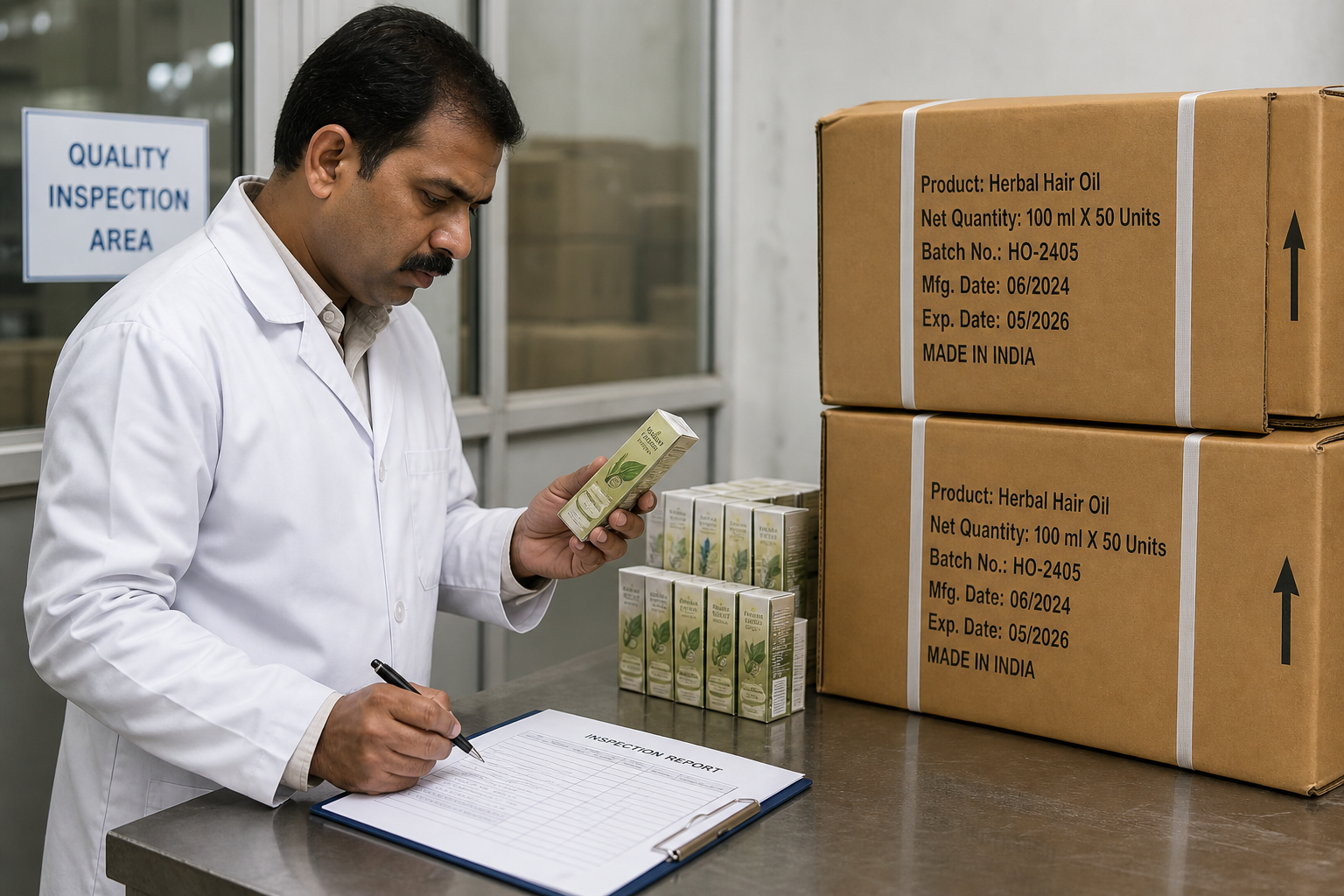
Practical scenarios buyers encounter
Scenario A: Packaging print sets the floor
A personal-care or food buyer can fill smaller lots, but the custom carton printer quotes a higher minimum per SKU. Options commonly include combining SKUs only when artwork truly matches, using a standard carton with a custom label first, paying a short-run digital premium, or delaying multi-language variants.
Scenario B: Material batch sets the floor
A color, active ingredient, fabric dye lot, or fragrance compound arrives in a lot larger than the desired first order. Options commonly include accepting leftover material as buyer-owned inventory, choosing a stock shade for trial, or finding a manufacturer that already runs a compatible material for other work without breaching exclusivity commitments.
Scenario C: Policy MOQ exceeds physical MOQ
The plant’s email signature says 10,000, but decomposition shows packaging and materials could support less. Negotiation may involve a surcharge, tighter SKU count, or partner-managed coordination so the factory’s overhead is covered another way. If the factory will not move even with costs covered, treat it as fit information.
Scenario D: Assortment inflation
A retailer wants twelve variants for shelf presence. Twelve print setups and twelve changeovers can create a programme MOQ that looks unreasonable for a first import. A staged assortment—core SKUs first, extensions after sell-through evidence—usually protects both brand and factory.

Aligning MOQ with development and manufacturer choice
MOQ is not only a purchasing topic. Development choices create MOQ. A highly customized construction, exclusive shade library, or complex multi-component pack raises minimums before any factory is asked for a quote. Freeze decisions should therefore include a quantity hypothesis: target trial band, target first scale band, and packaging approach for each.
Manufacturer choice also encodes MOQ. Selecting a large export plant for a micro-batch lifestyle launch can create friction that no negotiation email will erase. Selecting a micro workshop for a compliance-heavy, high-documentation programme can create the opposite problem. Match plant profile to quantity ambition, then negotiate inside that fit.
A practical quantity hypothesis worksheet
- Launch story: first market, first channel, and whether the order is evidence-building or demand-filling.
- SKU count: hero SKUs versus optional extensions.
- Packaging stance: final branded pack, interim pack, or mixed.
- Target trial band: a range, not a single stubborn number.
- Target first scale band: what success would justify next.
- Cash ceiling: maximum acceptable outlay including deposits, tooling, print, freight, and inspection.
- Walk-away: which MOQ or surcharge combination is commercially unacceptable.
Before requesting final quotations, write a one-page quantity hypothesis the internal team can defend:
Share a cleaned version of that hypothesis with shortlisted manufacturers and your sourcing partner. Factories respond more usefully to a structured band and constraint set than to “What is your MOQ?” alone. If every factory’s workable band sits above the cash ceiling, the problem may be assortment design or pack complexity—not a lack of hard bargaining.
Landed-cost sensitivity at different private-label quantities
- Model the trial quantity, a midpoint repeat, and a stretch quantity the factory prefers.
- Keep product specs constant so the comparison isolates quantity effects.
- Add freight assuming realistic chargeable weight and mode for each band.
- Include one inspection event and one rework contingency allowance proportionate to risk.
- Ask what price break, if any, appears at each band—and whether the break requires a hard PO commitment.
Unit manufacturing price is only one line in the model. At low quantities, fixed costs dominate: tooling, artwork/setup, laboratory tests where required, inspection mobilization, and document handling. At higher quantities, variable costs and inventory risk dominate.
A simple sensitivity check helps buyers avoid false precision:
Buyers sometimes discover that airfreighting a small urgent trial, then moving to sea freight on repeat, changes the economics more than a modest piece-price concession. Others discover that a packaging print plate fee dwarfs the apparent savings from shaving a few hundred units off the fill MOQ. Put those numbers beside each other before choosing a negotiation target.

How a sourcing partner helps with MOQ conversations
- obtain component-level MOQ breakdowns from factories and printers;
- compare two or three manufacturer profiles on workable trial bands;
- identify where interim packaging or standard inputs unlock a safer first order;
- keep exceptions documented in the purchase order; and
- connect quantity decisions to inspection and shipment readiness so a “small order” still has controls.
A local partner can:
The partner’s value is translation and evidence, not magic reduction. A factory may quote a round policy number until someone asks for the print minimum, the dye-lot size, and the changeover recovery in writing. Getting those answers—and checking them against what the line can actually run—usually matters more than another round of generic discount requests.
Altus Exports can support this through private label manufacturing India, merchant exporter India, and global sourcing partner India models, depending on whether the buyer needs manufacturing coordination, export handoff support, or broader procurement partnership. No partner can honestly guarantee a universal private label MOQ India number across categories.
Conclusion: make quantity a designed decision
Private label MOQ in India becomes manageable when buyers stop hunting for one magic number and start managing drivers. Materials, tooling, packaging print runs, process batches, and changeovers explain most minimums. Illustrative ranges help with planning, but written factory breakdowns decide reality. Trial quantities should create evidence; scale quantities should follow evidence. Negotiate with the MOQ Negotiation Ladder—clarify, simplify, standardize, separate setups, and change plant profile when needed—without demanding economics that undermine quality.
When quantity, manufacturer fit, and packaging strategy are designed together, MOQ stops being a surprise objection and becomes part of a controlled private-label launch plan.