How to Choose a Private Label Manufacturer in India
By Saurabh Mittal, Founder, Altus Exports
Choose a private label manufacturer in India by scoring capability fit, compliance readiness, sampling discipline, capacity realism, communication quality, and commercial clarity on the same weighted criteria. Require evidence for each claim, distinguish white-label base…

Choosing a private label manufacturer in India is a different decision from finding factories that advertise “OEM” or “white label.” Discovery produces a shortlist. Selection decides who will turn your brand brief into a repeatable, shippable product. That manufacturer will influence formulation or construction quality, packaging discipline, lead-time reliability, documentation readiness, and how quickly problems surface when something drifts from the approved sample.
India’s private-label landscape is broad. The same buyer language—“private label,” “OEM,” “white label”—can describe three different commercial models: an existing base product with your label applied; a custom formulation or construction developed to your specification; or a full OEM program that includes tooling, molds, exclusive components, or brand-exclusive packaging systems. A factory that is excellent at one model may be a poor fit for another. Cross-category buyers see this constantly: personal care, food ingredients, home textiles, kitchenware, promotional goods, and light industrial consumables all use private-label language, but the evidence required for a sound appointment differs.
This article gives international buyers a practical evaluation method. It assumes you already have candidates and need a disciplined way to compare them. For discovery channels and shortlisting approaches, see how to find private label manufacturers in India. For brand and confidentiality operating controls after appointment, see how to protect your brand when working with Indian private label manufacturers. This guide owns the selection scorecard and evaluation process—not the full sourcing playbook, not packaging-compliance depth, and not legal IP drafting.
Executive answer: what a buyer should choose
Choose the manufacturer that can prove fit for your product model, destination-market readiness, sampling discipline, and capacity against your intended launch or reorder pattern. Prefer a factory that asks precise questions about specifications, pack formats, critical-to-quality characteristics, and approval gates over one that offers a broad catalog and a fast unit price. Require written evidence for capability claims, clarify what is standard versus custom, and treat commercial terms as part of operational risk—not as a separate negotiation after production has started.
Do not appoint on the basis of a polished brochure, a trade-show conversation alone, a single sample that was not controlled, or a promise to “match any brand.” Those signals may open a conversation. They do not prove that the factory can freeze a golden sample, hold process control, and export consistently under your brand.

Clarify the private-label model before you score factories
- Are we adapting an existing base or developing something new?
- Which attributes would be most expensive to get wrong: safety, sensory, fit/function, shade, stability, or packaging integrity?
- Do we need export-ready documentation and destination labeling support, or only factory packing?
- What annual volume and reorder rhythm are realistic in year one?
- Which approvals stay with us: manufacturer appointment, sample freeze, artwork release, purchase-order release, inspection release, payment authorization?
- Is exclusivity required for the formula, pack, or tooling—or is brand differentiation enough?
A fair comparison starts with the job the manufacturer must perform. Write a short private-label brief before evaluation interviews. It should state the product family, target market, expected pack sizes or SKUs, intended order pattern, quality tolerance, packaging expectations, any formulation or material constraints, and which decisions your team must retain.
Also name the engagement model:
If your brief is still vague—“we want a private-label shampoo / tea / candle / kitchen tool like Brand X”—selection will reward the most confident presenter rather than the best operating fit. Tighten the brief until each candidate can be scored against the same requirements.
Useful internal questions before evaluation:
For the wider private-label sourcing context, start with how to source private label products from India. This article focuses on manufacturer appointment once candidates exist.
Comparison table
Swipe →
Data table — swipe horizontally on small screens
| Model | What the manufacturer typically owns | What the buyer typically owns | Selection implication |
|---|---|---|---|
| Existing base + brand (white label / light private label) | Proven base formula or construction, process control, packing to approved artwork | Brand, artwork, market claims review, commercial acceptance criteria | Prioritize consistency, pack changeover discipline, and documentation over creative R&D |
| Custom formulation or construction | Development iterations, lab or tech samples, process scale-up, batch records appropriate to category | Product brief, performance targets, claim boundaries, sample approvals | Prioritize NPD capability, revision control, and technical communication |
| Full OEM tooling / exclusive components | Tooling or mold ownership arrangements, exclusive parts, dedicated process steps where agreed | Design intent, tooling commercial terms, exclusivity scope, change control | Prioritize engineering controls, tooling records, capacity reservation, and IP operating discipline |
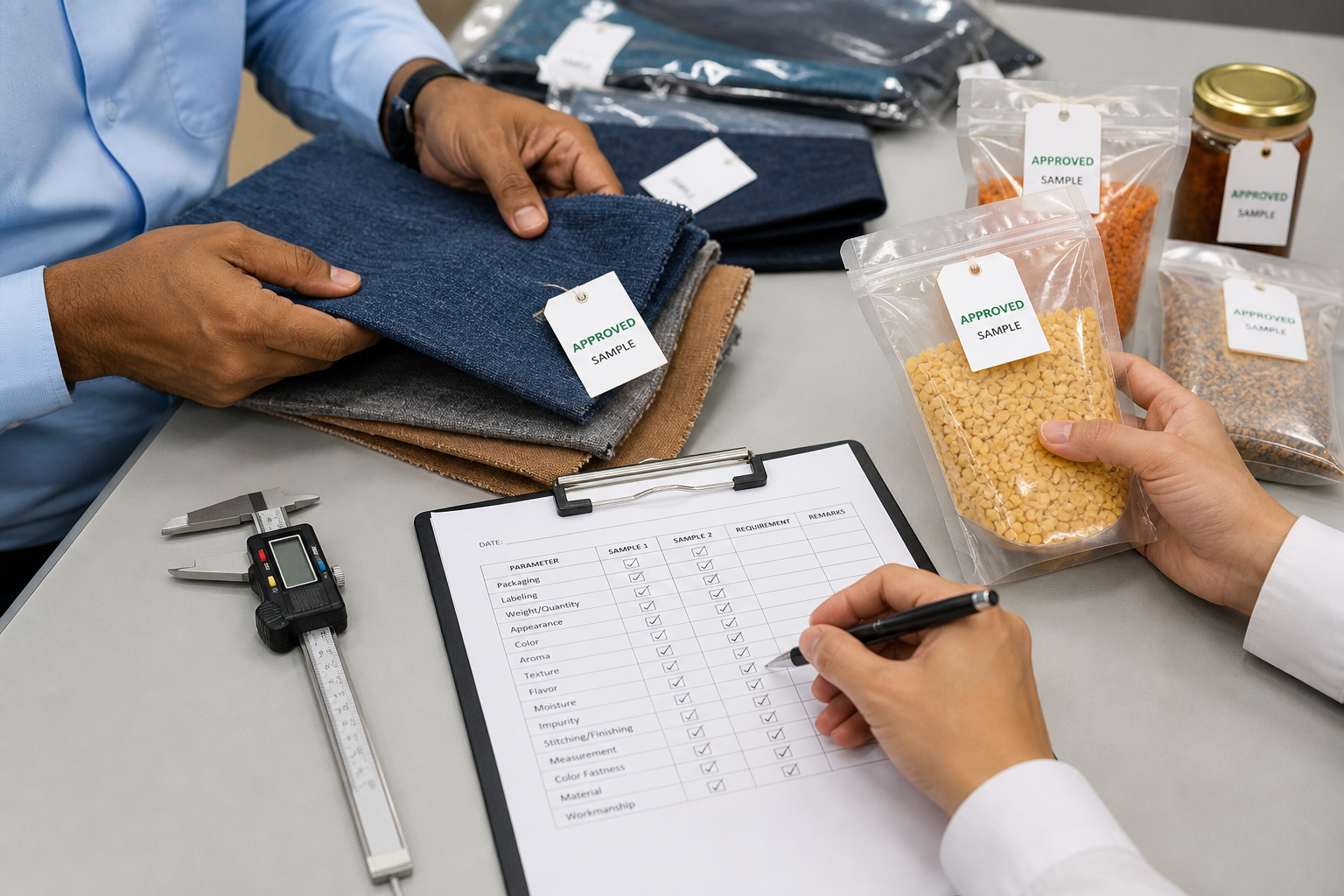
The 12-Point Private Label Manufacturer Selection Scorecard
Apply the 12-Point Private Label Manufacturer Selection Scorecard to every shortlisted OEM or white-label factory using the same brief. Rate each criterion 1–5 against private-label evidence: process fit for your SKU model, compliance pathway for destination markets, sample control, capacity realism, packaging readiness, and commercial clarity. Weight the scores, then review the lowest-scoring criteria before you appoint. A polished prototype or aggressive unit price should not override missing proof on brand, pack, or production control.
The total weight is 100. As a decision rule, do not appoint a manufacturer that scores poorly on capability fit, compliance readiness, sampling discipline, or commercial transparency merely because the unit price looks attractive. Those four areas determine whether your brand can be governed after the first sample.
Comparison table
Swipe →
Data table — swipe horizontally on small screens
| Criterion | Weight | What good evidence looks like |
|---|---|---|
| 1. Product-model capability fit | 12 | Clear match to white-label base, custom development, or OEM tooling needs; honest gaps |
| 2. Compliance and market readiness | 12 | Relevant licenses/records where applicable; realistic view of destination requirements; testing pathway |
| 3. Sampling and revision discipline | 11 | Sample plan, labeling of revisions, retention samples, written approval gates |
| 4. Capacity and schedule realism | 10 | Capacity against your launch and reorder pattern; bottleneck honesty; lead-time logic |
| 5. Quality system and critical controls | 10 | Process controls tied to failure modes; in-process checks; release criteria; CAPA habit |
| 6. Packaging and artwork execution readiness | 8 | Pack changeover control, artwork versioning, packing specs, sample-to-production pack match |
| 7. Communication and project ownership | 8 | Named owners, decision-ready updates, escalation path, bilingual clarity where needed |
| 8. Commercial transparency and cost structure | 8 | Clear price basis, tooling/sample fees, payment terms, change-order treatment |
| 9. Export documentation and shipment readiness | 7 | Practical export packing, document discipline, mark/label control, handoff clarity |
| 10. KYC, legitimacy, and operating substance | 6 | Verifiable entity, site substance, ownership clarity, consistent commercial identity |
| 11. References and comparable program evidence | 5 | Relevant anonymized examples or permissioned references; scope honesty |
| 12. Pilot / trial readiness and cultural fit | 3 | Willingness to start with controlled gates; collaborative problem-solving; no pressure to skip steps |
1. Score capability fit to the product model, not generic “OEM” language
- Personal care / home care: base formula maturity, stability pathway, fragrance/color change control, fill accuracy.
- Food ingredients / packaged foods: specification ownership, allergen controls where applicable, batch traceability, sensory and analytical targets.
- Home textiles / soft goods: construction, shade, shrinkage, measurement tolerance, trim and packing standards.
- Hard goods / housewares: material grade, dimensional tolerance, surface finish, assembly method, drop/function tests appropriate to the item.
- Candles / fragrance goods: wax system, fragrance load, burn behavior, labeling and pack integrity.
Ask each candidate to explain which model it is proposing for your brief: existing base with brand application, custom formulation/construction, or full OEM with tooling. A credible manufacturer can describe the process route, typical development time, what is already validated, and what remains unknown.
For an existing base product, ask how long the base has been in regular production, what can and cannot be customized (fragrance, shade, size, pack, additive level, construction detail), and how changeovers are controlled so your SKU does not inherit another brand’s residual variation. For custom development, ask who owns the formulation or construction notes, how iterations are recorded, and how scale-up differs from lab samples. For tooling-led OEM, ask about tooling design ownership, maintenance, spare capacity, and what happens if volumes fall below expectations.
Cross-category examples of useful probing:
The goal is not a full technical audit in the first call. It is to learn whether the factory knows the questions that protect your product.
2. Evaluate compliance readiness without pretending one certificate covers every market
- Which destination-market requirements have you supported for similar products?
- What testing is standard versus buyer-funded?
- Who reviews claims on labels and marketing copy for feasibility against the actual product?
- What records can you provide for batch or lot traceability?
- What would prevent you from accepting this brief?
“Compliant” is not a universal state. Compliance readiness means the manufacturer can support the evidence pathway your category and destination market require. Ask what licenses, registrations, quality-system certificates, test reports, or process records are already in place for comparable products—and what still needs to be built for your SKU.
Be precise. A factory may be strong in domestic production and still need additional testing, labeling controls, or documentation for your market. A factory may hold useful ISO or sector certificates and still lack the process discipline for your critical attributes. Score honesty and pathway clarity, not logo volume on a website.
Ask:
Packaging and labeling compliance depth belongs in a dedicated guide; for that layer, see private label packaging and labeling in India. In selection, you only need enough evidence that the manufacturer will not treat packaging as an afterthought.
3. Test sampling discipline before you trust a “beautiful first sample”
- Development or sales samples versus pre-production / golden samples
- How revisions are numbered and what changed in each round
- Who signs off on sensory, functional, dimensional, or analytical criteria
- How long retention samples are kept
- What freezes the specification before mass production
Private-label risk often appears between sample and production, not at the first presentation sample. Ask how samples are requested, coded, revised, retained, and approved. A strong manufacturer can describe:
If a factory sends unlabeled jars, unlabeled fabric cuttings, or unmarked prototypes with no revision note, treat that as a process signal. You are evaluating whether the manufacturer can protect a brand through iteration, not whether it can assemble one impressive object for a meeting.
For the development path from idea to freeze, see private label product development in India. Use that article for NPD sequencing; use this scorecard to decide whether a given factory is capable of running that sequence for you.
4. Demand capacity realism for launch and reorder—not peak-month storytelling
- Machine or line capacity
- Skilled labor bottlenecks
- Material and packaging procurement time
- Quality-release time
- Export booking and packing constraints
Capacity claims are easy to state and hard to prove without a structured conversation. Ask about monthly or line capacity for your product family, current utilization bands, peak-season constraints, raw-material lead times, and packaging lead times. Ask what would happen if your order doubled after a successful launch—and what would happen if it stayed small.
A useful manufacturer distinguishes:
Also ask whether your SKU would run on a dedicated line, a shared line with changeover controls, or a contractor network. Subcontracting is not automatically disqualifying, but undisclosed subcontracting is. You need to know who actually makes the product and who is accountable when it fails.
MOQ economics are covered separately in private label MOQ in India. During selection, focus on whether the factory’s capacity story and commercial minimums are coherent with your launch plan.
5. Inspect the quality system through failure modes, not slogans
“We have QC” is not a selection criterion. Ask which characteristics are critical for your product, where they are measured, what equipment or methods are used, and what happens when a result is out of specification. Request a redacted in-process or final inspection record if available. Look for specificity: fill weight, torque, shade, seam strength, moisture, microbial or contaminant checks where relevant, functional tests, packing completeness.
Ask how nonconformities are contained. Can the factory segregate suspect lots? Who authorizes rework or concession? How are corrective actions verified? A private-label manufacturer should be able to explain release criteria tied to the approved sample and written specification—not only “we check every shipment.”
For an integrated operating view later in the program, see India private label sourcing: supplier, quality control, packaging and export guide.
6. Confirm packaging and artwork execution readiness
Many private-label failures are packaging failures: wrong revision printed, barcode mismatch, seal integrity issues, scuffing, incorrect language panels, or pack counts that do not match the purchase order. During selection, ask how artwork is received, confirmed, printed or applied, and version-controlled. Ask whether the factory or a nominated packer owns secondary packing, inserts, shipper marks, and carton strength.
You do not need a full compliance treatise here. You need evidence that the manufacturer treats packaging as part of product quality. Request a packing specification example and ask how a last-minute artwork change is handled without silent substitution.
7. Score communication as an operating system
- Answers that change materially between calls without explanation
- Inability to distinguish sample stage from production commitment
- Pressure to place a deposit before specification freeze
- Reluctance to put key commitments in writing
- Mixing of personal WhatsApp-only coordination with no record trail for approvals
Overseas buyers need decision-ready updates: what is confirmed, what is assumed, what is blocked, and who must decide. Ask for a named commercial owner and a named technical or quality owner. Ask for a sample weekly status format. Evaluate behavior during selection itself—response clarity, willingness to say “we do not do that,” and follow-up quality.
Warning signs include:
Good communication is not polished English alone. It is structured ownership and traceable decisions.
8. Make commercial terms part of the risk assessment
- Price basis (EXW, FOB, or other) and what is included
- Sample charges, development fees, and whether they are adjustable against orders
- Tooling or mold costs, ownership, and amortization logic if applicable
- Payment terms and milestones tied to sample freeze, production start, and shipment
- Validity of quotations and raw-material escalation language
- Treatment of change orders after golden-sample approval
- Liability for wrong packing or wrong revision when factory-controlled
Request a written commercial outline covering:
None of these terms has a single “correct” shape across categories. Opacity is the problem. A low unit price with undefined change-order costs, vague tooling ownership, or payment demands disconnected from approval gates is a selection risk.
9. Check export and shipment readiness early
A factory can make a good product and still create export friction through weak packing lists, inconsistent commercial invoices, missing marks, or poor coordination with forwarders. Ask who prepares export documents, who checks them against the purchase order, and how carton marks and labels are controlled. Ask about experience with your typical Incoterm and destination region without accepting overconfident customs advice as fact.
If the manufacturer uses traders or sister entities for invoicing, understand the structure before appointment. Identity consistency matters for KYC and for payment safety.
10. Complete KYC and substance checks before deposits or tooling payments
- How to verify an Indian supplier before placing an order
- Indian supplier due diligence: the complete guide
Selection is incomplete without legitimacy and operating-substance checks. Confirm legal identity, address consistency, authorized signatories, bank-account beneficiary alignment, and that the production site matches the commercial story. Visit when practical; when not, use structured remote evidence and third-party checks appropriate to order value and risk.
For verification depth, use:
Those guides own KYC methodology. This scorecard requires that KYC is done and scored—not that every verification technique is restated here.
11. Validate references with scope-aware questions
- What did the manufacturer actually control: formula, pack, both?
- How were sample revisions handled?
- What went wrong, and how was it resolved?
- Were commercial terms stable after approval?
- Would you launch another SKU with them?
Ask for relevant evidence of comparable private-label work. A manufacturer that fills commodity bottles for domestic retail may still be unproven for export private label with complex artwork and stability needs. When references are available, ask:
Respect confidentiality. Anonymized case descriptions and controlled reference calls can be enough when customer names cannot be shared.
12. Use a pilot gate to test operating fit
No interview replaces a controlled trial. Define a pilot that exercises the real risks of your program: sampling iterations if you need custom work, artwork application if brand presentation matters, packing integrity if transit risk is high, and documentation if export is part of the first shipment. Write success criteria before the pilot starts.
Do not treat the pilot as an informal favor. Specify product definition, approval rights, fees, timeline, and what happens if the golden sample is not achieved. A manufacturer that resists structured pilots while pushing for large deposits is telling you how the relationship will feel under pressure.
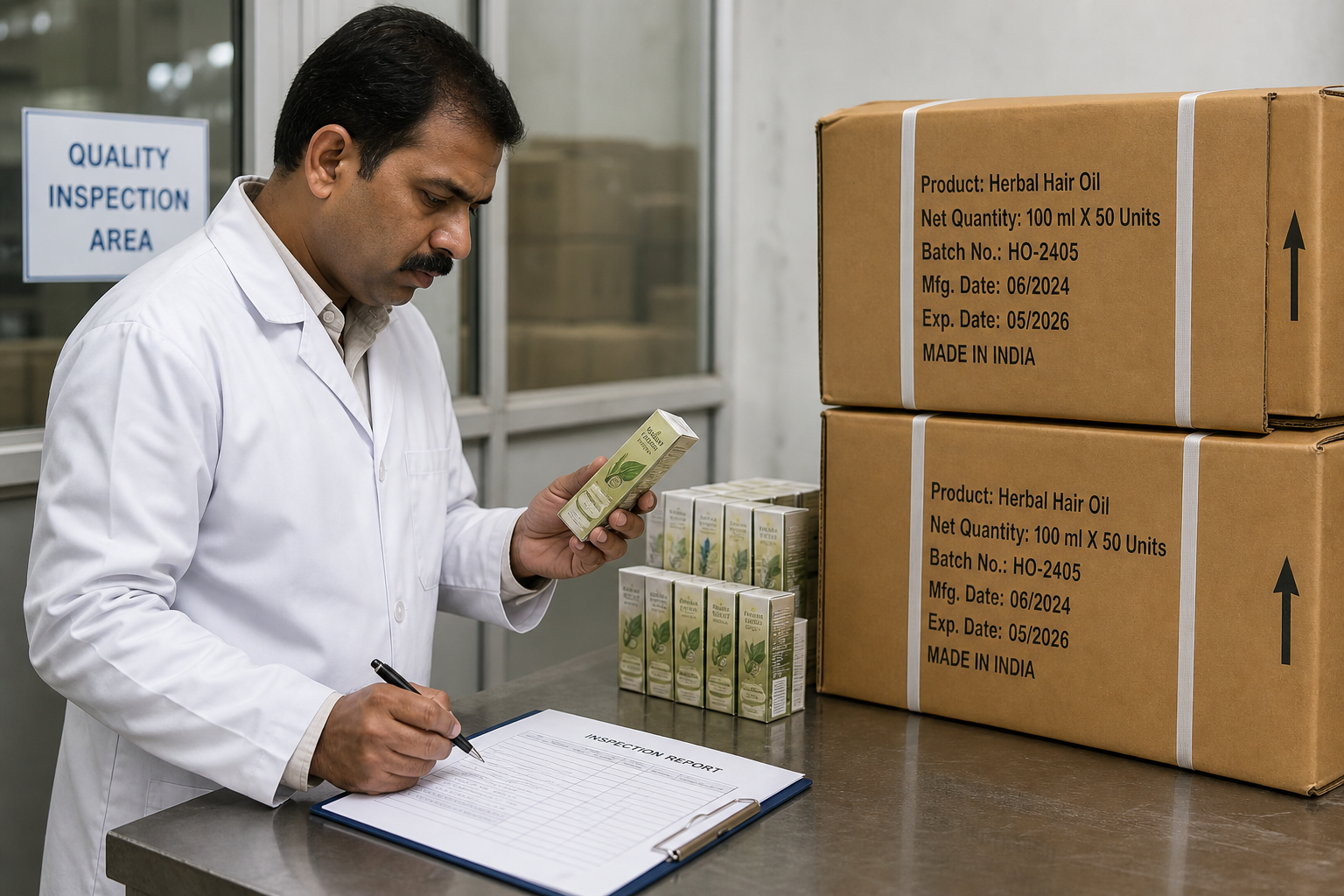
The Private Label Manufacturer Evaluation Process
Named framework: PL-SELECT Path — a six-stage evaluation sequence for international buyers.
This sequence keeps discovery separate from appointment. Finding factories is not the same as choosing one.
Comparison table
Swipe →
Data table — swipe horizontally on small screens
| Stage | Buyer action | Exit gate |
|---|---|---|
| 1. Brief lock | Finalize product model, markets, pack intent, volume band, approval map | Written brief shared with all candidates |
| 2. Evidence request | Send identical RFQ / RFI pack: capability, compliance pathway, sample plan, commercial outline | Comparable written responses received |
| 3. Structured interviews | Use the same interview set; score live notes against the 12-point scorecard | Shortlist reduced to serious contenders |
| 4. KYC and site substance | Entity checks, site confirmation, ownership and bank alignment | Pass / conditional pass / fail recorded |
| 5. Sample or micro-pilot | Controlled samples or limited trial under written gates | Golden-sample path accepted or candidate removed |
| 6. Appointment and operating plan | Award scope, freeze commercial terms, define change control and escalation | Manufacturer appointed with written operating plan |
Interview questions that reveal private-label capability
- Which private-label model are you proposing for our brief, and why?
- What is already proven versus what must be developed?
- Walk us through your sample revision and approval process.
- Which critical-to-quality checks protect this product in production?
- What licenses, tests, or records are required for our destination market, and what is already in place?
- Where are the capacity bottlenecks for our SKU family?
- Do you subcontract any process step? If yes, who controls quality and disclosure?
- How are artwork revisions controlled from approval to packed goods?
- What is included in the quoted price, and what triggers a change order?
- Describe a private-label program you declined or paused—and why.
Use the same core questions with each candidate.
Look for an explicit choice among base+brand, custom development, and tooling-led OEM—not a vague “we can do anything.”
Strong answers separate validated bases/processes from open technical risks.
Listen for coding, retention, written sign-off, and production freeze rules.
Prefer specific controls over generic “100% inspection” claims.
Honesty about gaps is more valuable than overclaiming.
Material, packing, skilled labor, and line time should all be considered.
Undisclosed subcontracting is a red flag.
Ask for version control and pack-line checks.
Commercial clarity belongs in selection, not after a dispute.
Judgment and boundary-setting are positive signals.

Common selection mistakes
Choosing the lowest unit price before specification freeze
A price without a frozen sample, pack specification, and test pathway is not comparable. Cheap quotes often omit development reality, packaging quality, or rejection risk.
Treating a sales sample as a production standard
Uncontrolled samples can be hand-finished, specially packed, or made from preferred material lots. Only approved, retained, revision-controlled samples should govern production.
Ignoring the difference between white label and custom OEM
Buyers who need exclusive performance or unique construction sometimes appoint a white-label filler that cannot develop. Buyers who only need brand application sometimes overpay for unnecessary custom R&D. Match the model.
Skipping KYC because the product sample looked good
Product appeal does not prove legal identity, site substance, or payment safety. Complete verification before tooling payments or significant deposits.
Appointing on category breadth instead of SKU fit
“We manufacture many private-label products” is not evidence that your critical process is controlled. Score the line that will make your goods.
Leaving exclusivity and IP expectations unspoken
Selection should surface whether the base is shared, whether a custom formula will be exclusive, and how confidential briefs are handled. Detailed brand-protection controls belong in the brand-protection guide; silence during selection is still a mistake.
Letting packaging be “decided later”
If brand presentation is part of the product, packaging capability is a selection criterion, not a postscript.

A practical appointment checklist
Checklist
- Product model confirmed in writing (base+brand, custom, or tooling OEM).
- Specification and pack intent clear enough to sample against.
- Scorecard completed for at least two serious candidates.
- KYC and site-substance checks passed or conditions documented.
- Sample pathway and approval rights agreed.
- Commercial terms, payment milestones, and change-order rules in writing.
- Named contacts and escalation path confirmed.
- Pilot or first-order success criteria defined.
- Subcontracting disclosure obtained.
- Export document ownership clarified.
Before you issue a first production purchase order:

Conclusion: select the manufacturer that can govern your brand on the line
The right private label manufacturer in India is not the one with the broadest catalog or the lowest opening quote. It is the one that fits your product model, can evidence compliance readiness, controls sampling and revisions, speaks honestly about capacity, and accepts commercial and approval discipline before mass production.
Strengthen appointment with adjacent controls: how to verify an Indian supplier before placing an order, how to conduct quality control when sourcing from India, and pre-shipment inspection in India. For operating coordination after appointment, use private label manufacturing India, find manufacturers in India, and global sourcing partner India.
Altus Exports supports international buyers with private-label manufacturer evaluation, sourcing coordination, and India-based program support across compatible categories. If you have a shortlist or a brief ready for comparison, a structured selection discussion can clarify capability fit, missing evidence, and a practical pilot gate before you commit deposits or tooling spend.