
Best Private Label Products to Source From India
By Saurabh Mittal, Founder, Altus Exports
The best private label products to source from India are categories where India has credible production depth, export packing capability, and a workable path from brand brief to inspected shipment. Strong candidates often include home textiles, spices and ingredients, honey…

“Best private label products from India” is not a shopping list of SKUs. It is a category-fit question. International buyers succeed when they choose product families where India has real manufacturing depth, where private-label branding is commercially meaningful, and where the buyer can manage quality, packing, and destination requirements without inventing a supply chain from scratch.
India is a cross-category sourcing market. That is an advantage and a trap. The advantage is choice: textiles, ingredients, natural products, lifestyle goods, sports products, and packaging-adjacent items can all support private-label programmes. The trap is selecting a category because it looks popular online, then discovering that compliance, MOQ, seasonality, or brand differentiation make the programme impractical for your channel.
This article gives category discovery criteria, examples of top private label categories India buyers commonly evaluate, and a fit scorecard you can reuse before manufacturer search. It does not replace food-ingredient deep dives, HS-code encyclopedias, or SKU catalogs. For the end-to-end sourcing playbook after category choice, see how to source private label products from India. For factory discovery next, see how to find private label manufacturers in India.
Altus Exports works with international buyers as an India-based private-label and sourcing partner across categories, helping translate category intent into briefs, manufacturer shortlists, and staged execution. Use the frameworks below to decide what to private-label before you ask who can make it.
The short answer: choose categories with production depth plus brandable control points
- Supply reality — India has factories or producer networks that can make the product for export at a practical scale.
- Brand control points — you can own meaningful differentiation through formulation range, material grade, design, assortment, packaging presentation, or quality standard.
- Operating fit — your team can handle the category’s compliance burden, sampling cycles, MOQ pattern, and reorder logic.
White label products India ideas become commercially useful when three conditions are present:
A category can be “strong for India” and still be wrong for your brand. The scorecard later in this article exists to separate national capability from buyer fit.
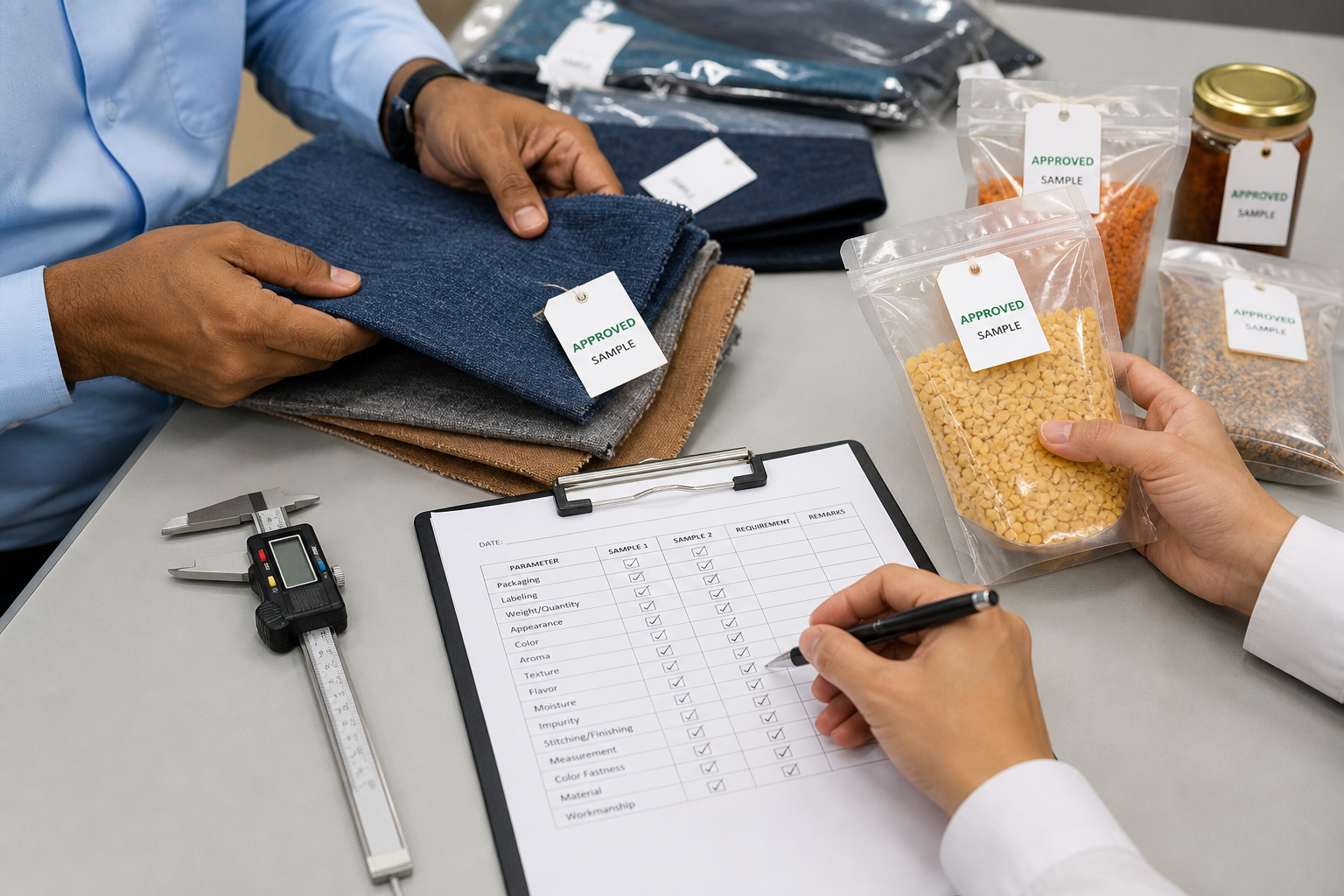
Private Label Category Fit Scorecard
The Private Label Category Fit Scorecard is the decision tool for this article. Score each candidate category from 1 (weak) to 5 (strong) across eight criteria. Prioritize categories with high totals and no catastrophic low score on compliance or supply continuity.
Comparison table
Swipe →
Data table — swipe horizontally on small screens
| Criteria | What “5” looks like | What “1” looks like | Why it matters |
|---|---|---|---|
| A. India production depth | Multiple credible producers / clusters | Thin, opportunistic supply | Protects continuity and comparison |
| B. Export readiness | Regular export packing and document discipline | Domestic-only mindset | Reduces shipment friction |
| C. Brand differentiation room | Clear levers for private-label value | Commodity with no brandable edge | Protects margin and positioning |
| D. Compliance manageability | Requirements are knowable and budgeted | Opaque or buyer-unready regulation | Prevents launch blockers |
| E. Sampling clarity | Specs and approvals can be made tangible | Subjective, endless revision loops | Controls time-to-freeze |
| F. MOQ practicality | Trial and reorder quantities fit your channel | MOQ far above sell-through reality | Protects cash and inventory |
| G. Quality observability | Defects and standards can be inspected | Hidden variability until after import | Protects brand reputation |
| H. Reorder stability | Materials and capacity support repeats | One-off artisan or crop lottery only | Needed for private-label programmes |
How to use the scorecard
- List 3–5 category candidates, not 30 SKUs.
- Score each criterion independently.
- Flag any score of 1–2 as a veto risk unless you have a mitigation plan.
- Choose one primary category and, at most, one adjacent category for the first programme.
- Only then begin manufacturer search and process design.
MOQ ranges and negotiation tactics are covered in private label MOQ in India. Manufacturer evaluation depth belongs in how to choose a private label manufacturer in India. This article stops at category fit.
What makes a private label opportunity in India actually attractive
- Cluster or network depth — more than one workable producer path.
- Specifiable quality — materials, grades, dimensions, or sensory standards can be written down.
- Pack-and-brand leverage — presentation changes create retail or e-commerce value without requiring impossible engineering.
- Export precedent — producers already understand cartons, marks, lead times, and document routines.
- Channel match — your retail, wholesale, foodservice, or DTC model can absorb the MOQ and reorder pattern.
- Margin logic — landed cost, brand price architecture, and quality tier can coexist.
- a competitor launched something similar;
- a directory lists many suppliers;
- the product photographs well;
- unit price looks low before packing, testing, and freight;
- a factory offers “any private label” with no process evidence.
Private label opportunities India buyers should take seriously usually share these signals:
Avoid selecting a category only because:
Category example 1: Home textiles
- established manufacturing capability across multiple product types;
- clear material and construction variables (fiber, GSM, weave, finish, stitching);
- strong packaging and label presentation opportunities for retail and e-commerce;
- reorder logic that can support branded programmes when quality is controlled.
- quality is visible to the end customer immediately;
- size, shrinkage, color fastness, and finishing standards must be explicit;
- assortment complexity can multiply SKUs faster than sell-through.
Home textiles are among the most natural private-label categories for India because production depth and brandable presentation often coexist. Buyers commonly evaluate towels, bed linen, throws, cushion covers, kitchen textiles, and related soft-home assortments.
Why the category can score well
Fit cautions
Scorecard lens: Usually strong on production depth and brand differentiation; medium-to-high on quality observability needs; MOQ practicality depends on size/color proliferation.
Home textiles are a process-heavy private-label category. After category selection, use the manufacturing workflow in private label manufacturing in India: how the process works to keep sampling and freeze disciplined.

Category example 2: Spices and ingredients
- deep agricultural and processing base for many spice and ingredient lines;
- private-label room through grade, cut, blend architecture, pack format, and quality tier;
- strong relevance for retail, foodservice, and industrial buyers.
- food compliance and testing expectations vary by destination;
- sensory and moisture variability require clear specifications;
- crop and season dynamics can affect continuity;
- packaging and labeling are not decorative extras; they are part of market readiness.
Spices and ingredients remain a major India private-label conversation for importers, distributors, and food brands. The category can include whole and ground spices, blends, and related ingredient formats—used here as a category example, not as a rewrite of the food-ingredients content cluster.
Why the category can score well
Fit cautions
Scorecard lens: Often strong on India production depth and brand differentiation; compliance manageability can become the veto score if the buyer is not ready for food-category controls.
If your programme is specifically private-label food ingredients, use the dedicated food-ingredients guides for category depth. In this cross-category article, spices/ingredients are one fit example among several.
Category example 3: Honey and natural products
- brand storytelling potential around origin, purity positioning, and pack presentation;
- multiple retail and gift-adjacent formats depending on product form;
- opportunity to differentiate on grade, filtration/process choices, and quality evidence.
- authenticity, quality markers, and testing expectations must be defined early;
- destination rules for claims and labeling can be restrictive;
- supply consistency and traceability evidence matter more than brochure language.
Honey and broader natural-product adjacency attract buyers seeking clean-label or nature-positioned private brands. India can be relevant where processing, packing, and export routines exist for the specific product form you want.
Why the category can score well
Fit cautions
Scorecard lens: Brand differentiation can score high; compliance and quality observability often decide whether the opportunity is real or merely attractive.
Natural products should be chosen for operational readiness, not only for shelf appeal. A beautiful jar concept with unclear quality evidence is not yet a private-label programme.

Category example 4: Ayurvedic and personal-care adjacency
- strong association between India and herbal / traditional-care narratives;
- private-label room through formula family, fragrance, texture, pack, and claim discipline;
- relevance across specialty retail, wellness channels, and e-commerce.
- claims, ingredients, and product classification can create destination-market complexity;
- sampling may involve sensory and stability considerations;
- buyers must separate cultural storytelling from regulated product obligations.
Ayurvedic heritage and personal-care adjacency are frequent white label products India ideas for international buyers. Examples at category level include herbal personal-care formats, oil-based care products, and related wellness-adjacent lines where India has formulation and manufacturing ecosystems.
Why the category can score well
Fit cautions
Scorecard lens: Differentiation often scores well; compliance manageability and sampling clarity are the criteria that separate serious programmes from wishful branding.
This article does not provide formula libraries or claim guidance. It asks whether your organization can support the category’s control burden before you brief factories.
Category example 5: Handicrafts and lifestyle goods
- distinctive design and material stories that support brand identity;
- assortment building for home, gift, and seasonal programmes;
- opportunity to private-label through design curation, finishes, and packaging presentation.
- unit-to-unit variability can be higher than in engineered consumer goods;
- capacity planning may depend on workshop networks, not only one automated line;
- QC criteria must respect handmade character without accepting uncontrolled defects;
- reorder exactness can be harder than in standardized categories.
Handicrafts and lifestyle products—wood, metal, ceramic/terracotta adjacency, textile crafts, seasonal décor, and gift-led assortments—offer design-led private label opportunities India retailers and importers often explore.
Why the category can score well
Fit cautions
Scorecard lens: Brand differentiation can be excellent; reorder stability and quality observability need honest scoring. Lifestyle private label works when buyers design for controlled variation, not factory-perfect identicality they never specified.
Category example 6: Sports and consumer goods
- functional specifications can often be written and tested;
- private-label room through materials, construction grade, cosmetics, and retail pack;
- relevance for sporting goods retailers, clubs, promotional channels, and e-commerce.
- performance expectations must be explicit;
- safety and material requirements can vary by destination and product type;
- tooling or component dependencies may affect MOQ and lead time.
Sports and broader consumer goods—from selected sports accessories and practice goods to everyday consumer products with assemble-pack private-label potential—can fit buyers who want functional products with brandable presentation.
Why the category can score well
Fit cautions
Scorecard lens: Quality observability and production depth are often decisive. A consumer-goods private-label programme fails when marketing promises a performance tier the specification never defined.

Category example 7: Packaging-adjacent products
- India has substantial packaging and conversion ecosystems in many formats;
- private-label brands need consistent packing to protect product and presentation;
- buyers running multi-category programmes often need pack coordination as much as product supply.
- packaging is specification-sensitive: dimensions, material grade, print, and strength criteria matter;
- artwork and compliance content must be managed carefully;
- packaging lead times can gate finished-goods readiness.
Packaging-adjacent products are easy to overlook in “best products” lists, yet they are commercially important for private-label operators. Examples include export-ready secondary packaging components, branded packing presentations, and related pack formats that support other private-label lines.
Why the category can score well
Fit cautions
Scorecard lens: Strong when treated as a specified component of the private-label system, weak when assumed to be a last-week print job. Detailed artwork and labeling compliance belongs in the packaging article; here, the point is category fit for packaging-adjacent sourcing.
Category comparison matrix for first-pass shortlisting
Use this matrix to compare category families before deep supplier work. Scores are directional for planning discussions, not universal rankings. Your channel, compliance readiness, and brand positioning can change the outcome.
Comparison table
Swipe →
Data table — swipe horizontally on small screens
| Category family | Production depth | Brand room | Compliance load | Sampling clarity | Reorder practicality | First-programme fit notes |
|---|---|---|---|---|---|---|
| Home textiles | High | High | Medium | High if specs are written | High with controlled assortment | Strong for retail soft-home brands |
| Spices / ingredients | High | Medium–High | High | Medium–High with lab/sensory standards | Medium–High with grade control | Strong if food controls are budgeted |
| Honey / natural | Medium–High | High | High | Medium | Medium | Attractive; evidence and claims discipline required |
| Ayurvedic / personal-care adjacency | Medium–High | High | High | Medium | Medium–High | Strong narrative; compliance can veto |
| Handicrafts / lifestyle | Medium | High | Low–Medium | Medium | Medium | Good for design-led ranges with QC realism |
| Sports / consumer goods | Medium–High | Medium–High | Medium–High | High when performance is specified | Medium–High | Fit depends on functional standards |
| Packaging-adjacent | High | Medium | Medium | High with technical pack specs | High | Often essential support category |

The Category-to-Brief Bridge
- Customer promise — What should the end buyer believe about this private-label line?
- Quality tier — Good / better / best, defined in measurable terms where possible.
- Must-have specifications — The few variables that define the product family.
- Brand control points — Where your brand actually differentiates.
- Compliance envelope — Destination requirements you already know you must satisfy.
- Assortment boundary — How many sizes, flavors, colors, or designs are in version one.
- Launch quantity logic — Trial, first order, and reorder hypothesis.
- Exit criteria — What evidence would make you stop a supplier or category path.
The Category-to-Brief Bridge converts a chosen category into a sourcing-ready brief without drifting into SKU cataloguing. After the scorecard selects a category, answer these eight prompts:
If you cannot answer these prompts, you do not yet have a private-label category decision. You have a mood board. Return to the scorecard, narrow the assortment, and write the brief before requesting quotes.
Buyer-type guidance: which categories tend to fit which models
Category fit also depends on who you are as a buyer.
Importers and distributors
Often favor categories with reorder stability and clear grade structures—home textiles basics, ingredients with defined specs, or consumer goods with repeat demand. Differentiation still matters, but continuity usually matters more than novelty.
Retail private-label teams
Often favor categories where shelf presentation and assortment architecture create value—textiles, lifestyle, natural products, and selected personal-care adjacency. They should score compliance and QC readiness honestly before seasonal launches.
E-commerce brands
Often favor categories with shippable packs, photographable differentiation, and manageable return risk. Lifestyle and textiles can work; food and care categories demand stronger compliance and claims discipline.
Wholesalers and trading companies
Often favor categories where comparable specifications support multi-customer selling. They should avoid over-customized OEM paths unless a named customer underwrites the customization.
SME brands without an India team
Should usually begin with one category that scores well on sampling clarity and export readiness, then use a coordination partner for manufacturer search and process control rather than opening five categories at once.
How to shortlist categories without building a SKU encyclopedia
- Start from channel need — What gaps exist in your assortment or margin architecture?
- Map India strength — Where does India have production depth for that need?
- Run the Fit Scorecard — Eliminate categories with unmanaged veto scores.
- Write one Category-to-Brief Bridge — Force clarity before supplier emails.
- Select two factories max for first sampling — Depth beats breadth at the start.
- Pilot one hero line plus limited variants — Do not launch a full wall of SKUs.
- Review sell-through and quality evidence — Only then expand adjacent products.
A practical discovery sequence:
This sequence keeps “best private label products from India” as a management decision rather than a Pinterest board of unrelated ideas.

Common category-selection mistakes
Mistake 1: Choosing a category only because India is famous for it
Fame is not fit. Score compliance, MOQ, and reorder reality for your channel.
Mistake 2: Confusing a viral product idea with a private-label programme
Programmes need repeatable specs, packing, and supply. Trends need timing and inventory discipline.
Mistake 3: Starting with ten categories to “see what works”
Multi-category coordination is powerful later. At the beginning, it multiplies unfinished briefs and weak approvals.
Mistake 4: Treating food, care, and textiles as identical operating systems
They are not. Sampling evidence, inspection logic, and compliance envelopes differ. Keep category-specific controls even if one partner coordinates all of them.
Mistake 5: Ignoring packaging as a category decision
If your brand value lives in presentation, packaging-adjacent capability is part of category fit, not an afterthought.
Mistake 6: Asking factories for “best products to private label”
Factories will promote what they already make. That input is useful, but it is not a substitute for your scorecard and channel economics.
Mistake 7: Skipping manufacturer evaluation after category choice
Category fit gets you to the right neighborhood. Supplier evaluation chooses the building. Continue with how to choose a private label manufacturer in India and, for search channels, find manufacturers in India.
Turning category fit into an operating plan
- manufacturing process gates from brief to export handoff;
- packaging and labeling ownership;
- inspection criteria appropriate to the category;
- brand-protection expectations for artwork, formulas, or designs;
- commercial model: direct factory, partner-coordinated sourcing, or mixed.
Once a category wins the scorecard, define the operating plan before price hunting:
Altus Exports can support cross-category private-label programmes through private label manufacturing in India and global sourcing partner coordination—especially when buyers need one operating layer across textiles, lifestyle, ingredients, or consumer goods. The company should be scoped against deliverables, not assumed to make every category decision for you.

Conclusion
The best private label products to source from India are not the ones with the prettiest catalog page. They are the categories that pass a hard fit test: production depth, export readiness, brandable control points, compliance manageability, sampling clarity, practical MOQs, inspectable quality, and reorder stability.
Use the Private Label Category Fit Scorecard and Category-to-Brief Bridge to choose one primary category—such as home textiles, spices and ingredients, natural products, personal-care adjacency, lifestyle goods, sports/consumer goods, or packaging-adjacent support—before you chase quotations. When you are ready to move from category choice to execution, Altus Exports can help translate that brief into manufacturer shortlisting and staged private-label coordination without turning category selection into an unmanaged SKU spree.