Private Label Product Development in India: From Idea to Finished Product
By Saurabh Mittal, Founder, Altus Exports
Private label product development in India works best as a gated path: lock an idea brief, agree the concept and product model, convert it into a formulation or technical specification, run controlled sampling with revision records, freeze a golden sample, validate a pilot or…
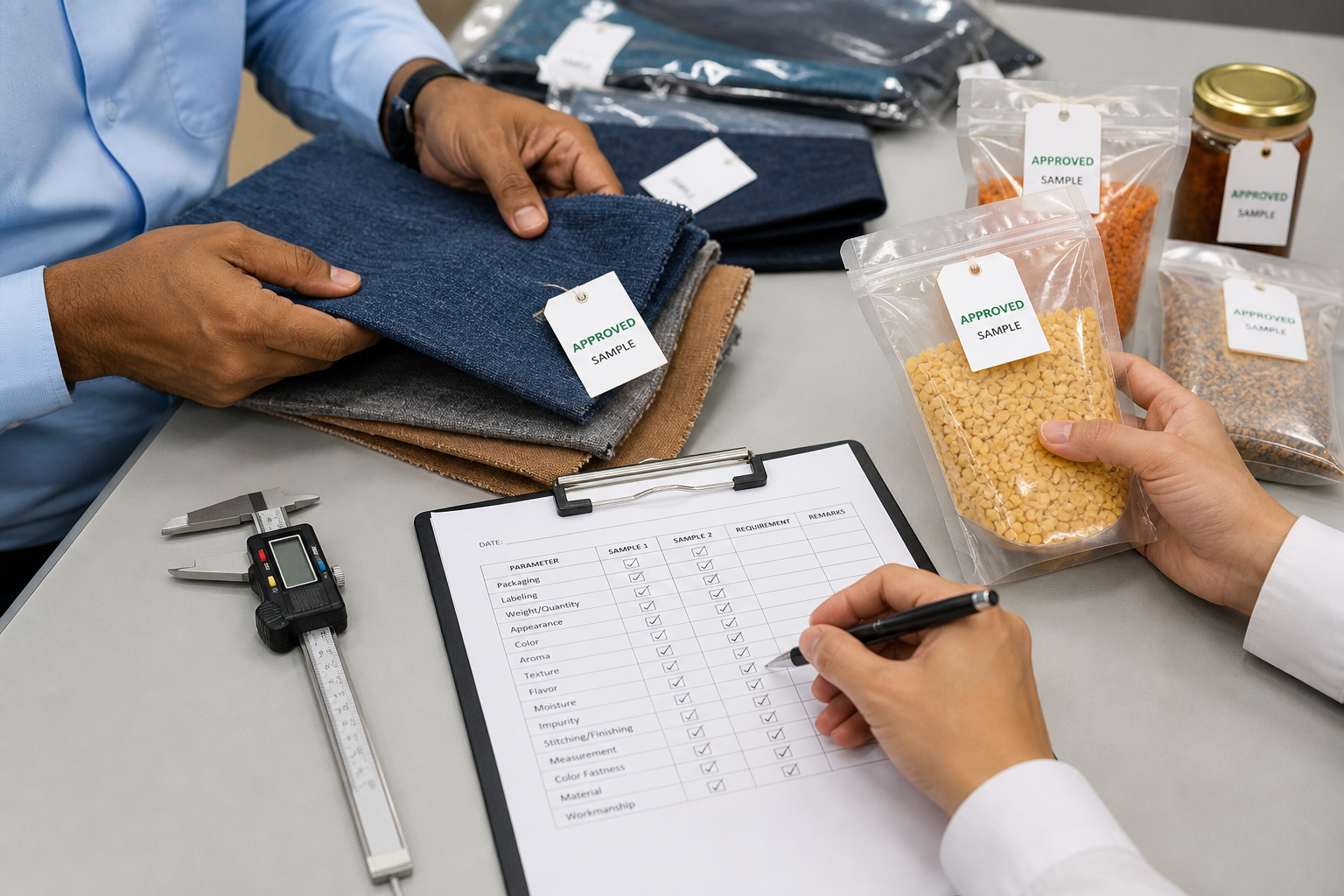
Private label product development in India is the work of turning a brand intention into a specification-backed, sample-approved, production-ready SKU. It is not the same as browsing catalogs and choosing a stock item. It is also not the same as the factory’s day-to-day manufacturing workflow once the product is already frozen. Development is the bridge between idea and finished goods: brief, concept, formulation or construction specification, samples, revisions, golden-sample freeze, pilot validation, and a clean handoff into production.
International buyers often underestimate this bridge. A promising first sample can hide open questions about stability, shade, fragrance load, dimensional tolerance, pack integrity, label feasibility, raw-material substitution risk, or scale-up behavior. Conversely, a disciplined development path can make a modest first launch safer than a large order placed on an uncontrolled prototype.
This guide is written for importers, retailers, distributors, e-commerce brands, and product teams developing private-label or OEM products with Indian manufacturers across categories—personal care and home care, food ingredients and packaged goods, home textiles, housewares, fragrance goods, and other brandable manufactured items. It owns the NPD path. It does not replace the stage-by-stage manufacturing process map, the MOQ economics guide, or packaging-compliance depth. For those layers, use:
Executive answer: how development should run
Private label manufacturing in India: how the process works
Private label packaging and labeling in India
For end-to-end sourcing context, see how to source private label products from India. For manufacturer appointment criteria before or during development, see how to choose a private label manufacturer in India.
Treat private-label development as a sequence of decision gates, not as an informal exchange of photos and WhatsApp samples. Start with a written brief. Agree whether you are branding an existing base, customizing a formulation or construction, or commissioning full OEM tooling. Convert targets into measurable specifications. Sample under revision control. Freeze a golden sample only when critical attributes and pack presentation are accepted. Validate scale-up with a pilot or pre-production quantity. Then hand off to production with change-control rules that prevent silent drift.
Do not pay for mass production while major attributes remain “to be confirmed.” Do not assume a lab or hand sample will behave identically at line speed. Do not skip retention samples. Development speed matters, but uncontrolled speed usually creates relaunch cost.

Choose the development model before you write formulas or drawings
- A retailer private-label dish soap may start from an existing base with fragrance and color variants.
- A supplements or botanical ingredient brand may need custom specification, testing, and documentation pathways.
- A housewares brand introducing a unique closure or molded part may need tooling-led OEM.
- A home-textile program may customize construction, shade, and packing rather than invent a fiber system.
- A candle brand may tune wax system and fragrance load on a known process platform.
Named distinction: the same phrase “develop our private label product in India” can mean three different programs.
Selecting the wrong model wastes months. Buyers who only need brand application sometimes fund unnecessary custom R&D. Buyers who need unique performance sometimes appoint a white-label filler that can only change labels. Be explicit in the brief.
Cross-category examples of model fit:
Comparison table
Swipe →
Data table — swipe horizontally on small screens
| Development model | Typical starting point | Main development work | Freeze means |
|---|---|---|---|
| Existing base + brand | Proven factory base formula or construction | Variant selection, limited customization, artwork/pack application, acceptance criteria | Approved base variant + pack presentation + QC release checks |
| Custom formulation / construction | Buyer performance, sensory, material, or design targets | Iterative lab/tech samples, scale-up trials, specification lock | Approved formula/construction sheet + golden sample + test pathway |
| Full OEM tooling | Buyer design intent or engineered requirement | Tooling/mold development, process validation, exclusive components where agreed | Approved tools, process parameters, golden sample, and spare/maintenance rules |
The India Private Label NPD Path
Named framework: IDEA-to-LINE Path — eight gates from concept to production handoff.
Each gate should end with a written status: approved, approved with conditions, or rejected. Informal “looks fine” messages are not a freeze.
Comparison table
Swipe →
Data table — swipe horizontally on small screens
| Gate | Name | Primary output | Buyer decision |
|---|---|---|---|
| G1 | Idea brief | Written product intent, markets, constraints | Proceed / refine brief |
| G2 | Concept lock | Chosen product model and concept direction | Approve concept for specification |
| G3 | Spec & formula / construction | Measurable targets and draft BOM or tech pack | Approve draft specification |
| G4 | Sampling | Revision-controlled samples | Continue / redirect / stop |
| G5 | Revisions & validation | Closed comments, test results where needed | Conditional acceptance |
| G6 | Golden sample freeze | Retained approved standard | Freeze for production reference |
| G7 | Pilot / pre-production | Scale-up evidence and pack validation | Release to mass production or rework |
| G8 | Production handoff | Controlled manufacturing package | Authorize PO / first bulk run |
Gate 1: Write an idea brief that a factory can build from
- Product category and intended use
- Target markets and channels
- Product model (base+brand, custom, tooling OEM)
- Must-have performance or sensory attributes
- Absolute constraints (allergens, materials to avoid, certifications sought, claim boundaries)
- Pack formats and sizes under consideration
- Benchmark references (what to match or avoid—without asking a factory to copy a protected brand identity unlawfully)
- Target cost band if known, labeled as guidance rather than a hard quote
- Timeline milestones and internal approvers
- What “done” means for development versus first shipment
- Which attributes are non-negotiable versus nice-to-have?
- Are we optimizing for speed to shelf, differentiation, or cost?
- Who approves sensory, technical, legal/claims feasibility, and commercial acceptance?
- What evidence will we require before freeze: lab tests, burn tests, wash tests, drop tests, stability observations, third-party reports?
- What information is confidential and should be shared only under controlled terms?
An idea brief is not a marketing manifesto. It is an operating document. Include:
Useful brief questions for your team:
Brand-protection operating controls are covered in how to protect your brand when working with Indian private label manufacturers. During briefing, at least identify what is confidential and who may receive it.
Gate 2: Lock the concept and reject false precision
- What the product is
- What success looks like in use
- Which benchmarks are directional only
- Which options are out of scope
- Whether development will start from a factory base library or from a blank specification
Concept lock turns possibilities into a chosen direction: product form, target user promise that the product can support, pack architecture family, and development model. This is where teams should kill attractive but incoherent ideas—claims the formulation cannot support, pack formats the channel cannot retail, or aesthetic directions that conflict with transit durability.
A strong concept note states:
Avoid false precision. Declaring “exact match to Brand X shade 3, fragrance 12%” without measurement methods creates dispute. Prefer: “target shade within approved visual standard under agreed light; fragrance character as approved sample; dosage to be confirmed by development trials.”
Gate 3: Convert the concept into a formulation or technical specification
- Formula skeleton or ingredient classes / composition ranges
- Construction details, materials, and tolerances
- Critical-to-quality attributes and test methods
- Process notes known to matter at scale
- Packaging components and compatibility questions
- Label claim boundaries that must remain feasible
- Shelf-life or durability hypothesis and how it will be checked
- Traceability expectations for batches or lots
- Buyer-owned brief and acceptance criteria
- Manufacturer-owned process know-how
- Shared specification that both parties use for approval and release
Specification is where private-label development becomes governable. Depending on category, the draft package may include:
Distinguish ownership clearly:
For custom formulation, ask how the manufacturer records iterations and whether the approved formula version is identifiable. For existing-base programs, ask which parameters are locked by the base and which are open to customization. For tooling OEM, add drawings, material grades, tool cavitation assumptions, and finish standards.
Do not expect every destination labeling rule to be solved inside the formula sheet. Packaging compliance has its own depth; keep a parallel pack brief and link to the packaging guide for artwork and market rules.
Gate 4: Run private label sampling as a controlled system
Comparison table
Swipe →
Data table — swipe horizontally on small screens
| Sample type | Purpose | Typical risk if misused |
|---|---|---|
| Concept / sales sample | Directional look and feel | Mistaken for production standard |
| Lab / bench / proto sample | Technical exploration | Overstates process capability at scale |
| Engineering or fit sample | Dimensional / assembly validation | Approved without pack or finish checks |
| Pre-production sample | Line-intent confirmation | Skipped when timeline pressure rises |
| Golden / sealed sample | Frozen reference standard | Multiple “goldens” without retirement of old versions |
| Retention / library sample | Dispute and continuity reference | Not retained or not labeled |
- Every sample carries a code, date, product name, revision, and factory identity.
- Each revision states what changed from the previous version.
- Buyer comments are consolidated and versioned.
- Sensory panels or functional checks use the same method across rounds.
- Packaging components are sampled with the product when pack is part of brand acceptance.
- “Approved for direction” is not “approved for production.”
Private label sampling in India should be treated as a mini project, not as a courtesy. Define sample types before the first courier leaves the factory.
Sampling rules that protect buyers:
Courier photos help communication; they do not replace physical approval for attributes that matter in hand, on shelf, or in use.
Gate 5: Manage revisions until the open issues are closed
- Open attribute gaps versus brief
- Who owns each gap (buyer, manufacturer, pack supplier, lab)
- Evidence required to close the gap
- Impact on cost, MOQ, or timeline if the solution changes
- Personal care: viscosity, fragrance character, color, foam, skin feel, compatibility with pack
- Food / ingredients: particle size, moisture, sensory profile, purity or contaminant checks, solubility
- Textiles: shade, handfeel, shrinkage, stitching, measurement
- Hard goods: fit, finish, function, sharp edges, assembly torque, print adhesion
- Candles / fragrance: melt pool, scent throw, soot behavior, container adhesion, label durability
Revision cycles are normal. Unbounded revision cycles are a process failure. Set a planned number of rounds for the complexity of the product, then require a written issue log:
Common revision themes by category:
Stop revising cosmetics of the brief while critical performance remains unresolved. Equally, do not keep changing fragrance or shade after you have asked the factory to prepare production materials unless you accept cost and time impact.
Gate 6: Freeze the golden sample with ceremony, not casual approval
- Critical-to-quality attributes accepted against agreed methods
- Pack presentation accepted for the SKU being launched
- Known limitations documented (what the product will not do)
- Pending tests listed with responsibility and timing
- Previous sample revisions retired so only one production reference remains
- Retention samples held by buyer and manufacturer where practical
Golden-sample freeze is the commercial and quality turning point. Before freeze, confirm:
A freeze record should identify sample code, revision, approval date, approver names, accompanying specification version, and photographs if useful. If approval is conditional, write the conditions. Conditional freezes that live only in chat threads become production disputes.
After freeze, any change—material, fragrance house, fabric lot standard, print process, closure, carton board grade—should trigger change control. Silent “equivalent” substitutions are a primary private-label failure mode.
Gate 7: Validate with a pilot or pre-production run
- Do process parameters transfer from sample making to line making?
- Are raw materials and packaging from the intended supply sources?
- Do fill weights, dimensions, shade, or sensory results stay inside limits?
- Does pack integrity survive handling representative of export?
- Are batch records or production records usable for release?
- What defects appeared, and are corrective actions closed?
A golden sample proves that a target can be hit under controlled conditions. A pilot asks whether the line can hit it repeatedly with production materials, production packing, and production speeds.
Pilot design depends on category and risk, but the questions are similar:
Pilot quantity should be large enough to expose process issues and small enough to contain learning cost. Exact commercial minimums and trial MOQ strategy belong in the MOQ article; here, define the learning objective first, then size the pilot to that objective.
If the pilot fails, resist the urge to “fix it in bulk.” Decide whether the issue is specification, process, material, pack, or unrealistic brief expectations—then re-enter the correct gate.
Gate 8: Hand off to production with a controlled manufacturing package
- Frozen specification / formula or tech pack version
- Golden-sample references and retention locations
- Bill of materials and approved alternates, if any
- Packaging component list and artwork revision IDs
- QC checkpoints and acceptance criteria
- Labeling and claims boundaries relevant to the packed goods
- Change-control rule: what requires buyer re-approval
- First bulk purchase-order commercial terms and Incoterms
- Escalation contacts for quality and schedule exceptions
Production handoff is successful when manufacturing can run without rediscovering the product. The handoff package typically includes:
This is the point where development ends and manufacturing process control begins. For the factory workflow after handoff—planning, production stages, inspection, and shipment preparation—use the manufacturing process guide rather than expanding NPD into a second process encyclopedia.
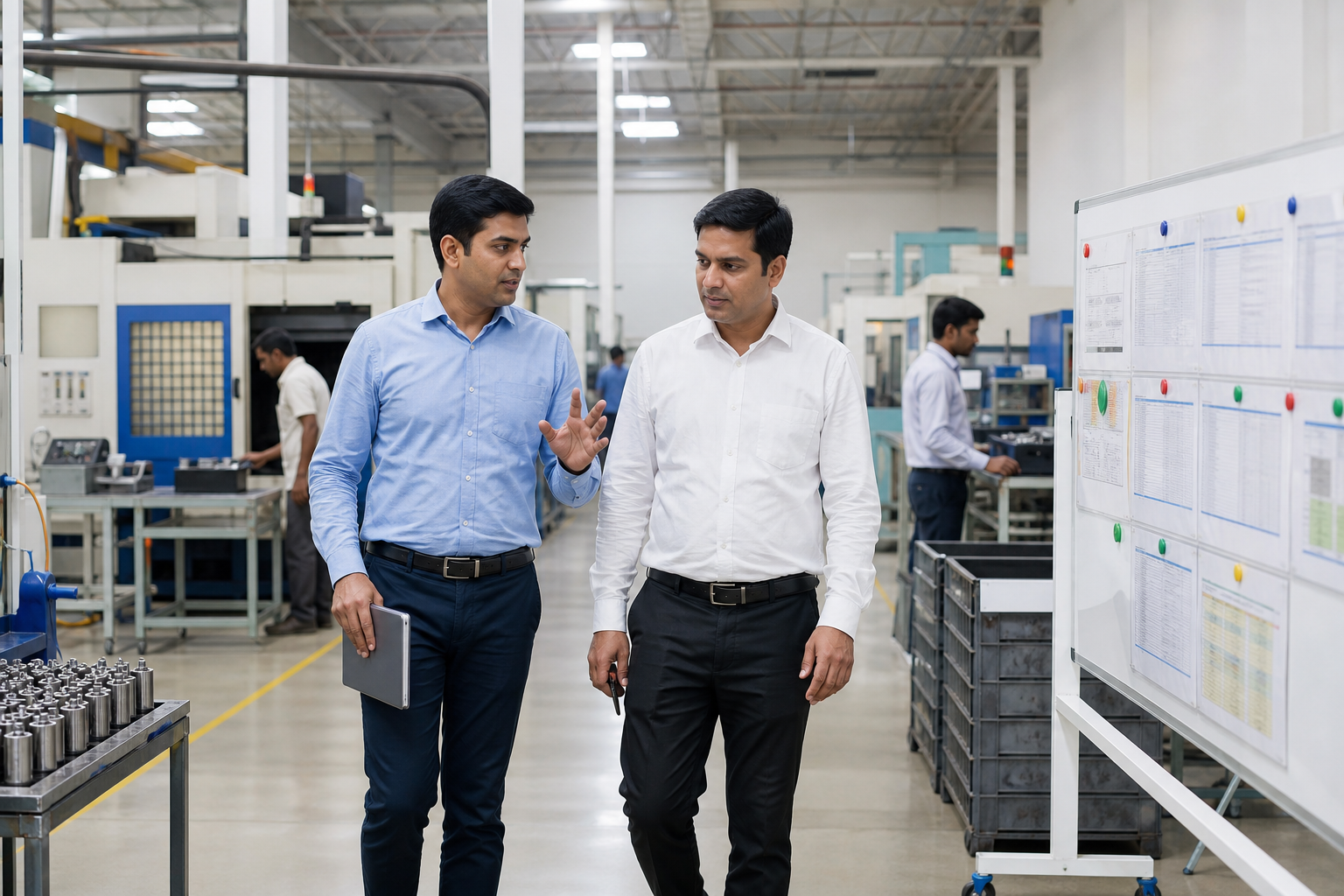
Sampling discipline: the working rules buyers should require
- Name the sample type before production of the sample.
- Code every physical unit that can be confused with another revision.
- Write the change log for each round in one shared tracker.
- Separate directional approval from production approval.
- Approve pack with product when brand presentation is in scope.
- Retain counterparts at buyer and manufacturer for the freeze revision.
- Tie commercial commitments (bulk PO, tooling balance payments) to freeze and pilot gates.
- Re-approve after material or process changes that can affect critical attributes.
Named framework: SAMPLE-LOCK Rules for private label sampling India programs.
These rules are category-agnostic. The tests inside them change; the governance does not.
What “good” looks like in OEM product development India programs
- A manufacturer that asks clarifying questions early
- Transparent distinction between available bases and true custom work
- Realistic timelines that include procurement of packaging and external tests
- Willingness to say a target is not feasible at the requested cost or claim level
- Documentation that a third shift or a new operator could follow later
- Instant exact matches to complex benchmarks without iteration
- Free unlimited revisions disconnected from scope
- Legal or regulatory sign-off from a factory for every destination market
- Guaranteed shelf outcomes without an evidence plan
OEM product development in India succeeds when engineering or formulation intent survives contact with real materials and real lines. Buyers should expect:
Buyers should not expect:
Where destination packaging and labeling create constraints on claims, languages, or pack architecture, involve that work in parallel from Gate 2 onward rather than after freeze. Link to the packaging guide for compliance detail; keep NPD focused on product definition and approval discipline.
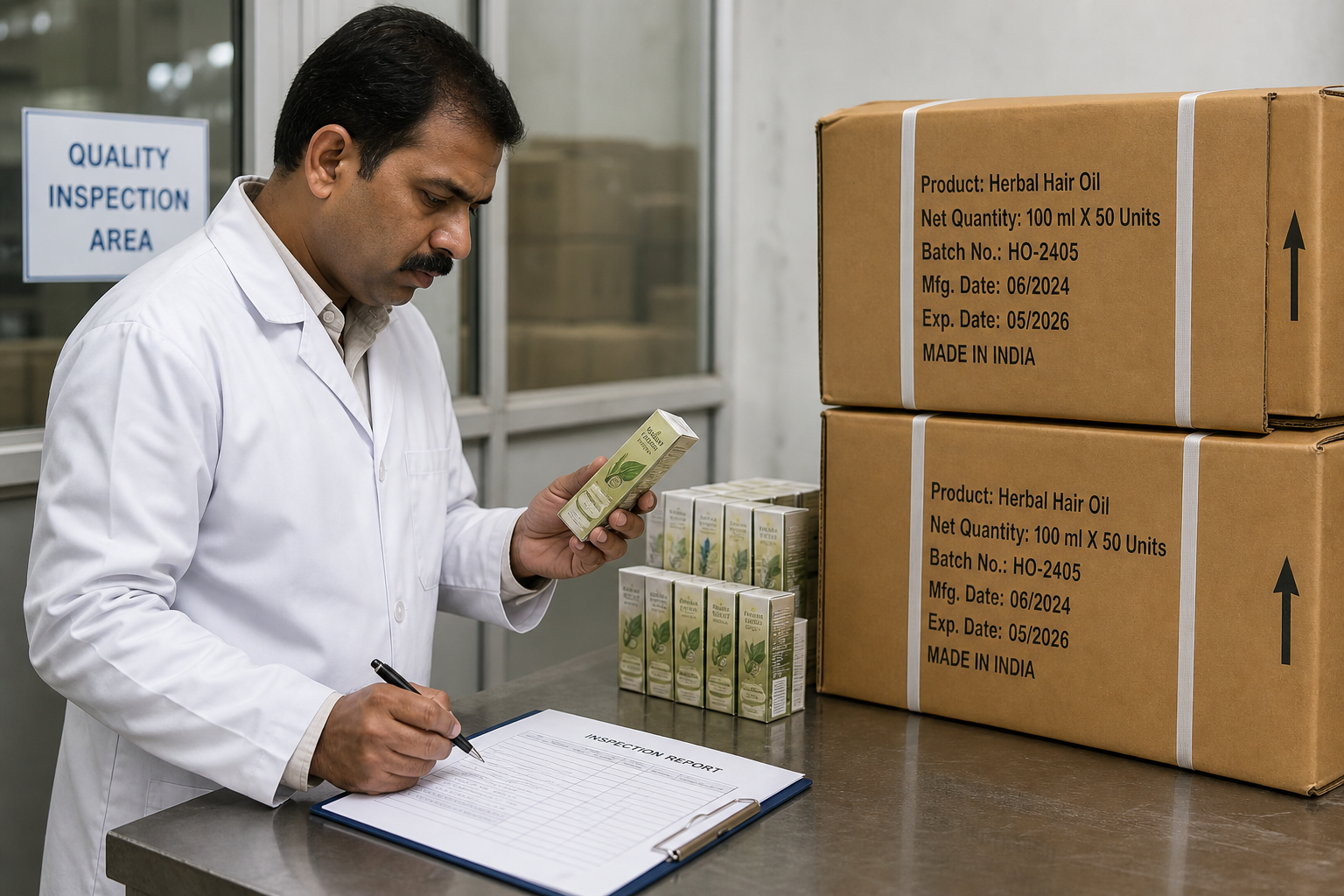
Cross-category development notes without turning this into a catalog
Personal care and home care
Prioritize compatibility between formula and pack, stability pathway appropriate to the product, fragrance/color change control, and fill accuracy. Existing bases accelerate launch; custom actives or sensory targets extend sampling and validation.
Food ingredients and packaged foods
Prioritize specification ownership, sensory and analytical targets, allergen and contaminant controls where applicable, and lot traceability. Development often hinges on whether the buyer is selecting a grade or creating a differentiated blend.
Home textiles and soft goods
Prioritize construction, shade continuity, shrinkage, measurements, and packing presentation. Development is often standard-and-variance work rather than invention of a new textile system.
Housewares and hard goods
Prioritize material grade, tolerances, finish, function testing, and tooling readiness if parts are exclusive. Proto samples can mislead if they were machined or finished differently from intended mass process.
Fragrance goods and candles
Prioritize burn or use performance, scent character, container compatibility, labeling durability, and pack safety in transit. Small fragrance changes can force re-validation.
Across all categories, keep one shared truth: development is finished only when the product can be reproduced from documents and retained standards, not from the memory of the person who made the last sample. If a critical attribute can be judged only by one buyer’s personal preference and has no retained reference, freeze is premature.
Decision rights during development
- Who can change the brief after concept lock
- Who approves sensory or aesthetic direction
- Who approves technical or safety-related attributes
- Who approves packaging presentation versus regulatory feasibility
- Who can authorize additional paid sample rounds
- Who can freeze the golden sample
- Who can release the pilot into first bulk
Ambiguous ownership is a common reason NPD stalls. Before Gate 4 sampling begins, write a short approval map:
A practical pattern is dual control: product/technical approval plus commercial approval. Either side can withhold freeze. Neither side should silently override the other in chat. When a sourcing partner or local coordinator is involved, define whether they facilitate evidence and schedules only, or also hold delegated authority for defined gates. Clear limits prevent accidental commitments.

Development timeline logic (ranges, not promises)
Exact timelines vary by category, testing needs, packaging lead times, and decision speed. Use ranges as planning logic, not as commitments:
The largest avoidable delay is usually buyer-side: slow consolidated feedback, changing the brief after materials are bought, or approving pack late. The largest technical delay is usually underestimating packaging lead time or external testing.
Comparison table
Swipe →
Data table — swipe horizontally on small screens
| Phase | Indicative planning logic | Main dependencies |
|---|---|---|
| Brief and concept | Days to a few weeks | Internal alignment |
| Spec drafting | About 1–3 weeks after concept | Technical completeness of brief |
| Sampling rounds | Often 2–6+ weeks per serious iteration cycle | Material availability, courier time, buyer feedback speed |
| Validation / tests | Parallel or sequential; can add weeks | Lab capacity, method clarity |
| Golden freeze | A decision point, not a long phase | Completeness of evidence |
| Pilot | Often days to a few weeks of slotting once materials are ready | Line availability, pack readiness |
| Handoff to bulk | Immediate after pilot acceptance, commercially | PO clarity, deposit/terms, material booking |

Commercial checkpoints inside development
- Sample and development fees: what is payable per round, and what is adjustable against bulk
- Tooling costs: when payable, who owns tools, where tools are stored, maintenance responsibility
- Pilot costs: how scrap and packing trials are charged
- Bulk pricing: refreshed after freeze if materials or pack changed during development
- Payment milestones: avoid full production deposits before freeze when risk remains high
Development is technical, but money and risk travel with it. Align commercial checkpoints with gates:
MOQ and price-break negotiation have dedicated depth elsewhere. During development, the rule is simpler: do not negotiate final unit economics on an unfrozen product unless both sides accept reopeners after sample approval.
Common private-label development mistakes
Starting factories without a brief
Unscoped outreach produces attractive but incomparable samples. Write the brief first.
Using a sales sample as the golden sample
If the sample is not coded, retained, and tied to a specification version, it is not a production standard.
Changing the brief every revision without resetting expectations
Each major brief change should reset timeline, cost, and sometimes MOQ assumptions.
Ignoring pack until the formula or product is “final”
Pack is part of the product experience and often part of compliance. Develop it in parallel.
Skipping pilot because the golden sample looked perfect
Scale-up is where many private-label defects appear.
Appointing a manufacturer mid-development without scorecard discipline
If you switched factories because sampling stalled, re-run capability fit and KYC rather than transferring hope. Use the selection scorecard article when re-appointing.
Treating destination claims as a design afterthought
If the marketing story requires substantiation the product cannot support, development will thrash. Align claim boundaries early.
Confusing factory process knowledge with a finished private-label program
A manufacturer may know how to run its lines well and still be early in your brand’s development journey. Process familiarity does not replace your brief, freeze record, or pilot evidence. Keep NPD gates distinct from the later manufacturing process map so launch readiness is evidenced, not assumed.

A practical buyer checklist: idea to finished product
Checklist
- Brief locked with markets, model, constraints, and approvers.
- Concept approved with explicit out-of-scope items.
- Draft specification / tech pack issued and understood.
- Manufacturer development plan and sample calendar agreed.
- Sample types defined; tracker opened.
- Revision comments consolidated each round.
- Required tests commissioned with owners and due dates.
- Pack components and artwork revisions aligned in parallel.
- Golden sample frozen with retention and written record.
- Pilot run evaluated against release criteria.
- Manufacturing handoff package completed.
- First bulk PO issued against frozen revision only.
Conclusion: finished product quality is decided in the gates before bulk
Private label product development in India rewards buyers who treat NPD as a governed path: brief, concept, specification, controlled sampling, revision closure, golden-sample freeze, pilot validation, and production handoff. The factories that feel easiest at the sales-sample stage are not always the ones that can protect a brand through scale-up. The buyers that win are usually those who write clearer briefs, freeze fewer ambiguous standards, and refuse to fund bulk while critical attributes remain open.
Connect development to adjacent authority: private label packaging and labeling in India, how to conduct quality control when sourcing from India, and India private label sourcing: supplier, quality control, packaging and export guide. For execution support, see private label manufacturing India, product sourcing company India, and global sourcing partner India.
Altus Exports supports international buyers with private-label product development coordination in India—helping structure briefs, sampling plans, freeze records, and handoff packages across compatible categories. If you have an idea or an unfinished sample trail, a development-gate review can clarify the shortest safe path to a production-ready SKU.