India Private Label Sourcing: Supplier, Quality Control, Packaging and Export Guide
By Saurabh Mittal, Founder, Altus Exports
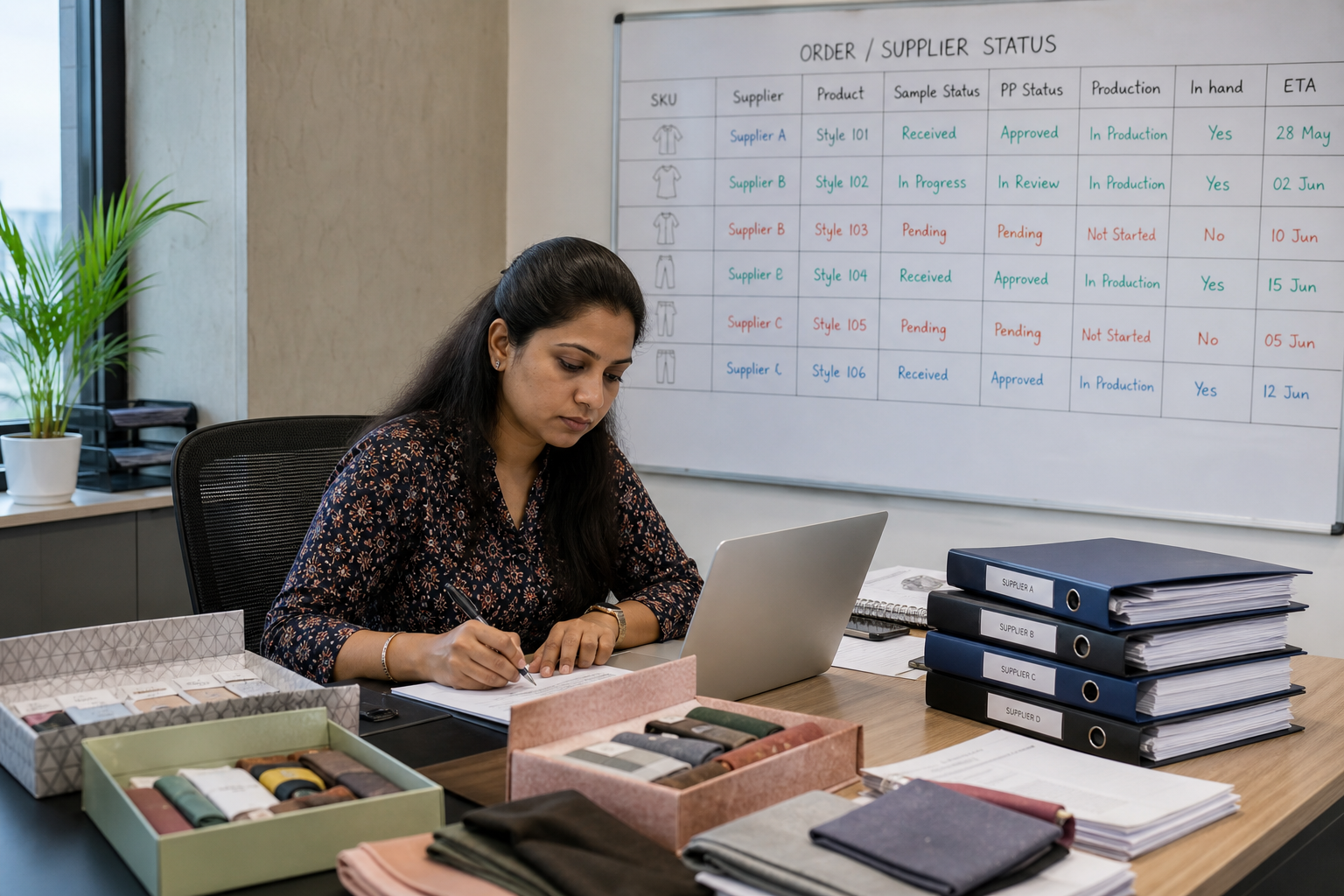
The India private label sourcing guide for operations is the PL-SQPE Framework—Supplier, Quality, Packaging, Export. Run private-label programs as one checklist: approve the manufacturer and scope, lock specifications and QC gates, freeze packaging and labeling, then complete…

Private-label programs fail at handoffs. A capable factory is appointed without a QC plan. Artwork is approved without a packing standard. Goods pass inspection while export documents still name the wrong entity. Each team believes its step is done; the program still cannot ship cleanly.
This India private label sourcing guide is the cluster’s comprehensive operational map. It does not repeat the strategic playbook in how to source private label products from India (Article 1). That pillar answers how to decide across discovery, development, MOQ, and brand model. This article answers how the operating sequence runs across four pillars:
> PL-SQPE Framework = Supplier → Quality → Packaging → Export
How PL-SQPE differs from the pillar playbook
Use PL-SQPE as a master checklist for OEM and private-label programs, a RACI aid with your India partner, and an index into deeper Altus guides on manufacturer choice, development, packaging, MOQ, brand protection, QC, and import execution.
Altus Exports coordinates private-label execution for international buyers through private label manufacturing in India, import products from India, merchant exporter India, and global sourcing partner in India. The map below remains useful whether you self-manage or work with a partner—ownership must still be explicit.
PL-SQPE connects those deep dives. When Packaging fails, open private label packaging and labeling in India. When Supplier selection is weak, open how to choose a private label manufacturer in India. When Export documents stall, open import and shipping guides linked in Pillar E below.
Comparison table
Swipe →
Data table — swipe horizontally on small screens
| Content type | Primary question | Best resource |
|---|---|---|
| Private-label strategy playbook | What should I decide, in what order, for a PL program? | How to source private label products from India (Art 1) |
| Operational checklist map | What must be true in Supplier, QC, Packaging, and Export before the next gate? | This article (Art 10 / PL-SQPE) |
| Topic deep dive | How do I execute one specialty well? | Arts 2–9 + QC / verification / import clusters |
PL-SQPE at a glance
``text SUPPLIER QUALITY PACKAGING EXPORT (Pillar S) (Pillar Q) (Pillar P) (Pillar E) Find → Verify → Spec → Sample → Artwork → Label → Docs → Ship → Appoint → Inspect → CAPA → Freeze → Pack → Clear → Learn ``
Cross-cutting controls—change control, payment evidence, escalation, and brand confidentiality—apply in every pillar. For brand/IP operating controls, use how to protect your brand with Indian private label manufacturers. For buyer–partner risk ownership, use reduce India sourcing risk.
Comparison table
Swipe →
Data table — swipe horizontally on small screens
| Pillar | Objective | Gate question | Primary outputs |
|---|---|---|---|
| S — Supplier | Appoint a capable, verified PL manufacturer for a defined scope | Can this factory make this branded product under controlled conditions? | Approved supplier record, scope of approval, commercial baseline |
| Q — Quality | Prove the product matches the frozen specification before release | Does evidence show the lot meets the approved standard? | Golden sample, QC plan, inspection reports, dispositions |
| P — Packaging | Freeze brand-facing and compliance-facing pack elements | Is the correct approved pack on the correct product? | Artwork rev, packing standard, label checklist, pack-out records |
| E — Export | Move conforming goods with complete documents and clear logistics | Can customs and the buyer receive what the PO promised? | Export pack, booking, release note, receipt feedback |
Master checklist table: PL-SQPE gates
Checklist
Comparison table
Swipe →
Data table — swipe horizontally on small screens
| Gate ID | Pillar | Gate name | Must be true before exit | Typical owner | Deep-dive |
|---|---|---|---|---|---|
| S1 | Supplier | PL brief & scope | Written brief: product, market, brand model, volume band | Buyer | Art 1 playbook; best PL products |
| S2 | Supplier | Discovery shortlist | 2–4 candidates with PL/OEM fit notes | Buyer / partner | Find PL manufacturers |
| S3 | Supplier | Verification | Entity, site, capacity, export readiness evidenced | Buyer / partner | Verify supplier before order |
| S4 | Supplier | Selection & appointment | Scorecard decision recorded; scope of approval set | Buyer | Choose PL manufacturer |
| S5 | Supplier | Commercial & MOQ lock | Trial/production MOQ, price basis, lead time agreed | Buyer + supplier | Private label MOQ in India |
| Q1 | Quality | Spec & development freeze path | Spec/BOM path defined; NPD stages named | Buyer + supplier | PL product development; PL manufacturing process |
| Q2 | Quality | Golden sample & tests | Approved sample + linked tests/records | Buyer | Conduct QC when sourcing |
| Q3 | Quality | PO quality clauses | Spec, AQL/plan, inspection rights on PO | Buyer | QC process map |
| Q4 | Quality | In-process / monitoring | Critical checkpoints scheduled | Supplier + partner | Monitor production overseas |
| Q5 | Quality | Pre-shipment inspection | PSI against frozen spec and pack | Inspector / buyer | Pre-shipment inspection in India |
| P1 | Packaging | Pack architecture | Primary/secondary/shipper roles defined | Buyer | PL packaging & labeling |
| P2 | Packaging | Artwork & compliance freeze | Rev-controlled artwork; market label checks | Buyer | Art 7 (above) |
| P3 | Packaging | Pack-out standard | Carton marks, unit integrity, inserts agreed | Buyer + supplier | Art 7 + PSI guide |
| E1 | Export | Document pack | CI, PL, COO/certs as required; entity alignment | Exporter / partner | Import documents |
| E2 | Export | Logistics & Incoterms | Mode, Incoterm, booking vs cargo-ready aligned | Buyer + forwarder | Shipping from India; FOB vs CIF vs EXW |
| E3 | Export | Release & learn | Release recorded; receipt CAPA feeds next PO | Buyer | India import process map |

Pillar S — Supplier: appoint the right private-label manufacturer
S1: Write an operational private-label brief
- product category and performance requirements;
- brand model (white label vs custom private label / OEM);
- destination markets and any known compliance constraints;
- indicative volumes and reorder pattern;
- packaging ambition (stock pack vs custom);
- target timeline for samples and first shipment;
- what is confidential (see brand-protection article).
Before outreach, the brief should state:
Category fit criteria live in best private label products to source from India. Strategy sequencing lives in Article 1. Here, the brief is the input artifact that makes later gates measurable.
S2–S3: Discover, then verify
- legal entity and site identity;
- actual manufacturing vs trading-only role for your process;
- capacity realism for your MOQ and lead time;
- sample and revision control habits;
- export experience and document familiarity;
- subcontracting disclosures for filling, printing, or packing.
Discovery channels and shortlisting methods are covered in how to find private label manufacturers in India. Do not skip verification because a factory “already does private label.”
Minimum verification themes for PL programs:
Deep methodology: how to verify an Indian supplier before order and the wider supplier-verification cluster. Altus can coordinate local checks under find manufacturers in India when that service applies to your search.
S4: Select with a PL scorecard
- approved factory location(s) and processes;
- approved product scope (what is not approved);
- conditions of approval (tests pending, packaging trial required, etc.);
- named commercial and quality contacts;
- confidentiality and brand-use acknowledgements status.
Use how to choose a private label manufacturer in India for evaluation depth. Operationally, record:
S5: Lock MOQ and commercial baseline
- [ ] Brief and selection criteria filed.
- [ ] Shortlist comparison complete.
- [ ] Verification evidence stored.
- [ ] Buyer appointment recorded.
- [ ] MOQ, price basis, and lead time written.
- [ ] Scope of approval and open conditions listed.
MOQ drives packaging customization, formula batching, and trial strategy. Use private label MOQ in India for negotiation and cost drivers. For PL-SQPE, the gate exit is simpler: written MOQ, price basis, payment milestones linked to evidence, and lead-time assumptions that match the QC and packaging calendar.
Supplier pillar exit checklist
Pillar Q — Quality: control the product before you brand the cartons
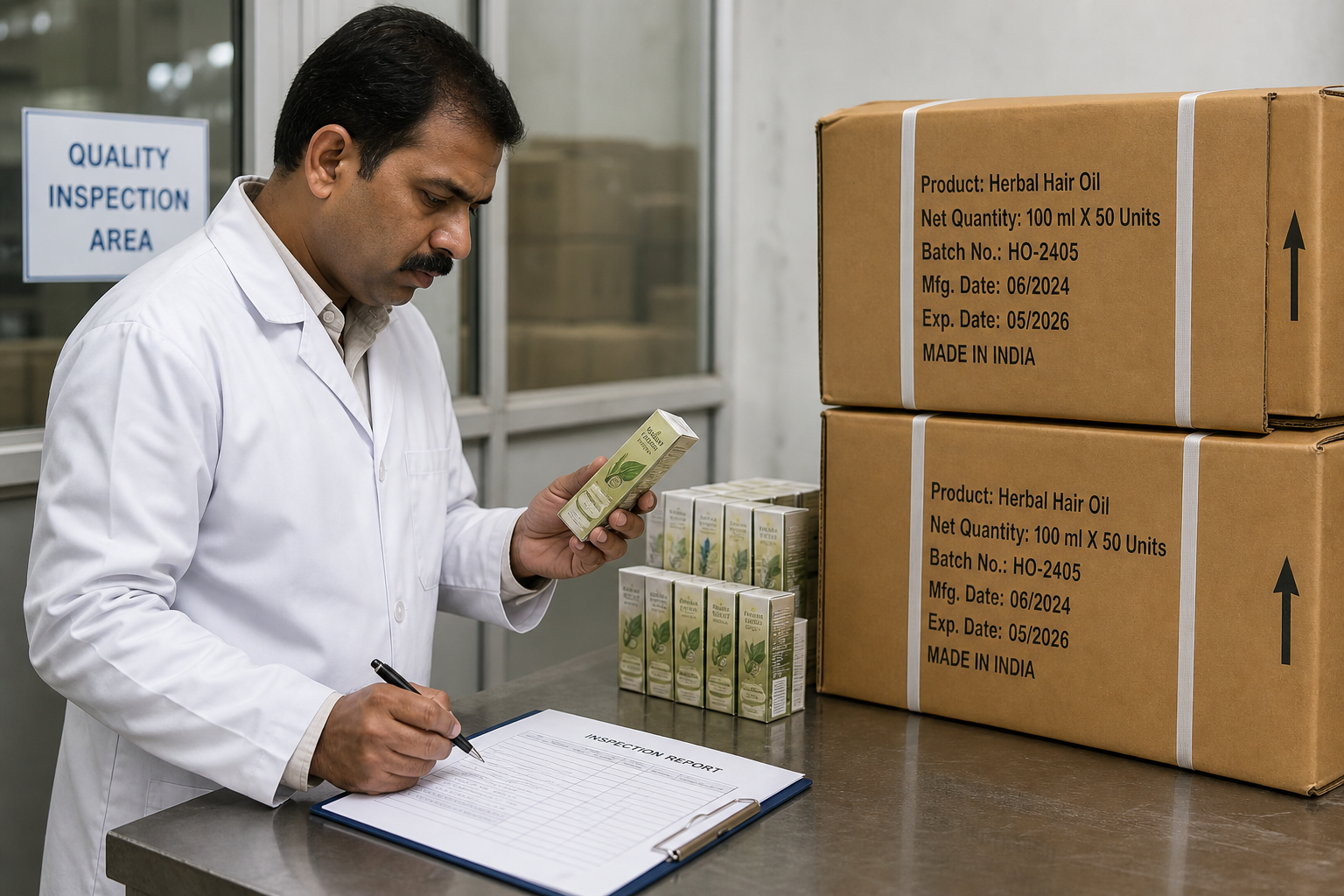
Private-label QC is specification control plus inspection—not a last-day packing photo. Anchor the operating system in how to conduct quality control when sourcing from India and the end-to-end India QC process from selection to shipment.
Q1: Connect manufacturing process and product development
- factory process stages → private label manufacturing in India: how the process works;
- idea → sample → freeze → handoff → private label product development in India.
Understand stage ownership:
PL-SQPE needs a named freeze: which revision of the product is authorized for bulk. Without freeze, packaging and PSI have nothing stable to check.
Q2: Golden sample and test evidence
- specification / BOM revision;
- critical measurements or sensory standards;
- required lab or certificate evidence for the category and market;
- packing presentation if pack is part of the saleable unit.
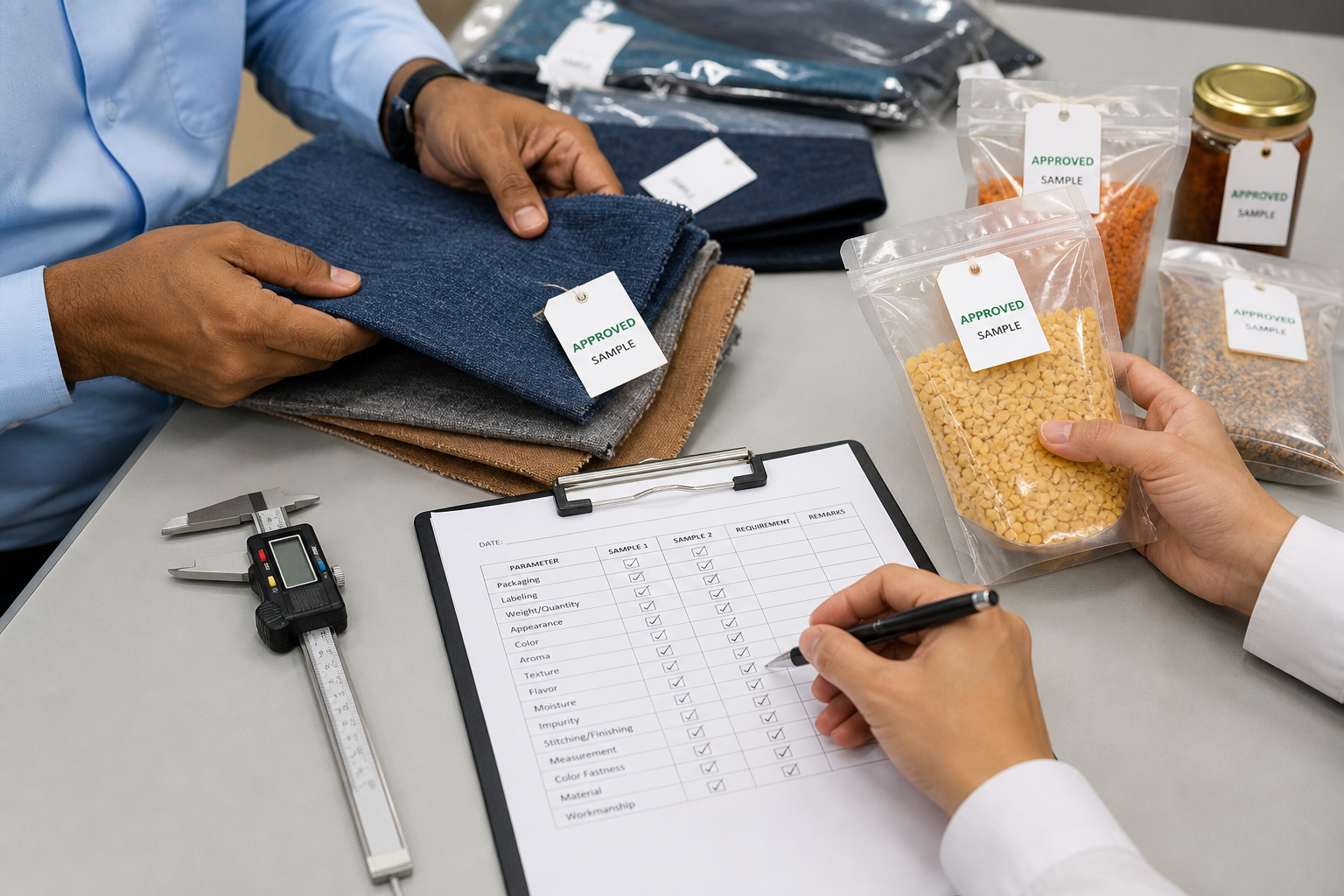
Approve a golden sample (or equivalent documented baseline) linked to:
Retain dual references when risk warrants it (buyer + factory sealed sample).
Q3: Put quality into the purchase order
- frozen specification and artwork revision IDs;
- inspection standard and sampling approach where used;
- acceptance / rejection authority;
- change-control rule (no silent substitutions);
- document and traceability requirements appropriate to the category.
Attach or reference:
Q4: Monitor production with proportionate depth
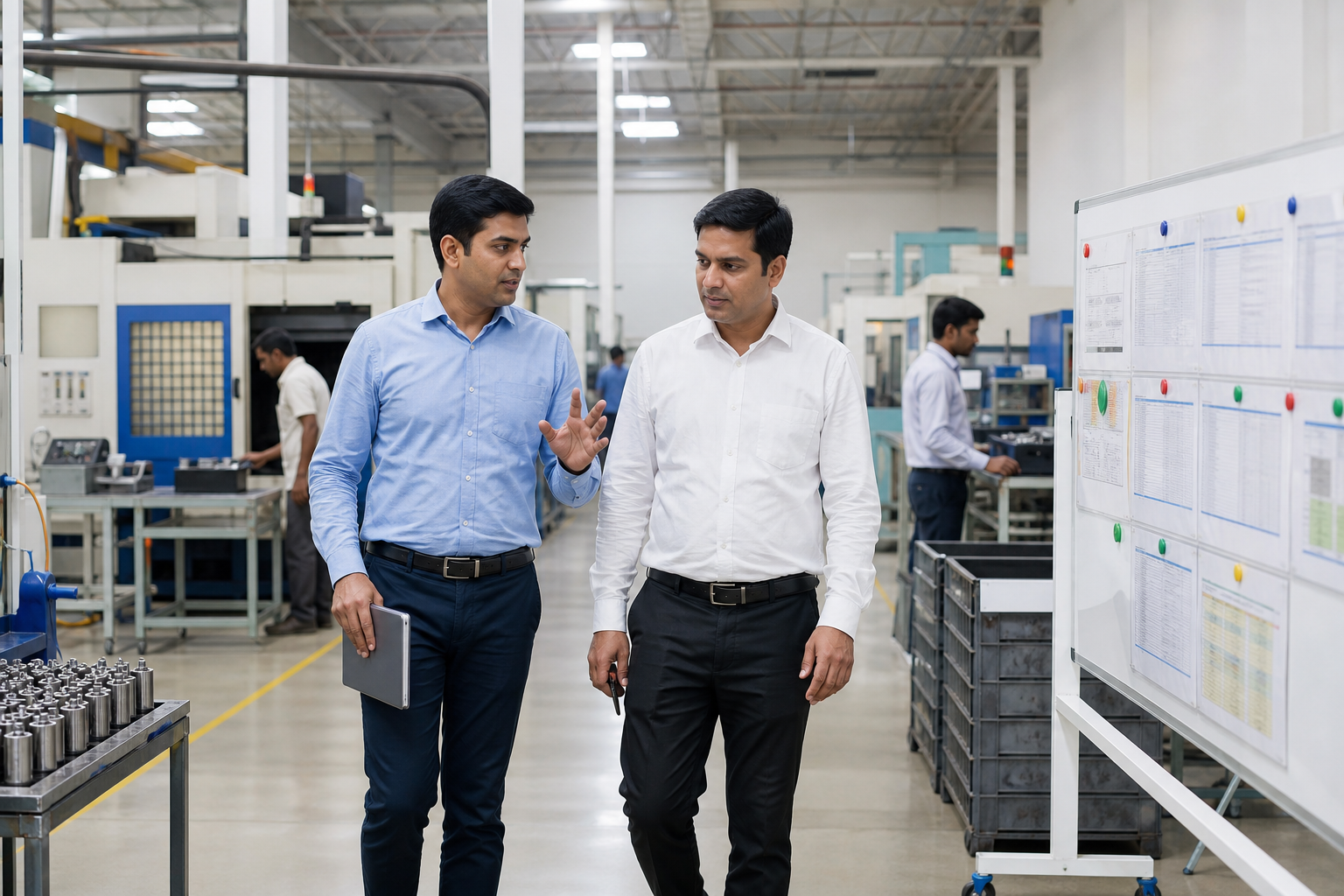
New custom PL SKUs usually need more monitoring than repeat catalog OEM. Define cadence, photo evidence, and in-process checks for critical steps. See how to monitor production at Indian factories from overseas.
Q5: Pre-shipment inspection and disposition
- [ ] Frozen product revision identified.
- [ ] Golden sample / baseline approved and stored.
- [ ] PO includes QC attachments and change control.
- [ ] Monitoring plan executed or consciously waived with risk acceptance.
- [ ] PSI (or agreed alternate release) completed with disposition on file.
PSI is the quality release gate for most private-label exports. Plan it against the frozen product and frozen pack. Use pre-shipment inspection in India for methodology. Record pass, conditional pass with written buyer waiver, or hold/reject. Do not treat “ship now, sort later” as a silent default.
Quality pillar exit checklist

Pillar P — Packaging: freeze the brand-facing system
Packaging is where private label becomes visible—and where compliance and brand-protection risks concentrate. Own the detail in private label packaging and labeling in India; use the gates below as the operational spine.
P1: Define pack architecture
- primary pack (consumer unit);
- secondary pack (inner, if any);
- export shipper / master carton;
- unitizing (pallet/slip sheet) if relevant;
- inserts, labels, tamper features, and desiccants as applicable.
Document for each SKU:
P2: Artwork and labeling freeze
- revision-controlled print files;
- color references;
- barcode / GTIN ownership and placement;
- mandatory label elements for destination markets (buyer confirms with compliance advisors);
- language and claim constraints;
- manufacturer/importer identity lines as required.
Freeze includes:
Brand confidentiality and logo-use rules belong in protect brand with Indian private label manufacturers. Packaging compliance detail stays in Article 7—do not invent market-legal conclusions in the factory chat.
P3: Pack-out and shipper standards
- units per inner / inners per carton;
- carton board grade and dimensions;
- shipping marks and PO references;
- fragile or orientation marks;
- pallet pattern if buyer-specified;
- how mixed SKUs are (or are not) allowed.
- [ ] Pack architecture recorded per SKU.
- [ ] Artwork revision frozen and obsolete files superseded.
- [ ] Destination label checklist completed by the buyer’s compliance process.
- [ ] Pack-out and shipping-mark standard approved.
- [ ] Pre-production pack sample approved when risk warrants.
- [ ] Leftover branded component disposition agreed (link to brand controls).
Agree before bulk packing:
PSI should verify pack-out against this standard, not only product function.
Packaging pillar exit checklist
Pillar E — Export: documents, logistics, and release
Private label export from India succeeds when conforming goods meet a complete document set and a logistics plan that matches the Incoterm. This pillar is execution, not category strategy.
E1: Export documentation pack
- commercial invoice aligned to PO and Incoterm;
- packing list matching cartons and quantities;
- transport document (BL/AWB) draft then final;
- certificate of origin where required or beneficial;
- product certificates / test reports as contracted;
- any buyer-required packing declaration or inspection certificate.
Typical commercial set (adapt to Incoterm, destination, and product):
Entity names must align across invoice, packing list, and transport documents. If you ship via a merchant exporter in India, confirm who appears as exporter of record and how that affects your destination paperwork. Document depth: documents required to import products from India.
E2: Logistics, Incoterms, and cargo readiness
- cargo readiness after quality/pack release;
- booking that matches ready date and cutoff;
- export customs filing in India by the responsible party under the Incoterm;
- in-transit data to your broker;
- destination clearance and delivery.
Sequence matters:
Use shipping from India: complete guide for importers and FOB vs CIF vs EXW when buying from India. For the full supplier-to-warehouse sequence, see India import process: supplier selection to warehouse. Payment milestone hygiene: how to pay Indian suppliers.
E3: Release authority and feedback loop
- log shortages, damage, and quality escapes;
- open CAPA with the supplier where needed;
- update the supplier scorecard and the next PO’s gates;
- confirm branded leftovers were dispositioned.
- [ ] Quality and packaging gates closed (or written waivers filed).
- [ ] Document pack complete and internally consistent.
- [ ] Incoterm responsibilities clear; booking matches cargo-ready date.
- [ ] Buyer release (or delegated authority) recorded.
- [ ] Receipt feedback logged into the next cycle.
Record who authorized shipment and on what evidence (PSI report ID, document checklist, quantity reconciliation). After warehouse receipt:
Export pillar exit checklist
PL-SQPE RACI (operating map)
Adapt roles to your structure. This is not a legal liability allocation.
Key: R = Responsible; A = Accountable; C = Consulted; I = Informed.
Comparison table
Swipe →
Data table — swipe horizontally on small screens
| Activity | Buyer | India partner | Supplier / exporter |
|---|---|---|---|
| PL brief and market requirements | A/R | C | I |
| Manufacturer discovery and comparison | A | R | C |
| Supplier verification evidence | A | R | C |
| Supplier appointment | A/R | C | I |
| Spec / formula / artwork freeze approvals | A/R | C | C |
| Production execution to freeze | I | C | A/R |
| In-process monitoring coordination | A | R | R |
| PSI execution and report | A | R | C |
| Nonconformity disposition | A/R | C | C |
| Export document preparation | I | C | A/R |
| Document completeness review | A | R | C |
| Shipment release decision | A/R | R/C | I |
| Receipt CAPA and scorecard | A/R | R | C |
| Brand/confidentiality operating controls | A/R | R | C |
Integrated timeline: one private-label cycle
Durations vary widely by category, testing, season, and whether packaging is custom. First programs usually spend more calendar time in sample/freeze and document alignment than repeat orders.
Comparison table
Swipe →
Data table — swipe horizontally on small screens
| Phase | Typical duration (indicative) | Active PL-SQPE gates | Parallel work |
|---|---|---|---|
| Brief & shortlist | 1–3 weeks | S1–S2 | Category fit (Art 4); confidentiality staging (Art 9) |
| Verify & appoint | 1–4 weeks | S3–S4 | Factory visit/audit if risk requires |
| Sample & freeze | 2–8+ weeks | Q1–Q2, P1–P2 | MOQ negotiation (Art 8); development (Art 6) |
| PO & material cover | 1–2 weeks | S5, Q3, P3 | Payment schedule; tooling title if any |
| Production | 2–10+ weeks | Q4 | Monitoring; change control |
| Inspect & pack verify | 3–7 days | Q5, P3 | Quantity / leftover disposition |
| Document & ship | 1–3 weeks | E1–E2 | Broker data; insurance as chosen |
| Receive & learn | 1–2 weeks after arrival | E3 | Scorecard; reorder planning |
OEM sourcing checklist India — one-page operating version
Checklist
Use this condensed OEM sourcing checklist India view for kickoff meetings. Expand with the gate tables above for execution.
Supplier
- Brief complete and confidential items classified.
- Shortlist of PL-capable factories.
- Verification done; appointment recorded.
- MOQ, price, lead time written.
Quality
- Spec path and golden sample approved.
- PO carries QC clauses and freeze IDs.
- Monitoring plan set.
- PSI planned before cargo handoff.
Packaging
- Pack architecture defined.
- Artwork/label freeze complete.
- Pack-out and marks approved.
- Branded waste disposition agreed.
Export
- Incoterm and logistics owner clear.
- Document pack checklist assigned.
- Release authority named.
- Receipt feedback path defined.
Common failure modes mapped to PL-SQPE
Comparison table
Swipe →
Data table — swipe horizontally on small screens
| Failure mode | Pillar that should have stopped it | Fix for next cycle |
|---|---|---|
| Trader quoted; factory unknown | S3 verification | Site verification before PO |
| Bulk differs from sample | Q2 / Q4 | Stronger freeze + monitoring |
| Wrong artwork revision on cartons | P2 / Q5 | Revision IDs on PO + PSI artwork check |
| MOQ surprise after artwork spend | S5 / Art 8 | MOQ lock before expensive pack tools |
| Shipment before PSI | Q5 / E3 | Release gate tied to booking |
| Invoice entity ≠ packing list | E1 | Document checklist with entity match |
| Branded rejects sold locally | P + Art 9 | Written disposition + evidence |
| Single factory holds only formula copy | S + Art 9 | Controlled spec retention; dual-source plan |
How to use PL-SQPE with Altus Exports
- Map your SKU risk to gate depth (trial vs scale; custom vs catalog OEM).
- Run Pillar S with verification-led shortlist and appointment.
- Freeze product and pack (Q + P) before bulk materials commit.
- Inspect and release (Q5 + E3) with document readiness (E1–E2).
- Feed warehouse results into the next PO.
A practical engagement pattern:
Altus Exports can support coordination across these pillars without replacing your counsel on IP, your compliance advisor on labeling claims, or your broker on destination customs. For program design conversations, start from private label manufacturing in India or global sourcing partner in India.

Conclusion: run private label as one system
India private-label sourcing works when Supplier, Quality, Packaging, and Export are managed as one sequence. Appoint on evidence, freeze product and pack before bulk, inspect against those freezes, then ship on complete documents with a named release. Use Article 1 for strategy; use PL-SQPE to keep the operational checklist honest at every handoff.
Altus Exports helps international buyers operationalize this map—from manufacturer coordination through inspection-linked release and export readiness—via private label manufacturing in India and import products from India. Bring your SKU list, destination markets, and whether this is a trial or scale program; we can help mark which PL-SQPE gates need full depth on the first cycle.