
How to Find Private Label Manufacturers in India
By Saurabh Mittal, Founder, Altus Exports
To find private label manufacturers in India, use multiple channels—referrals, trade shows, industry clusters, export bodies, professional networks, filtered B2B platforms, specialist search, and sourcing partners—then shortlist factories by process fit, private-label…
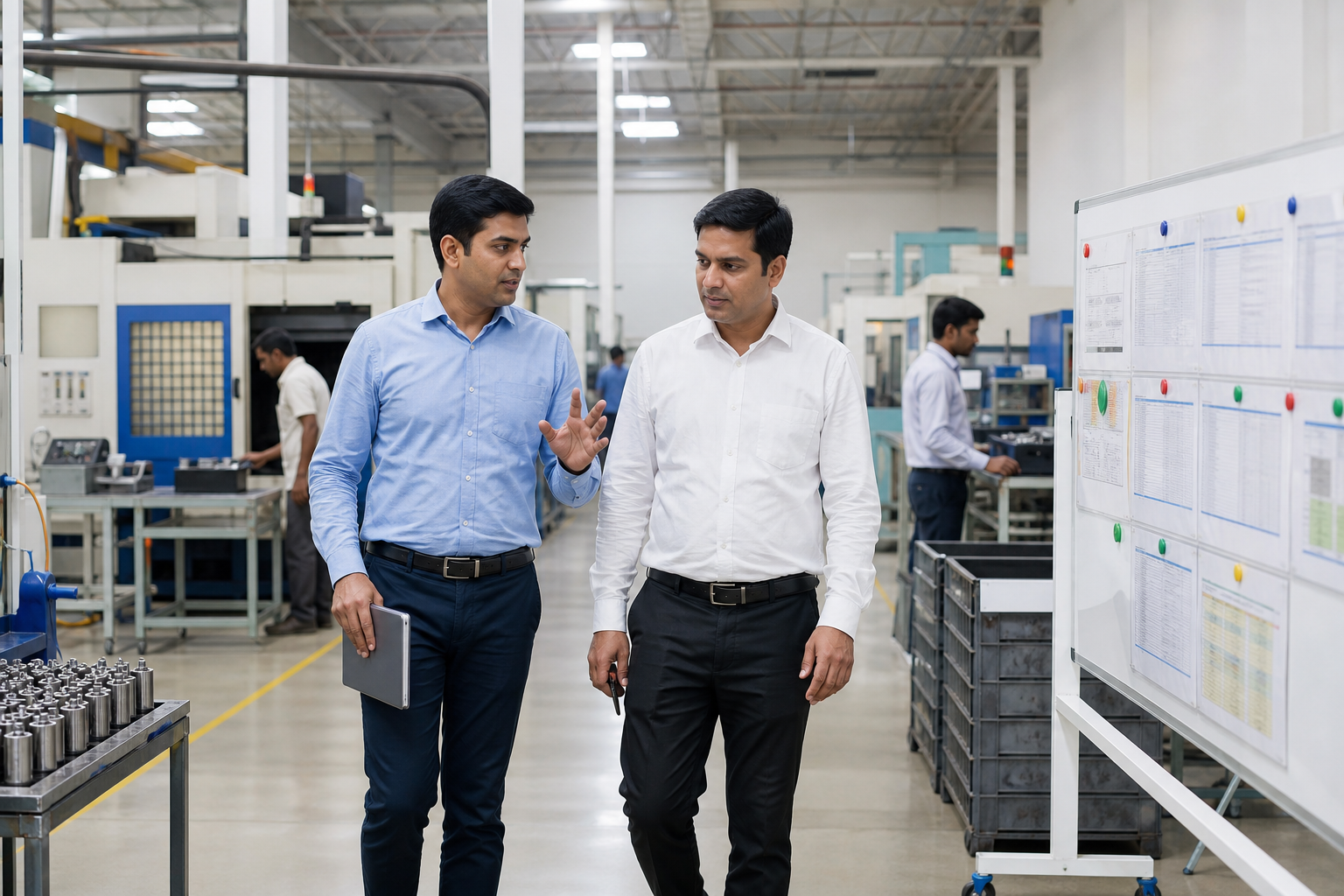
Finding private label manufacturers in India is a discovery and shortlisting problem first. Selection—scoring capacity, quality systems, commercials, and brand-fit—comes after you have a credible set of options. International buyers who collapse both steps into one email thread often award the first responsive factory or abandon the search after a noisy B2B inbox.
This article focuses on how to find a private label factory India can offer for your category, how to run an OEM manufacturer India search without drowning in traders, and how to separate white label supplier India options from true private-label or OEM capability. It does not replace a full selection scorecard. For choosing and scoring after shortlist, use how to choose a private label manufacturer in India. For the end-to-end program context, start with the pillar guide how to source private label products from India.
Altus Exports helps international buyers with on-ground manufacturer identification and private-label sourcing coordination in India. The discovery method below is useful whether you work with Altus Exports, another partner, or an internal team.
Clarify what “private label manufacturer” means for your search
Before you search, define the manufacturing role you need. The same directory listing may describe itself as factory, OEM, white label, exporter, or “private label specialist” with different meanings.
All four can be valid commercial partners. Problems arise when you think you hired an OEM factory and later learn the contact is a trader with limited process control—or when you need white-label speed but issue a full custom OEM brief.
Write one sentence for internal use: “We are searching for [private label / OEM / white label] manufacturers in India for [category], with [key process], shipping to [markets], at [trial / annual] volume range.” That sentence drives channel choice and outreach filters.
Comparison table
Swipe →
Data table — swipe horizontally on small screens
| Search target | You need them to… | Discovery signal to look for |
|---|---|---|
| Private label factory | Produce under your brand with agreed customization | Branding, pack customization, sample revision process |
| OEM manufacturer | Build to your technical design or adapted OEM spec | Process equipment, tooling, engineering or tech pack literacy |
| White label supplier | Supply a base product you rebrand with limited change | Existing catalog SKUs, quick logo/pack options |
| Merchant exporter / trading firm | Source and export, sometimes without owning the plant | Transparent factory relationship; not a substitute for plant verification |

Prepare a Manufacturer Discovery Brief before outreach
A discovery brief is lighter than a full development pack, but it must be specific enough to filter irrelevant factories.
Manufacturer Discovery Brief — minimum fields
- Category and product family (for example home textiles, personal care bottles and fill, wooden lifestyle goods, food-ingredient packing formats, metal home accessories)
- Private label vs OEM vs white label preference
- Must-have process capabilities (knit, weave, injection mold, glass, soap finishing, spice grinding and packing, CNC wood, and so on)
- Branding methods required (woven label, heat transfer, screen print, shrink sleeve, sticker, embossing)
- Destination markets and any known compliance themes the buyer already owns
- Indicative trial quantity and reorder horizon (ranges)
- Preferred regions or openness to any capable cluster
- Languages for business communication
- Confidentiality constraints for artwork or formulas
Do not demand a full quotation from every longlist contact. Discovery outreach should confirm fit and interest; RFQs come after a shortlist.
The 8-Channel Manufacturer Discovery Map
Use several channels. Each has a bias. Relying on one channel—usually a B2B portal—creates a longlist that looks large and is commercially weak.
Channel 1 — Referrals from comparable buyers
- Was the company the manufacturer or an intermediary?
- Did they handle branding, packaging changes, and sample revisions?
- What broke, and how did the factory respond?
- Would they use them again for a similar private-label project?
Ask importers, retailers, brand owners, freight forwarders, packaging converters, testing labs, and trade advisers for introductions. The useful referral is specific: same category complexity, similar order scale, and experience with private-label branding—not “they are nice on WhatsApp.”
Ask the referrer:
Referrals are high trust and often narrow. Supplement them; do not stop at one name.
Channel 2 — Trade shows and category exhibitions
- request a capability note in writing;
- confirm the legal entity behind the booth;
- schedule a deeper call with the person who would run samples, not only sales.
Trade shows surface factories and exporters in a product context. Prepare a short discovery script and a one-page brief. On the stand, ask about private-label work, minimums for branded runs, sample lead times, and export markets—not only catalog prices.
After the show:
Presence at a fair is a discovery signal, not verification.
Channel 3 — Industry clusters and production regions
India’s manufacturing strength is often regional. Searching “private label” without cluster logic wastes time. Map the process to likely clusters—for example textile processing regions for soft goods, industrial corridors for plastics and hardware, personal-care manufacturing belts, spice and ingredient processing zones, handicraft and wood clusters for lifestyle lines. You do not need perfect geography knowledge on day one; you need to ask candidates where production actually happens and whether subcontracting is normal for your SKU.
Cluster-aware search improves OEM manufacturer India search quality because you talk to plants that already run adjacent products.
Channel 4 — Export councils, chambers, and industry associations
Export promotion councils, bilateral chambers, and industry associations can introduce active exporters in a sector. Treat introductions as leads, not endorsements. Ask the same capability and private-label questions you would ask any factory.
This channel is especially useful when your product needs a specialized material or process that general B2B search buries under unrelated listings.
Channel 5 — LinkedIn and professional networks
- build a longlist of entities and people;
- find mutual connections for warm introductions;
- spot whether export and private-label language appears in real posts or only ads.
Search combinations such as “private label manufacturer India,” “OEM manufacturer” + category, “white label” + product family, and named process terms. Review whether the company shows a plant, a product team, quality roles, or only generic motivational posts.
LinkedIn helps you:
It does not replace entity checks or a factory capability review.
Channel 6 — B2B platforms, used as a filter—not a verdict
- Can they name the production process and location?
- Do they distinguish white label catalog items from custom private label?
- Is the contracting entity clear?
- Are response details specific to your brief or copy-paste?
B2B marketplaces can generate volume quickly. They also mix manufacturers, traders, agents, and outdated listings. Use them to collect candidates, then apply hard filters:
Platform badges, years in business displays, and stock photos are weak evidence. Move promising names offline into your shortlist worksheet.
Channel 7 — Specialist search and practical content
Factories and sourcing firms that explain sampling, MOQ drivers, packaging customization, or QC steps in plain language are easier to evaluate later. Search for your category plus “OEM,” “private label,” and “export” together. Read for process specificity. Be cautious with pages that claim every certification and every product without describing how private-label change control works.
Channel 8 — India sourcing / private-label coordination partners
A sourcing partner does not replace manufacturer discovery forever, but it can accelerate a relevant longlist when you lack local networks. The partner should show how candidates are found, how traders are labeled, and how private-label capability is screened—not only forward a list of names. Altus Exports can support this channel as part of find manufacturers in India and private label manufacturing in India coordination. For partner-role discovery more broadly, see how to find a reliable sourcing partner in India.

Channel bias table
Comparison table
Swipe →
Data table — swipe horizontally on small screens
| Channel | Strength | Typical bias | Best use |
|---|---|---|---|
| Referrals | Trust and real history | Narrow network | Seed high-quality names |
| Trade shows | Category context | Sales polish | Meet process-capable exporters |
| Clusters | Process fit | Local knowledge required | OEM-heavy searches |
| Councils / chambers | Sector introductions | Not a quality guarantee | Specialized categories |
| People and entities | Marketing noise | Longlist and warm intros | |
| B2B platforms | Scale and speed | Traders + weak listings | Raw candidate generation |
| Specialist content | Process clarity | Incomplete coverage | Education + selective leads |
| Sourcing partners | Structured shortlisting | Scope and fee model vary | Buyers without India team |
Build a longlist with the Private Label Factory Longlist Sheet
Aim for a longlist sized to your category difficulty—often 12 to 25 names for a typical consumer private-label search, fewer for highly specialized OEM, more if white-label catalog options are plentiful. Record the same fields for every candidate.
Private Label Factory Longlist Sheet — columns
- Legal / trading name
- Apparent role (manufacturer / exporter / trader / unclear)
- Production location claimed
- Process fit (strong / partial / weak)
- Private label / OEM / white label evidence
- Export markets mentioned
- Sample policy notes
- Indicative MOQ posture (if disclosed)
- Source channel
- Open questions
- Status (new / contacted / responded / rejected / shortlist)
Reject early when the company cannot explain where goods are made, refuses to clarify its role, or only pushes unrelated catalog items after receiving your brief.
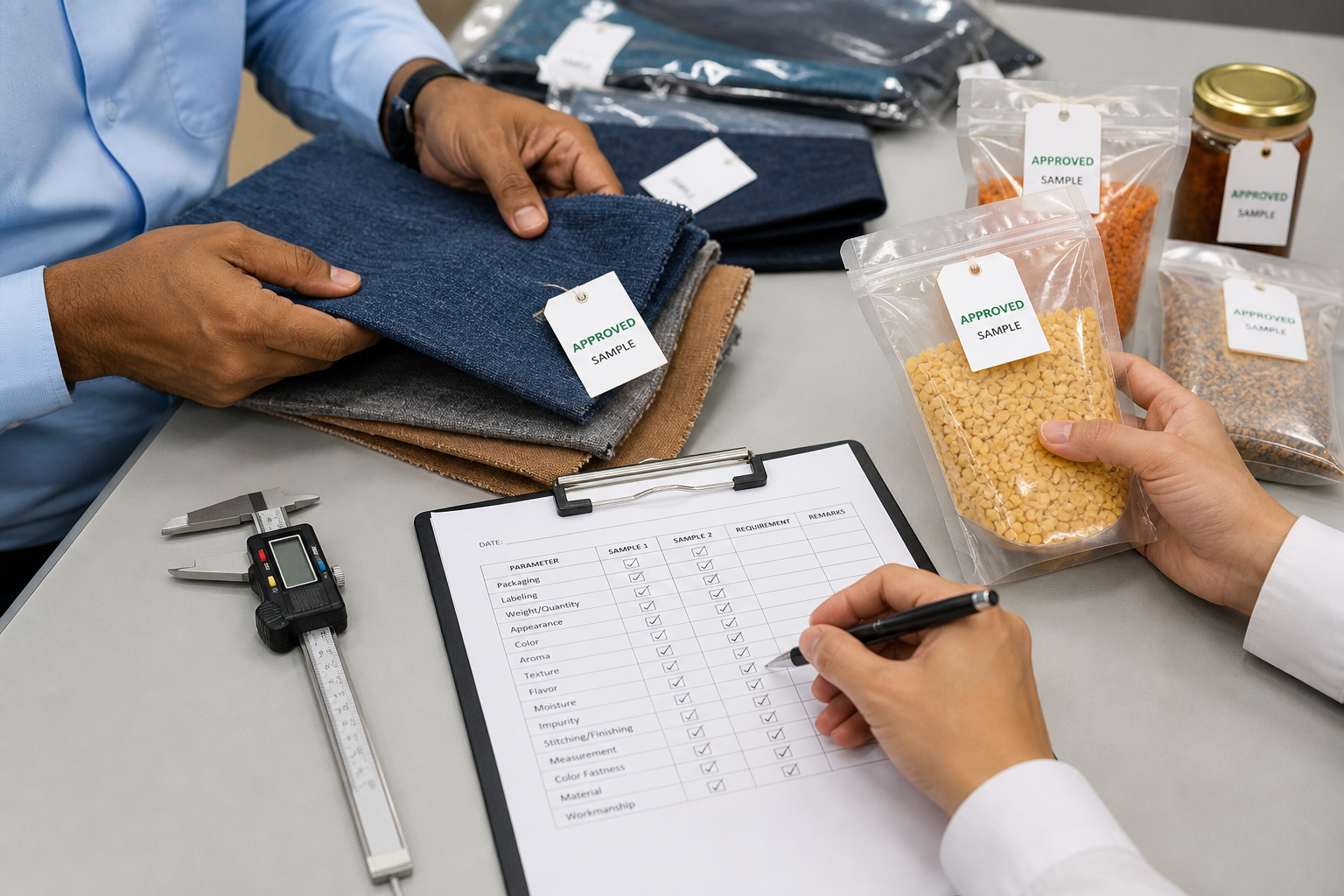
Shortlist filters: the 7-Gate Private Label Shortlist Filter
Shortlisting is still discovery hygiene—not final selection. Use gates that are cheap to apply before you invest in audits, large sample budgets, or full scorecards.
Gate 1 — Role clarity
Do you know whether you are talking to a factory, a multi-plant group, or a trading company? Trading companies can be valid white label suppliers or export coordinators; they must be labeled correctly for later verification.
Gate 2 — Process match
Does the core process match your product? A general “home décor exporter” may not be the right private label factory for a technical textile or a filled personal-care SKU.
Gate 3 — Branding and packaging customization
Ask how logo application, colorways, label languages, and carton marks are handled. Vague “yes we do private label” answers are weaker than a description of artwork approval and print methods.
Gate 4 — Sample and revision path
Can they outline sample types, typical timelines, and how revisions are recorded? Private-label programs fail when samples are informal and untracked.
Gate 5 — Export readiness signals
Have they shipped to markets like yours, or only domestic wholesale? Ask for process description of documents and packing—not confidential client lists.
Gate 6 — Communication quality
Do they ask clarifying questions about specs, pack, and volumes? Factories that quote instantly on a vague brief are often guessing.
Gate 7 — Confidentiality posture
For branded programs, note whether they acknowledge NDA or controlled sharing practices. Deep brand-protection design belongs in how to protect your brand when working with Indian private label manufacturers; at discovery stage you only need a willingness to handle brand assets carefully.
Pass three to six candidates through these gates into a shortlist for formal evaluation. That evaluation—capacity, quality system, commercials, references, pilot—is owned by how to choose a private label manufacturer in India.
Outreach that gets useful replies
Cold messages that say “send your best price for private label products” attract catalog spam. Use a structured outreach note.
Private Label Outreach Note — template elements
- Who you are and destination markets (without oversharing launch strategy)
- Product family and process needs
- Private label / OEM / white label intent
- What you want in the first reply: capability confirmation, indicative MOQ posture, sample policy, export experience, and questions they need answered
- What you are not asking for yet: final unit price on incomplete specs
Good first-reply questions to send every candidate
- Where is the product manufactured, and do you own the production process for this SKU type?
- What private-label or OEM customizations do you support for branding and packaging?
- What information do you need before an indicative quotation?
- What is your usual sample path for a new branded SKU?
- Are any processes subcontracted (printing, filling, finishing)?
- What export markets have you served for similar goods?
Compare answers side by side. Specific, bounded answers beat confident generalities.
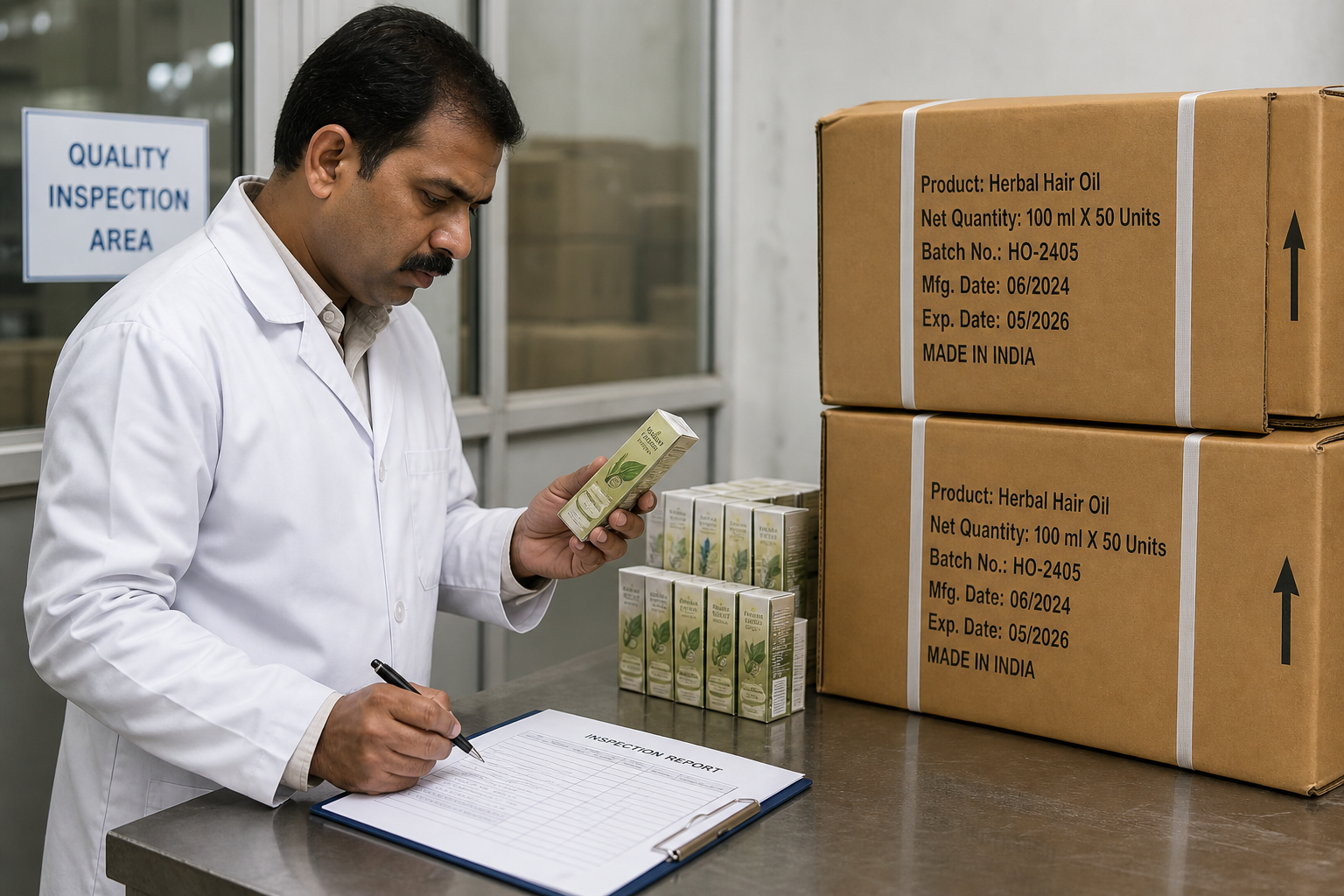
Separate white label catalogs from OEM-capable plants
White label supplier India options can be an efficient path when a base formula, construction, or mold already exists and your differentiation is brand and pack. OEM paths matter when dimensions, materials, performance, or formulation must follow your design.
Quick separation tests
Comparison table
Swipe →
Data table — swipe horizontally on small screens
| Test | White-label-leaning signal | OEM-leaning signal |
|---|---|---|
| Starting point | “Choose from catalog, we change logo” | “Send tech pack / formula / reference sample” |
| Change scope | Color, label, minor pack | Construction, materials, tooling, performance |
| Timeline talk | Fast if base SKU exists | Sampling stages and freeze discussed |
| MOQ talk | Often pack/print driven on known SKU | Setup, material batch, and process constraints |
Many Indian manufacturers offer both. Your discovery job is to classify the offer you are being sold so the shortlist is comparable.
Cross-category examples: where to look without turning this into a catalog
- Textiles and soft goods: process capability (weave, knit, cut-sew, embroidery) matters more than a “private label” keyword.
- Home and lifestyle: materials and finishing (wood, metal, ceramic, mixed media) and packaging durability for export.
- Personal care: filling, sealing, labeling, and claims discipline; buyer owns market compliance decisions.
- Food ingredients and packed food concepts: processing hygiene posture, packing formats, and documentation pathways—still buyer-led on destination food law.
- Engineering-adjacent consumer goods: tooling readiness, tolerances, and component supply.
Keep discovery cross-category. Illustrative—not exclusive—directions:
For category-fit criteria at portfolio level, see best private label products to source from India. Manufacturing stage context after you find factories: private label manufacturing in India: how the process works.

Verification belongs next—but start light during discovery
- confirm the company name on documents or websites matches the contact’s claims;
- ask for a clear address and production location description;
- note inconsistencies in role (factory vs trader);
- reverse-check phone numbers, domains, and export references at a light level.
Discovery shortlisting is not a full KYC and factory audit. Still, avoid advancing candidates that fail basic sanity checks.
During discovery, you can:
For a structured verification approach before order, use the supplier verification cluster: how to verify an Indian supplier before order. Do not postpone all verification until after a deposit; also do not demand a full audit before a candidate has passed shortlist filters.
Red flags during manufacturer discovery
- Instant “any product, any brand, lowest price” promises with no process questions
- Refusal to say whether they manufacture or trade
- Pressure for payment before capability, sample path, or entity clarity
- Catalog photos that change story every message
- Unwillingness to discuss subcontracted steps for printing, filling, or finishing
- Quotes with no assumptions listed
- Dismissal of confidentiality for artwork or formulas on a branded program
- Only personal messaging accounts with no verifiable company identity
Red flags mean slow down or remove from shortlist—not always proof of fraud. Document why a name was dropped so you do not rediscover it next quarter.

Common mistakes when buyers try to find private label manufacturers India
Common Mistakes Box
Mistake 1: Searching “private label” without process keywords
Add the manufacturing process and product family. Private label is a commercial model, not a machine type.
Mistake 2: Building a longlist of traders while believing they are factories
Label roles early. Verify plants later for anyone who will make your branded goods.
Mistake 3: Asking for final prices in the first email
Price without specs, pack, and quantity tiers creates false comparisons and trains suppliers to guess.
Mistake 4: Shortlisting on response speed alone
Fast replies help; accurate clarifying questions help more.
Mistake 5: Skipping brand-protection thinking until after selection
If your artwork or formula is sensitive, discovery outreach should already limit file sharing. See how to protect your brand when working with Indian private label manufacturers.
Mistake 6: Treating shortlist as selection
A shortlist is a set of candidates ready for scorecard evaluation, references, and possibly a pilot—not a PO award. Continue with how to choose a private label manufacturer in India.
Mistake 7: Using only one discovery channel
One channel inherits one bias. The 8-Channel Manufacturer Discovery Map exists to reduce that risk.
From shortlist to next steps
- Normalize a preliminary RFQ with identical assumptions.
- Request comparable sample proposals.
- Run entity and capability verification at the depth your risk requires.
- Apply a selection scorecard.
- Agree confidentiality and brand-asset rules before heavy file exchange.
- Decide pilot vs full first order.
When three to six manufacturers remain:
Pillar sequencing for the full program remains in how to source private label products from India. If you need a coordination layer across search, verification, and sampling, Altus Exports can support through global sourcing partner in India and product sourcing company in India.

Conclusion
To find private label manufacturers in India, treat discovery as a disciplined search: define the manufacturing model, brief the requirement, use the 8-Channel Manufacturer Discovery Map, record a consistent longlist, and apply the 7-Gate Private Label Shortlist Filter. That process produces a shortlist ready for real evaluation—without confusing a catalog reply for an OEM partner or a fast quote for a capable private label factory.
When you are ready for structured manufacturer identification and private-label coordination on the ground, share your discovery brief with Altus Exports—including category, process needs, target markets, and private label vs OEM vs white label intent—and we can discuss a focused search and shortlist plan.