
India Sourcing for E-commerce Businesses and Online Brands
By Saurabh Mittal, Founder, Altus Exports
India sourcing for e-commerce works when you treat supply as a listing-and-restock system: choose SKUs that match real velocity, sample for photo and pack consistency, freeze presentation standards, plan reorder cadences around cash and lead time, and run QC that protects…
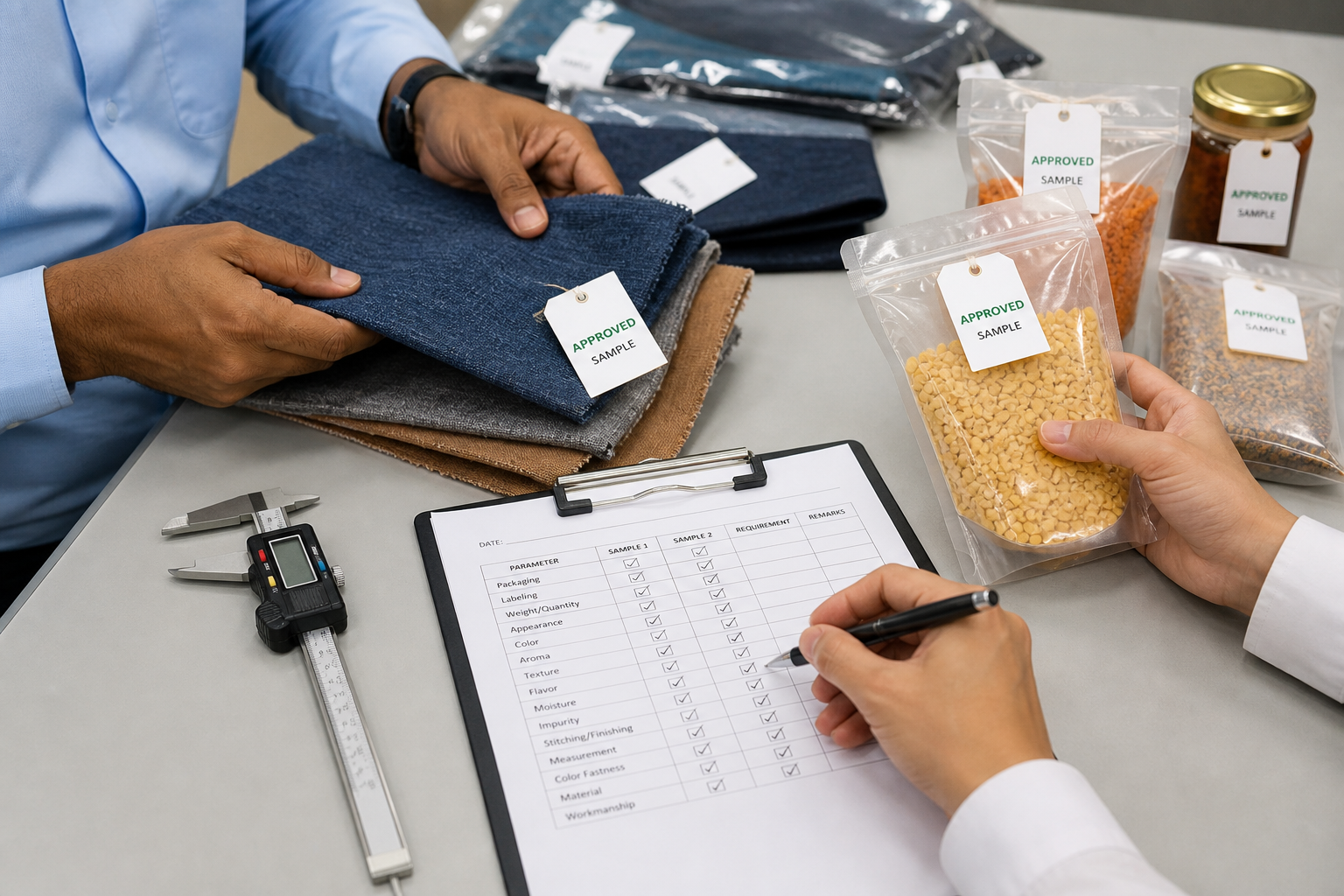
India sourcing for e-commerce is different from general import buying. An Amazon seller, Shopify brand, or D2C operator does not only need a factory that can make a product. They need a supply rhythm that protects listings, reviews, cash, and brand presentation. Online brands win or lose on SKU velocity, photo and pack consistency, restock timing, returns sensitivity, and how much working capital sits in inventory that is not moving.
This article is written for e-commerce businesses and online brands—marketplace sellers, Shopify and other D2C stores, multi-channel retailers, and small brands that sell primarily online—who want to source products from India without building a local office. It owns the e-commerce operating constraints: assortment strategy, sampling for listings, QC for brand presentation, restock cadence, and reorder planning under cash pressure. It does not replace the broader small-business sourcing pillar, the startup private-label deep dive, or a full import-documents encyclopedia.
Use this guide when your question is: “How should an online brand run ecommerce sourcing India so listings stay live, packs look consistent, and inventory does not trap cash?” For the general small-business playbook, start with how small businesses can source products from India. For small-order economics, use how to buy from India with small order quantities. For startup-stage private label, see how startups can develop private label products in India. For budgeting context, see how much it costs a small business to source from India.
Altus Exports supports online brands as an India-based sourcing and merchant-export coordination partner—manufacturer shortlisting support, sampling follow-up, presentation QC arrangements, and export handoffs—while the brand retains product, listing, compliance, and commercial decisions.
Executive answer: what ecommerce sourcing India should optimize for
Optimize for listing continuity and brand presentation before you optimize for the last cents of unit cost. Choose a focused assortment with clear hero and support SKUs. Sample until photo, pack, and unit presentation are stable enough for listing assets. Freeze what “on-brand” looks like. Build a restock calendar from lead time plus safety buffer, not from hope. Keep inventory turns visible so cash is not trapped in slow movers. Run QC that catches label, finish, and pack defects that drive returns and bad reviews—not only functional failures.

Why e-commerce constraints change the India sourcing model
A distributor can absorb a carton with mixed shades or a delayed replenishment. An online brand often cannot. Marketplace algorithms and D2C conversion depend on in-stock status, review quality, and consistent unboxing. Returns and chargebacks punish presentation gaps. Cash is usually tied in inventory, ads, and returns reserves at the same time.
These constraints are why ecommerce sourcing India should feel like operations design, not catalog shopping.
Comparison table
Swipe →
Data table — swipe horizontally on small screens
| Constraint | What it means for India sourcing | What online brands should do |
|---|---|---|
| SKU velocity | Fast movers need reliable reorder; slow movers trap cash | Rank SKUs by demand evidence before large POs |
| Photo / pack consistency | Listing images must match arriving units | Freeze color, finish, label placement, and pack standard |
| Restock cadence | Lead time + inspection + transit must fit sell-through | Build a calendar with buffers, not optimistic ETAs |
| Returns sensitivity | Cosmetic and pack defects become review and refund risk | Add presentation QC criteria, not only function checks |
| Marketplace compliance themes | Labels, claims, restricted materials, and pack info matter | Keep buyer-owned compliance review; do not outsource legal judgment to the factory |
| Cash tied in inventory | Overbuying “to hit MOQ” can starve ads and ops | Prefer staged orders and SKU focus over wide catalogs |
Who this guide is for (and who should use a different article)
- You sell primarily online (marketplace, D2C, or both).
- You need India supply that protects listings and brand presentation.
- You care about restock rhythm and inventory turns as much as unit price.
- You may use white-label, adapted private label, or light OEM—but your immediate pain is e-commerce operating cadence.
- You need the full small-business India sourcing pillar → how small businesses can source products from India
- You are a startup building a private-label program from idea through freeze → how startups can develop private label products in India
- You need deep OEM/packaging/IP mechanics → how to source private label products from India and private label product development in India
- You need import document detail → use Altus import guides rather than this article
This guide fits when:
Use a different article when:

Named framework: E-commerce India Sourcing Cadence
Named framework: E-commerce India Sourcing Cadence — six recurring loops that keep online brands stocked without overbuying.
Run the loops continuously. A brand that freezes once and never revisits velocity or pack drift will eventually see either stockouts or warehouse clutter.
Comparison table
Swipe →
Data table — swipe horizontally on small screens
| Loop | Cadence question | Primary output | Failure mode if skipped |
|---|---|---|---|
| L1 Assortment | Which SKUs deserve India supply attention now? | Ranked hero / support / test SKU list | Cash in slow movers; fragmented factory load |
| L2 Sampling for listings | Do units match what customers will see? | Approved listing sample + photo pack notes | Image mismatch, returns, review damage |
| L3 Freeze presentation | What is the brand-standard unit and pack? | Written presentation standard + retention reference | Shade/pack drift across POs |
| L4 First controlled buy | Can we launch without overcommitting cash? | Trial PO sized to learn sell-through | Overstock or stockout after launch |
| L5 Restock planning | When must the next PO be placed? | Reorder calendar from lead time + buffer | Listing gaps; panic air freight |
| L6 Presentation QC | Will arriving goods protect reviews? | Gate checklist for pack, label, finish, count | Silent cosmetic defects reach customers |
Loop 1 — Assortment strategy for online brands
- Hero SKU: Highest expected velocity or brand-defining product; prioritize supply reliability.
- Support SKU: Complements the hero (variant, accessory, or adjacent need); keep SKU count limited.
- Test SKU: Small exploratory buy to validate demand; do not fund like a hero until data appears.
- Parked idea: Interesting factory option with no channel evidence yet; do not place a production PO.
- Which SKUs have demand evidence (search volume, ads tests, waitlists, prior sales)?
- Which variants are true demand drivers versus “nice catalog coverage”?
- Can one factory family cover multiple SKUs without confusing packaging versions?
- What is the maximum number of active India SKUs your team can manage this quarter?
- Which SKUs are too returns-sensitive for your current QC maturity?
Assortment is the first e-commerce control. India can supply many categories, but online brands should not launch a mini-catalog because factories can quote them. Start with a narrow set of SKUs that you can photograph well, restock predictably, and support with customer service.
Practical assortment roles:
Assortment questions before RFQ:
D2C sourcing India and Amazon seller source from India programs both fail when assortment sprawl outruns ops capacity. A focused Shopify brand India sourcing plan often beats a wide assortment with weak restock discipline.
Loop 2 — Sampling for listings (not only for “factory approval”)
Comparison table
Swipe →
Data table — swipe horizontally on small screens
| Sample outcome | Meaning for e-commerce | Next step |
|---|---|---|
| Directional only | Looks promising; not listing-locked | Continue revisions; do not shoot final assets as final |
| Listing-ready | Matches intended listing story and pack | Capture assets; freeze presentation notes |
| Production-ready | Matches freeze pack for manufacturing | Authorize trial PO with QC criteria |
| Rejected | Gap too large in function or presentation | Redirect factory, change SKU, or stop |
- Confirm product function and basic construction against your brief.
- Photograph under the lighting and angles you will use on the listing.
- Check primary pack, insert, and any barcode or SKU marks for camera readiness.
- Note shade, texture, print sharpness, and hardware finish in writing.
- Compare courier photos to physical sample; decide which attributes need physical approval.
- Record sample code, revision, and whether approval is for listing direction or production freeze.
Online brands sample for two jobs: factory fit and listing readiness. A sample that “works” physically can still fail commercially if color, finish, label placement, or pack structure does not match what you will photograph and promise.
Listing-sample checklist:
Do not treat a sales-sample photo from the factory as your listing standard unless you have accepted that exact revision as your brand reference.
Loop 3 — Freeze presentation standards
- Color / shade / finish reference (physical retention where practical)
- Label placement and artwork revision ID
- Primary pack structure and protective packing notes
- Accessory and insert contents list
- Acceptable cosmetic defect limits (scuffs, print misalignment, dust, glue marks)
- Carton marks and inner-pack rules that affect pick-and-pack or FBA prep
For online brands, presentation freeze is as important as technical freeze. Customers judge what arrives against what they saw. Marketplace returns often cite “not as pictured,” wrong color, damaged pack, or missing accessories—even when the core product “works.”
Freeze at minimum:
If you are moving toward private label, keep packaging ownership clear and link out for OEM depth rather than inventing a full packaging encyclopedia here. Service support for branded programs: private label manufacturing in India.
Loop 4 — First controlled buy sized to learn
- Expected weekly velocity (conservative)
- Lead time for reorder (production + inspection + transit + receiving)
- Returns buffer assumptions (category-dependent; do not invent false precision)
- Cash available after ads and operating costs
- MOQ reality for the SKU and pack format
The first India production buy for an online brand should answer commercial questions, not only fill a warehouse. Size it to cover launch plus a short sell-through window, with enough units to exercise real packing and QC—not so many that a miss destroys cash.
First-buy design inputs:
When factory MOQ exceeds what your velocity can justify, use the small-order tactics in how to buy from India with small order quantities rather than forcing a hero-sized buy on a test SKU. Cost context belongs in how much it costs a small business to source from India.
Loop 5 — Restock cadence and reorder planning
Comparison table
Swipe →
Data table — swipe horizontally on small screens
| Restock posture | When it fits | Risk |
|---|---|---|
| Lean | Stable velocity, reliable factory, cash-tight brand | Stockout if demand spikes |
| Balanced | Most online brands with one or two heroes | Requires calendar discipline |
| Buffer-heavy | Long lead times or volatile ads-driven demand | Higher cash tied in inventory |
- On-hand and inbound units
- Trailing velocity and any known seasonality
- Agreed production lead time from the real start event (deposit, artwork approval, or material arrival)
- Inspection and document buffer
- Transit mode assumptions (ocean vs air) without treating them as promises
- Safety days based on demand uncertainty and factory reliability history
Restock is where e-commerce India programs live or die. A good first shipment with no reorder system creates stockouts, rushed air freight, or opportunistic factory substitutions under time pressure.
Build a simple reorder formula in plain language:
Reorder trigger date ≈ (days of cover remaining) − (production lead time + inspection buffer + transit + receiving buffer)
Track for each active SKU:
Avoid “order when we are almost out” unless lead time is short enough. For many India ocean programs, almost-out is already too late.
Loop 6 — QC for brand presentation
- Color / shade consistency vs retention sample
- Print clarity, logo alignment, and label adhesion
- Pack cleanliness, dents, scuffs, and seal integrity
- Correct inserts, accessories, and quantity per inner pack
- Barcode / SKU readability if used in your channel prep
- Carton strength and moisture signs after export packing
- Odor, residue, or finish issues visible in customer photos
E-commerce QC should protect the unboxing and listing match. Functional QC still matters; presentation QC is what online brands often under-specify.
Presentation-oriented checks (adapt by category):
Define accept / rework / reject rules before pre-shipment inspection. A factory saying “export quality” without measurable presentation criteria is not an e-commerce QC plan. Altus can help arrange inspection coordination against your written checklist under product sourcing company in India and global sourcing partner in India.
Named framework: Online Brand SKU Launch Checklist
Checklist
Named framework: Online Brand SKU Launch Checklist — use before you authorize production or listing assets as final.
Do not launch paid traffic against a SKU that fails checkpoints 4–6. Ads amplify supply mistakes.
Comparison table
Swipe →
Data table — swipe horizontally on small screens
| # | Checkpoint | Pass criteria | Owner |
|---|---|---|---|
| 1 | Channel fit | SKU has a clear marketplace or D2C role and pricing hypothesis | Brand / merchandising |
| 2 | Brief clarity | Specs, pack intent, markets, and volume range documented | Buyer |
| 3 | Factory fit | Process capability and export posture match the SKU | Sourcing lead / partner |
| 4 | Listing sample | Physical or approved sample supports photos and claims boundaries | Brand |
| 5 | Presentation freeze | Retention reference + written cosmetic / pack standards | Brand + factory |
| 6 | Compliance themes review | Buyer-owned check of labels, claims, restricted inputs for target markets | Brand / counsel as needed |
| 7 | Trial PO economics | Quantity matches learning goal and cash limits | Founder / finance |
| 8 | QC gate plan | Presentation + function criteria and inspection timing agreed | Buyer / QC |
| 9 | Restock plan | Reorder trigger and lead-time calendar exist before launch ads scale | Ops |
| 10 | Document / logistics handoff | Invoice, packing list, and shipping responsibility clear for the Incoterm used | Buyer / coordinator |

Channel notes: Amazon, Shopify/D2C, and multi-channel
Amazon seller source from India
Marketplace sellers usually feel inventory and compliance pressure first. Keep SKUs focused. Align pack and labeling with your own marketplace account requirements and destination rules—factories can support labels, but account compliance remains the seller’s responsibility. Plan FBA or 3PL prep capacity before a large inbound arrives. Treat review risk as a QC input: cosmetic defects are commercial defects online.
Shopify brand India sourcing / D2C
D2C brands control the storefront story, so pack consistency and unboxing become brand equity. Invest early in presentation freeze and photography from approved samples. Restock planning must align with campaign calendars; do not schedule a major drop without a confirmed production and ship window with buffers.
Multi-channel online brands
If you sell on marketplace and D2C, standardize the physical SKU wherever possible and differentiate with inserts or outer messaging only when controlled. Dual pack versions multiply MOQ, artwork, and QC complexity. Start unified; split packs only when channel economics justify the ops cost.
Cash, inventory, and returns: the e-commerce money loop
- Separate test budget from hero replenishment budget.
- Cap open POs as a share of liquid cash after ads and operating reserves.
- Prefer fewer SKUs with better turns over many SKUs with slow turns.
- Track landed cost per sellable unit, including expected returns handling—not only factory unit price.
- Avoid emergency air freight as a default plan; use it as exception with a written reason.
Online brands often underestimate how India lead times interact with cash. A cheap unit that arrives in a quantity your channel cannot sell becomes expensive. Returns amplify the problem when presentation quality is weak.
Cash discipline practices:
For cost categories and SME budgeting structure, use how much it costs a small business to source from India. This article owns the e-commerce cash posture, not the full cost encyclopedia.

Manufacturer and partner model for online brands
Online brands can work factory-direct when one proven manufacturer, clear specs, and internal bandwidth already exist. Many Amazon and Shopify teams without India staff benefit from a coordination partner for shortlisting, sampling chase, presentation QC, and export document follow-up.
Altus Exports can operate as the India coordination layer for ecommerce sourcing India programs while you keep listing, pricing, and compliance decisions. Manufacturer discovery support: find manufacturers in India. Private-label manufacturing coordination: private label manufacturing in India.
Comparison table
Swipe →
Data table — swipe horizontally on small screens
| Situation | Factory-direct may fit | Coordination partner often helps |
|---|---|---|
| SKU count | One stable SKU | Multiple SKUs or factories |
| Local follow-up | You can visit or manage daily detail | Remote brand; need on-ground chase |
| Presentation risk | Low cosmetic sensitivity | High photo/pack sensitivity |
| Restock pressure | Long buffers acceptable | Listing continuity is critical |
| Docs / export | Factory export desk proven | Unclear ownership or multi-supplier handoff |

Marketplace compliance themes (high level only)
- Product category restrictions in target marketplaces and countries
- Labeling and language requirements that apply to your SKU
- Claims language that marketing wants versus what the product and docs can support
- Restricted materials or substances relevant to your category
- Packaging information that customers and channels expect
- Record retention for specs, approvals, and shipment lots
This section is intentionally high level. It is not a legal or marketplace policy manual.
Online brands should maintain a buyer-owned checklist for:
Ask factories for process support and documentation they can reasonably provide. Do not ask a manufacturer to act as your marketplace attorney. When in doubt, pause listing claims until your own compliance review is complete.
Common e-commerce India sourcing mistakes
Mistake 1: Launching too many SKUs from the first factory visit
Wide assortment feels like progress. It usually creates fragmented inventory and weak restock discipline.
Mistake 2: Shooting final listing images on an unfrozen sample
If the production unit drifts, your ads and listing become a returns machine.
Mistake 3: Ordering MOQ-max on a test SKU
MOQ is a constraint to design around, not a demand forecast. See small-order tactics rather than overbuying.
Mistake 4: Ignoring presentation in QC
Function-only inspection misses the defects customers photograph first.
Mistake 5: Scaling ads before restock math exists
Paid growth without a reorder calendar creates stockouts and frantic supplier pressure.
Mistake 6: Treating every category like a private-label mega-program
Some online brands only need controlled white-label or light adaptation. If you need full startup private-label stage gates, use the startup article instead of forcing OEM complexity too early.
Mistake 7: No single SKU matrix
Without a living matrix of SKU, factory, freeze revision, velocity, inbound, and next PO date, remote teams lose control quickly.

Operating toolkit: SKU matrix for online brands
- SKU code and channel listing IDs
- Factory / supplier entity
- Product model (stock, white label, adapted PL, OEM)
- Freeze revision and retention sample location
- Presentation QC checklist version
- On-hand / inbound / weeks of cover
- Agreed lead time and reorder trigger date
- Last inspection result summary
- Open issues
Keep a simple sheet or dashboard with one row per active SKU:
This matrix is the practical backbone of the E-commerce India Sourcing Cadence.
How Altus Exports helps online brands source from India
- Private label manufacturing in India
- Global sourcing partner in India
- Product sourcing company in India
- Find manufacturers in India
- Import products from India
- Contact Altus Exports
Altus Exports supports e-commerce businesses and online brands that need India coordination without a local office. Typical support includes manufacturer shortlisting help, sampling follow-up against listing and presentation standards, QC arrangement to written criteria, production checkpoint communication, and export documentation handoffs. Engagements vary by category and scope; the useful starting point is your SKU list, target channels, volume ranges, and which cadence loops you want locally managed.
Service entry points:
This article does not claim exclusive factory access, guaranteed MOQs, guaranteed prices, or invented case studies. Reliability for online brands comes from assortment discipline, freeze control, restock math, and evidence-based QC.

Conclusion
India sourcing for e-commerce businesses and online brands succeeds when supply is designed around channel reality: focused assortment, listing-ready sampling, presentation freeze, controlled first buys, restock cadence, and QC that protects what customers see. Amazon sellers, Shopify brands, and multi-channel D2C teams should optimize for listing continuity and inventory turns—not only factory unit price.
Use this article for the e-commerce operating system. Use the small-business pillar for the general journey, the small-order guide for MOQ tactics, the cost guide for budgeting structure, and the startup private-label article when you are building a brand-owned product path under startup constraints. Altus Exports can coordinate the India-side loops while you keep brand and channel decisions.