
How SMEs Can Find Reliable Indian Manufacturers
By Saurabh Mittal, Founder, Altus Exports
SMEs can find reliable Indian manufacturers by using multiple discovery channels, writing one equal RFQ brief, shortlisting on capability fit, and applying a lightweight reliability screen before deep KYC. Prioritize factories that answer with evidence—legal identity, process…
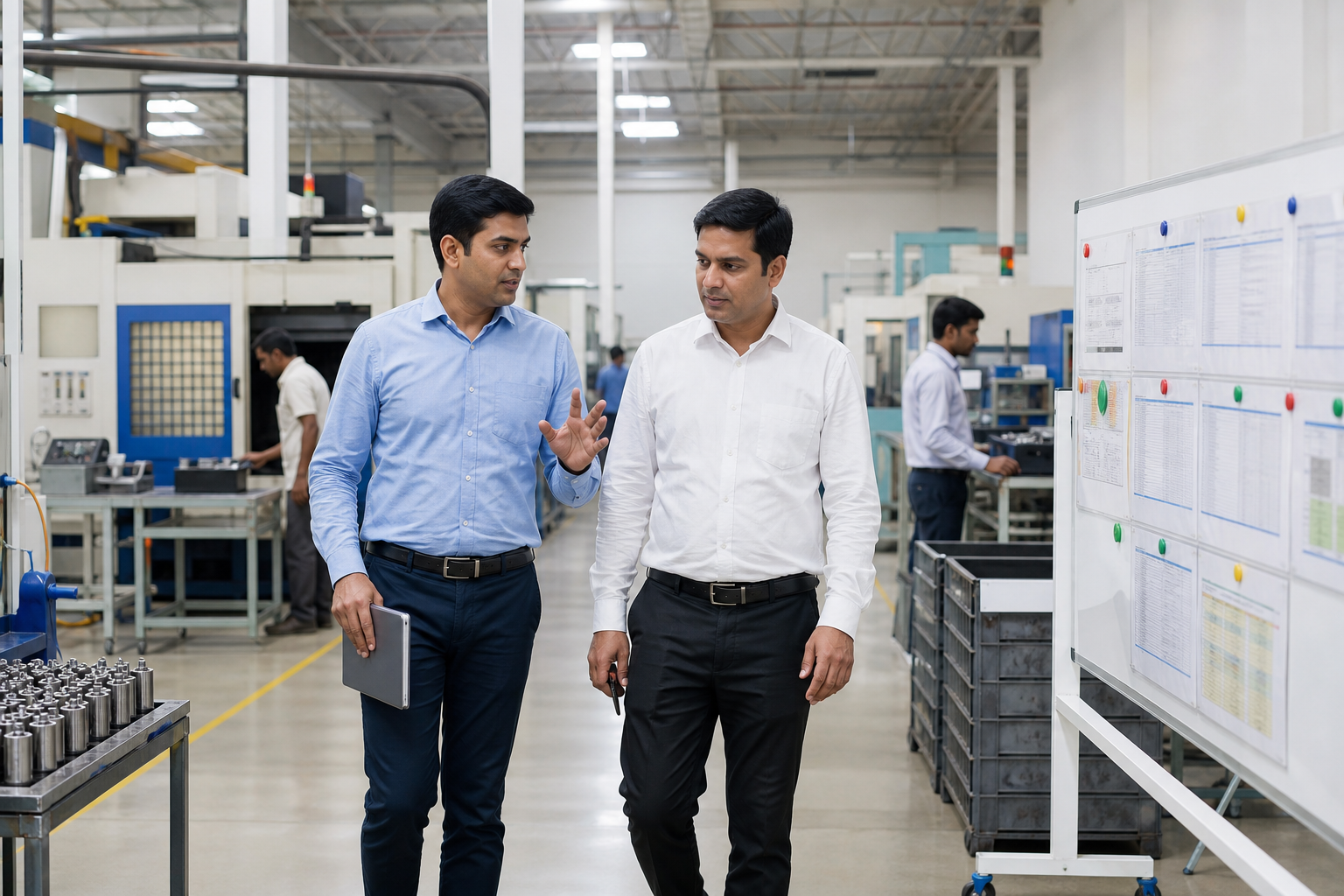
For a small or mid-sized business without an India office, finding a factory is easy. Finding a reliable manufacturer—one that can make the product you specified, communicate clearly, and support a controlled first order—is harder. Online directories mix factories, traders, and brokers. Trade-show conversations sound confident. The lowest quote often hides different materials, pack assumptions, or capacity realities.
This article owns manufacturer discovery for resource-constrained SMEs: where to look, how to shortlist, which red flags to catch early, which lightweight verification gates to run before deep KYC, and how to compare factories on equal briefs. It does not replace a full supplier verification encyclopedia—use the Indian supplier verification checklist: 25 things to check and how to verify an Indian supplier before ordering when you are ready for deep diligence. It also does not own sourcing-partner selection; that lives in how to find a reliable sourcing partner in India. For the small-business end-to-end playbook, see how small businesses can source products from India.
Altus Exports works as an India-based sourcing and procurement coordination partner. On manufacturer discovery, that usually means building a comparable shortlist, applying a practical reliability screen, and preparing you for verification and trial decisions—not claiming exclusive factory access or inventing certifications.
Executive answer: equal briefs, multiple channels, staged evidence
To find reliable Indian manufacturers as an SME, write one clear product brief, collect candidates from more than one channel, force comparable quotations, apply an eight-point reliability screen, then invest deeper verification only in the shortlist that survives. Do not pick a factory from a single WhatsApp introduction and a unit price. Reliability is demonstrated through identity clarity, capability fit, sample and specification discipline, and honest limits—not through polished photos alone.

What “reliable” means for an SME buyer
- Identity clarity: you know the legal entity you would contract with and whether it manufactures, trades, or brokers.
- Capability fit: equipment, materials, pack formats, and export experience match your SKU—not a vague “we make everything.”
- Commercial honesty: MOQ, lead time, Incoterms, and payment terms are stated with assumptions, not marketing fog.
- Sample discipline: samples follow a written brief and revisions are tracked.
- Communication rhythm: questions get specific answers on a usable cadence for your time zone.
- Process transparency: subcontracting, capacity windows, and quality checks can be explained without evasion.
- Document readiness: basic export paperwork and packing standards are familiar for your destination class.
Reliability is not a logo or a years-in-business claim. For a small business, a reliable manufacturer typically shows:
Reliability does not mean zero risk. It means you can see enough evidence to stage commitment—sample, trial, then scale—as described in how small importers can reduce risk when buying from India.
Start with a one-page manufacturer brief (before you search)
- product description, materials, dimensions, finishes, and critical tolerances;
- packaging intent (retail pack vs master carton only; interim vs final artwork);
- target first-order and repeat quantity bands (ranges, not invented forecasts);
- destination markets and any known compliance labels or tests you already require;
- preferred Incoterms and rough timeline to sample and to first PO;
- what must stay confidential (branding, customer names, target costs);
- whether you need a manufacturer only or also coordination support.
Many SME searches fail because every candidate answers a different question. Write a one-page brief first. Share the same brief with every channel and every candidate.
Include:
You do not need a perfect engineering pack on day one. You do need enough specificity that two factories quoting the same brief can be compared. Quantity economics for small first lots are covered in how to buy from India with small order quantities; keep this article on discovery and shortlisting.

The SME Manufacturer Discovery Map
The SME Manufacturer Discovery Map ranks channels by typical signal quality and SME resource cost. Use at least two channels; three is better for non-commodity products.
Comparison table
Swipe →
Data table — swipe horizontally on small screens
| Channel | Best use for SMEs | Strength | Weakness | Resource tip |
|---|---|---|---|---|
| Buyer / freight / lab referrals | Warm intros with comparable order scale | Higher trust, specific stories | Narrow network | Ask what went wrong, not only praise |
| Production-cluster knowledge | Categories with known India hubs | Capability density | Needs local or partner navigation | Map cluster before cold outreach |
| Trade shows & B2B exhibitions | Face-to-face capability checks | See samples and people | Booth ≠ production readiness | Collect cards; RFQ after the show |
| Export councils / chambers / associations | Sector introductions | Context on active exporters | Not an endorsement | Apply the same screen as any lead |
| LinkedIn & professional networks | Named people and mutual contacts | Role clarity | Profile marketing bias | Verify entity offline |
| Specialist content & directories | Longlist building | Speed | Noise and outdated listings | Use to list, not to decide |
| B2B marketplaces | Broad candidate pool | Volume of options | Mix of factories, traders, brokers | Filter hard; never decide on badges alone |
| Cold email / portal forms | Filling gaps in thin categories | Coverage | Low response quality | Send brief once; score replies |
Channel 1: Referrals from comparable buyers
- What did the factory actually manufacture and pack?
- How did they handle a missed lead time or sample revision?
- Was the contracting party the factory or a trading company?
- Would you use them again at a similar risk level?
Ask importers, retailers, freight forwarders, testing labs, designers, or trade advisers for introductions. The best referral matches your product complexity and order scale—not only the same country.
Ask the referrer:
Channel 2: Production clusters and category hubs
India’s manufacturing strength is often cluster-based. Home textiles, certain metalwares, spices, leather goods, engineering components, and other categories concentrate in known regions. Cluster awareness helps you avoid random nationwide spam and focus where capability density is real.
You do not need to memorize every district map. You do need to ask each candidate where production happens, whether subcontractors are used, and whether your process fits that cluster’s normal work. A coordination partner with on-ground reach can accelerate this without requiring you to open an India office—see how to source from India without setting up an office.
Channel 3: Trade shows and supplier events
- send the same written brief within one week;
- request a quotation with assumptions listed;
- ask for factory address, entity name, and sample lead time;
- schedule a video walkthrough of the production area if a visit is not yet possible.
Trade shows help SMEs see materials, finishes, and communication style quickly. Treat the booth as a discovery node, not a final audit.
After the show:
Channel 4: Export bodies, chambers, and associations
These introductions can surface exporters outside the loudest online ads. Treat them as context, not certification. Apply the same reliability screen.
Channel 5: LinkedIn and professional networks
Useful for finding named export managers, mutual contacts, and company footprints. Weak as a sole proof of manufacturing. Confirm whether the person represents the manufacturing entity or a trading desk.
Channel 6: B2B platforms—used as a longlist tool
- confirm the legal name that would invoice you;
- ask whether production is in-house or outsourced;
- request process photos or a live video of the relevant line—not only product catalogs;
- ignore badges as substitutes for verification.
Platforms are efficient for building a longlist and dangerous for deciding. Expect mixed roles. Before investing time:
Channel 7: Search and specialist content
Practical articles, category explainers, and process descriptions can help you learn the right questions. Prefer specificity over “we source anything.” Use search to form hypotheses; use the brief and screen to test them.
Build a longlist, then shortlist fast
SMEs waste weeks when every inquiry becomes a deep conversation. Use a staged funnel.
Typical discovery funnel sizes
Comparison table
Swipe →
Data table — swipe horizontally on small screens
| Stage | Typical count | Purpose |
|---|---|---|
| Longlist | 10–20 | Channel coverage without analysis paralysis |
| Screened list | 5–8 | Survive identity + capability + responsiveness filters |
| Shortlist for RFQ | 3–5 | Equal brief comparison |
| Verification candidates | 2–3 | Lightweight gates, then deeper KYC if proceeding |
| Trial candidate | 1–2 | Sample approval and controlled first order |
Adjust counts for niche products. A highly specialized process may yield fewer real options; do not invent fake competition.
Fast screen before RFQ (15–20 minutes per candidate)
- refuse to state whether they manufacture or trade;
- cannot name a production location at city/cluster level;
- quote a firm unit price with no questions about material or pack;
- only communicate through disposable personal chats with no company identity;
- claim every certification and every category with no evidence path;
- pressure for immediate payment before sample or PO terms.
Discard or park candidates that:
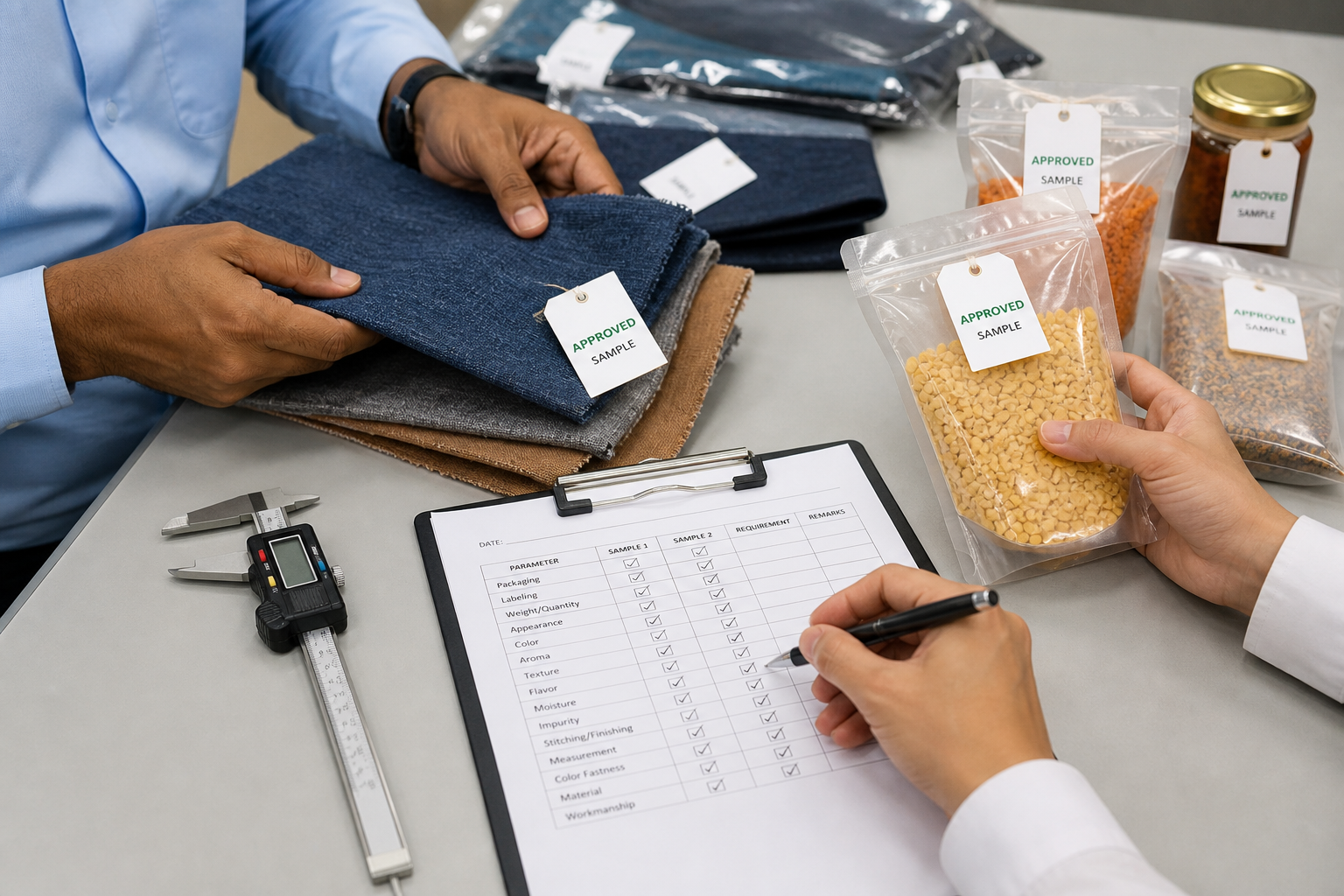
The 8-Point Reliability Screen for SMEs
Use the 8-Point Reliability Screen for SMEs on every shortlisted factory before you spend on deep audits, travel, or large deposits. Score each point as strong, partial, or weak. Prefer two or three “strong” factories over one charismatic “maybe.”
1. Legal and commercial identity
Confirm company name, address, primary contacts, and who would appear on the invoice and contract. Ask whether they act as manufacturer, merchant exporter, or agent. Ambiguity here is a stop sign.
2. In-house capability vs trading role
Ask which process steps happen in their facility and which are subcontracted. Trading is not automatically bad; undisclosed trading is. You need to know who controls quality and schedule.
3. Category and process fit
Match your brief to their normal work: materials, equipment, pack formats, typical order bands, and destination experience. A factory that occasionally “can try” your product is higher risk than one that runs similar work weekly.
4. Sample and specification discipline
Ask how they handle drawings, bills of materials, tolerances, artwork, and revision control. Request a sample lead time and what information they need before sampling. Vague sampling processes predict vague production.
5. Commercial clarity (MOQ, lead time, Incoterms, payment)
Require assumptions in writing. MOQ should be decomposable into material, process, and pack where relevant. Lead times should state sample vs bulk. Payment terms should match risk staging, not only supplier preference.
6. Quality system signals (lightweight)
You are not running a full audit yet. Ask what in-process checks they perform, whether they accept third-party inspection, and how they handle nonconformities. Resistance to any independent check is a red flag for SME first orders.
7. Communication and export readiness
Evaluate response quality, language clarity, and willingness to use email or shared documents—not only chat. Ask which export documents they routinely prepare for markets like yours. Document chaos on a small order becomes expensive fast.
8. References or evidence artifacts
Ask for anonymized evidence: sample reports, packing standards, previous destination markets (without confidential client data), or a reference conversation where appropriate. Absence of any artifact is not always fatal for a younger factory, but it raises the verification bar.
Scoring tip for busy SMEs
Create a simple spreadsheet with the eight points across columns and factories across rows. Mark strong / partial / weak. Drop any factory with weak identity or weak process fit before you negotiate price.
Comparing factories on an equal brief
Reliability ranking collapses when quotes are not comparable. Force equality.
Equal-brief RFQ checklist
- product specification or detailed description with drawings/photos;
- material and finish notes, including acceptable alternates if any;
- packaging description and labeling scope;
- target quantity bands for trial and repeat;
- destination and known compliance tests you already require;
- requested Incoterm and currency;
- sample requirements and approval method;
- deadline for quotation response.
Send every shortlisted factory the same packet:
Quotation comparison fields SMEs should not skip
Comparison table
Swipe →
Data table — swipe horizontally on small screens
| Field | Why it matters |
|---|---|
| Material description and grade | Prevents “same price, different product” |
| Process steps included | Reveals subcontract gaps |
| MOQ and what drives it | Separates physics from policy |
| Tooling / setup fees | Shows true first-order cash |
| Packing and labeling scope | Avoids surprise artwork or carton costs |
| Lead time sample / bulk | Planning reality |
| Payment terms and milestones | Risk staging |
| Incoterms | Landed-cost and risk ownership |
| Inspection acceptance | Control rights |
| Validity date of quote | Stops stale comparisons |
Normalize before ranking. A lower unit price with heavier pack exclusions, longer lead time, or unclear materials is not automatically better. Keep full landed-cost modeling in the cluster cost article; here the goal is equal commercial comparison for manufacturer selection.

Red flags when SMEs search for Indian factories
- Unit price promised before materials, pack, quantity, and Incoterms are defined.
- Refusal to share factory address or to show production on a live video.
- “We make everything” with no process constraints.
- Pressure to wire money to a personal account or unrelated entity.
- Documents that show a different company name than the one negotiating.
- Samples that arrive with no link to a written specification revision.
- Claims of every certification without reports, scope, or willingness to discuss test plans.
- Hostility toward third-party inspection or buyer visits.
- Constant role-switching: factory today, agent tomorrow, exporter the next day without explanation.
- Unwillingness to put MOQ, lead time, and payment terms in writing.
Red flags do not always prove fraud. They do mean slow down, gather evidence, or walk away.
When red flags appear, do not “hope it works because the price is good.” Price without identity and process clarity is not a bargain.
Lightweight verification gates before deep KYC
SMEs should not run a 25-point deep audit on fifteen random leads. Use staged gates. Deep KYC belongs after a factory survives discovery and screen.
Gate A — Identity lightweight check
- Confirm legal name and address consistency across quotation, website, and registration details you can reasonably obtain.
- Confirm the signatory and bank beneficiary will match the contracting party (or understand why not).
- Note trading vs manufacturing role in writing.
Gate B — Capability lightweight check
- Video walkthrough of the relevant process area, or recent process photos with date context.
- Confirmation of equipment or process steps needed for your SKU.
- Clear statement on subcontracted steps.
Gate C — Sample gate
- Paid or clearly scoped sample against the written brief.
- Retention of approved sample photos/measurements.
- Written list of differences if the sample is “close but not final.”
Gate D — Commercial gate
- Comparable quote fields complete.
- MOQ drivers explained at a practical level.
- Payment milestones that protect a first order (for example, deposit against defined PO terms, balance against documents/inspection as agreed).
Gate E — Pre-PO verification escalation
Only after Gates A–D look acceptable, invest in deeper verification: fuller document KYC, references, third-party audit, or on-site inspection planning. Use the verification cluster guides linked above for the encyclopedia-level checklist. Do not skip those steps on higher-risk or regulated products just because the discovery screen felt friendly.

How SMEs should run discovery calls
- Walk me through how you would produce this SKU from materials to packed carton.
- Which steps are in-house vs subcontracted?
- What information do you still need before quoting firmly?
- What usually sets MOQ for a product like this—materials, process, or packaging?
- How do you handle sample revisions and who approves changes internally?
- What destinations have you exported similar goods to recently (category-level, not confidential clients)?
- Will you accept third-party pre-shipment inspection on a first order?
- Who is my day-to-day contact, and what is the escalation path if they are unavailable?
A 30- to 40-minute call can separate operators from brochure sellers if you use a script.
Ask:
Score the specificity of answers. “No problem, best quality, cheap price” is not an answer.
Working with a coordination partner during manufacturer search
DIY discovery can work when your category is clear, your brief is strong, and you can manage follow-up daily. A partner becomes useful when you need cluster navigation, comparable RFQs across factories, local follow-up, or help separating supplier claims from checked facts.
A partner should use your brief, present options with differences visible, disclose how it is paid, and support verification without replacing your approvals. Altus Exports can support manufacturer search through find manufacturers in India, product sourcing company India, and global sourcing partner India models. Partner selection criteria remain in the sourcing-partner guide—do not confuse “find a factory” with “select a procurement partner.”
Common SME mistakes in manufacturer discovery
- Cheapest factory first. Price ranking before equal briefs selects storytellers, not manufacturers.
- Hidden trading roles. Trading can work when disclosed; undisclosed roles break accountability.
- Different briefs per candidate. You destroy comparability and invite cherry-picked answers.
- Skipping lightweight gates on small orders. Defective small lots still damage customers and cash.
- Deep KYC on too many names. Screen first; verify deeply later.
- Confusing partner search with factory search. Evaluate each role with the right checklist.
- Treating samples as production proof. Samples prove a moment; production needs specs, capacity, and inspection rights.
From shortlist to first order
Discovery success is a shortlist you trust enough to verify—not a PO after one good call. Sequence: brief and channels → longlist/screen/equal RFQ → 8-Point Reliability Screen → Gates A–D → deeper KYC on finalists → sample approval → trial with inspection and go/no-go → repeat after scorecard review. Keep search aligned with staged commitment.

Conclusion
SMEs find reliable Indian manufacturers by running discovery as a process, not a lottery. Map channels with the SME Manufacturer Discovery Map, write one equal brief, shortlist quickly, and score survivors with the 8-Point Reliability Screen for SMEs. Catch red flags early. Use lightweight verification gates before investing in deep KYC, travel, or large deposits. Compare factories on evidence and equal commercial fields, then stage samples and trial orders so reliability is proven in work—not claimed in sales chats.
If you want help building a comparable manufacturer shortlist in India, share your product brief, target quantity bands, and destination markets with Altus Exports. A clear discovery scope is the fastest way to separate workable factories from noisy listings.