
Outsourcing India Procurement: A Guide for Small and Medium-Sized Businesses
By Saurabh Mittal, Founder, Altus Exports
SMEs should outsource India procurement when coordination load, verification needs, or multi-supplier follow-up exceed internal bandwidth—and keep product specs, supplier appointment, pricing approval, and compliance decisions in-house. Start with a defined scope, SLA, and…
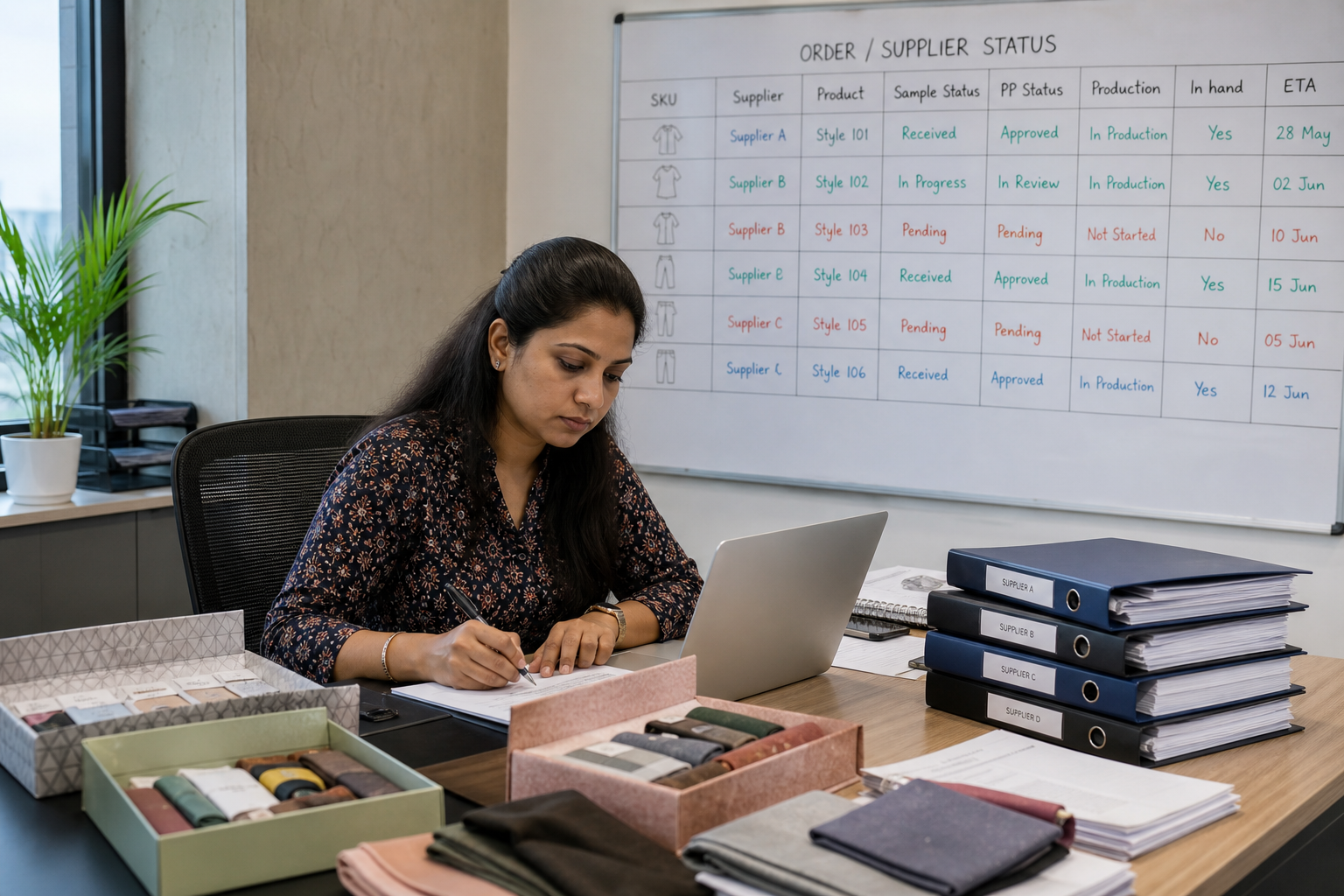
Outsourcing India procurement is a strategic operating decision, not a slogan. For small and medium-sized businesses, the question is rarely “Is India a good sourcing country?” It is whether your team can run supplier discovery, verification, samples, production follow-up, quality gates, and export handoffs at a distance—without burning founders’ time or absorbing avoidable mistakes.
This guide is for SME owners, e-commerce operators, and procurement managers evaluating whether to outsource India sourcing and procurement coordination. It owns the build vs buy decision, what to outsource versus keep in-house, how to write a usable scope of work, what SLA and reporting should look like, how to compare outsourcing cost to the cost of mistakes, and how to run a pilot before you scale. It is the strategic conversion article in the India Sourcing for Small Businesses cluster.
It does not rewrite the day-to-day service encyclopedia of what a sourcing company does—see what does an India sourcing company do. It does not replace a partner-selection scorecard—see how to choose an India sourcing partner. For cost line-item depth, use how much does it cost for a small business to source from India.
Altus Exports is an India-based sourcing and procurement coordination partner for international buyers. The right outcome of this article is not “hire someone today.” It is a clear decision: keep India procurement in-house, outsource a defined scope, or run a time-boxed pilot with measurable gates.
Executive answer: outsource coordination, keep decisions
Outsource India procurement when local execution and multi-party follow-up are the bottleneck. Keep in-house the decisions that define your business: product requirements, supplier appointment, commercial approvals, brand standards, and destination-market compliance ownership. Engage a partner with a written scope map, reporting cadence, and a 90-day pilot that proves communication and control before you expand volume or categories.

When outsourcing is the right move
- you have no India office and travel is infrequent;
- founders are doing factory follow-up at night across time zones;
- quotes are incomparable because nobody normalizes assumptions;
- samples stall without a clear owner;
- quality issues appear only after goods arrive;
- you are adding SKUs or suppliers faster than your process can absorb;
- you need one accountable local coordinator rather than five disconnected threads.
Outsourcing fits when the cost of delayed answers, weak verification, missed inspections, or fragmented supplier chat exceeds the cost of structured local coordination. Common SME triggers:
Outsourcing is a weaker fit when you already have a proven factory relationship, an experienced buyer who can manage the account, and a single simple SKU with low coordination load. In that case, a light verification and inspection plan may be enough without a full procurement partner.
For the remote operating model without an India entity, see how to source from India without setting up an office. For the broader small-business journey, start with how small businesses can source products from India and the operating framework in India sourcing for small businesses: a complete guide.
The SME Procurement Outsourcing Decision Matrix
The SME Procurement Outsourcing Decision Matrix helps you choose a mode: keep in-house, hybrid, or outsource coordination. Score each factor honestly for the next 6–12 months—not for an idealized future team you have not hired.
Comparison table
Swipe →
Data table — swipe horizontally on small screens
| Factor | Keep in-house more likely | Hybrid more likely | Outsource coordination more likely |
|---|---|---|---|
| India presence | Frequent visits or resident staff | Occasional travel + local help for gates | Rare travel; need weekly local follow-up |
| SKU / supplier count | One known supplier, one SKU | Few SKUs, one primary factory | Multi-SKU or multi-supplier program |
| Process maturity | Written specs, QC, and PO discipline already exist | Specs exist; follow-up is inconsistent | Process still forming; need operating rhythm |
| Category risk | Low brand/safety consequence | Moderate; gates needed at key stages | Higher brand, private-label, or defect cost |
| Team bandwidth | Dedicated buyer time available | Part-time buyer stretched | Founder-led; procurement competes with everything else |
| Information need | Direct factory relationship is sufficient | Need help normalizing RFQs and samples | Need structured comparisons, escalation, and reporting |
| Growth plan | Stable reorder only | Trialing one new line | Building an India supply base this year |
How to use the matrix
- Mark each row for your current reality.
- If four or more rows land in “outsource coordination,” design a pilot scope.
- If most rows are “keep in-house,” invest in better briefs, verification, and QC rather than adding a partner layer.
- If results are mixed, use hybrid: outsource verification, inspection, and production follow-up; keep discovery or commercial negotiation if you already have strength there.
The matrix is a decision aid, not a contract. Your category, volume, and risk tolerance still govern the final call.

Build vs buy: what you are actually deciding
“Build” means creating internal capability: hiring, training, process design, travel, and management time. “Buy” means purchasing coordination capacity from an India procurement or sourcing partner. Most SMEs are not choosing between a 20-person India office and a partner. They are choosing between founder-as-coordinator and defined external coordination.
Build (internal) when
- India volume already justifies dedicated headcount;
- you need proprietary supplier relationships managed only by employees;
- your category requires deep in-house technical buying that a general coordinator cannot replace;
- you have time to hire and ramp before the next sourcing cycle.
Buy (outsource coordination) when
- volume is real but not yet large enough for a full local team;
- speed to a controlled first order matters more than building infrastructure;
- you need local eyes for samples, production, and documents;
- you want a single operating point across suppliers without incorporating in India.
Hybrid when
- you keep strategy and key supplier relationships;
- a partner runs RFQ normalization, verification tasks, inspection coordination, and chase work;
- you expand partner scope only after a pilot proves reporting quality.
Altus Exports typically fits the buy or hybrid model: local coordination across sourcing stages you define, while you retain approvals. That is useful precisely because it does not pretend to replace your product judgment.
What to outsource vs keep in-house
Clear boundaries prevent the most common outsourcing failure: the buyer assumes “they handle India,” while the partner waits for undefined approvals.
Usually keep in-house (buyer-owned)
- product concept, specification ownership, and brand standards;
- destination-market compliance strategy and legal/regulatory advice;
- supplier appointment and disqualification decisions;
- target price policy and final commercial approval;
- sample accept / reject and specification freeze;
- payment authorization;
- shipment release decisions (or written delegation rules);
- customer promises, launch dates, and inventory policy.
Often outsource (partner-executed within scope)
- translating the brief into supplier search criteria;
- identifying and screening candidate suppliers;
- collecting verification evidence at the agreed depth;
- running RFQs and normalizing comparison tables;
- coordinating samples, revisions, and trackers;
- production milestone follow-up and exception escalation;
- arranging or conducting agreed quality checks;
- chasing export document completeness and logistics handoffs;
- consolidating status across multiple suppliers.
Decide explicitly case by case
- who issues the commercial invoice / acts as seller or exporter of record;
- who books freight under the Incoterm;
- whether negotiation is partner-led or buyer-led;
- whether the partner may hold shipment pending your response within defined rules.
For the detailed stage-by-stage service view, use what does an India sourcing company do without copying that encyclopedia into your RFP.
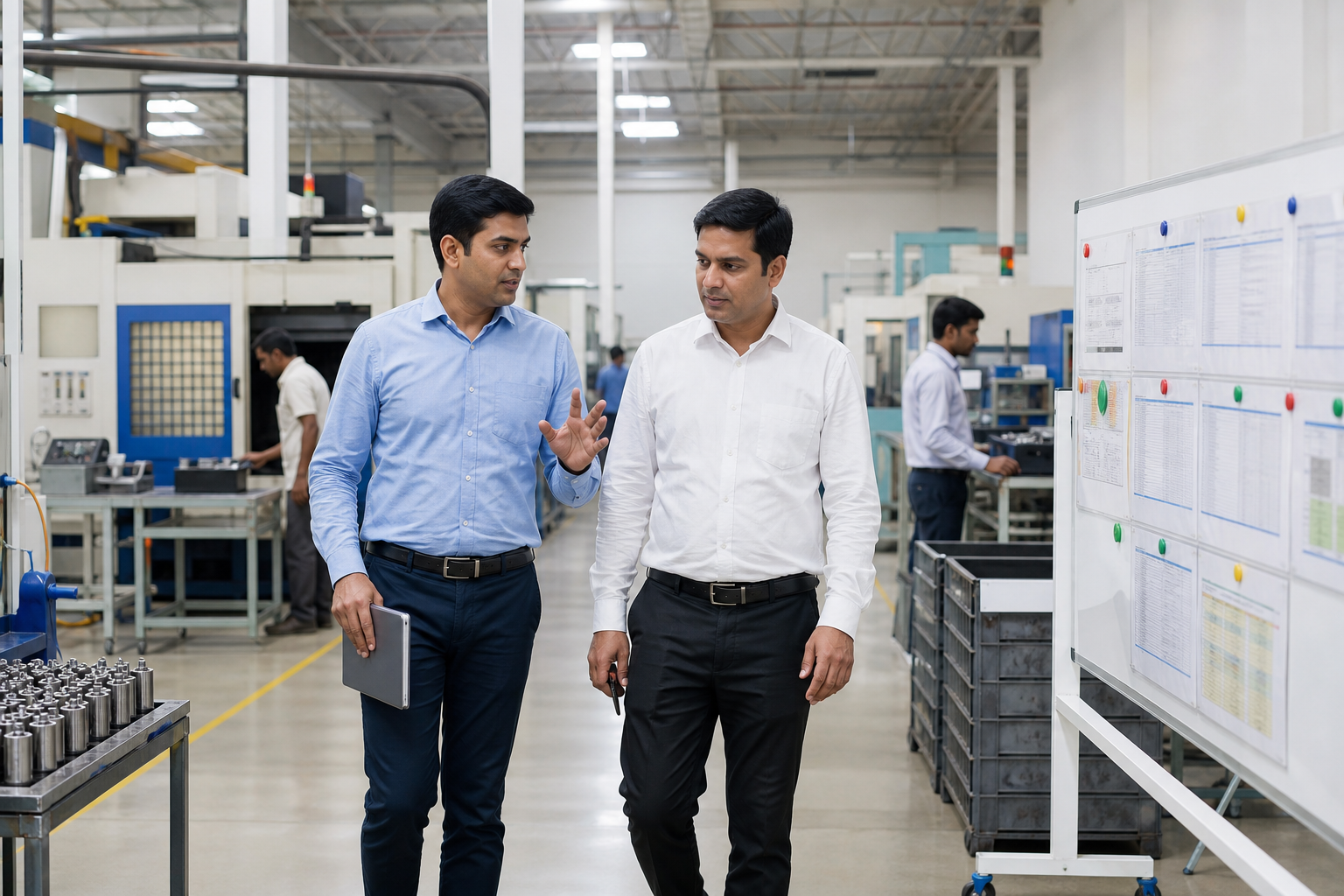
Outsourced India Procurement Scope Map
The Outsourced India Procurement Scope Map is the document you should complete before you talk fees. It turns “outsource procurement” into stages, deliverables, and buyer decisions.
Comparison table
Swipe →
Data table — swipe horizontally on small screens
| Stage | Outsourced activities (examples) | Deliverables you should require | Buyer decisions retained |
|---|---|---|---|
| 1. Discovery | Clarify brief; assumptions list; project plan | Sourcing brief; open-questions log | Confirm requirements and priorities |
| 2. Supplier search | Longlist/shortlist against capability fit | Shortlist with fit notes and gaps | Approve who receives RFQs |
| 3. Verification | Agreed identity/capability evidence | Verification summary; risk notes | Accept, deepen, or reject supplier |
| 4. RFQ & compare | Normalize quotes and assumptions | Comparison sheet; exception list | Select negotiation path |
| 5. Samples | Coordinate iterations and records | Sample tracker; revision log | Freeze or reject sample/spec |
| 6. Order follow-up | Milestone tracking; escalation | Weekly status; decision requests | Approve changes / recovery plans |
| 7. Quality gates | Inspection per agreed checklist | Inspection report; NC log | Accept, rework, hold, reject |
| 8. Export handoff | Document chase; readiness updates | Document checklist; cargo status | Approve docs and shipping instructions |
| 9. Review | Post-shipment performance summary | Lessons and next-order controls | Decide reorder, limit, or exit |
Scope writing rules
- Mark each stage Included / Optional / Excluded.
- State frequency of reports (for example, weekly status + event-based escalation).
- Define what “verification” and “QC” mean in evidence terms, not slogans.
- Name approval SLAs on the buyer side (for example, sample feedback in three business days).
- List exclusions: legal advice, customs brokerage, guaranteed factory performance, destination compliance sign-off.
A vague SOW creates quiet failure. A Scope Map creates a testable engagement.
SLA and reporting expectations that keep SMEs in control
Outsourcing without reporting is just distance with a fee. Ask for an operating rhythm that matches SME attention spans: concise, decision-oriented, evidence-linked.
Practical SLA elements
Comparison table
Swipe →
Data table — swipe horizontally on small screens
| Area | Example expectation | Why it matters |
|---|---|---|
| Response time | Acknowledge urgent escalations within one business day (India working days), with interim containment notes | Prevents silent delays |
| Status reporting | Weekly written status for active POs | Creates a single source of truth |
| Escalation | Material quality, timing, or commercial risks raised with options and deadline | Forces decisions while remedies exist |
| Sample cycle | Tracker updated when status changes; revision requests logged | Stops informal sample chaos |
| Inspection | Report within agreed hours after inspection completion | Protects ship windows |
| Document readiness | Checklist opened before cargo-ready date, not on sailing day | Avoids last-minute document risk |
| Change control | No silent substitutions; partner reports proposed changes for buyer approval | Protects freeze pack |
What a useful weekly report contains
- PO / SKU / supplier;
- planned vs actual milestones;
- open risks and required buyer decisions with dates;
- sample or inspection status;
- document or logistics blockers;
- links or attachments for evidence (photos, reports, quote files).
If a prospective partner cannot show a sample report format, treat that as a process gap. Selection criteria beyond reporting are covered in how to choose an India sourcing partner.
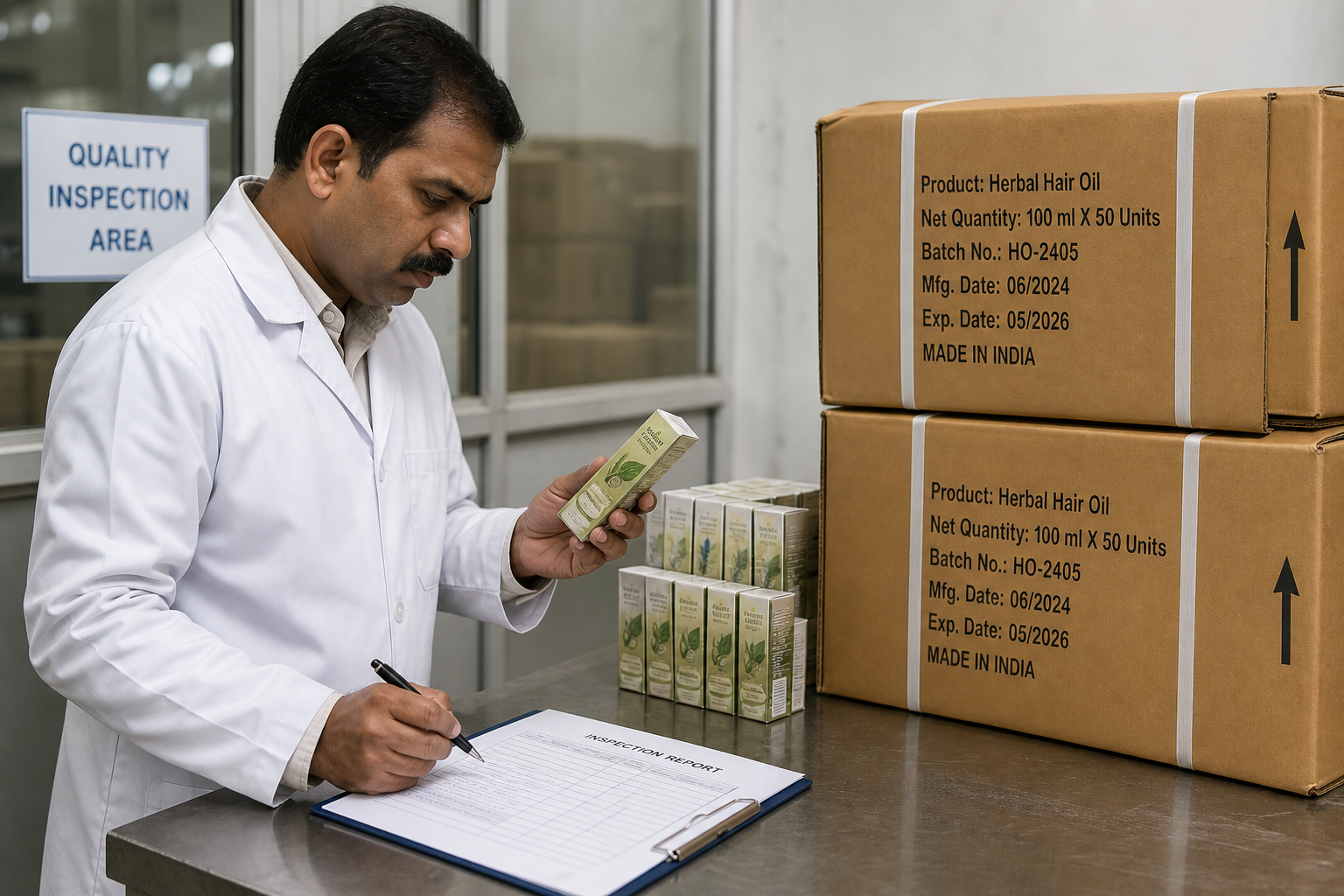
Cost of outsourcing vs cost of mistakes
SMEs often compare a partner fee only to “doing it ourselves for free.” Founder time is not free. Neither are defective goods, airfreight emergencies, missed launches, chargebacks, or dead inventory.
Cost of outsourcing (typical buckets)
- project or monthly coordination fees;
- inspection or third-party service pass-throughs;
- sample and courier costs;
- travel for visits if requested;
- any commercial model tied to order handling (must be transparent).
Exact numbers vary by scope and category. For a structured view of India sourcing cost components for small businesses, see how much does it cost for a small business to source from India. This article focuses on decision logic, not a full landed-cost model.
Cost of mistakes (often larger than fees)
- wrong-spec production requiring rework or write-off;
- prepaid exposure to an unfit supplier;
- freight paid on goods you cannot sell;
- marketplace returns and rating damage;
- launch delay and stockouts;
- management time spent firefighting across time zones;
- opportunity cost of not developing a second product line because procurement is stuck.
A simple decision test
- partner fee for the scoped stages;
- hours your team would spend without a partner, valued at a realistic internal rate;
- probability-weighted cost of one material mistake (quality, identity, or delay).
Estimate, for your next India cycle:
If (2) + (3) clearly exceeds (1) for a defined pilot, outsourcing coordination is economically rational even before you debate “strategic partnership” language. If (1) exceeds the value of the whole trial order, shrink scope: verification + samples only, then decide.
Be honest: a cheap partner with no reporting can increase mistake cost. Price without process is not savings.
The 90-Day Outsourcing Pilot Plan
The 90-Day Outsourcing Pilot Plan lets SMEs test a partner without marrying a vague long-term mandate. Design the pilot around one product family or one supplier search, with explicit gates.
Days 0–15: Align and freeze the operating rules
- complete the Outsourced India Procurement Scope Map;
- share product brief, target volumes, and timeline;
- agree commercial model, expenses, and confidentiality basics;
- name buyer approvers and partner account owner;
- set reporting cadence and escalation contacts;
- define success metrics for day 90.
Exit check: Written scope, fees, and approval rights exist. If not, do not start supplier outreach under assumptions.
Days 16–45: Prove search, verification, and comparison
- run supplier identification within the agreed category;
- deliver shortlist with fit notes and gaps;
- complete agreed verification depth on priority candidates;
- issue RFQs and return a normalized comparison;
- buyer selects who progresses to samples.
Exit check: You can explain why the shortlist is relevant and what remains unverified. If deliverables are late, thin, or non-comparable, pause before samples consume more money.
Days 46–75: Prove sample control and production readiness path
- coordinate samples and revisions with a tracker;
- lock a freeze pack or document why the pilot stops at sample stage;
- agree QC/release plan for a trial PO if you proceed;
- place a limited trial order only if Gates from your risk process are met.
For staged capital and go/no-go discipline on that trial, use how small importers can reduce risk when buying from India.
Exit check: Sample decisions are traceable; payment milestones and inspection expectations are written before deposit.
Days 76–90: Prove follow-up, release, and review
- receive production status against plan;
- complete agreed inspection or release evidence;
- review document readiness;
- log receiving feedback if goods arrive within the window—or review readiness quality if shipment is still in transit;
- hold a pilot review: keep, resize scope, or exit.
- weekly reports delivered on schedule;
- escalations include options and deadlines;
- quote comparison usable without rework by your team;
- sample revision log complete;
- no silent substitutions;
- trial PO evidence gates followed;
- clear recommendation for next-quarter scope.
Success metrics examples (pick a few):
A successful pilot earns expanded scope. An unsuccessful pilot saves you from a larger entanglement. Both outcomes are valuable.

RFP-style brief for India procurement partners
Use this brief when you contact Altus Exports or any prospective partner. It is intentionally shorter than a corporate RFP and denser than a casual email.
1. Company and category
- who you are and where you sell;
- product category and whether private-label, wholesale, or catalog;
- rough annual or first-year volume range (ranges are fine).
2. Objective for the next 90 days
- example: shortlist and verify two to three suppliers; complete sample freeze; place one trial PO; or coordinate production and inspection only for an existing factory.
3. Scope Map stages requested
- paste Included / Optional / Excluded from the Scope Map table.
4. Constraints
- target ship window;
- MOQ or cash constraints;
- compliance themes you already know;
- languages, branding, packing constraints;
- must-avoid supplier types if any.
5. Reporting and tools
- preferred weekly report day;
- shared folder or tracker expectations;
- who must be copied on escalations.
6. Commercial questions for the partner
- fee model and what is excluded;
- expense approval rules;
- any supplier-side commissions or incentives (require disclosure);
- who contracts with the factory and who exports;
- liability and confidentiality posture at a high level (legal detail with counsel).
7. Evaluation criteria (lightweight)
- clarity of scope response;
- sample report formats;
- category realism;
- escalation approach;
- fit for SME communication style;
- willingness to pilot before scale.
You do not need a 40-page RFP. You need enough structure that two partners cannot give equally vague answers and look the same.
How Altus Exports fits an SME outsourcing model
- Global sourcing partner in India for multi-stage procurement coordination;
- Product sourcing company in India when the immediate need is structured sourcing execution;
- Find manufacturers in India when discovery is the bottleneck;
- Contact Altus Exports with your Scope Map and pilot goals.
Altus Exports can support SMEs that need India-based coordination across supplier identification, verification support, RFQ comparison, sampling follow-up, production visibility, quality arrangements, and export handoffs—scoped to what you actually need for a pilot or ongoing program. Engagements work best when you arrive with a product brief, a 90-day objective, and clear approval owners.
Natural starting points:
This is not a promise of lowest price, exclusive factories, or zero defects. It is an offer of structured local coordination so your team can make better decisions with better evidence. If a simple direct-factory reorder already works cleanly, you may not need a partner. If India procurement is consuming leadership time or exposing cash to unmanaged gates, a defined pilot is a rational next step.
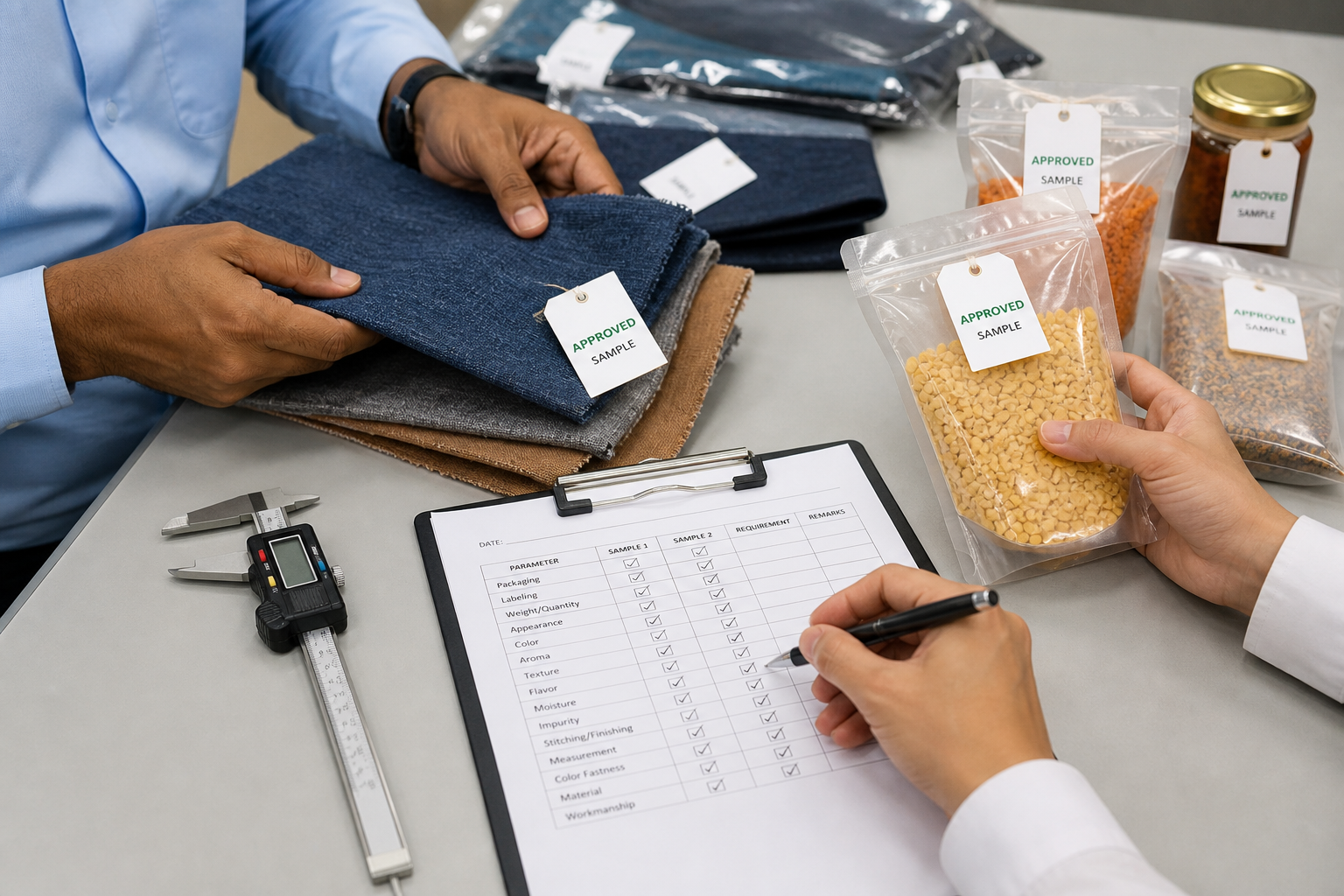
Common outsourcing mistakes SMEs should avoid
Mistake 1: Outsourcing “India” without stages
If everything is in scope, nothing is measurable. Use the Scope Map.
Mistake 2: Keeping approvals undefined
Partners cannot ethically invent your freeze pack or payment rules. Name approvers and response times.
Mistake 3: Selecting only on the lowest coordination fee
The expensive outcome is a failed shipment, not a slightly higher monthly fee for real reporting.
Mistake 4: Skipping the pilot
Jumping from intro call to multi-category exclusivity language is how SMEs get stuck. Ninety days of evidence beats twelve months of hope.
Mistake 5: Confusing a partner with a manufacturer
A coordination partner is not the factory. Assess production capability at supplier level; assess coordination quality at partner level.
Mistake 6: Ignoring conflict disclosure
Ask how the partner is paid and whether supplier-side incentives exist. Transparency is part of procurement hygiene.
Mistake 7: Abandoning risk gates because “the partner is handling it”
Outsourcing execution does not remove staged commitment. Keep the discipline in how small importers can reduce risk when buying from India.
Decision checklist: outsource now, later, or not yet
Checklist
- [ ] Decision Matrix mostly points to hybrid or outsource coordination.
- [ ] You can name what stays in-house.
- [ ] Scope Map stages are marked included/excluded.
- [ ] Success metrics for 90 days are written.
- [ ] Internal approvers can meet SLA response times.
- [ ] Budget for fees + samples + trial PO is agreed.
- [ ] You have compared fee cost to mistake and time cost.
- [ ] You are prepared to exit or resize after the pilot review.
If several boxes are unchecked, spend a week finishing the brief before you shop for partners. Clarity on your side improves every proposal you receive.

Conclusion
Outsourcing India procurement works for SMEs when it is scoped, measured, and decision-led. Use the SME Procurement Outsourcing Decision Matrix to choose in-house, hybrid, or partner coordination. Use the Outsourced India Procurement Scope Map to define work and approvals. Use the 90-Day Outsourcing Pilot Plan to test reporting and control before you scale. Keep product and commercial authority; buy local execution where distance and bandwidth create real risk.
If your next step is a structured pilot rather than another unstructured supplier chase, Altus Exports can help you map a practical coordination scope for supplier search, verification support, samples, production follow-up, quality gates, and export handoffs. Bring a brief and a 90-day objective—then decide with evidence whether outsourcing should remain a pilot, become an operating model, or wait until volume justifies a different build path.