
How Small Businesses Can Source Products From India
By Saurabh Mittal, Founder, Altus Exports
Small businesses can source products from India by running a controlled eight-stage playbook: write a clear product brief, shortlist and verify manufacturers, approve samples, lock commercial terms, place a staged order, apply quality gates, complete export documents, then…

Small businesses can source products from India without a local office, but opportunity alone is not a buying plan. A useful first program needs a written product brief, comparable manufacturer options, approved samples, clear commercial terms, quality gates, and an export handoff that matches the Incoterm you choose. Skip those controls and the cheapest quote often becomes the most expensive lesson.
India works for many small importers, e-commerce brands, distributors, and startups because manufacturing depth spans textiles and home goods, gifts and stationery, selected personal-care formats, components, and other export-oriented categories. The advantage is not a universal low price. It is the ability to develop, produce, and ship when the buyer runs a repeatable process matched to limited staff time and working capital.
This article is the pillar playbook for how small businesses can source products from India. It walks the path from brief to shipment and points to deeper cluster guides for small-order quantities, manufacturer discovery, no-office operating models, cost budgeting, risk controls, e-commerce constraints, startup private label, and procurement outsourcing. Altus Exports supports international buyers as an India-based sourcing and procurement coordination partner—helping with manufacturer search, verification follow-up, sampling, production checkpoints, QC arrangements, and export document handoffs—while the buyer keeps product, compliance, and commercial approval authority.
Why small-business sourcing needs a different operating rhythm
Large procurement teams can absorb a slow learning cycle. A small business usually cannot. One owner or operations lead may also run sales, customer service, and cash management. A vague RFQ, informal sample approval, or late document chase therefore hits harder.
Treat India sourcing as a staged commercial program, not a weekend factory hunt. Your job is to make decisions with evidence: what the product is, who can make it, what the sample proves, what the order costs in cash and time, and what must be true before goods leave India.
Constraints that shape every stage
Comparison table
Swipe →
Data table — swipe horizontally on small screens
| Constraint | What it means in practice | Playbook response |
|---|---|---|
| Limited staff time | Supplier chat, revisions, and documents compete with daily operations | One program owner, written decisions, consolidated updates |
| Smaller order quantities | Factories have setup, material, and pack minimums | Design a realistic first order; see small-order tactics in the MOQ guide |
| Cash-flow exposure | Deposit, balance, freight, and duties can cluster | Stage commitments; budget before supplier award |
| Uneven category knowledge | Confident claims are not proof of fit | Comparable RFQs, samples, and verification before deposit |
| No India travel budget | You cannot visit every candidate factory | Local evidence process: identity, capability, samples, inspection |
For the fuller readiness and operating-model decision (DIY vs hybrid vs outsourced), use India sourcing for small businesses: a complete guide. This pillar stays on the end-to-end buying path.
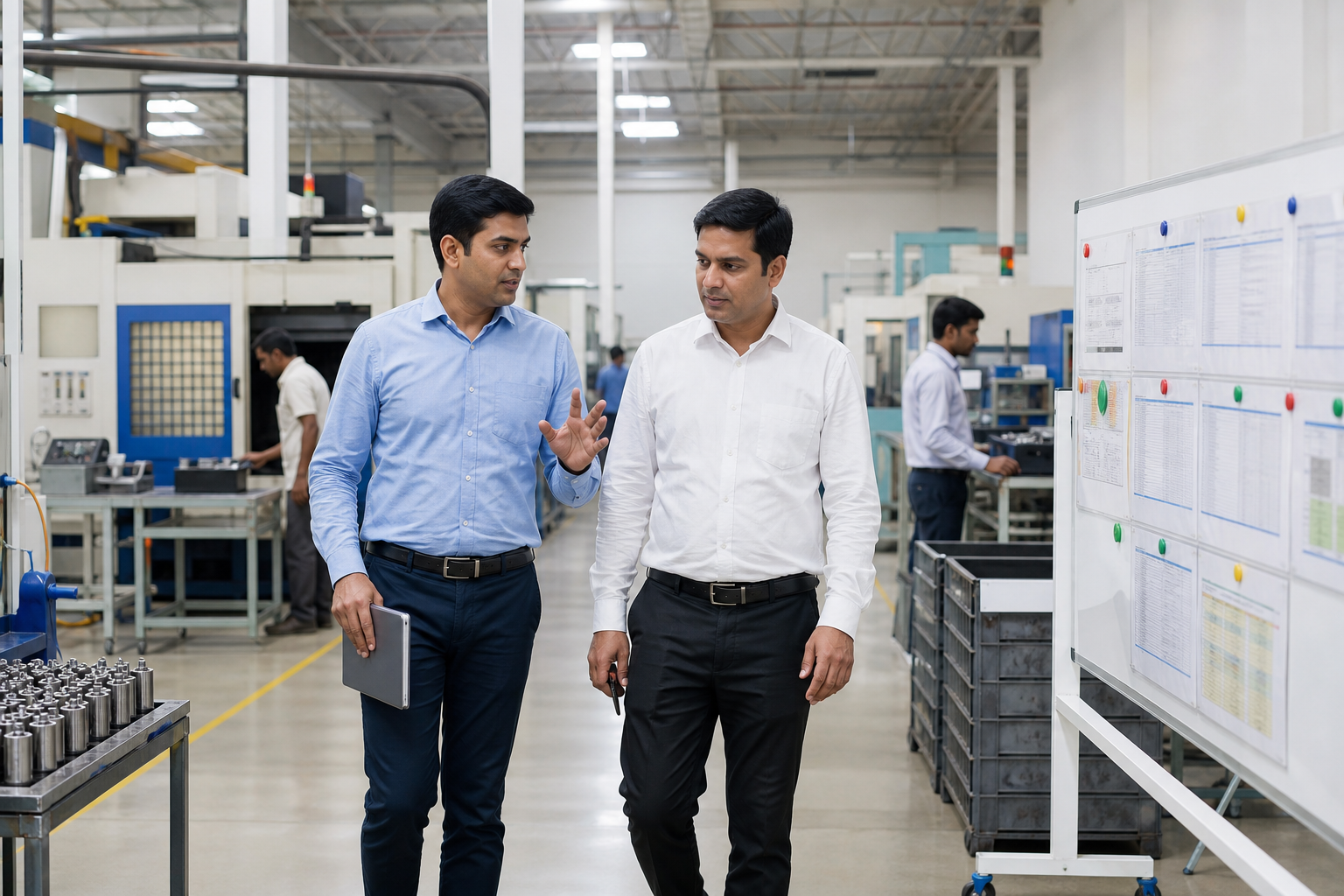
The Small Business Product Brief Checklist
Checklist
Most failed first orders start with an incomplete brief. Factories then invent assumptions about materials, pack, MOQ, labeling, and lead time. You compare non-comparable quotes and discover the gap after samples—or after production.
Use the Small Business Product Brief Checklist before you contact manufacturers. One to three pages is enough if it is specific.
Checklist items
- Product identity — category, intended use, destination markets, and whether the SKU is stock, adapted, or custom.
- Reference pack — photos, drawings, competitor SKU notes, or a physical reference you can describe precisely.
- Materials and construction — grades, finishes, dimensions, tolerances, performance needs, and known “must avoid” defects.
- Packaging and labeling — primary pack, carton marks, barcodes, insert needs, and language or claims constraints you already know apply.
- Quantity intent — trial range, expected reorder pattern (ranges are fine), and any hard ceiling on inventory risk.
- Commercial context — indicative target landed or unit range if you choose to share it; preferred Incoterm if known.
- Timeline — sample window, decision date, and first shipment window with the business reason the date matters.
- Quality and testing themes — acceptance criteria themes, any lab tests the buyer will require, and who pays for them.
- Compliance ownership note — destination obligations the buyer already knows apply; do not ask the factory to act as your legal counsel.
- Communication rules — program owner name, approval method (email/portal), and what counts as a written freeze.
Brief quality table
Comparison table
Swipe →
Data table — swipe horizontally on small screens
| Brief quality | What manufacturers receive | Likely outcome |
|---|---|---|
| Vague | “Good quality home product, competitive price, small MOQ” | Scattered quotes; mismatched packs and lead times |
| Partial | Photos + approximate size; no pack or acceptance criteria | Samples that look right but ship wrong |
| Controlled | Specs, pack concept, volume ranges, markets, approval method | Comparable RFQs and a usable sample plan |
You do not need to disclose every commercial secret in first outreach. You do need enough detail that a serious manufacturer or sourcing partner can say yes, no, or “possible with these conditions.”
The Small Business India Sourcing Playbook (8 stages)
Treat sourcing as eight connected stages. Skipping a stage does not remove the work; it only moves risk later—usually into production, cash, or customs.
Stage 1 — Define product, markets, and commercial boundaries
Confirm what “done” means for the first program: retail-ready goods, warehouse-ready master cartons, or components for local packing. Decide who owns artwork files, who pays for tooling if any, who arranges testing, and which Incoterm you intend to use for first shipment.
Write the Small Business Product Brief Checklist above. Name one buyer-side program owner and a backup. If the product is still a concept, label the work as development sampling—not a production RFQ that looks precise but rests on guesses.
Stage 2 — Shortlist manufacturers with comparable evidence
Build a longlist, then a shortlist of two to four options that can actually make your process—not only trading companies that claim they can “source anything.” Record legal entity name, role (manufacturer, merchant exporter, trader), process fit, indicative MOQ posture, sample policy, and export experience to your region.
Discovery channels and SME-specific shortlisting methods belong in how SMEs can find reliable Indian manufacturers. Keep this stage focused on options and data, not a premature award based on a polite video call.
Manufacturer search support: find manufacturers in India.
Stage 3 — Verify before you commit money to production
Verification is proportional to risk, not a theatrical checklist for every low-value stock item. At minimum for a first meaningful order, understand entity identity, production capability relevant to your SKU, sample history, capacity realism, and who issues export documents.
Ask for evidence, not slogans. A catalog photo is not proof of OEM or private-label capability. A “export quality” claim without measurable criteria is not a QC plan. For risk staging and controls after appointment, see how small importers can reduce risk when buying from India.
Stage 4 — Sample, revise, and freeze
- Concept or lab sample — prove form and function.
- Revised sample — close gaps from written comments.
- Pre-production / golden sample — made with intended materials and process where feasible.
- Specification freeze — written approval of product, pack, and acceptance criteria.
Move from inquiry to an approved reference before you scale. Typical sequence:
Keep a revision log: who requested each change, what cost or lead-time impact was disclosed, and which version is approved. Factories that “improve” a product without approval create expensive surprises. For startup private-label development depth, use how startups can develop private label products in India; for e-commerce brand cadence, see India sourcing for e-commerce businesses and online brands.
Stage 5 — Lock commercial terms and place a staged order
- quantity and SKU matrix;
- unit price basis and what is excluded;
- sample, tooling, or setup charges and ownership after payment;
- payment milestones tied to approvals and shipment evidence;
- Incoterm and named place;
- lead time from the real start event (deposit, artwork approval, or material arrival);
- packing standard and carton marks;
- what happens on nonconformity or material substitution.
A unit price is only meaningful when the quote states material grade, pack format, quantity break, payment milestones, lead-time start trigger, and delivery basis. Normalize those fields before you award.
Agree in writing:
MOQ deserves its own analysis because minimums often reflect packaging print runs, color batches, and setup—not only machine capacity. Use how to buy from India with small order quantities for tactics; use how much does it cost for a small business to source from India for the broader cost stack. Do not treat either encyclopedia as a substitute for a written PO on your SKU.
Stage 6 — Follow production with milestone evidence
Production follow-up is where small businesses lose control if they rely only on optimistic chat messages. Request updates against agreed milestones: material readiness, production start, inline status, packing start, cargo-ready date.
Escalate exceptions early: material substitutions, capacity conflicts, artwork delays, and missed intermediate dates. A weekly cadence is often enough for a simple SKU if exceptions are raised immediately. Multi-factory programs need a single status map so issues are not buried across threads.
Stage 7 — Apply quality gates before shipment release
Comparison table
Swipe →
Data table — swipe horizontally on small screens
| Gate | When | Purpose |
|---|---|---|
| Material / incoming check | Before or at production start | Confirm agreed inputs where risk justifies it |
| Inline / process check | During production | Catch construction, fill, color, or assembly drift early |
| Pre-shipment inspection (PSI) | When goods are largely complete and packed, as agreed | Decide ship / rework / reject against written criteria |
| Document check | Before booking cut-off | Align invoice, packing list, marks, and certificates |
| Post-arrival spot check | At destination | Feedback loop for PO2 |
QC is not only a final photo set. Match gates to brand and safety risk.
Define acceptance criteria in writing: dimensions, appearance, function, packaging integrity, labeling accuracy, and any lab tests you require. Who inspects, who pays, and who can release shipment should be clear before production finishes—not negotiated at the pier.
Stage 8 — Export handoff, receive, and review before reorder
Export readiness is part of sourcing, not a courier afterthought. Before cargo is ready, confirm shipper and consignee details, product descriptions that match packing lists, HS approach with your broker, certificates your market requires, carton marks, inspection release, and who books freight under the chosen Incoterm.
After arrival, review actual lead time, quality result, document accuracy, communication load, and landed-cost variance versus plan. Only then decide whether to repeat, adjust specs, change quantity, qualify a second source, or pause. Import coordination context: import products from India.
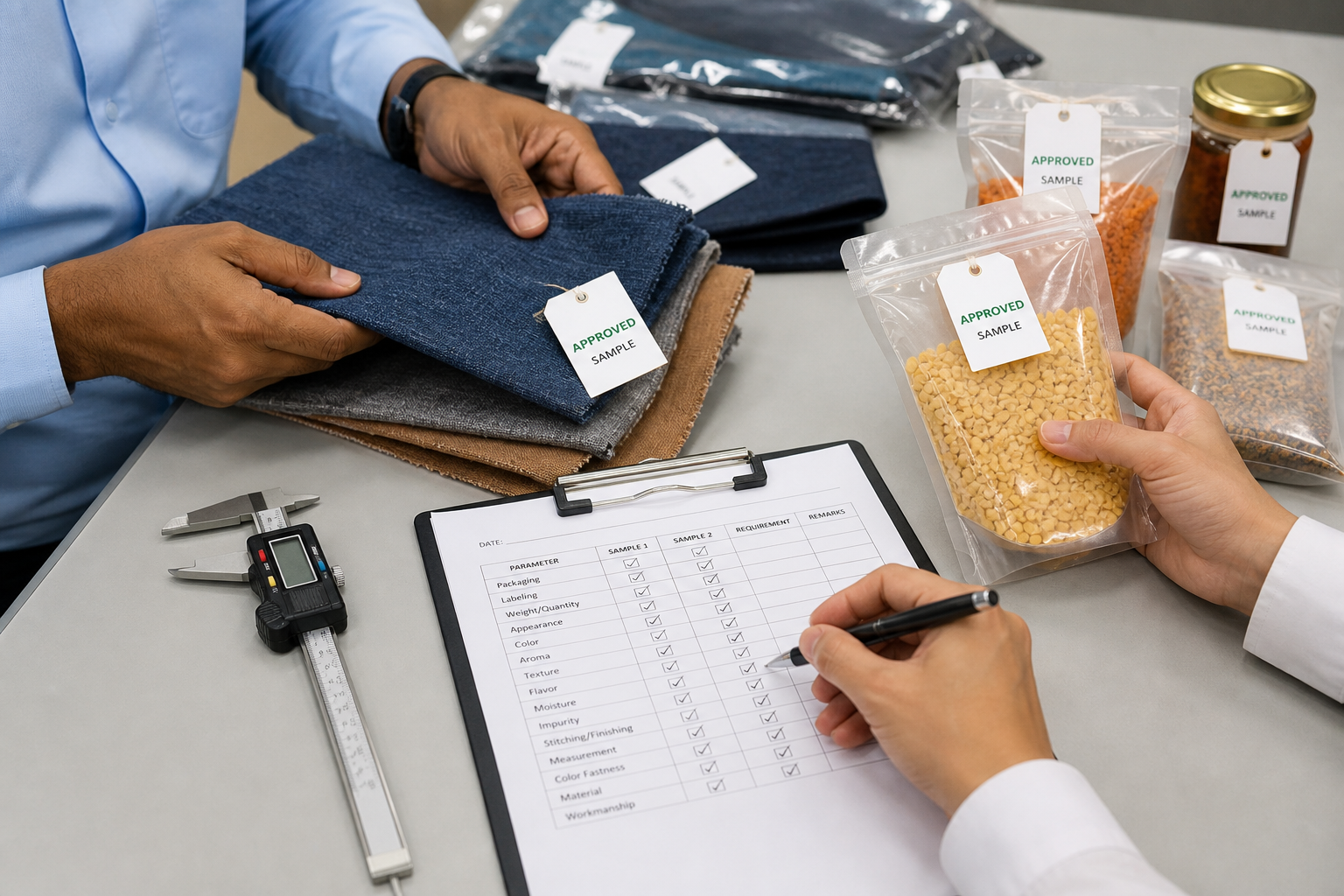
Direct factory vs India coordination partner
You can source directly when the product is relatively standard, you have category knowledge, one proven factory path, and weekly bandwidth for samples, QC, and documents. A coordination partner becomes more useful when you are new to India, evaluating unfamiliar processes, juggling several SKUs or factories, or need local follow-up without travel.
Altus Exports can operate in the partner and merchant-export coordination role—manufacturer identification support, verification coordination, sampling follow-up, QC arrangements, and export handoffs—while you retain product, pricing, and compliance decisions. For remote operating design without an India entity, see how to source from India without setting up an office. For when to outsource procurement more broadly, see outsourcing India procurement: a guide for SMEs. Service entry points: global sourcing partner in India and product sourcing company in India.
Comparison table
Swipe →
Data table — swipe horizontally on small screens
| Situation | Direct manufacturer may fit | India sourcing coordination often helps |
|---|---|---|
| Scope | One known SKU and factory | New line, multi-SKU, or first India program |
| Local presence | Frequent visits or resident team | Limited travel; need on-ground follow-up |
| Category knowledge | Buyer can assess claims | Buyer needs structured comparison and technical chase |
| Coordination load | Buyer can manage daily factory chat | Buyer needs one accountable local coordinator |
| Export | Factory export desk is proven | Multiple suppliers or unclear document ownership |
Finding manufacturers without freezing selection too early
- legal entity name and role;
- process capability that matches your product;
- evidence of export or branded-goods experience (without requiring confidential client names);
- indicative MOQ and lead-time posture;
- sample policy and revision process;
- open questions for verification.
Discovery and selection are different jobs. Discovery builds options; selection awards a partner. Mixing them creates two common errors: awarding the first polite factory, or collecting twenty contacts with no comparable data.
Practical discovery inputs include referrals from comparable buyers, trade shows, export councils and industry clusters, professional networks, carefully filtered B2B platforms, and specialist search with process keywords (knitting, injection molding, wooden housewares, soap conversion, and so on)—always tied to your brief.
When you shortlist, record:
Do not treat a glossy catalog as proof of manufacturing capability. Ask how change control, packaging, and subcontracting are handled. Full SME discovery depth: how SMEs can find reliable Indian manufacturers.
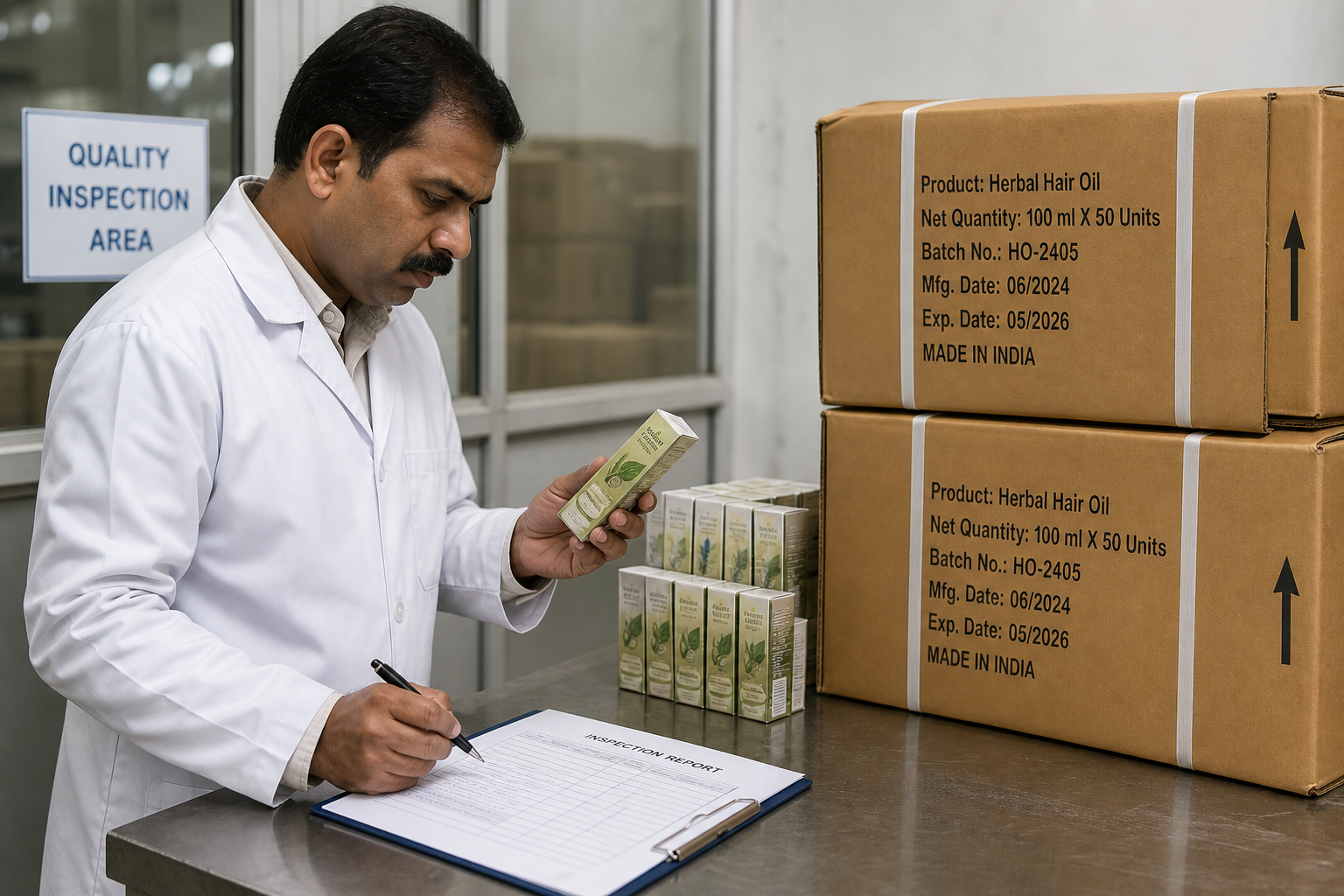
Sampling discipline that protects cash
Samples are learning tools and commercial evidence. They are not free marketing gifts in every category, and unpaid sample chaos often correlates with unpaid attention later.
Sampling rules for small businesses
- Pay transparent sample or courier costs when justified; record what the fee covers.
- Comment in writing against the brief—not only “looks good” or “not okay.”
- Freeze only one golden reference for production; archive rejected versions.
- Do not approve production deposits until the freeze pack is complete enough for your risk level.
- If packaging is branded, treat artwork proof as part of the freeze, not a parallel afterthought.
A small business should prefer a controlled trial that exercises real materials and packing over a tiny “toy” sample that never stresses the process you will actually buy.
Order placement: make the first PO a learning system
Your first purchase order should be large enough to be a real commercial order and small enough that a learning cycle is survivable. That balance is product-specific. Avoid launching a full catalog from India on day one.
First-order control pack
Comparison table
Swipe →
Data table — swipe horizontally on small screens
| Control | Buyer decision before deposit |
|---|---|
| SKU count | Prefer one family or a tight related group |
| Quantity | Align with cash, storage, and MOQ reality |
| Payment evidence | What document or inspection gate releases balance |
| Substitution rule | No silent material or pack changes |
| Ship release | Who can approve departure after QC/docs |
| Reorder trigger | What metrics must improve or hold on PO2 |
Phased entry—validate, pilot, review, expand—beats a broad first launch. E-commerce and startup paths often need tighter cash and speed discipline; see the segment guides linked in the cluster rather than stretching this pillar into those encyclopedias.

Quality and risk without a resident team
- write measurable acceptance criteria before production;
- use photos and measurements against the approved sample;
- commission third-party or partner-coordinated inspection when risk justifies cost;
- hold shipment release until agreed gates pass or a written concession is logged;
- capture nonconformities for supplier scorecards on reorder.
Distance does not remove quality responsibility. It changes how you gather evidence.
Practical approaches for small buyers:
Risk reduction for small importers is a staged commitment problem: verify, sample, pilot, then scale. Depth: how small importers can reduce risk when buying from India.
Export documents and logistics handoff
- who prepares commercial invoice and packing list;
- who books and pays freight;
- what certificates of origin or product declarations apply;
- how HS classification will be handled with your broker;
- insurance responsibility;
- destination delivery and unpack checks.
Private buyers sometimes treat logistics as “the factory’s problem.” Under many Incoterms, responsibilities split. Confirm early:
Merchant-export consolidation can help when multiple suppliers feed one shipment and the commercial model is agreed. Factory-direct export can work when one manufacturer handles the full document set reliably. Choose consciously; do not discover the model during a customs query. Broader import coordination: import products from India.

Communication protocol for bandwidth-limited teams
- one controlled brief and version naming convention;
- a decision log for price, sample, specification, and shipment changes;
- milestone-based supplier updates, not vague “on track” language;
- consolidated status where a partner manages several factories;
- written final approvals shared with affected parties.
Small buyers underestimate message volume. One product question can generate several decisions: which sample revision applies, whether label wording is approved, whether carton counts match the packing list, and whether a delayed component moves the ship date.
Create a simple protocol:
A weekly update is often sufficient for active production if exceptions escalate immediately. The goal is not reporting volume; it is preventing unresolved issues from hiding in chat threads.
Common mistakes small businesses make when sourcing from India
Common Mistakes Box
- Starting with too many products. Focus on one controllable family before adding categories.
- Sending only a target price and image. Use the Small Business Product Brief Checklist.
- Awarding the first polite factory. Shortlist, verify, and compare on equivalent terms.
- Choosing on unit price alone. Normalize pack, MOQ, payment, lead time, and QC.
- Approving samples informally. Record revision, linked specification, and allowable variation.
- Waiting until goods are finished to discuss inspection and documents. Plan release at order confirmation.
- Negotiating an MOQ the supplier cannot sustain. Change the program design instead of forcing a slogan.
- Scaling after one acceptable order without a review. Measure workload, quality, cost, and document accuracy first.
- Assuming a partner owns buyer decisions. Retain approval of product, price, and shipment release.
- Ignoring cash timing. Map deposits, balances, freight, and duties before award.

Small Business India Sourcing Readiness Gate (pre-PO)
- Brief complete against the Small Business Product Brief Checklist.
- Shortlist of at least two credible options compared on equivalent RFQ fields.
- Verification depth appropriate to order value and category risk.
- Sample freeze (and artwork freeze if branded) recorded in writing.
- Commercial terms written: price basis, quantity, payment, Incoterm, lead time.
- QC plan agreed: gates, criteria, inspector, release authority.
- Export checklist assigned: document owners and timeline before cargo-ready date.
- Cash envelope and contingency identified for delay or rework.
- Program owner named with response-time expectations.
- Reorder review metrics defined before goods ship.
Use this gate before a first significant production deposit. It is a go/no-go check, not a guarantee of success.
If several items are missing, pause or run a discovery/sampling phase rather than forcing a production PO.
How Altus Exports fits the playbook
- Global sourcing partner in India
- Product sourcing company in India
- Find manufacturers in India
- Import products from India
Altus Exports can support small-business buyers who need India-based coordination across manufacturer identification, verification support, sampling follow-up, production checkpoints, quality arrangements, and export documentation handoffs. Engagements vary by category and scope. The useful starting point is a clear product brief, target markets, volume ranges, and the stages you want locally managed.
This article does not claim exclusive factory access, guaranteed savings, fixed MOQs, or certifications beyond what a specific project documents. Reliability comes from process clarity and evidence—not slogans.
Service paths:

Conclusion
How small businesses can source products from India successfully is less about finding a secret factory and more about running a controlled playbook: brief, shortlist, verify, sample, commercial lock, production follow-up, quality gates, and export review. Use the Small Business Product Brief Checklist and the eight-stage Small Business India Sourcing Playbook to keep limited staff time and working capital aligned with evidence. Use the cluster guides for MOQ tactics, manufacturer discovery, no-office operations, cost budgeting, segment paths, risk controls, and procurement outsourcing when you need depth.
If you want on-ground coordination for a first or next India program, contact Altus Exports with your product brief, target markets, volume ranges, and the stages you need supported. A clear first discussion can determine whether a structured sourcing plan is the right next step.