
How to Source From India Without Setting Up an Office
By Saurabh Mittal, Founder, Altus Exports
You can source from India without setting up an office by keeping product, commercial, and release decisions with your team while assigning defined on-ground work—supplier follow-up, sample movement, production evidence, inspection coordination, and export handoff—to…

Many small businesses assume buying from India requires a local company, a rented desk, or a full-time employee on the ground. That is usually wrong for early and mid-stage programs. What you need is not an Indian office by default—it is a remote operating model that separates decisions you must own from work that must happen in India with evidence you can trust.
This article is for small businesses, e-commerce brands, and lean SME buyers that want to source from India without office infrastructure—without forming an India entity and without treating WhatsApp as a procurement system. It owns the remote sourcing operating model: roles, tools, evidence, travel versus no-travel, communication cadence, failure modes, and how a coordination partner can act as the local layer.
It does not own the multi-product, multi-supplier operations encyclopedia. If you already juggle several factories and SKUs into one shipment plan, use multi-product procurement from India without an Indian office and how to manage multiple Indian suppliers from overseas for multi-factory dashboards, consolidation, and cross-supplier QC. Here the focus is the small-business remote model for buying from India remotely with control.
Executive answer: remote decisions, local evidence
- You own the decisions that define risk—product specs, supplier appointment, price and payment structure, destination-market requirements, major deviations, and shipment release.
- Someone in India owns the execution that creates evidence—factory follow-up, sample movement, production milestones, inspection booking, packing/document chase, and exception escalation.
- Both sides share one operating rhythm—written briefs, version control, a regular cadence, and stop/go gates before money and cargo move.
Altus Exports supports international buyers as an India-based sourcing and procurement coordination partner—supplier follow-up, sample and production evidence, inspection logistics, and export readiness—while the buyer retains product, commercial, compliance, and shipment-release authority. A written remote model with accountable local execution is often a more practical first answer than an office.
For the wider playbook, see how small businesses can source products from India and India sourcing for small businesses: a complete guide. For later outsourcing decisions, use outsourcing India procurement for SMEs.
You can buy from India remotely without an India entity when three conditions hold:
An office is not required for those three conditions. An office becomes relevant when the local workload is sustained, technical presence must be frequent, and you have management capacity for hiring and supervision. Until then, India procurement without local office is a design problem, not a company-registration problem.

The Remote India Sourcing Operating Model (RISOM)
The Remote India Sourcing Operating Model (RISOM) is the named framework for small buyers that want remote sourcing India without pretending distance does not matter. RISOM has six components:
RISOM is deliberately lighter than a multi-supplier control tower. A small business may start with one or two products and one primary factory. The model still matters: remote sourcing fails more often from unclear ownership than from lack of an office lease.
Comparison table
Swipe →
Data table — swipe horizontally on small screens
| RISOM component | Purpose | Small-business output |
|---|---|---|
| 1. Buyer decision seat | Keeps product, commercial, and release authority with a named person | One program owner + approval list |
| 2. Local execution layer | Makes on-ground work assignable and accountable | Factory, specialist, partner, or hybrid |
| 3. Shared source of truth | Stops “latest version” living in chat threads | Brief, sample log, PO tracker, decision log |
| 4. Evidence standard | Replaces optimistic updates with checkable proof | Photos, reports, dates, SKU-linked files |
| 5. Cadence and escalation | Converts time zones into a predictable rhythm | Weekly update + exception rules |
| 6. Travel / no-travel policy | Decides when physical presence is mandatory | Visit plan by risk tier |
How RISOM differs from multi-supplier “no office” guides
Comparison table
Swipe →
Data table — swipe horizontally on small screens
| Question | This article (RISOM) | Multi-supplier no-office guides |
|---|---|---|
| Primary buyer | Small business / lean SME starting or running remote sourcing | Buyer managing several products and factories |
| Core problem | How to operate from overseas without an entity/office | How to integrate multi-SKU / multi-factory ops |
| Named framework | Remote India Sourcing Operating Model + No-Office Control Checklist | RIPOM and multi-supplier operating systems |
| Depth boundary | Roles, tools, evidence, cadence, failure modes | Consolidation, cross-factory QC, multi-supplier RACI |
Keep both clusters linked. Do not merge them into one generic “buy from India online” page.
What you can run without an India entity or office
Source India no entity is normal for most import programs. Your home-country company places orders, pays suppliers or a merchant exporter under agreed terms, and imports under your destination rules. An Indian subsidiary is a separate strategic choice—useful for some long-term footprints, unnecessary for most first programs.
What you cannot honestly “run from a laptop alone” without risk is physical verification when the product is new, the supplier is unproven, the order value is material, or the brand risk is high. Remote does not mean evidence-free. It means evidence is collected by named parties and judged by you.
This article is not legal advice. In practice, small importers usually contract as foreign buyers with Indian exporters or merchant exporters, do not need an India company merely to purchase goods for export, and remain responsible for destination import compliance and product rules in their market. If counsel later recommends an India entity for tax or employment reasons, that is a different project from sourcing—do not open an office to fix a coordination problem that written gates and a scoped partner can address.
Comparison table
Swipe →
Data table — swipe horizontally on small screens
| Activity | Remote-capable approach | What still needs India-side work |
|---|---|---|
| Product brief and RFQ | Buyer writes and issues | Local partner can clarify factory questions |
| Supplier shortlisting | Desktop research + structured outreach | Capability evidence, visits, or verification support |
| Commercial negotiation | Buyer decides price, MOQ, payment, Incoterm | Local context on capacity and process reality |
| Sample approval | Buyer approves against written criteria | Sample collection, courier, comparison support |
| Production monitoring | Buyer reviews milestone evidence | Factory chase, photo/report verification |
| Quality decision | Buyer sets criteria and release | Inspection booking and on-site sampling |
| Export document chase | Buyer reviews pack | Origin-side document collection and corrections |
| Freight booking | Buyer or forwarder books under Incoterm | Origin handoff and cut-off coordination |
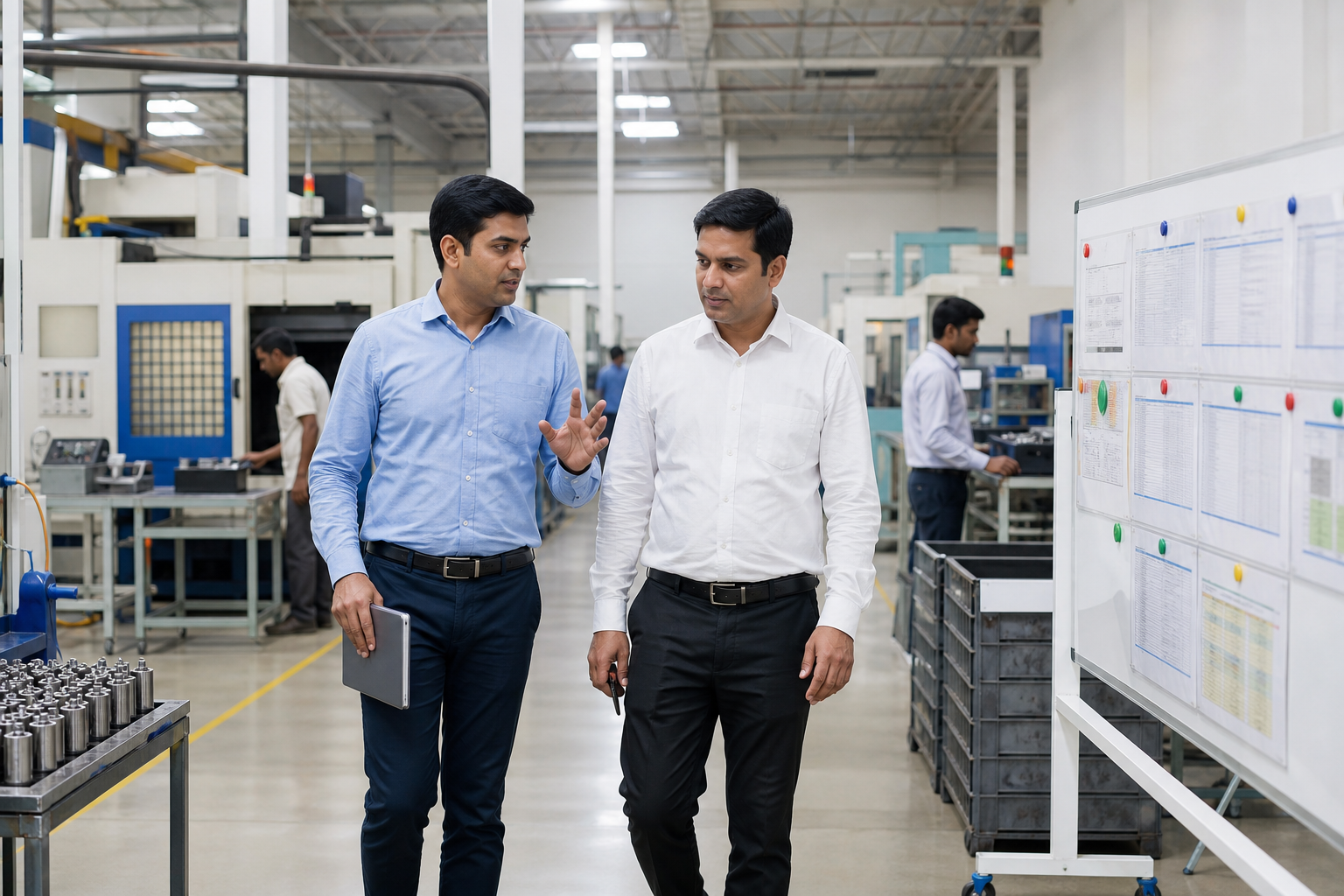
Roles that make remote sourcing work
Ambiguity is the enemy of buy from India remotely. Name roles before the first sample order.
Altus Exports can fill the coordination-partner role when you need a local layer without hiring. The buyer still approves samples, prices, and release. For service framing, see global sourcing partner in India and product sourcing company in India.
Comparison table
Swipe →
Data table — swipe horizontally on small screens
| Role | Owns | Does not own |
|---|---|---|
| Buyer program owner | Specs, approvals, budget, supplier award, payment authorization, shipment release | Day-to-day factory chase (unless you choose to) |
| Supplier / factory | Production, agreed packing, origin documents under contract | Your destination compliance decisions |
| Independent inspector / lab | Sampling and reporting against agreed criteria | Commercial acceptance (buyer still decides) |
| Freight forwarder / broker | Transport and clearance services under instruction | Product quality or supplier selection |
| India coordination partner (optional) | Local follow-up, evidence collation, escalation, QC logistics, export readiness support | Unapproved substitutions; final product ownership |
RACI for a single-product remote program
Comparison table
Swipe →
Data table — swipe horizontally on small screens
| Workstream | Buyer | Supplier | Inspector | India partner |
|---|---|---|---|---|
| Brief and market requirements | A/R | C | I | C |
| Supplier shortlist | A | C | I | R/C |
| Award and PO | A/R | C | I | C |
| Sample development | A | R | I | R/C |
| Sample approval | A/R | C | C | C |
| Production milestones | A | R | C | R/C |
| Inspection booking | A | C | R/C | R |
| Release decision | A/R | I | C | C |
| Export document pack | A | R | I | R/C |
| Freight under Incoterm | A | C | I | C |
Use a simple RACI so “someone will handle it” becomes a named letter.
If you are not using a partner, the “partner” column collapses into buyer + supplier + specialist—and you must be honest about capacity. Small teams often underestimate the hours spent chasing packing-list corrections and photo proof.
Tools: keep the stack boring and complete
You do not need enterprise procurement software—you need version control and decision visibility. Minimum shared workspace: one current brief/pack file per SKU; supplier comparison (price, MOQ, lead time, payment, exclusions, export role); sample revision log with approved version marked; PO and milestone tracker; decision log; inspection/CAPA/shipping folder; escalation contacts with time-zone notes.
Rules that prevent remote chaos: chat is for alerts, the workspace is for truth; no production deposit against an unapproved sample revision; photos need date context and SKU identity; only the program owner authorizes payment and shipment release.

Evidence standards: what “ready” means remotely
Supplier messages such as “goods almost ready” are not a control system. Define evidence by gate.
For broader small-importer risk staging, see how small importers can reduce risk when buying from India. For QC mechanics beyond this operating model, use the quality-control guides in the Altus QC cluster rather than inventing a second QC encyclopedia here.
Comparison table
Swipe →
Data table — swipe horizontally on small screens
| Gate | Evidence that should exist | Remote-only risk if skipped |
|---|---|---|
| Supplier appointment | Entity clarity, capability notes, comparable quote, sample plan | Wrong factory role or capacity |
| Sample freeze | Approved sample record + revision closed | Production improvisation |
| Production start | PO acknowledgment, material confirmation | Silent substitutions |
| Mid-production | Milestone photos/reports at agreed points | Late discovery of defects |
| Pre-shipment | Inspection report against written criteria | Shipping known risk |
| Document ready | Invoice, packing list, transport docs aligned | Clearance delays |
| Release | Buyer written authorization | Cargo moves on urgency, not readiness |
Travel versus no-travel: a deliberate policy
Remote sourcing India does not forbid travel. It forbids unplanned travel as the only control.
Write a one-page travel policy: which risk tier requires a visit, who can approve travel cost, and what evidence substitutes when you do not travel. That is more useful than a vague plan to “go to India someday.”
Comparison table
Swipe →
Data table — swipe horizontally on small screens
| Situation | Travel often worth considering | No-travel often acceptable with strong evidence |
|---|---|---|
| New category / first factory | First visit or third-party audit | Low-risk stock item with strong sample + PSI |
| High brand or safety risk | On-site review before scale | Only after pilot success and stable CAPA history |
| Large deposit relative to cash | Visit or independent verification before deposit escalation | Staged payments with inspection gates |
| Recurring reorder, same SKU | Periodic spot checks | Routine PSI + milestone evidence |
| Exception / dispute | Focused visit or local representative | Documented CAPA may suffice for minor issues |
Communication cadence for time zones
Daily unstructured messaging creates noise; monthly silence creates surprises. Match cadence to stage:
Weekly buyer-facing update order: SKU/PO reference; planned vs actual milestone; evidence attached; amber/red risks with owner; decision needed (yes/no, by date); next checkpoint. If a partner or supplier cannot produce that structure, you have a chat habit—not a remote operating model. Name backup approvers for samples, artwork, and release: remote sourcing fails as often from slow buyer decisions as from slow factories.
Comparison table
Swipe →
Data table — swipe horizontally on small screens
| Stage | Normal rhythm | Escalate immediately when… |
|---|---|---|
| Discovery / RFQ | 2–3 touchpoints per week until shortlist | Factory cannot answer process questions |
| Sampling | Weekly status + courier milestones | Sample missed window or wrong revision |
| Pre-PO | Decision call when comparison pack is ready | Quote assumptions conflict |
| Production | Weekly dashboard (twice weekly if tight) | Material change, missed milestone, quality red flag |
| Pre-ship | Release checklist daily until authorized | Failed inspection, document mismatch, cut-off risk |
| Post-arrival | One structured review before reorder | Defects, shortage, or claim |
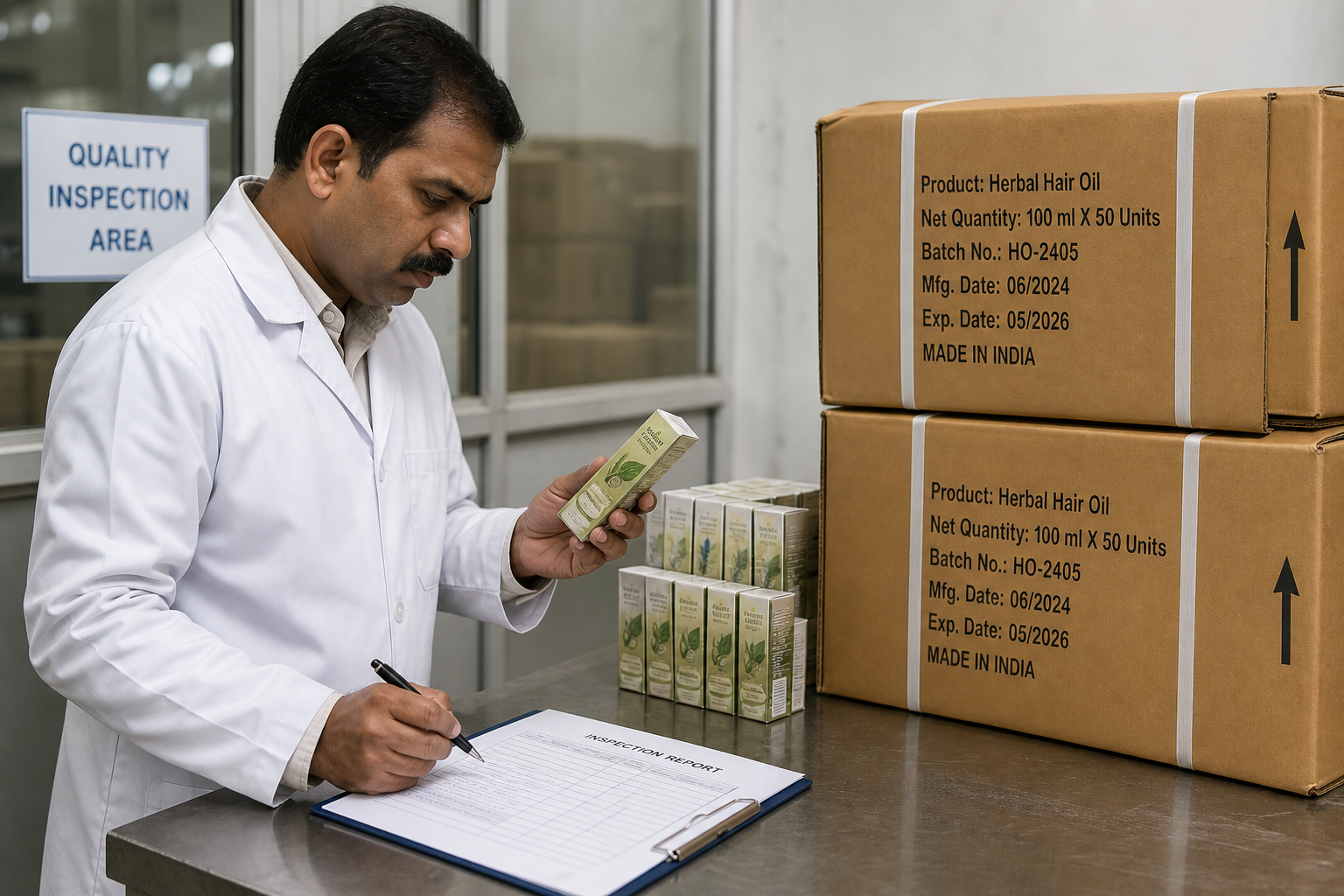
The No-Office Control Checklist
Checklist
Use the No-Office Control Checklist—the second named framework—before a meaningful first order or volume expansion.
A. Ownership: named program owner with time and authority; written list of buyer-only approvals; escalation contacts on both sides; clear rule for who factories speak to (buyer, partner, or both) and about what.
B. Specs and commercial clarity: controlled brief; comparable quotes with exclusions; sample freeze rule; payment milestones tied to evidence; Incoterm named with place (link out for Incoterm depth).
C. Evidence and quality: written production milestones; inspection criteria and booking owner; release register (reported ready ≠ authorized to ship); CAPA path for fails and conditional passes.
D. Tools and cadence: shared workspace with current versions only; weekly update format; exception rules; decision log started.
E. Local layer decision: direct factory model assessed against bandwidth; specialist inspection/testing where risk requires it; partner scope defined if needed; travel / no-travel policy written.
If more than a few items are unchecked, do not “solve” the gap by incorporating an India company—fix the operating model first. For manufacturer discovery, see how SMEs can find reliable Indian manufacturers. For cost planning, see how much it costs a small business to source from India.
Partner as the local layer (without partner-selection encyclopedia)
A coordination partner is optional. It helps when you cannot visit regularly, evidence would otherwise be supplier self-reporting only, document/inspection logistics exceed your hours, or you want one India escalation contact without hiring. It is the wrong answer when you want someone else to invent product strategy, scope is vague “manage everything,” factory identity and costs are hidden without agreement, or you refuse to approve samples and releases yourself.
Partner selection scorecards and RFP depth belong in the sourcing-partner and outsourcing guides—not here. If you use a local layer, write scope, reporting frequency, disclosure expectations, and approval boundaries. Altus Exports can discuss scoped coordination under global sourcing partner in India; deeper outsourcing framing lives in outsourcing India procurement for SMEs.
Comparison table
Swipe →
Data table — swipe horizontally on small screens
| Local-layer option | Fits when | Boundary |
|---|---|---|
| Direct factory desk | Simple SKU, proven exporter, buyer has time | Buyer is the integrator |
| Factory + independent PSI | Quality risk needs third-party eyes | Buyer still interprets report |
| India coordination partner | Recurring follow-up without office | Scope and authority must be explicit |
| Merchant-exporter arrangement | One India contracting/export path needed | Confirm title, documents, payment flow |
| Own hire / office | Sustained local workload + management capacity | Fixed cost and supervision burden |
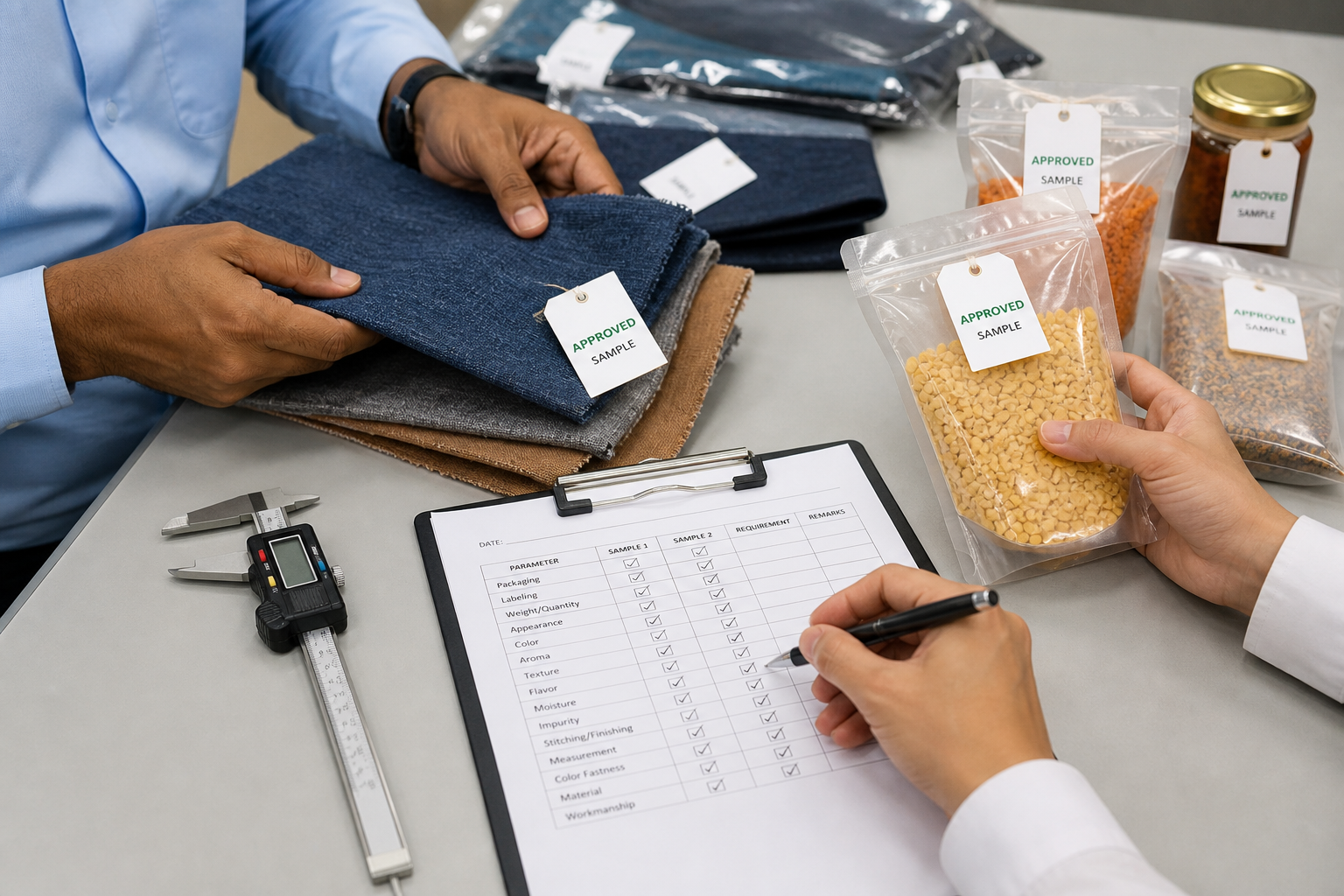
When remote sourcing fails—and what to do instead
Remote models fail in recognizable patterns. Diagnose the pattern before defaulting to “we need an office.”
An office becomes serious when local execution is continuous, category development needs frequent physical presence, and leadership can hire and manage well. Until those conditions are measured, strengthening RISOM is usually cheaper and faster than incorporation.
Comparison table
Swipe →
Data table — swipe horizontally on small screens
| Failure pattern | Symptom | First fix | Office needed? |
|---|---|---|---|
| Ownership fog | Everyone thought someone else booked inspection | Written RACI | Rarely |
| Spec drift | Production does not match approved sample | Freeze pack + revision control | No |
| Evidence theater | Nice photos, wrong lot or stage | SKU-linked, timed evidence rules | No |
| Slow approvals | Factory waits; then air freight panic | Backup approvers + SLAs | No |
| Scope dumping | Partner or factory “handles quality” with no criteria | Written QC criteria | No |
| Complexity overload | One person remote-managing too many factories | Reduce SKU/factory count or add local layer | Sometimes later |
| Trust collapse | Repeated misses after gates | Pause volume; re-verify; consider visit | Visit or audit first |
60-day remote launch path for small buyers
Days 1–20 — design RISOM: Write the brief, name the program owner, stand up the shared workspace, draft the No-Office Control Checklist, choose direct / specialist / partner local execution, and set the weekly update format.
Days 21–40 — qualify with evidence: Shortlist manufacturers, request comparable quotes, run samples, record approvals, and book verification or inspection plans by risk. Do not award on unit price alone. Manufacturer discovery methods for SMEs are covered in the sibling article on finding reliable Indian manufacturers.
Days 41–60 — pilot under gates: Place a controlled first order, run cadence and milestone evidence, inspect before release, and ship only with authorization. After arrival, review defects, documents, communication load, and whether your local layer was enough—then reorder, tighten controls, add partner support, or only if evidence justifies it consider heavier local structure. A pilot is a limited-exposure rehearsal of the remote model, not a casual test buy.

Common mistakes when sourcing India with no office
Common Mistakes Box
- Equating “no office” with “no process.” Distance increases the need for written gates.
- Treating supplier status messages as inspection. They are inputs, not release.
- Hiring locally before proving workload. Anxiety is not a headcount plan.
- Outsourcing product ownership. Partners coordinate; you still decide.
- Skipping sample freeze to “save time.” You usually pay later in rework.
- Running multi-factory complexity on a single-SKU process. Scale the operating system before supplier count—or use the multi-supplier guides.
- Ignoring time-zone approval SLAs. Silence is a schedule risk.
- Opening an entity to fix a chat-thread problem. Fix ownership and evidence first.
How Altus Exports fits a no-office model
- Global sourcing partner in India
- Product sourcing company in India
- Find manufacturers in India
- Import products from India
- Contact Altus Exports
Altus Exports can act as the India execution layer inside RISOM: manufacturer search support, sample and production follow-up, inspection coordination, document readiness, and export handoff support under an agreed scope. Buyers keep product definition, commercial terms, destination compliance, and release authority.
Useful entry points:
This article does not claim that every category can be sourced remotely with equal ease, that an office is never useful, or that any partner eliminates buyer responsibility. Reliability comes from roles, evidence, and cadence—not from a slogan about “managing India from anywhere.”

Conclusion
You can source from India without setting up an office when you run a deliberate remote model: keep decisions with a named buyer owner, assign local execution for evidence, share one source of truth, enforce gates, and keep a sane communication cadence. The Remote India Sourcing Operating Model (RISOM) and the No-Office Control Checklist give small businesses a practical way to buy from India remotely—without confusing “no entity” with “no controls,” and without inheriting the full multi-supplier operations encyclopedia.
If you want help designing the local execution layer for a first or next India order, contact Altus Exports with your product category, destination market, volume range, and whether you plan to work factory-direct, with inspection support, or with coordination partner coverage. A clear operating model beats an unplanned office every time.