
How Much Does It Cost for a Small Business to Source From India?
By Saurabh Mittal, Founder, Altus Exports
The cost for a small business to source from India is a stack, not a single unit price: samples and development, deposits and product value, inspection and testing, freight and insurance, import duties and taxes, brokerage and handling, optional sourcing-partner fees, and…

“How much does it cost?” is the first commercial question most small buyers ask about India—and the easiest one to answer badly. A factory can quote a low unit price and still leave you with a program that strains cash, misses margin after freight and duty, or fails because sample and inspection costs were never modeled. The useful question is not “What is the India price?” It is “What is the full cost to source from India for a small business, in what order does cash leave the account, and which lines are still unknown until I get quotes?”
This article owns the India sourcing cost SME view: the cost stack for small buyers, a budgeting method, what “cheap unit price” misses, illustrative category ranges framed as ranges—not guarantees—and a cash-timing map. It does not own the full Incoterms encyclopedia (use FOB vs CIF vs EXW when buying from India), deep duty calculation (use how import duties and taxes work when buying from India and how to calculate landed cost for products imported from India), or MOQ negotiation depth (use how to buy from India with small order quantities).
Altus Exports supports small and mid-sized international buyers as an India coordination partner—helping structure quotes, samples, inspection logistics, and export readiness so cost lines become visible before commitment. Altus does not invent a universal price list. Every real budget starts with your product, destination, Incoterm, volume, and current supplier or forwarder quotes.
For the operating playbook around these numbers, see how small businesses can source products from India and India sourcing for small businesses: a complete guide. For remote ops without an office, see how to source from India without setting up an office. When you evaluate outsourcing the coordination work, use outsourcing India procurement for SMEs.
Executive answer: budget a stack, not a slogan
- list every cost category that applies to your first program;
- mark each line as known quote, estimate, or unknown;
- time when cash exits versus when goods become sellable;
- stress-test freight, duty, and quantity assumptions;
- only then decide whether the margin and cash plan work.
There is no single honest number for small business import cost India. Two buyers can import “from India” and see completely different totals because category, order size, packaging, freight mode, duty rate, inspection need, and partner support differ.
What you can do is:
Illustrative ranges in this article are planning aids. They are not offers, not guarantees, and not substitutes for a formal quote. When in doubt, ask for a quote and put the number in the worksheet.

The Small Business India Sourcing Cost Stack (SBISCS)
The Small Business India Sourcing Cost Stack (SBISCS) is the named framework for SME budgeting. It has ten layers. Classic landed cost small business India sits inside layers 3–8; layers 1–2 and 9–10 explain why first programs feel more expensive than a replenishment PO.
SBISCS rule: If a layer is “not applicable,” write zero and why. Silent zeros become surprise invoices.
Comparison table
Swipe →
Data table — swipe horizontally on small screens
| # | SBISCS layer | What it covers | Typical timing |
|---|---|---|---|
| 1 | Discovery & setup | Research time, RFQs, verification basics, brief writing | Before first PO |
| 2 | Samples & development | Sample fees, couriers, revisions, small tooling/setup | Pre-production |
| 3 | Product commercial value | Goods on the proforma/commercial invoice | Deposit + balance per terms |
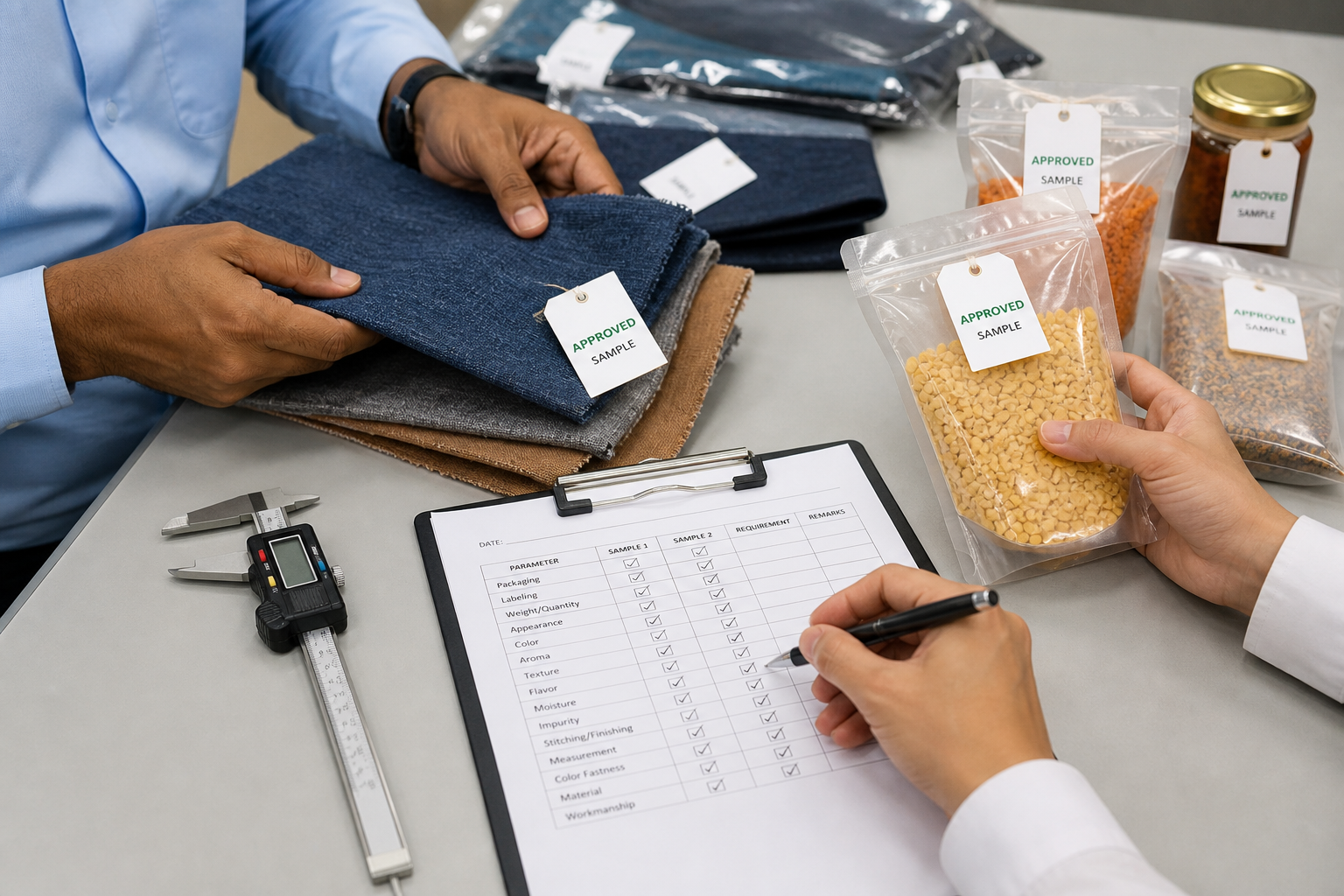
| 4 | Quality & compliance spend | PSI, inline checks, lab tests buyer requires | Before/around shipment |
| 5 | Origin logistics add-ons | Export packing extras, inland haulage if not in quote | With supplier or origin invoice |
| 6 | International freight & insurance | Ocean/air, surcharges, cargo cover | Booking / pre-arrival |
| 7 | Import duties, taxes & fees | Duty, VAT/GST/MPF-type fees as applicable | Clearance |
| 8 | Destination handling | Brokerage, port/airport handling, delivery to warehouse | Clearance / delivery |
| 9 | Coordination / sourcing fees | Partner or agent fees if used | Per scope (retainer, project, or order) |
| 10 | Working capital & time cost | Cash tied up from deposit to sellable stock; rush premiums | Across the cycle |
Layers 1–2 — Discovery, samples, and development
Count founder hours for briefs, RFQs, and comparison sheets; optional external verification or show travel if you choose them. Do not invent large “market entry fees” nobody quoted. Sample cost is often the first real cash outlay—factories may charge custom samples, credit some fees later, or expect you to pay couriers. Private-label work can add plates, molds, or setup quoted separately. For startup private-label path economics, see how startups can develop private label products in India; this article only requires sample and setup lines in the budget before you call unit price “cheap.”
Illustrative planning band (not a quote): stock-like samples may be low or waived; custom/branded samples plus international courier often land in a small three-digit to low four-digit USD range per round depending on weight, urgency, and revisions. Ask for a written sample policy.
Layers 3–5 — Product value, quality spend, origin add-ons
Product commercial value is the invoice amount under your Incoterm—driven by material, process, quantity break, packing inclusions, and payment terms. Small orders usually pay higher unit prices than large replenishment; that is economics. Record the quantity assumption next to every unit price (MOQ tactics live in the small-order article).
Budget inspections and tests you require—not brochure “export quality.” Skipping QC to protect short-term margin is how small importers fund returns. Illustrative planning band (not a quote): one pre-shipment inspection for a single factory/lot often falls in a low-to-mid hundreds of USD range by location and scope; lab tests vary widely—request prices before PO.
If the quote is not inclusive to the named place, inland haulage, special export packing, palletization, or document couriers appear as origin add-ons. Verify inclusions; use the Incoterms guide for depth rather than expanding this section.
Layers 6–8 — Freight, duties/taxes, destination handling
For many SMEs, freight is the largest swing factor after product value—especially LCL, air samples, or light bulky goods. Insurance is usually a small percentage of insured value but still a line. Treat every freight rate as dated and re-quote before locking retail on a long production cycle.
Duty and tax depend on destination rules and HS classification; supplier statements are not classification advice. Model placeholders only with broker or counsel input and use the duty and landed-cost guides for calculation depth. Destination handling covers brokerage, terminal charges, drayage, delivery, and storage if documents lag—delay cost often exceeds the fee itself for first-time importers.
Layers 9–10 — Sourcing fees and working capital
Factory-direct programs may show near-zero cash partner fees (not zero founder time). India coordination partners may charge project, retainer, per-order, or deliverable-based fees—there is no single market tariff. Ask for written scope; compare fee to hours and risk you would otherwise carry. Altus Exports discusses scoped coordination under global sourcing partner in India and product sourcing company in India.
Deposits, balances, freight prepayments, and slow clearance create cash gaps. A profitable landed-cost unit still hurts if cash sits for many weeks before revenue. Map cash-out dates versus earliest sellable-stock date; rush air freight to fix late approvals is a time-cost failure mode.
What “cheap unit price” misses
Unit price is one input. Small businesses lose margin when they treat it as the whole model.
Run every serious quote through SBISCS, then push the shipment-level direct lines through the India Landed Cost Worksheet (ILCW-12) method for warehouse economics. SBISCS is broader (includes discovery, partner fees, and cash timing); ILCW-12 is the classic landed-cost engine.
Comparison table
Swipe →
Data table — swipe horizontally on small screens
| Cheap-price illusion | What the stack reveals |
|---|---|
| Lowest FOB/EXW unit wins | Higher freight, weaker packing, or inland distance can erase the gap |
| “No sample fee” | Courier + revision rounds still cost money and calendar time |
| Skip inspection | Returns, rework, and reputation cost more than PSI |
| Ignore partner / time | Founder hours are real; chaos has a burn rate |
| Quote at high MOQ | Your actual small order may sit on a different price break |
| CIF looks all-in | Duties, brokerage, and delivery usually remain |
| One FX screenshot | Payment-day conversion and bank fees move totals |

Budgeting method for SMEs: the five-pass estimate
Use this sequence so India sourcing cost SME planning stays honest.
Pass 1 — Scope card
Write one page: product, destination, target sellable units for first order, rough ship mode (air sample vs ocean), Incoterm preference, whether private label or stock-like, and whether you will use a partner. Without a scope card, every quote is theater.
Pass 2 — Known vs unknown register
Comparison table
Swipe →
Data table — swipe horizontally on small screens
| Line (SBISCS) | Status | Owner to quote | Notes |
|---|---|---|---|
| Samples / courier | Known / Estimate / Unknown | Factory / forwarder | |
| Product value | Factory | Quantity break stated | |
| Inspection / tests | Inspector / lab | ||
| Freight / insurance | Forwarder | Validity date | |
| Duties / taxes | Broker / counsel | HS assumption noted | |
| Brokerage / delivery | Broker / 3PL | ||
| Partner fees | Partner | Scope attached | |
| Working capital buffer | Buyer finance | Weeks of cash |
No “unknown” line should remain when you approve a production deposit—either convert it to a quote or accept an explicit contingency percentage.
Pass 3 — Build SBISCS totals
Sum layers for first program cost (includes samples/setup) and reorder cost (usually lower on layers 1–2). Small businesses often understate the first program and then feel “India is expensive” when they actually under-budgeted discovery and sampling.
Pass 4 — Unit economics
- First-program cost per sellable unit = (sum of layers allocated to first order) ÷ sellable units
- Reorder landed-style unit cost ≈ (layers 3–8 ± 9 as applicable) ÷ sellable units
If first-program unit cost looks ugly, that can still be acceptable if reorder economics work and cash can fund the learning cycle. What is unacceptable is discovering first-program drag after the deposit clears.
Pass 5 — Stress test
Comparison table
Swipe →
Data table — swipe horizontally on small screens
| Stress | Why it matters for SMEs |
|---|---|
| Freight +25–50% | Common on small LCL/air moves |
| Duty rate higher than placeholder | Classification risk |
| Quantity shortfall / QC rejects | Cost per sellable unit rises |
| One extra sample round | Cash and launch delay |
| Payment earlier than planned | Working-capital squeeze |
If the plan only works on perfect freight and perfect QC, it is not a small-business plan—it is a hope sheet.
Illustrative scenario tables (planning only)
Figures below are illustrative planning notes, not market offers. Replace every cell with current quotes for your SKU and lane.
Do not assume partner-assisted is always more expensive. Price the fee against hours and risk—not against zero.
Comparison table
Swipe →
Data table — swipe horizontally on small screens
| Cost view | Factory-direct | Partner-assisted |
|---|---|---|
| Cash partner fees | Lower / none | Higher (scoped fee) |
| Founder / staff time | Higher | Lower if scope is real |
| Evidence / chase risk | Buyer carries more | Shared per written scope |
| Best when | Proven exporter, simple SKU, available hours | New program, limited travel, need local follow-up |
The Cash Timing Map
The Cash Timing Map is the second named framework. It answers when money leaves relative to milestones—not only how much.
Comparison table
Swipe →
Data table — swipe horizontally on small screens
| Milestone | Typical cash events | Buyer control tip |
|---|---|---|
| Brief / RFQ | Soft cost (time); optional verification fees | Cap research time; avoid paid samples too early |
| Sample order | Sample invoice + courier | Limit revision rounds in writing |
| Supplier award | Possible tooling/setup invoice | Tie payment to approval pack |
| Production deposit | % of product value per terms | Deposit only after sample freeze |
| Mid-production | Rare progress payments if contracted | Link to milestone evidence |
| Pre-ship | Balance payment and/or freight booking deposits | Align with inspection release policy |
| In transit | Insurance premium if separate; finance cost accrues | Confirm Incoterm risk transfer point |
| Arrival / clearance | Duties, taxes, brokerage, delivery | Pre-alert broker with draft docs |
| Warehouse | 3PL intake fees if any | Budget sellable-unit landing |
| First sales | Cash returns begin | Measure weeks of cash outstanding |
Example Cash Timing Map (illustrative weeks)
Comparison table
Swipe →
Data table — swipe horizontally on small screens
| Week | Event | Cash out (illustrative pattern) |
|---|---|---|
| 0 | Sample + courier | Sample layer |
| 2–4 | Optional revisions | Extra sample / courier |
| 4 | Deposit after approved PPS | Portion of product value |
| 6–10 | Production | Limited new cash if deposit terms hold |
| 10–11 | PSI, then balance / freight | Inspection + product balance + freight |
| 12–15 | Transit, clearance, delivery | Duties, taxes, brokerage, drayage; WC continues |
| 15+ | Available to sell | Revenue starts (channel-dependent) |
Your calendar will differ by category, factory load, and mode—draw your map before promising retail dates. Cash rules: no production deposit against unfrozen samples; contingency for freight validity expiry; separate “pay to learn” (samples) from “pay to scale” (bulk); prefer a smaller pilot over a heroic first container when cash is tight; count marketplace or wholesale payment lags, not only India lead time.
Linking SBISCS to landed cost (without owning the formula)
- How to calculate landed cost of products imported from India
- How import duties and taxes work when buying from India
- FOB vs CIF vs EXW when buying from India
For shipment pricing and supplier comparison on direct import lines, use ILCW-12 from the landed-cost article:
Landed cost (classic) ≈ product + packing + inland + freight + insurance + duties/taxes + brokerage + inspection + other direct import costs, divided by sellable units.
SBISCS adds discovery, partner fees, and working-capital timing so small businesses do not confuse warehouse unit cost with program affordability. Cross-link, do not duplicate:
Incoterms in one cost paragraph (boundary-safe)
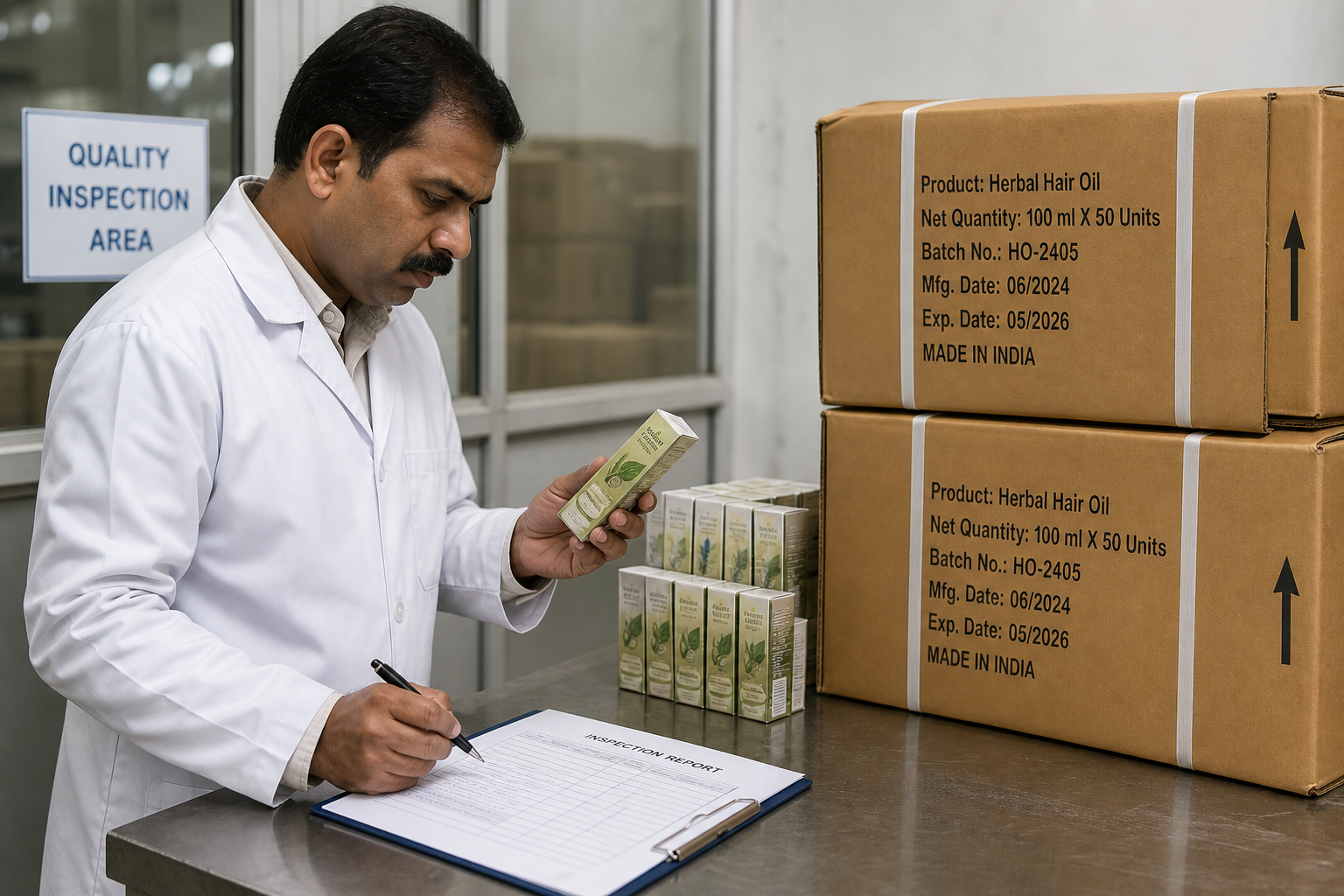
Incoterms change who invoices which SBISCS lines, not whether the cost exists. EXW tends to push origin logistics to the buyer. FOB often bundles more origin work into the supplier quote—if the named port and inclusions are real. CIF bundles freight and minimum insurance into the seller’s price to a destination port, but usually not your import duty, brokerage, or final delivery. Unpack every quote into SBISCS/ILCW lines before you celebrate a “cheaper” term. Full decision framework: the FOB vs CIF vs EXW guide linked above.
MOQ and quantity: cost impact without negotiation encyclopedia
Order quantity changes almost every per-unit line: product price breaks, setup amortization, freight per unit, and inspection cost per unit. Small businesses should model at least two quantities—trial and target reorder—inside SBISCS. How to negotiate or structure small MOQs is owned by how to buy from India with small order quantities. Here, the rule is simpler: never store a unit price without a quantity assumption.
Building a one-page SME budget template
- Header: SKU, destination, Incoterm, quantity A (trial), quantity B (reorder), FX rate + date, quote validity dates
- SBISCS lines 1–10 with columns: Trial $, Reorder $, Source, Confidence (High/Med/Low)
- Totals: Trial program $, Trial $/sellable unit, Reorder $/sellable unit
- Cash Timing Map: date, milestone, cash out, running cash committed
- Decisions: proceed / redesign pack / change mode / add partner / pause
Copy this structure into a spreadsheet:
Review the template whenever freight validity expires, the sample revision changes materials, or payment terms shift.

Common cost mistakes for small businesses sourcing from India
- Budgeting only product + freight — duties, brokerage, inspection, samples, and cash timing often decide survival.
- Using social-media “India prices” — anecdotes omit Incoterm, quantity, packing, and year.
- Treating partner fees as pure waste — compare fees to founder hours, missed inspections, and delay cost.
- Ignoring first-program vs reorder economics — samples/setup make PO1 look expensive; judge PO2+ without pretending PO1 is free.
- Locking retail before duty and freight are quoted — margin fiction creates later discounting.
- Paying large deposits to “secure a cheap price” — cheap unit price with weak gates is expensive risk.
- Forgetting sellable units — QC rejects and damage raise cost per unit you can sell.
- No contingency — buffer freight validity and one extra sample or inspection cycle.
How Altus Exports helps make costs visible
- Global sourcing partner in India
- Product sourcing company in India
- Import products from India
- Find manufacturers in India
- Contact Altus Exports
Altus Exports can help small buyers gather structured supplier quotes, clarify packing and Incoterm assumptions, coordinate sampling and inspection logistics, and prepare export-ready document handoffs so SBISCS lines are fewer “unknowns.” That coordination role does not replace your broker on classification, your counsel on compliance, or your authority on price and release.
Service entry points:
No article—and no partner—should promise a fixed dollar savings or a universal landed-cost percentage. Ask for quotes; keep the worksheet.

Conclusion
The real cost to source from India for a small business is the Small Business India Sourcing Cost Stack—ten layers from discovery and samples through freight, duties, optional sourcing fees India, and working capital—timed with the Cash Timing Map. Cheap unit price is an input, not a budget. Use illustrative ranges only as planning placeholders; replace them with quotes. For formula-level landed cost and duty mechanics, use the dedicated import guides; for MOQ structure, use the small-order guide; for whether to outsource coordination, use the SME outsourcing guide.
If you want help turning a product idea into a quote-backed SBISCS budget before you commit, contact Altus Exports with your category, destination, target trial quantity, and whether you need factory-direct support or coordination-partner scope. Clear cost lines beat optimistic screenshots.